
Roofer in Closter, NJ
Closter's Older Homes Deserve More Than a Quick Fix
Hear from Our Customers
Local Roofing Company in Closter, NJ
A roof that’s been properly replaced or repaired doesn’t just stop leaking — it stops costing you. No more stained ceilings after a hard rain. No more dread every time a nor’easter tracks up the coast toward Bergen County. You just live in your house without that background worry eating at you.
For a home worth what Closter homes are worth — the median sale price here sits around $1.5 million — the stakes of getting this wrong are real. A roofing failure that goes ignored through one winter can mean damaged insulation, compromised framing, and interior repairs that dwarf what the roof itself would have cost. The math isn’t complicated. The right job now is cheaper than the wrong job later.
What makes this especially relevant for Closter is the housing stock itself. More than half the homes in this borough were built between the 1940s and 1960s, with a median construction year of 1957. That means most roofs here are either on their second cycle or approaching it. Couple that with the freeze-thaw patterns Bergen County gets every winter — temperatures swinging above and below freezing, ice dams forming along eave lines, flashing working loose — and you have a specific, local set of conditions that demand a contractor who understands more than just roofing in general.
Roofing Company in Closter, NJ
We’re a licensed, family-owned exterior contractor serving Bergen County homeowners, including Closter residents, with over a decade of hands-on NJ roofing experience. Our license number is public — NJ HIC #13VH10605800 — and you can verify it through the NJ Division of Consumer Affairs before you ever pick up the phone. That’s not a small thing in a market where storm chasers roll through after every major weather event and disappear just as fast.
We also hold certifications from major shingle manufacturers. That matters because certified contractors can offer enhanced system warranties — the kind that cover the entire roofing system, not just the shingles — for up to 30 to 50 years. An uncertified contractor simply cannot offer that product. For a homeowner in Closter protecting a home that’s been in the family for decades, that warranty is a tangible, transferable asset.
We provide transparent pricing, free inspections, free estimates, and 24/7 emergency availability. No surprises. No pressure. Just clear answers and quality work.
Affordable Roofers in Closter, NJ
It starts with a free inspection. Not a glance from the driveway — a real assessment that covers the exterior surface, the attic, the drainage system, and the flashing details. You get a photo report to keep, regardless of what you decide to do next. For a 1950s-era home in Closter, that attic check matters. Older homes often have insulation that’s been compressed or degraded over the years, which accelerates ice dam formation along the eave line every winter. Knowing what’s actually happening up there before any work begins is the only way to give you an accurate picture.
From there, you get a detailed written estimate — every line item explained, every cost approved before our crew shows up. If you’ve gotten other quotes, bring them. The beat-or-match guarantee means you’re not choosing between price and quality.
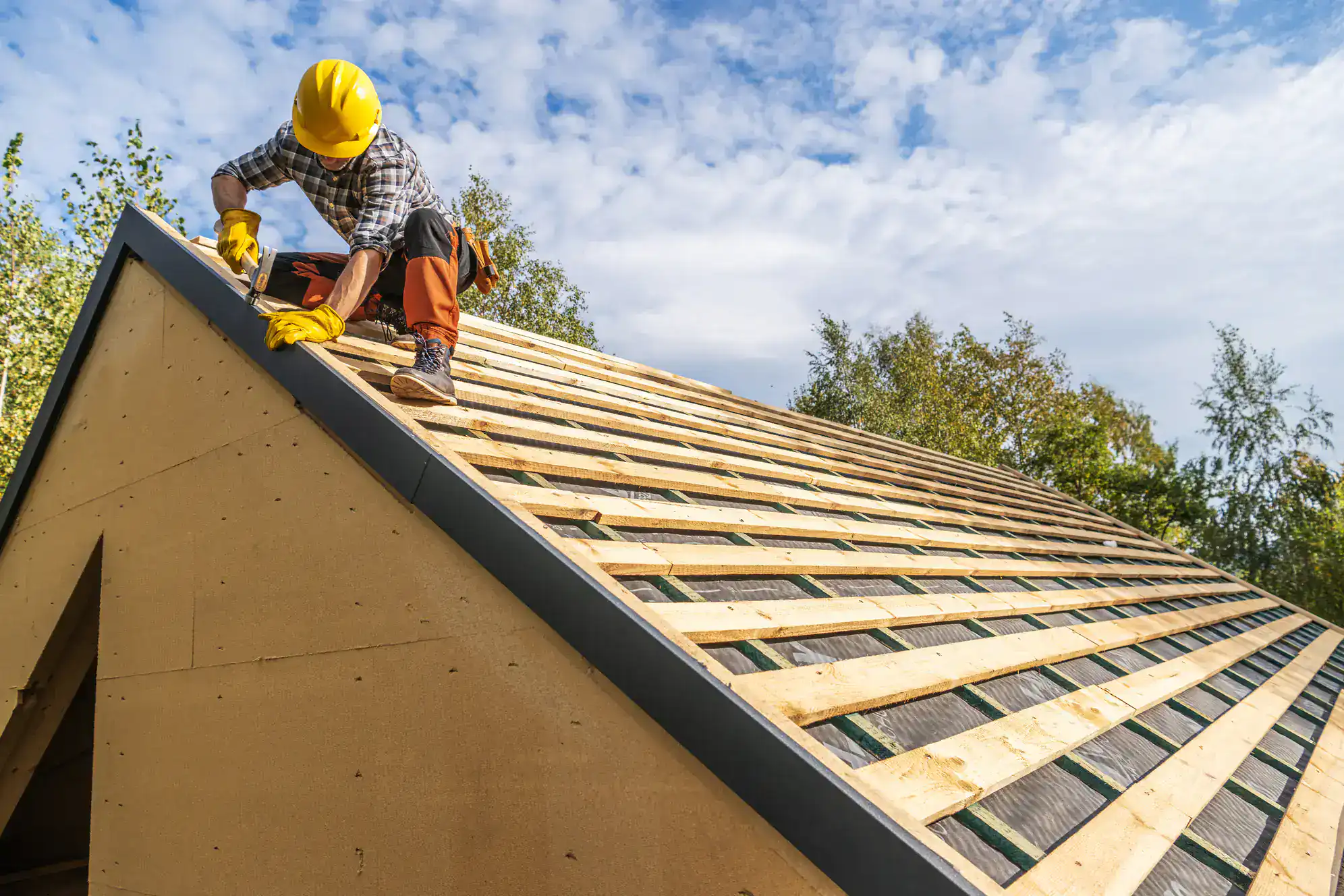
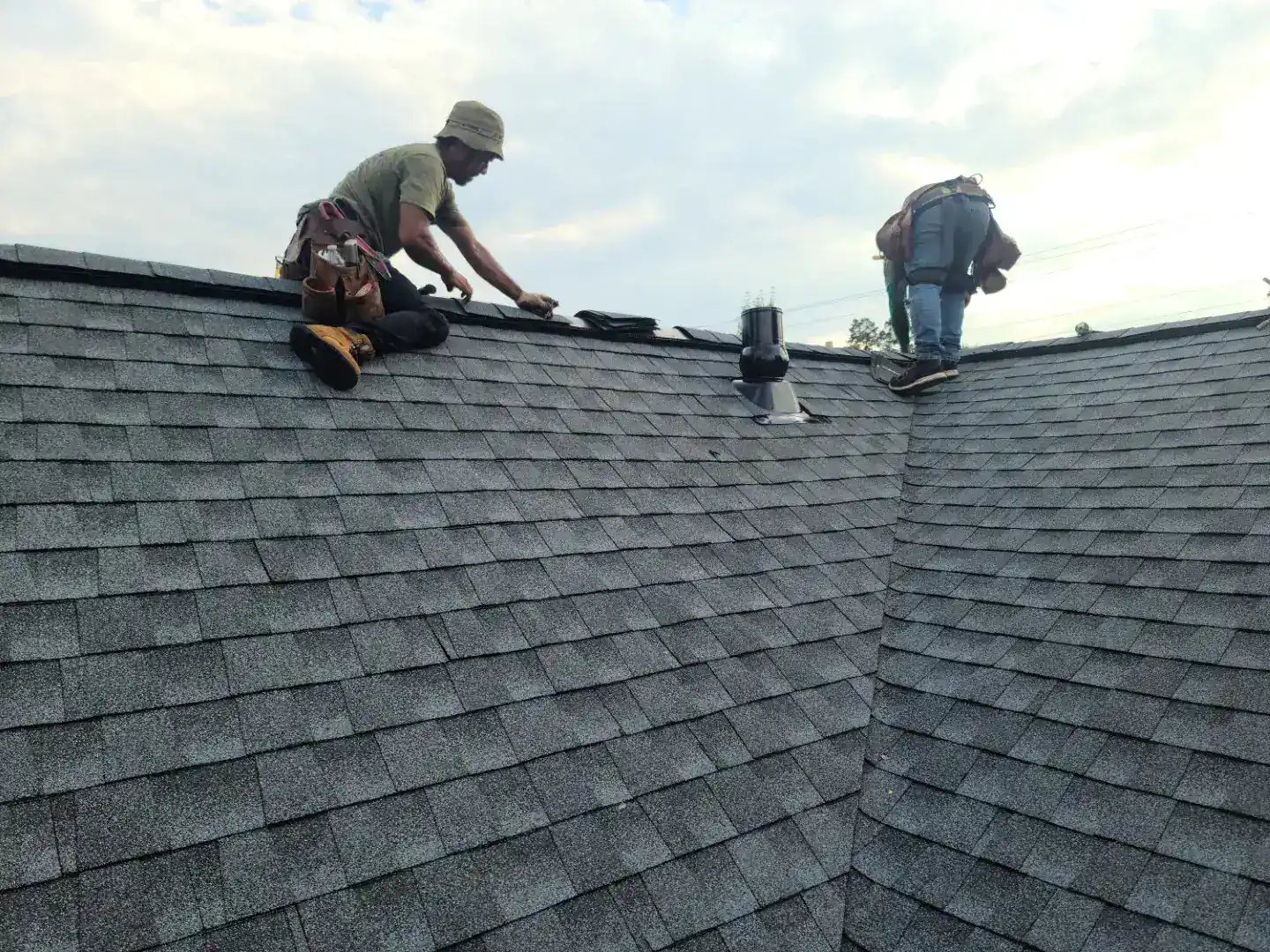
Once the work starts, the process is straightforward: the old material comes off, the deck gets inspected and addressed if needed, new underlayment goes down with proper ice and water shield at the eave — required under New Jersey’s Uniform Construction Code and especially important given Bergen County winters — and the new system goes on. We pull permits through the Closter Building Department at 295 Closter Dock Road as required. When the job is done, our crew cleans up completely and walks you through the finished work before they leave.
Ready to get started?
Emergency Roof Repair in Closter, NJ
Full roof replacements come with manufacturer-backed system warranties that only certified contractors can provide — covering materials and installation together, not just one or the other. For Closter homeowners with large, older homes, that kind of coverage is meaningful. These are not small roofs. Four and five-bedroom homes with dormers, multiple valleys, and chimney flashing details have more exposure points than a simple ranch, and more ways for water to find its way in if any one component fails.
Repair work follows the same standard. Whether it’s a few damaged shingles after a wind event, failed flashing around a chimney, or a gutter system that’s pulling away from the fascia and sending water behind the wall, we repair it properly — not patch it to buy time. Closter sees its share of storm activity, and we’re equipped with 24/7 emergency response for situations that can’t wait until Monday morning.
We also offer gutter and siding services for homeowners who want to address the full exterior in a single project. Everything is handled under one roof, one license, and one point of accountability.
Do I need a permit to replace my roof in Closter, NJ?
Yes — a building permit is required for full roof replacements in Closter, as it is throughout New Jersey under the state’s Uniform Construction Code. The Closter Building Department, located at 295 Closter Dock Road, handles local enforcement and inspections. Skipping the permit process isn’t just a code violation — it can void your homeowner’s insurance coverage for any future claims related to that work, and it can create real complications when you go to sell the home. Buyers’ attorneys and home inspectors look for this.
We handle the permit process as part of the job. You shouldn’t have to chase paperwork or figure out inspection scheduling on your own. The permit also requires that the installation meet current NJ UCC standards, including ice and water shield along the first 24 inches from the eave — a detail that matters a lot in Bergen County, where freeze-thaw cycles are a reliable part of every winter season.
How do I know if my Closter home's roof needs repair or full replacement?
The honest answer is: you probably can’t tell from inside the house or from the driveway. Most roofing failures in Closter’s older housing stock don’t announce themselves with a dramatic ceiling collapse — they show up as granule loss you can’t see, micro-cracking in aged shingles, or flashing that’s slowly separating from the chimney or dormer walls. By the time there’s a visible stain on your ceiling, water has usually been moving through the system for a while.
The median construction year for a Closter home is 1957. If your home was built in that era and the roof hasn’t been replaced in the last 20 to 25 years, a professional inspection is the only way to get a real answer. A thorough inspection — exterior surface, attic condition, drainage, flashing — will tell you whether you’re looking at a targeted repair, a system that needs replacement now, or one that can be monitored for another season. That’s the kind of clear, documented answer a free inspection is designed to give you.
What roofing materials hold up best against Bergen County winters?
For most Closter homes, architectural asphalt shingles are the right call — they’re durable, they perform well through freeze-thaw cycles, and when installed by a certified contractor, they qualify for the manufacturer system warranties that extend the life and coverage of the entire roof assembly. The specific product matters less than the installation quality and the certification level of the contractor, because those two factors determine what warranty you actually walk away with.
What Bergen County winters specifically demand is proper underlayment and ice and water shield installation at the eave line. Ice dams are a real and recurring problem in Closter, particularly on older homes where attic insulation has degraded over the decades. When heat escapes through an under-insulated attic, it melts snow at the roof surface, and that meltwater refreezes at the cold eave overhang — creating a dam that forces water back under the shingles. Addressing the insulation alongside the roofing system is the right long-term approach, and a thorough inspection will flag this if it’s a factor on your specific home.
How much does a roof replacement typically cost in Closter, NJ?
Roof replacement costs in Closter vary based on the size of the roof, the pitch and complexity of the structure, the materials specified, and the condition of the existing deck underneath. For a typical Closter home — which tends to be a large, four or five-bedroom single-family house with multiple architectural features — you’re generally looking at a more substantial investment than the regional average simply because of the square footage and complexity involved. Closter’s homes rank in the 98th percentile nationally for large home sizes, and larger roofs with more valleys, dormers, and flashing details take more time and material to do correctly.
What you should expect from any legitimate estimate is full transparency: every line item broken down, materials specified by name, and no vague language about “additional costs if we find something.” A written estimate locks in the scope before work begins. If you’ve already received other quotes, our beat-or-match guarantee gives you a direct way to compare — not just on the bottom line number, but on what’s actually included in the scope of work and what warranty coverage comes with it.
What should I do immediately after storm damage to my roof in Closter?
The first step is documentation — photograph whatever you can safely access from the ground before anything is touched or covered. If there’s active water intrusion, emergency tarping can stop the damage from spreading while a full assessment gets scheduled. Do not wait on this. A roof breach that’s left open through even one rain event can mean saturated insulation, damaged sheathing, and the beginning of a mold problem that’s far more expensive to remediate than the original roofing repair.
After that, contact your homeowner’s insurance carrier to open a claim. We can help you document the damage in the format insurers expect — photos, written assessment, scope of damage — which makes the claims process significantly smoother. Bergen County sees nor’easters, summer thunderstorms, and occasional hail events that generate insurance claims regularly. Having a contractor who understands how to support that process, not just do the physical repair, is a practical advantage when you’re already dealing with the stress of a damaged home.
Why do free inspections and estimates actually matter when hiring a roofer in Closter, NJ?
Because the inspection is where you find out what’s actually happening on your roof — not what a contractor assumes from the driveway. For Closter homeowners with mid-century homes, the difference between a $2,000 repair and a $15,000 replacement often comes down to what’s found during a thorough attic and surface inspection. You need that information before you agree to anything. A contractor who skips the detailed inspection and goes straight to a replacement quote isn’t doing you a favor.
The free estimate matters for a different reason. It removes the financial barrier from getting a second or third opinion, which is exactly what you should do on a job this size. Closter homeowners are accustomed to making major financial decisions carefully — the same approach that applies to any significant investment in a home worth over a million dollars applies here. Getting a clear, written, itemized estimate at no cost means you can evaluate the scope, compare it against other proposals, and make a decision based on complete information rather than sales pressure. That’s the only way this process should work.