
Gutter Installation in Closter, NJ
Closter's Older Homes Deserve Gutters That Actually Keep Up
Hear from Our Customers
Rain Gutter Installation in Bergen County
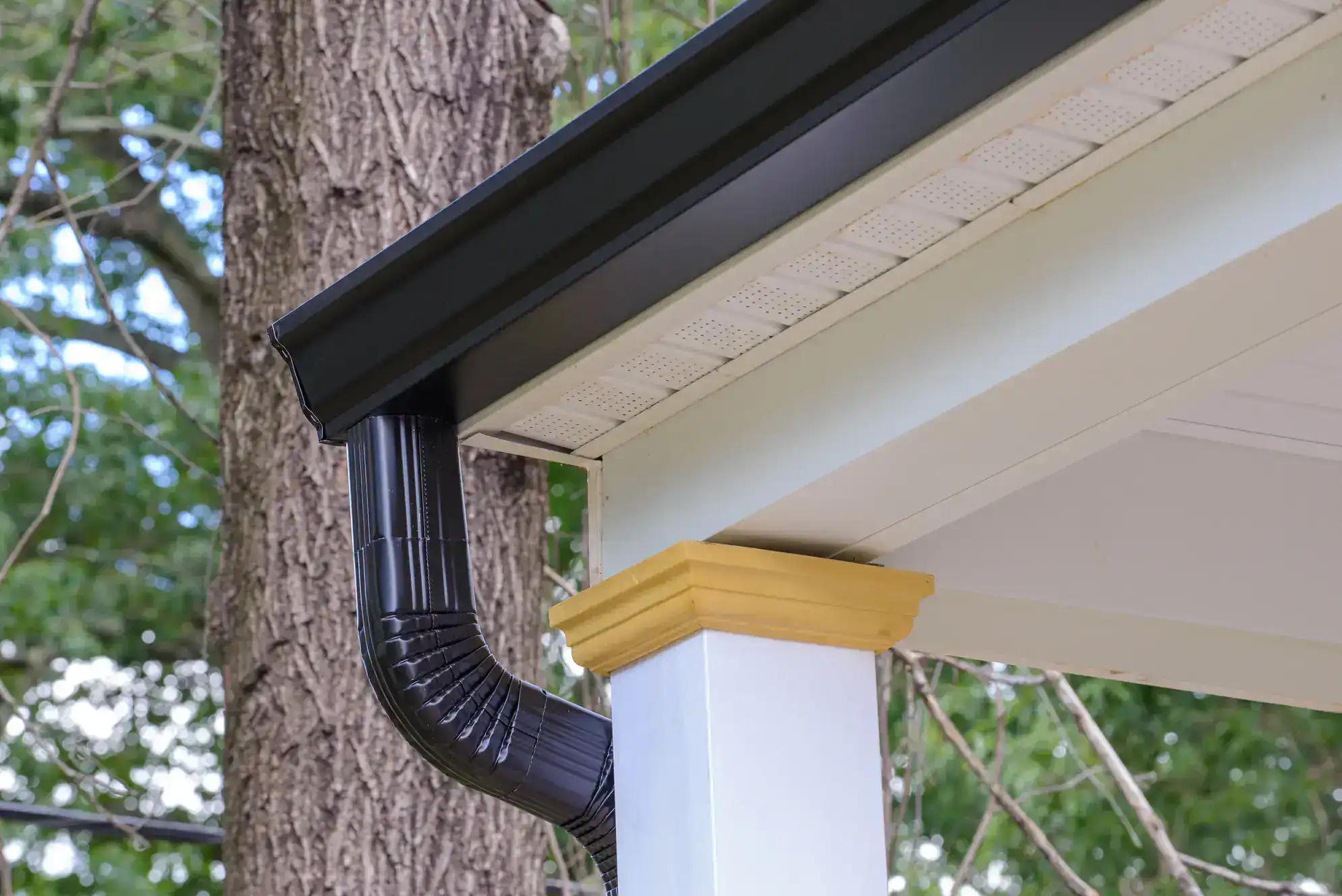
When gutters fail on a home worth over $800,000, the damage doesn’t stay on the roof. Water backs up against fascia boards, seeps into soffits, and eventually finds its way to the foundation. In Closter, where basement moisture issues are common enough that waterproofing companies actively market here, the connection between a failing gutter system and a wet basement is more direct than most homeowners realize.
Closter’s mature tree canopy — the same feature that makes streets like Schraalenburgh Road and Knickerbocker Road so visually distinct — fills gutters fast. Fall debris loads here aren’t just heavy, they’re relentless. A properly installed system with the right slope, the right downspout placement, and the right sizing for your roofline handles that load. An undersized or improperly pitched system just accelerates the problem.
Bergen County’s winters add another layer. Freeze-thaw cycles pull brackets away from fascia, trap ice in clogged sections, and stress every joint in a sectional gutter system. Seamless gutters eliminate most of those joints entirely — which means fewer failure points when the temperature swings 40 degrees in a week, as it regularly does in northern New Jersey.
Gutter Contractors Serving Closter, NJ
We’ve been working on exterior systems across northern New Jersey for over ten years. The company grew through referrals — not paid leads — which means every job in Closter and the surrounding area has to hold up, because the next call often comes from a neighbor who drove past the last one.
The work here is exterior renovation in the fullest sense: roofing, gutters, and siding treated as one connected system, not three separate line items. When our crew visits a Closter home, we’re looking at the whole picture — fascia condition, roofline drainage patterns, downspout discharge points relative to the foundation. That kind of assessment matters on homes built in the 1950s and 1960s, where original materials have had decades to degrade in ways that aren’t always visible from the driveway.
We carry NJ Home Improvement Contractor License #13VH10605800, hold manufacturer certifications from major materials manufacturers, and are registered with the Better Business Bureau. Every estimate is written, itemized, and free — no pressure, no hidden fees.
Home Gutter Installation Process in Closter
It starts with a free inspection. When we visit your Closter home, we’re not just measuring linear footage. We’re checking the fascia boards for rot, evaluating the existing gutter slope, identifying where water is currently discharging relative to your foundation, and assessing whether your downspout count and sizing match the actual water volume your roof produces. On a four- or five-bedroom home — which describes a significant portion of Closter’s housing stock — that assessment often reveals that the original gutters were undersized from the start.
From there, you get a written estimate. Specific, itemized, and honest about what’s included. If we find rotted fascia or soffit damage during the inspection, we’ll tell you before the job starts — not after. That kind of transparency isn’t a sales tactic; it’s just how the job has to go if the end result is going to hold up.
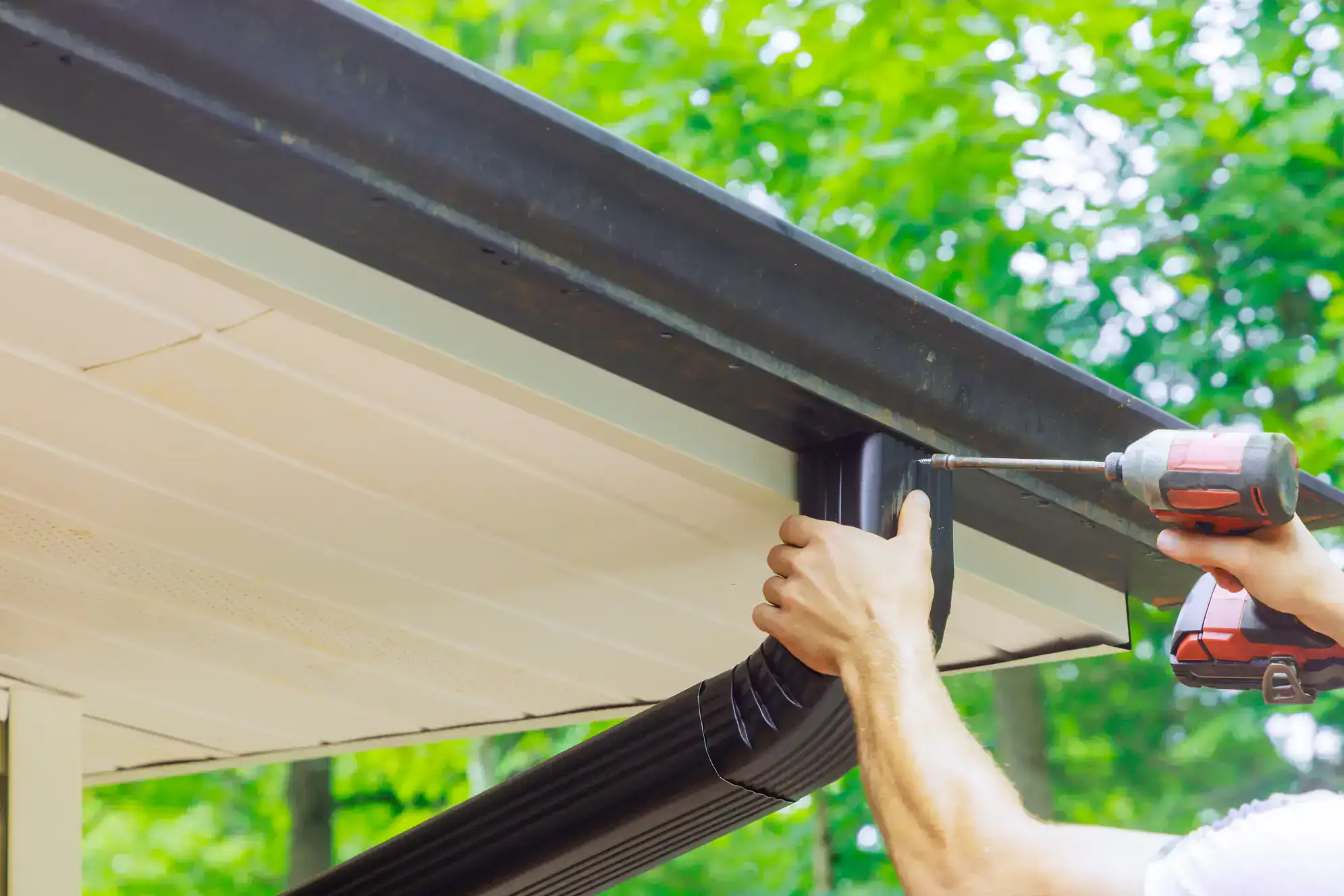
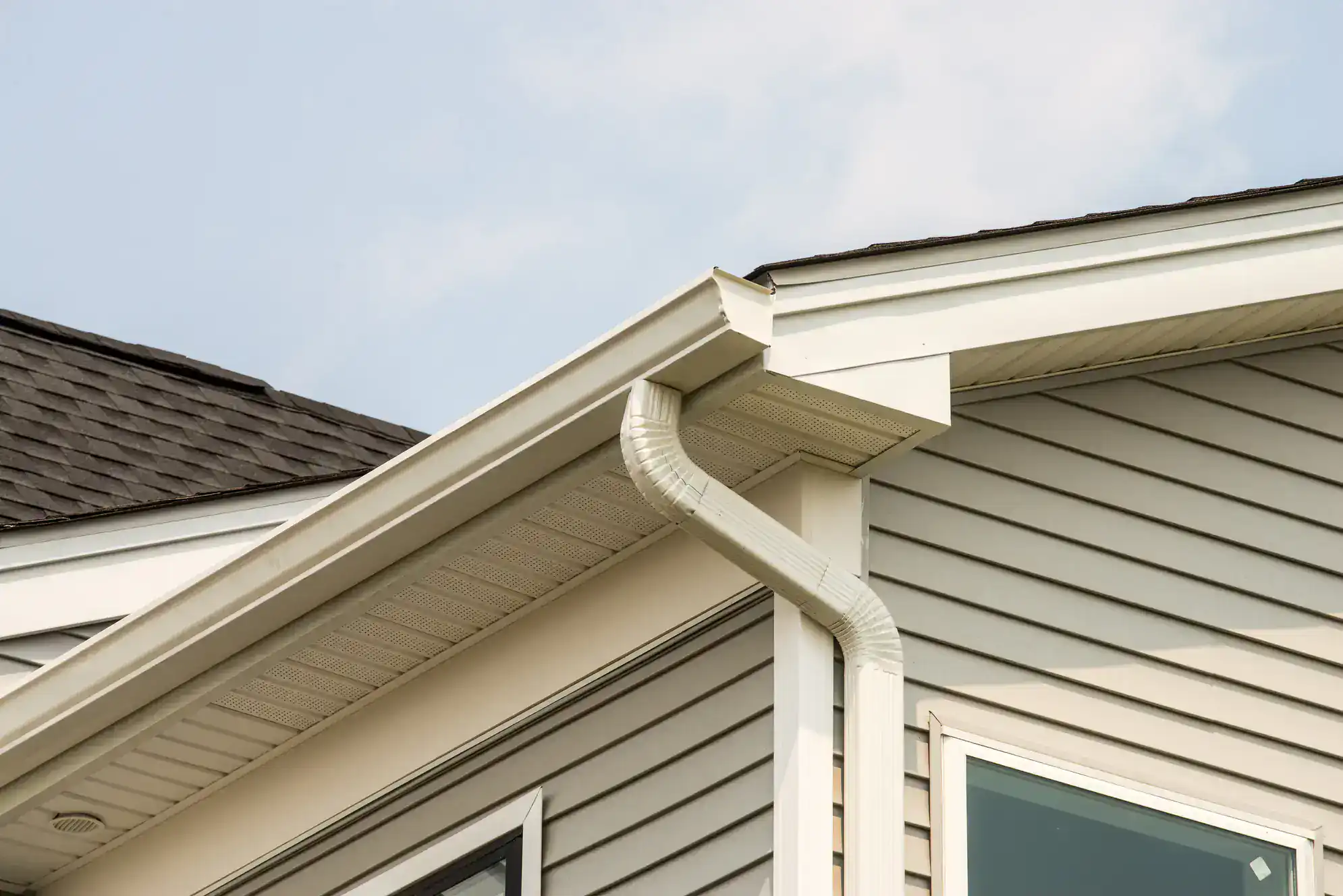
Installation uses seamless aluminum gutters custom-fabricated on-site to your exact measurements. No pre-cut sections, no field splices at arbitrary points. We calculate the proper slope — a quarter inch of drop per ten feet of run — before a single bracket goes up. Downspouts are positioned based on your roof’s drainage pattern and your property’s grading, with discharge extended far enough from the foundation to prevent soil erosion and basement seepage. In Closter, where lots have established landscaping and mature plantings close to the structure, that placement matters.
Ready to get started?
Roof Gutter Installation Company in Closter, NJ
Standard 5-inch gutters were the default when most of Closter’s homes were built. They’re still the default for a lot of contractors today. The problem is that a large colonial or ranch-style home with a substantial roofline sheds significantly more water per rainfall event than a standard gutter run is designed to handle — especially during the kind of summer microbursts that hit Bergen County with little warning and dump several inches of rain in under an hour.
Every gutter installation we perform starts with a sizing calculation based on your actual roof area and pitch, not a one-size-fits-all material order. Seamless aluminum is custom-fabricated on-site, which means the run is continuous from end to end with no mid-section seams where leaks typically start. Color options are available to match or complement your home’s exterior — a detail that matters in a borough where curb appeal directly affects property values that average over $820,000.
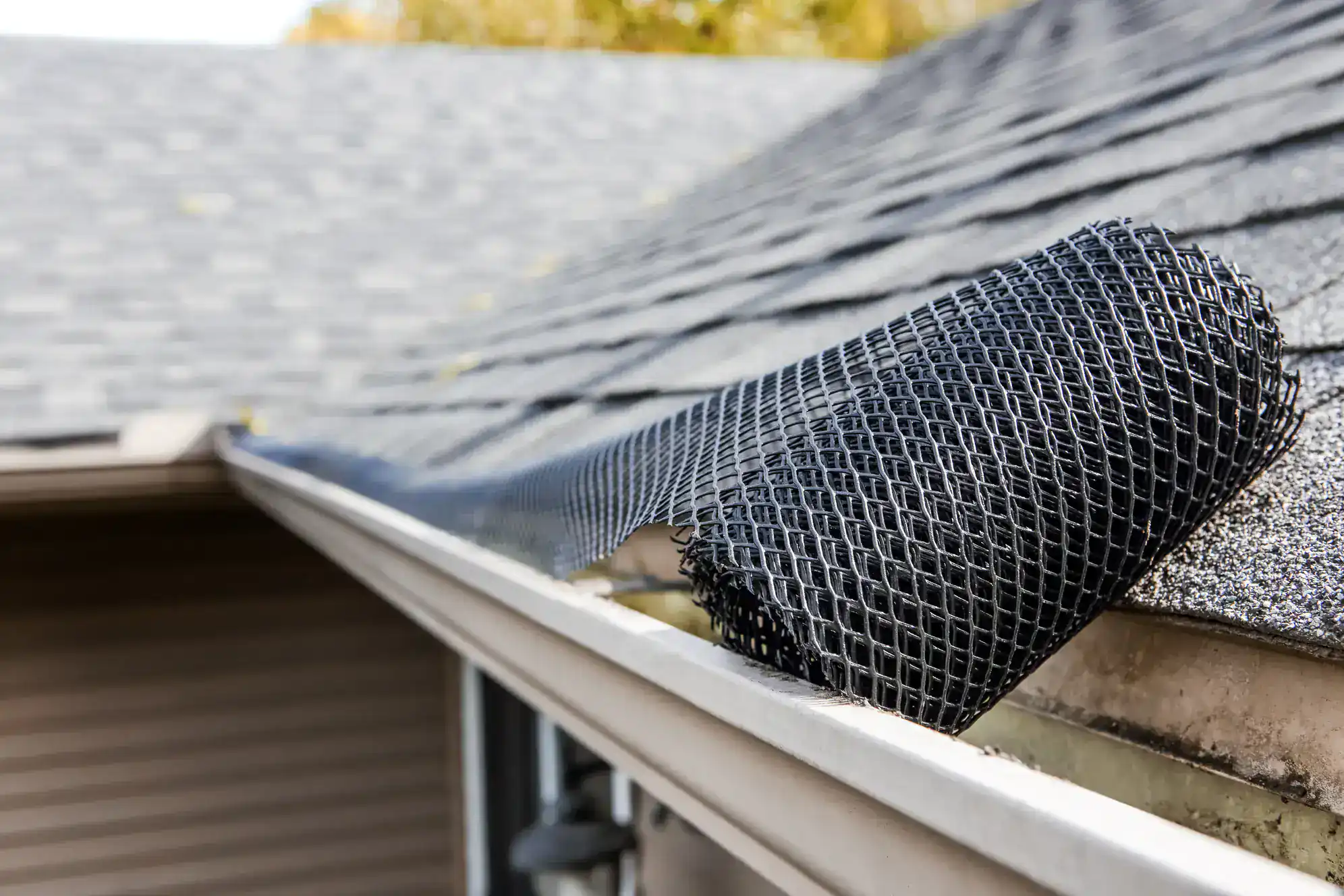
For homes with significant tree coverage — and many Closter properties have exactly that — we can also assess whether gutter protection makes practical sense for your specific situation. If your home sustained storm damage to the existing system, we assist with the insurance documentation process and work directly with your adjuster. All work is performed under NJ HIC License #13VH10605800, which satisfies New Jersey’s state registration requirement for home improvement work in Closter.
How do I know if my Closter home's gutters actually need to be replaced?
The most telling signs are visible, but you have to know what you’re looking for. Gutters that are pulling away from the fascia, sagging between hangers, or showing rust streaks and peeling paint along the exterior wall are past their useful life. If you’re seeing water pooling against your foundation after a heavy rain, or staining on your siding below the gutter line, those are signs the system isn’t moving water the way it should.
On homes built in the 1950s and 1960s — which covers a large portion of Closter’s housing stock — the original gutters are long overdue for replacement even if they look passable from the ground. Sectional aluminum gutters have a lifespan of 20 to 30 years. Galvanized steel, which was common in mid-century construction, starts corroding in 15 to 20 years. If your home hasn’t had a gutter replacement since the Reagan administration, the system is working against you, not for you. A free inspection will tell you exactly where things stand.
What's the difference between seamless gutters and regular sectional gutters?
Sectional gutters come in pre-cut lengths that are joined together on-site. Every one of those joints is a potential leak point — and over time, with seasonal expansion and contraction from New Jersey’s freeze-thaw cycles, those seams open up. Seamless gutters are fabricated in one continuous run from end to end, custom-cut on-site to your exact measurements. There are no mid-section seams, which means dramatically fewer failure points.
For a Bergen County home that goes through 40-degree temperature swings in a single week during winter, that difference is meaningful. Seamless systems also tend to look cleaner on the exterior — no visible lap joints or mismatched sections. They cost more upfront than sectional gutters, but on a home worth over $800,000, the incremental investment in a system that lasts longer and fails less often is straightforward math. Most homeowners in Closter who’ve had both types choose seamless the second time around.
How does Closter's tree canopy affect gutter performance and maintenance?
It affects it significantly. The mature trees that line Closter’s residential streets are one of the borough’s defining characteristics — and they’re also the reason gutters here clog faster and fail sooner than in communities with less established canopy. Fall debris loads are heavy and come in waves. Spring adds a second cycle of pollen, seed pods, and organic material. A gutter that isn’t cleaned at least twice a year in a heavily treed Closter neighborhood will clog, overflow, and start directing water against your fascia and foundation.
Proper installation helps manage this, but it doesn’t eliminate it. Gutter slope and downspout sizing matter — a well-pitched system moves debris-laden water more efficiently than a flat one. For properties with significant tree coverage directly over the roofline, gutter protection systems can reduce maintenance frequency, though they’re not a zero-maintenance solution. During your inspection, we can assess your specific tree coverage and recommend whether protection makes practical sense for your property or whether a regular cleaning schedule is the more cost-effective approach.
Does homeowner's insurance cover storm-damaged gutters in New Jersey?
It depends on the cause of the damage, but in many cases, yes. Homeowner’s insurance in New Jersey typically covers sudden, storm-related damage — wind, falling branches, ice, and hail. Bergen County gets hit regularly: nor’easters, summer microbursts, and ice storms all cause gutter damage, and many Closter homeowners don’t realize their policy may cover the repair or replacement because the damage can look gradual even when it happened in a single event.
What insurance generally doesn’t cover is wear and tear or neglect — gutters that failed because they were never maintained or because they were already at the end of their lifespan. The distinction matters, and it’s one reason documentation is important. We assist with the insurance claim process: we photograph and document the damage, provide a written assessment, and work with your adjuster so you’re not navigating that process alone. If your gutters took damage in a recent storm, it’s worth having the system inspected before you assume you’re paying out of pocket.
What size gutters do I need for a large home in Bergen County?
The standard 5-inch K-style gutter that was installed on most homes built in the 1950s and 1960s was sized for average roof areas and average rainfall intensity. Closter’s housing stock skews large — the borough ranks in the top 2% of American communities for four- and five-bedroom homes — and Bergen County’s summer storm events regularly exceed what “average” rainfall calculations assume. The combination of a large roofline and intense rainfall events means a lot of Closter homes are running undersized gutters right now.
The correct sizing depends on your roof’s square footage, pitch, and the length of each gutter run. A steeper roof sheds water faster and requires higher-capacity gutters. Longer runs need larger downspouts to move the volume without backing up. We calculate this before installation — it’s not guesswork, and it’s not a standard order from a supply house. Getting the sizing right upfront is the difference between a system that handles a heavy rain event and one that overflows every time the sky opens up.
Do I need a permit for gutter installation or replacement in Closter, NJ?
For standard gutter replacement on an existing home in New Jersey, a local building permit is typically not required — gutters are generally treated as maintenance and replacement work rather than new construction. That said, if the project involves structural repairs to fascia or soffit, or if it’s part of a larger exterior renovation, it’s worth confirming with the Closter Building Department before work begins, since permit thresholds can vary by scope.
What is required for any gutter work in Closter — and across all of New Jersey — is that the contractor performing the work be registered as a New Jersey Home Improvement Contractor with the NJ Division of Consumer Affairs. This isn’t optional, and it’s not a technicality. Unlicensed work can void your homeowner’s insurance coverage and manufacturer warranties, and it leaves you with no recourse if something goes wrong after the job is done. We carry NJ HIC License #13VH10605800, which you can verify directly through the state’s online contractor lookup before you commit to anything.