
Roofing Contractor in New Providence, NJ
Mid-Century Homes Here Deserve More Than a Quick Fix
Hear from Our Customers
Local Roofers in New Providence, NJ
A roof replacement or repair isn’t something you think about until you have to. Then suddenly it’s all you can think about — the water stain on the ceiling, the shingle you spotted in the yard after that last nor’easter, the nagging feeling that something’s off up there but you’re not sure how bad. The goal isn’t just to fix it. It’s to get to a place where you stop thinking about it entirely.
When the work is done right, that’s exactly what happens. You’re not wondering whether the crew cut corners. You’re not watching the ceiling every time it rains. Your roof is sealed, ventilated properly, and built to handle what New Jersey winters actually bring — the freeze-thaw cycles, the heavy snow loads that come with sitting at the foot of the Watchung Mountains, and the northwest winds that follow a nor’easter through Union County.
For homeowners in New Providence specifically, there’s another layer to this. A lot of these homes are on their second roof cycle, sometimes with aging underlayment and flashings that have been through 60-plus winters. Getting a proper assessment — not a sales pitch — changes everything. You find out what you’re actually dealing with, what it’s going to cost, and what it looks like when it’s done. That clarity is worth more than most people realize before they have it.
Reputable Roofing Contractors in New Providence, NJ
We’ve been doing exterior work across Union County for over 17 years, with deep roots in New Providence and surrounding communities like Berkeley Heights, Summit, and Mountainside. That kind of track record doesn’t happen by accident — it happens because the work holds up, the estimates are honest, and we’re still the ones responsible for what goes on your home.
New Providence isn’t a generic suburban market — it’s a community with a specific housing stock, specific weather exposure, and homeowners who do their research before making a call. We know that going in. We understand the mid-century construction that dominates the borough, the ice dam risk that comes with homes built at the base of the Watchung ridge, and the nor’easter wind loads that test roofing systems every few years.
We carry certifications from major shingle manufacturers, full licensing and insurance under New Jersey’s Home Improvement Contractor requirements, and we offer a free inspection policy with no obligation attached. These aren’t bonuses — they’re the baseline for what a reputable roofing contractor in New Providence should bring to the table.
Roof Repair in New Providence, NJ
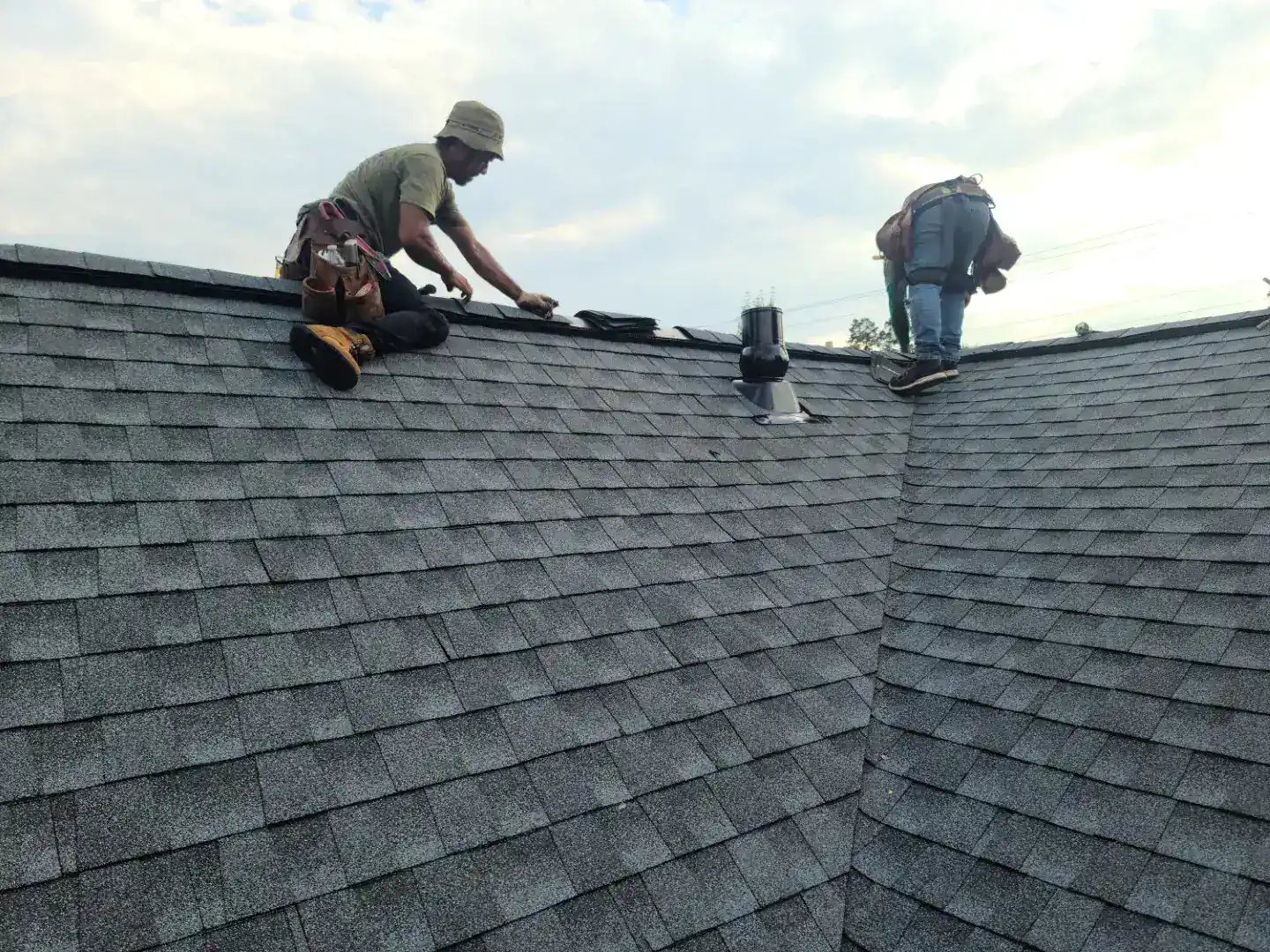
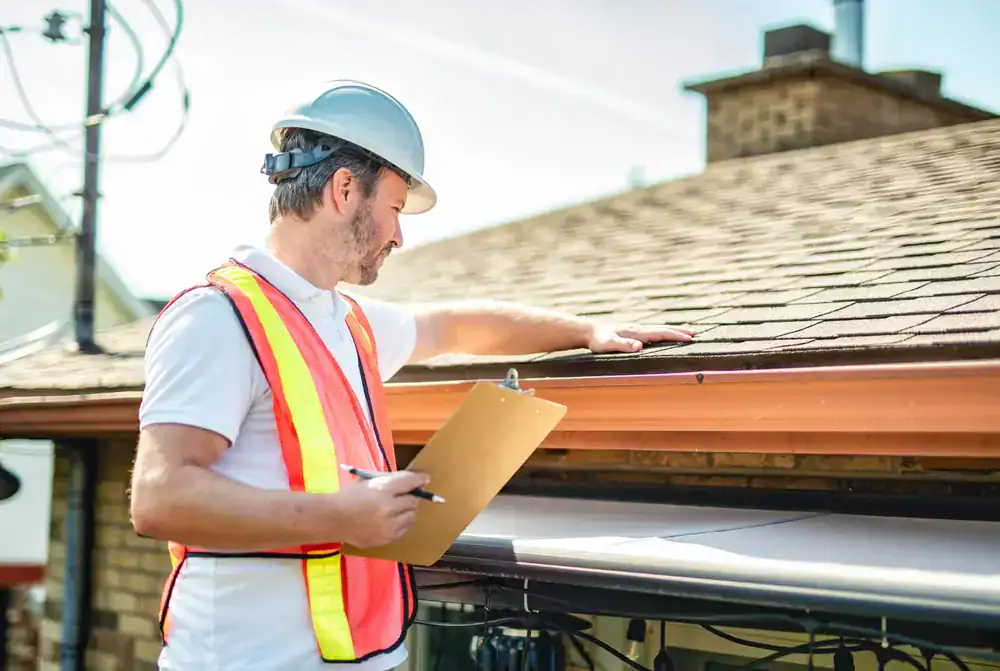
It starts with a free inspection. We come out, get on the roof, and give you an honest read on what’s actually going on — not what’s most profitable to recommend. For a lot of New Providence homeowners with homes built in the 1950s or 60s, this is where you find out whether you’re looking at a targeted repair or whether the roof has reached the end of its useful life. Either answer is a good one, because now you know.
From there, you get a written estimate that reflects the actual scope of work. No hidden line items that appear after the tear-off starts. If the decking needs attention once the old material is removed, that conversation happens before the project moves forward — not after. In New Providence, a full roof replacement requires a building permit through the borough, and we handle that process. The permit gets pulled, the inspection gets scheduled, and you get documentation that matters if you ever sell the home.
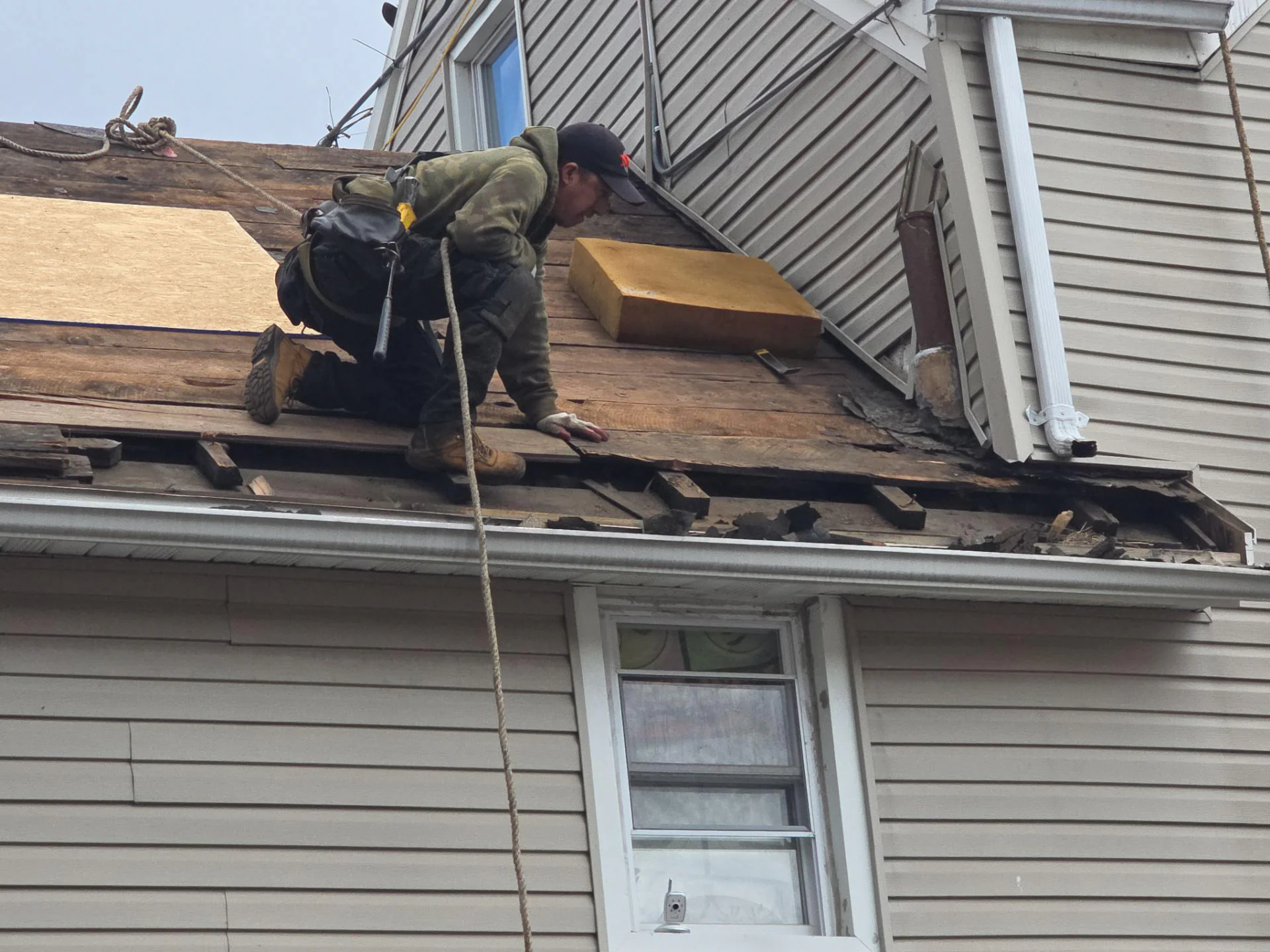
Installation follows a clear sequence — tear-off, deck inspection and any necessary repairs, ice and water shield in the vulnerable zones along the eaves and valleys, underlayment, and then the new roofing material. For a home sitting at the base of the Watchung ridge, proper ice and water protection isn’t optional. It’s what prevents the freeze-thaw damage that shows up as leaks two winters later. When the job is done, the site gets cleaned up and you get the warranty documentation in hand.
Ready to get started?
Metal Roofing Contractors in New Providence, NJ
Not every job is a full replacement, and we don’t treat it like one. Small roof repairs in New Providence, NJ — a few blown shingles from a storm, a flashing leak around a chimney, a small section of damaged decking — are handled directly without pushing you toward a larger project. If a repair is the right call, that’s what we recommend. If the roof has genuinely reached the point where repairs are just buying time, you’ll hear that too, with the reasoning behind it.
For full replacements, the material options go beyond standard asphalt. Architectural shingles are the most common choice for New Providence’s residential stock — they’re rated for the wind speeds that come with nor’easters and carry longer warranties than three-tab shingles. Metal roofing is a growing option here, and for good reason. A metal roof installed on a mid-century home in New Providence can last 40 to 70 years, sheds snow and ice more readily than asphalt, and reduces the ice dam risk that older homes with limited attic insulation are particularly prone to.
We also handle gutter installation and repair and siding work. In a neighborhood like New Providence — where mature trees line most residential streets and drop debris onto roofs and into gutters year-round — having one contractor responsible for the full envelope means there’s no gap in accountability when something crosses trade lines.
Do I need a permit to replace my roof in New Providence, NJ?
Yes, in New Providence a full roof replacement requires a building permit through the borough’s building department. New Jersey operates under the Uniform Construction Code, which applies statewide, and a tear-off and re-roof falls within the scope of work that requires permit approval and a follow-up inspection. This isn’t just a formality — the inspection creates a record that the work was done to code, which matters when you go to sell the home. An unpermitted roof replacement can create real complications during a title search or buyer inspection on a property valued near $1 million.
We handle the permit process as part of the project. You don’t need to navigate the borough’s building department on your own. The permit gets pulled before work starts, the inspection gets scheduled, and you receive documentation at the end. If you’re getting quotes from other contractors and the permit isn’t mentioned, that’s worth asking about directly.
How do I know if my roof needs to be replaced or just repaired?
The honest answer is that you usually can’t tell from the ground, and even what you can see doesn’t always tell the full story. A few missing shingles after a storm might be a simple repair. But if the underlying decking is soft, the underlayment has failed, or the flashings around your chimney or skylights have been leaking slowly for years, a repair is just patching over a deeper problem.
This is exactly why the free inspection matters. For a New Providence home built in the 1950s or 60s, a proper roof assessment looks at more than the surface — it looks at the decking condition, the ventilation, the state of the flashings, and whether the existing structure is sound enough to support a new layer of material. You get a clear recommendation with the reasoning behind it, not a default push toward the most expensive option. Some roofs genuinely need full replacement. Others just need targeted work. The inspection tells you which one you’re dealing with.
What causes ice dams, and are New Providence homes especially at risk?
Ice dams form when heat escaping from the living space warms the roof deck, melts the snow sitting on it, and that meltwater runs down to the colder eaves where it refreezes. Over time, the ice buildup forces water back up under the shingles and into the structure — which is how you end up with water stains on interior ceilings that don’t appear until weeks after the storm that caused them.
New Providence homes are more prone to this than people realize. The borough sits at the foot of the Second Watchung Mountain, which means heavier snowfall than lower-lying parts of Union County and colder overnight temperatures that accelerate refreezing. And because most of the housing stock here was built in the 1940s through the 1960s, attic insulation is often below modern standards — which means more heat escaping through the roof deck. A proper installation addresses this directly: ice and water shield along the eaves and in the valleys, a ventilation assessment, and flashings installed to handle the conditions that come with a New Jersey winter at this elevation. That’s not an upgrade — it’s how the job should be done here.
How much does a roof replacement cost in New Providence, NJ?
Most residential roof replacements in the New Providence area fall somewhere between $15,000 and $27,000, with the national average landing around $21,000. That range shifts based on the size of the roof, the pitch, the material you choose, whether the decking needs repair once the old material comes off, and the current cost of labor and materials in New Jersey. Union County labor rates run higher than national averages, so it’s worth getting a local estimate rather than relying on a national calculator.
What affects the number most is the condition of what’s underneath. A straightforward tear-off and replacement on a home with solid decking costs less than a job where the decking has been compromised by years of slow moisture intrusion — which is a real possibility on a home that’s been through 60 New Jersey winters. The free inspection is where you find out what you’re actually working with before any number gets put in front of you. The written estimate you receive after that reflects the full scope, so you’re not discovering additional costs mid-project.
Is metal roofing a good option for older homes in New Providence?
For a lot of New Providence homeowners, it’s worth a serious look. A metal roof installed today on a mid-century home can last 40 to 70 years, which means it may genuinely be the last roof that home ever needs. That’s a different kind of value calculation than a 25-to-30-year asphalt shingle roof — especially if you’re planning to stay in the home long-term or want to reduce the maintenance burden on a property you’re holding as an investment.
The practical benefits for this area are real. Metal sheds snow and ice more readily than asphalt, which reduces ice dam risk — a meaningful advantage on older New Providence homes with limited attic insulation. It handles nor’easter wind events well, and modern standing seam and metal shingle profiles look appropriate on the Colonial, Cape Cod, and split-level homes that make up most of the borough’s residential stock. The upfront cost runs higher than asphalt, but the longevity, reduced maintenance, and energy efficiency gains over time close that gap for a lot of homeowners. It’s a conversation worth having during the inspection.
How do I find a reputable roofing contractor in New Providence, NJ I can actually trust?
Start with the basics that are actually verifiable. In New Jersey, any contractor doing home improvement work over $500 is required to be registered as a Home Improvement Contractor with the NJ Division of Consumer Affairs — that registration requires proof of liability insurance and workers’ compensation coverage. You can look up a contractor’s HIC registration number on the state’s website. If a contractor can’t provide that number, that tells you something important before you’ve spent a dollar.
Beyond licensing, look for manufacturer certifications. Fewer than 5% of roofing contractors nationwide qualify for certifications from major shingle manufacturers like GAF or CertainTeed — and those certifications aren’t just a badge. They unlock extended warranties that non-certified installers can’t offer, which matters significantly on a home in New Providence where values run close to $1 million. Reviews matter too, but read them for specifics — not just star ratings. A contractor with 40 detailed reviews describing clean jobsites, honest assessments, and accurate estimates tells you more than one with 200 generic five-stars. We check all of these boxes and offer a free inspection with no obligation, so you can evaluate the work and the communication before you commit to anything.
Other Services we provide in New Providence