
Roofing Contractor in Cranford, NJ
Cranford's Older Homes Deserve More Than a Generic Roofing Bid
Hear from Our Customers
Local Roofers in Cranford, NJ
A roof that’s properly assessed, properly installed, and backed by real manufacturer certifications doesn’t just stop leaks — it protects a home that’s worth protecting. In Cranford, where median home values are pushing $700,000 and above, that’s not a small thing.
The Rahway River corridor runs right through Cranford. Flooding events here aren’t rare — they’re documented, recurring, and sometimes severe. When a nor’easter or a summer storm rolls through and water finds its way in, the condition of your roof determines how bad the damage gets. Flashing failures on older chimneys, deteriorated valleys, lifted shingles from high winds — these aren’t abstract risks on a 1930s colonial on the Northside. These are the calls we get every spring.
When the work is done correctly, you stop thinking about your roof. You’re not watching the ceiling after every storm. You’re not wondering if that small stain is getting bigger. You have a clear record of permitted work, a transferable manufacturer warranty, and a contractor you can reach if something comes up. That’s the actual outcome — not just a new roof, but the peace of mind that comes with knowing it was done by someone who understood your home from the start.
Reputable Roofing Contractors in Cranford, NJ
We’ve been working throughout Union County for over 17 years — on the same types of homes that line Cranford’s streets, from the pre-war colonials near the Orchard Street Historic District to the mid-century ranches closer to the Clark border. This isn’t a company that showed up after the last big storm and will be gone before the next one.
We’re family-owned, fully licensed under New Jersey’s Home Improvement Contractor registration, and certified by major shingle manufacturers — certifications that aren’t self-awarded and that unlock extended warranties most contractors in this area simply can’t offer. Every project comes with a free inspection, transparent pricing, and a crew that’s been doing this work long enough to know what older Cranford homes actually need.
When you call, you’re not getting a call center. You’re getting a contractor who has worked throughout Cranford, knows the township’s permit requirements under Chapter 186 of the construction code, and will tell you honestly whether you need a repair or a full replacement.
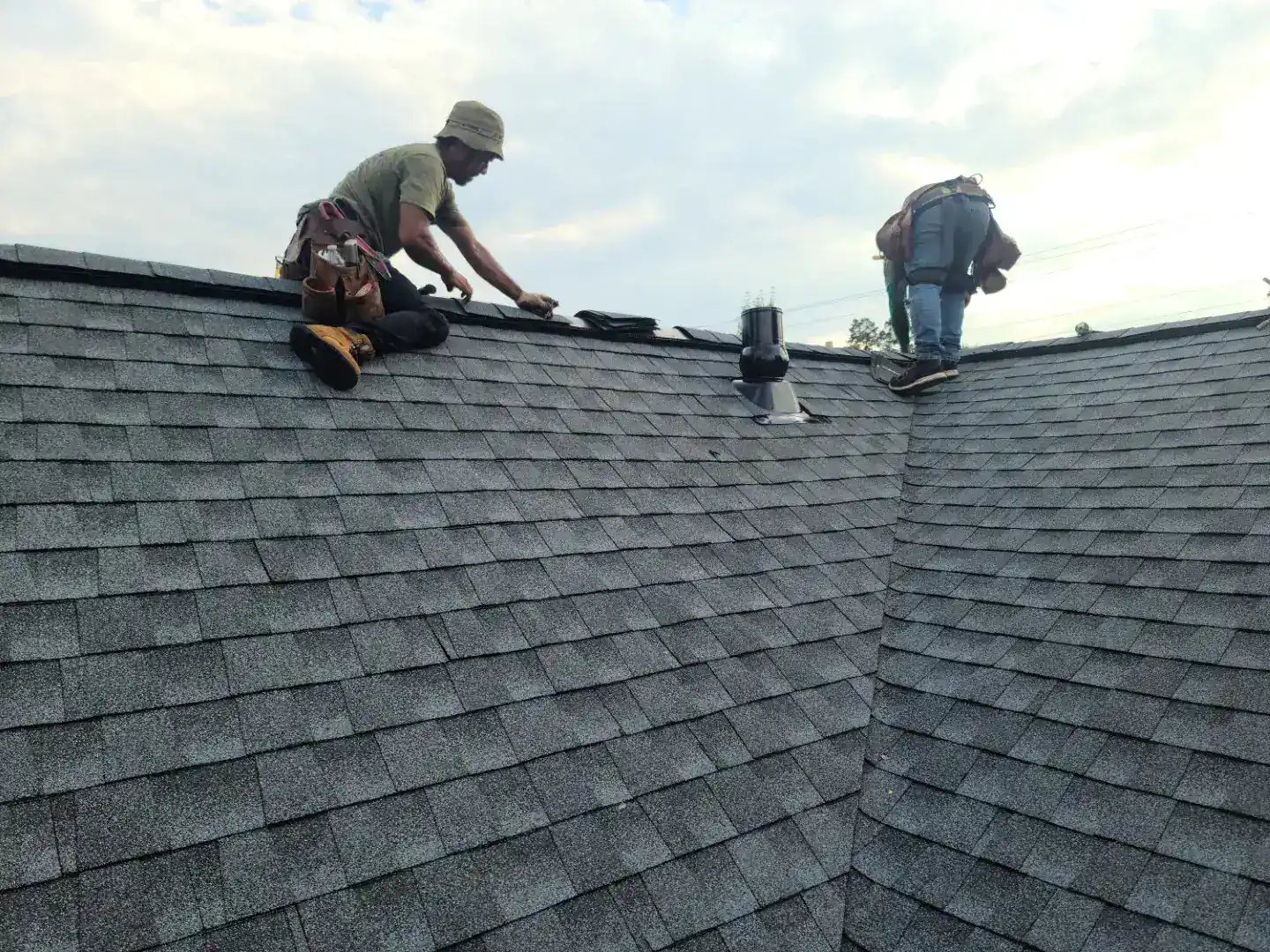
Roof Repair in Cranford, NJ
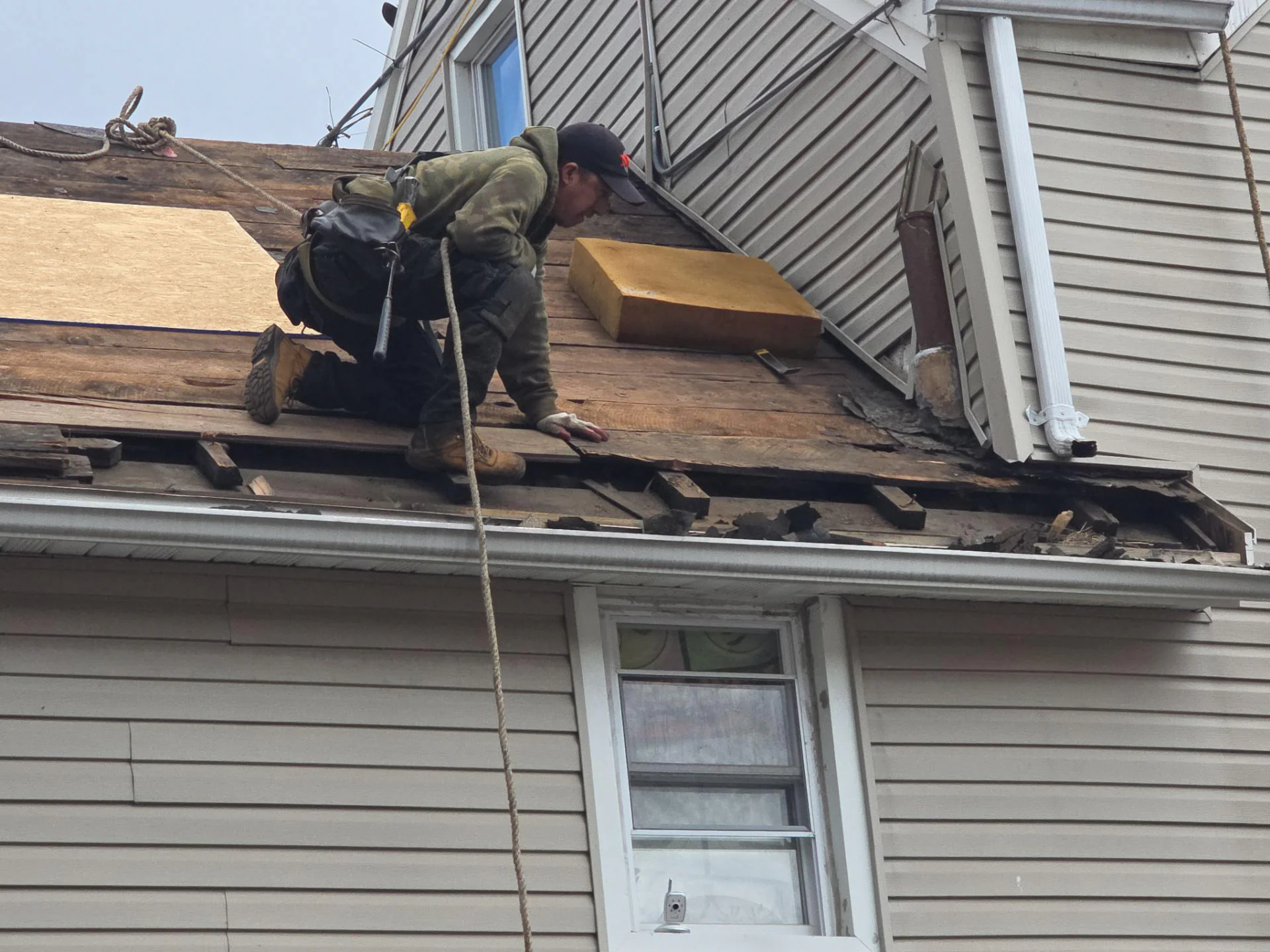
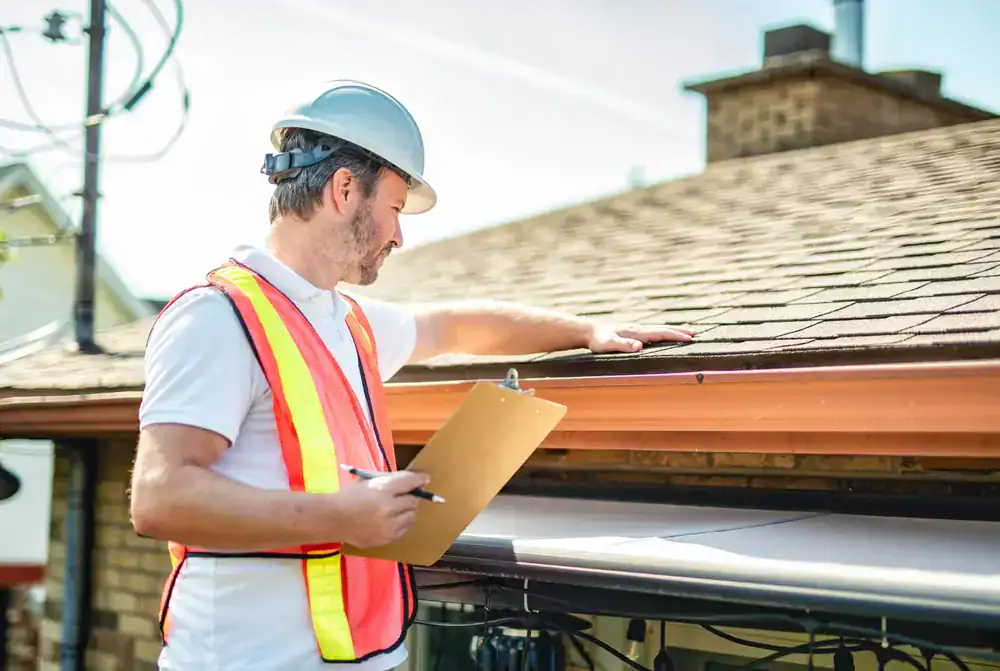
It starts with a free inspection. We come out, get on the roof, and look at what’s actually happening — not what’s easiest to sell. For a lot of Cranford homes, that means checking original board sheathing, aging chimney flashing, attic ventilation that may not meet current standards, and any soft spots in the decking that suggest long-term moisture exposure. If you’re in one of the flood-adjacent zones near Springfield Avenue or South Union Avenue, we’re looking at those lower roof sections and soffit areas with extra attention.
After the inspection, you get a clear, written estimate. No vague line items, no “we’ll figure it out once we’re up there” language. If the job requires a permit — and in Cranford, roof replacements do require one under the township’s construction code — we handle that as part of the process. You don’t need to navigate the Construction Office on your own.
Once the work starts, the timeline is set and communicated upfront. We know Cranford homeowners are often commuting to Newark or the city — you shouldn’t have to take a day off to manage a roofing crew. The job gets done, the site gets cleaned up, and you get documentation of everything: the permit, the warranty, the materials used. That’s the process, every time.
Ready to get started?
Metal Roofing Contractors in Cranford, NJ
Cranford gets the full range — nor’easters, summer hail, freeze-thaw cycles through January and February, and the occasional tropical storm remnant that dumps several inches of rain into the Rahway River basin in a matter of hours. Tropical Storm Floyd put over ten inches of rainfall through that watershed. Your roof needs to be built for that reality, not a mild climate somewhere else.
For most Cranford homeowners, asphalt shingles remain the right call — durable, cost-effective, and available with manufacturer-backed warranties that extend significantly when installed by a certified contractor like us. For homes in Cranford West, where property values regularly exceed a million dollars, or for homeowners who want the last roofing decision they’ll ever make, metal roofing is worth a serious conversation. We install metal systems with a 40-to-70-year lifespan, strong wind resistance, and energy efficiency that can meaningfully reduce cooling costs through a Cranford summer.
Beyond roofing, we handle gutters and siding as part of the same scope when needed. That matters because storm damage in Cranford rarely stops at the shingles — it hits the fascia, the gutters, and sometimes the siding below. One contractor handling all of it means one point of accountability, not three separate calls and three separate timelines.
Do I need a permit for roof replacement in Cranford, NJ?
Yes — Cranford Township requires a building permit for roof replacement work. Under Chapter 186 of the township’s construction code, your permit application needs to include a detailed cost estimate covering labor, materials, and contractor profit, and the Construction Official reviews it against the Means Cost Data Guide. A copy of the contractor’s proposal is required with the application, along with documentation of the contractor’s NJ Home Improvement Contractor license.
This isn’t just a formality. Unpermitted roofing work in Cranford can create real problems when you go to sell your home — title companies flag it, buyers ask questions, and it can delay or complicate a closing. If your roof replacement also involves structural work like decking replacement or ventilation upgrades, the permit application needs to include details on materials, sheathing type, and attic ventilation layout. We handle the permit process as a standard part of every job, so you’re not left navigating the Construction Office on your own.
How much does a roof replacement cost for a Cranford, NJ home?
For most single-family homes in Cranford, a full roof replacement runs somewhere between $15,000 and $27,000, with the national average sitting around $21,000 in 2025. Where your project lands in that range depends on the size of the roof, the pitch, the materials you choose, and the condition of what’s underneath — specifically the decking.
Cranford’s housing stock skews older, with nearly a third of homes predating 1940. On those properties, it’s not uncommon to find original board sheathing rather than plywood, which affects both the installation approach and the overall cost. Chimney flashing replacements, ventilation upgrades, and any decking repairs discovered during tear-off can also affect the final number. That’s why we do a thorough free inspection before giving you a written estimate — so the number you see upfront is the number you can plan around, not a starting point that grows once the job is underway.
How do I know if I need a full roof replacement or just a repair?
The honest answer is: it depends on the age of the roof, the extent of the damage, and what’s happening underneath the surface. A few missing shingles after a nor’easter might be a straightforward repair. But if the shingles are 20-plus years old, the granule loss is significant, and there’s soft decking underneath, patching the surface doesn’t fix the underlying problem — it delays it.
For Cranford’s older homes, this distinction matters more than it does on newer construction. A roof that’s been through multiple freeze-thaw cycles, has aging chimney flashing, and sits on a home with inadequate attic ventilation may look okay from the street but have real structural concerns underneath. That’s exactly what the free inspection is for — to give you an honest assessment of what the roof actually needs, not what generates the largest invoice. If a repair is the right call, that’s what we’ll tell you.
What roofing issues are most common after storms in Cranford, NJ?
The most frequent post-storm calls we get from Cranford homeowners involve missing or lifted shingles from high winds, flashing failures around chimneys and roof valleys, and ice dam formation on homes with older attic ventilation systems. The mature tree canopy throughout Cranford’s historic neighborhoods — particularly around the Northside and downtown corridor — also means branch impact damage is a real and recurring issue during nor’easters.
For homes near the Rahway River flood zones — streets like South Union Avenue, Springfield Avenue, and Fairfield Avenue — storm events often mean water is coming from multiple directions at once. A roof that has any existing vulnerabilities, even minor ones, can allow significant water intrusion when it’s dealing with both wind-driven rain from above and rising moisture from below. Getting a post-storm inspection done quickly matters, both for catching damage early and for documenting it properly if an insurance claim is involved.
Is metal roofing a good option for older homes in Cranford, NJ?
For the right home and the right homeowner, yes — and Cranford has a lot of both. Metal roofing’s 40-to-70-year lifespan means that on a home that’s already been re-roofed two or three times in its 80-year history, it may genuinely be the last roofing decision the owner ever makes. It handles wind and hail well, sheds snow and ice more effectively than asphalt, and can reduce cooling costs meaningfully during Cranford’s summer months.
The caveat is installation. Metal roofing requires precise work — improper fastening, poor flashing details, or incorrect panel overlap can create leak points that are difficult to diagnose and expensive to fix. It also requires a contractor who actually installs metal systems regularly, not one who does it occasionally. For homeowners in Cranford West, where property values regularly exceed a million dollars, or anyone looking at their home as a long-term investment, it’s worth having the conversation during your free inspection to see if metal makes sense for your specific roof geometry and budget.
How do I find a reputable roofing contractor in Cranford, NJ I can actually trust?
Start with the basics that are actually verifiable. A reputable roofing contractor in Cranford should carry a current NJ Home Improvement Contractor license — you can look this up through the NJ Division of Consumer Affairs. They should carry liability insurance and workers’ compensation coverage, and they should be willing to pull permits for your job rather than suggesting you skip that step. Manufacturer certifications from brands like GAF or CertainTeed are also worth asking about specifically, because those certifications require documented training and quality standards — they’re not self-issued.
Beyond credentials, pay attention to how a contractor communicates before you’ve hired them. Do they show up for the inspection on time? Do they give you a written estimate with clear line items? Do they explain what they found without pressuring you into a decision? A contractor who’s been working in Union County for 17-plus years and built their reputation on customer reviews rather than advertising volume is a different animal than a storm-chasing operation that appeared in your neighborhood last week. Longevity in this market is itself a signal — it means past customers were satisfied enough that the business is still standing.
Other Services we provide in Cranford