
Roof Inspection in Cranford, NJ
Cranford's Older Homes Deserve More Than a Glance From the Driveway
Hear from Our Customers
Roof Damage Inspection in Cranford, NJ
Most homeowners in Cranford don’t find out their roof has a problem until there’s a stain on the ceiling or a contractor knocking on their door after a storm. A professional roof damage inspection in Cranford, NJ changes that dynamic entirely. You get a clear, documented picture of your roof’s condition — what’s holding up, what needs attention, and what can wait — before small issues turn into structural ones.
With 75.5% of Cranford’s housing stock built before 1960, a large portion of roofs in this township are working well past their original design life. Pre-war construction often means original or early-replacement decking, aging flashing at chimneys and dormers, and insulation that doesn’t meet modern standards — all of which accelerate wear in ways that aren’t visible from the ground. An inspection that goes beyond the surface catches those issues while they’re still manageable.
Cranford’s relationship with the Rahway River adds another layer. After events like Hurricane Irene or Tropical Storm Ida — which sent the FEMA Disaster Recovery Center to the Cranford Community Center on Walnut Street — many homeowners discovered roof damage weeks after the storm, long after the window for a clean insurance claim had narrowed. A timely roof inspection in Cranford, NJ after any significant weather event gives you the documentation you need and the answers you deserve.
Licensed Roof Inspector in Cranford, NJ
We’ve been serving homeowners across Union County for over a decade, with a focus on roofing, gutters, and siding for the kind of older, high-value residential properties that make up the backbone of Cranford and surrounding communities. We’re family-operated, properly licensed with the New Jersey Division of Consumer Affairs, and certified by major shingle manufacturers — credentials that fewer than 3% of roofing contractors in the country hold.
What that means practically is that when a licensed roof inspector from USA Home Remodeling shows up at a home near the Rahway River corridor or in Roosevelt Manor, we’re not running through a generic checklist. We understand what pre-1960 construction looks like from the inside out, what Union County winters do to aging shingles over time, and what documentation an insurance adjuster actually needs to process a weather-related claim.
Our business has grown almost entirely through reviews and referrals — not advertising. In a community like Cranford, where neighbors talk and word travels fast, that track record means something.

Roof Inspection Company in Cranford, NJ
It starts with a call or a quick form submission — no pressure, no obligation. Once you schedule, a certified inspector comes to your Cranford home at a time that works for you. Given how many residents here commute via the Raritan Valley Line into Newark or New York, flexibility in scheduling matters, and we work around your availability.
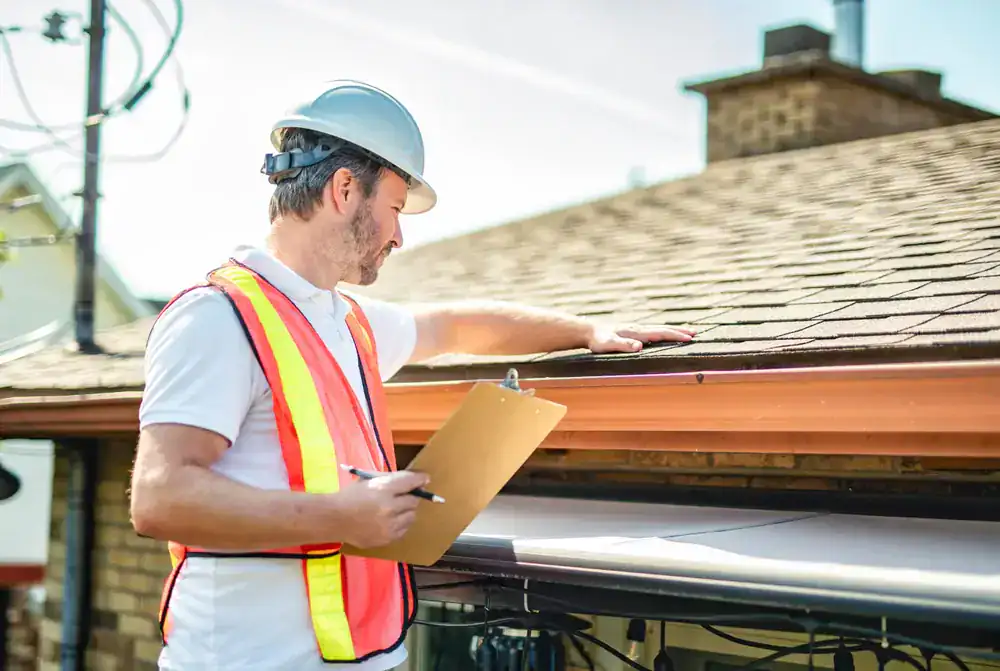
On-site, our inspector does a full exterior assessment — shingles, flashing, ridge, valleys, gutters, and all penetrations like chimneys and vents. For older homes, which make up the majority of Cranford’s housing stock, that also means checking the condition of the decking and evaluating attic ventilation, since inadequate ventilation is one of the leading causes of premature roof failure in pre-1960 construction. Homes near the Rahway River corridor get particular attention to moisture intrusion and underlayment condition, given the area’s documented history of flood-adjacent humidity issues.
After the inspection, you get a clear, honest summary of what we found. If a permit is required for any recommended repair or replacement work, we handle the submission to Cranford’s Building Department at 364 North Avenue East — you don’t have to navigate that process alone. If the roof is in good shape, we’ll tell you that too. Our goal is the right answer, not the biggest job.
Ready to get started?
Certified Roof Inspector in Cranford, NJ
A roof inspection in Cranford, NJ from USA Home Remodeling covers the full exterior envelope — not just a quick look at the shingles. Our inspector evaluates shingle condition and granule loss, flashing integrity at all penetrations and transitions, fascia and soffit condition, gutter attachment and drainage, ridge and hip wear, and visible decking where accessible. For homes with chimneys — common on Cranford’s older Colonial and Victorian-era stock — flashing and mortar condition around the chimney base get specific attention, since that’s one of the most frequent sources of slow leaks in pre-war construction.
Because we also handle gutters and siding, the inspection naturally extends to those systems as well. Storm damage in Union County rarely hits just one surface — wind and hail events often affect the roof, gutters, and siding simultaneously, and catching all of it in a single visit saves time and prevents gaps in your insurance documentation.
For homeowners dealing with a roof leak inspection in Cranford, NJ after a named storm or a heavy nor’easter, the written report we produce after the inspection is formatted to support an insurance claim — with photographs, findings, and a professional assessment that holds up when the adjuster reviews it. If you’re preparing to list a home on Cranford’s active real estate market, where median detached home values sit near $653,000, that same documentation gives buyers and their inspectors a clear picture of the roof’s condition upfront.

How do I know if my Cranford home needs a roof inspection right now?
The honest answer is that most roofs don’t give obvious warning signs until the damage is already significant. If your home was built before 1960 — which is the case for more than three out of four homes in Cranford — and you haven’t had a professional inspection in the last three to five years, that alone is reason enough to schedule one. Asphalt shingle roofs have a typical lifespan of 20 to 30 years, and many homes in Cranford may be on their second or third roof system by now, with the most recent installation potentially dating back to the late 1990s or early 2000s.
Beyond age, specific triggers that warrant an immediate roof damage inspection in Cranford, NJ include any recent storm event — particularly given the township’s history with Tropical Storm Ida, Hurricane Irene, and the flash flooding that hit streets like Springfield Avenue and South Avenue as recently as July 2025. Interior ceiling stains, granules accumulating in your gutters, or visible shingle curling at the edges are all signs that something is happening above you that needs a professional set of eyes.
What's the difference between a certified roof inspector and a regular contractor?
A certified roof inspector has completed manufacturer-specific training programs and met ongoing licensing, insurance, and customer satisfaction requirements set by major shingle brands. That matters for a few practical reasons. First, a certified contractor can offer manufacturer-backed warranty packages that an uncertified contractor legally cannot — meaning if you replace your roof through a certified company, your warranty coverage is broader and more enforceable. Second, the training behind certification means the inspector knows what compliant installation looks like and can spot deviations from it, which is particularly relevant when assessing older roofing work on Cranford’s pre-1960 housing stock.
For a home valued near $650,000 — which is close to Cranford’s median for detached single-family properties — the difference between a certified and uncertified contractor is the difference between a fully protected investment and one with a warranty that may not hold up when you need it. Working with a licensed roof inspector in Cranford, NJ who also holds manufacturer certification gives you both the legal compliance and the warranty coverage that a high-value property deserves.
Can a roof inspection help with an insurance claim after a storm in Cranford?
Yes — and in many cases, it’s the most important step you can take after a weather event. Insurance adjusters work for the insurance company, and their assessment of storm damage doesn’t always align with what a licensed contractor finds on the roof. A professional roof damage inspection in Cranford, NJ produces written documentation — with photographs and detailed findings — that gives you an independent record of what the storm actually did to your roof. That documentation carries real weight in the claims process.
Cranford has a well-documented storm history. Tropical Storm Ida in 2021 caused significant damage across Union County, and the township has dealt with repeated flooding events tied to the Rahway River for decades. If your home was affected by any named storm, a nor’easter, or even a severe summer thunderstorm, getting a professional inspection before the adjuster’s visit — or immediately after — puts you in a much stronger position. A roof inspection company in Cranford, NJ that provides claim-ready documentation is a practical tool that protects your investment.
Do I need a permit for roof replacement work in Cranford, NJ?
Yes. Roof replacement in Cranford requires a building permit under New Jersey’s Uniform Construction Code, administered locally through Cranford’s Building Department at 364 North Avenue East. The permit process requires a project valuation that includes all labor, materials, and contractor costs — and the Construction Official can review and adjust submitted values, so accuracy matters. Skipping the permit process isn’t just a code violation; it can create problems with your homeowner’s insurance coverage and complicate a future home sale.
For properties located near the Rahway River in Cranford’s floodplain, additional requirements under Chapter 225 of the Cranford Township Code — the township’s Flood Damage Prevention ordinance — may apply. Cranford takes an aggressive approach to floodplain regulation, and roof replacement on flood-zone properties may need to meet specific compliance standards. We handle permit submissions as part of the project, so the paperwork side is covered.
How often should a homeowner in Cranford schedule a roof inspection?
The general recommendation for most residential roofs is once every two to three years under normal conditions, and after any significant storm event regardless of when the last inspection was. For Cranford specifically, the calculus shifts a bit. The combination of older housing stock, recurring nor’easters, and the township’s documented history of severe weather tied to the Rahway River basin means that normal conditions is a relative term here. Freeze-thaw cycling through Union County winters — temperatures crossing the 32-degree threshold repeatedly from November through March — accelerates wear on aging shingles in ways that compound year over year.
If your home is more than 20 years old and you haven’t had a professional roof inspection in Cranford, NJ in the last few years, annual inspections are worth considering. The cost of catching a flashing failure early is a fraction of what interior water damage costs to remediate. For homeowners preparing to sell in Cranford’s competitive real estate market — where homes routinely list above $600,000 — a recent inspection report is also a practical asset that reduces the chance of roofing issues surfacing during a buyer’s inspection and derailing the transaction.
Why does USA Home Remodeling offer free roof inspections in Cranford?
The free inspection removes the one barrier that keeps most homeowners from getting a straight answer about their roof — the uncertainty of paying for an assessment that might just tell them everything is fine. For a community like Cranford, where residents tend to research carefully before committing to any contractor, offering a no-cost inspection is a way of saying the work speaks for itself before any money changes hands.
It also reflects how we’ve built our business. We’ve grown through reviews and referrals in Union County communities — not through advertising or pressure tactics. A free roof inspection in Cranford, NJ is the starting point for that relationship: a licensed inspector shows up, tells you exactly what we find, and lets you decide what to do with that information. If the roof needs work, you’ll know what and why. If it doesn’t, you’ll know that too. Cranford homeowners protecting properties worth $600,000 or more shouldn’t have to guess about what’s over their heads — and they shouldn’t have to pay just to find out.
Other Services we provide in Cranford