
Roofer in Glen Rock, NJ
Bergen County Winters Don't Forgive an Aging Roof
Hear from Our Customers
Glen Rock Roofing Company Results
More than a third of Glen Rock’s homes were built before 1939. That means original rooflines, aging flashing, chimneys that have never been touched, and valleys that have quietly been collecting water for decades. When those systems finally get addressed properly, the difference isn’t subtle — it shows up in your energy bills, your ceiling, and your peace of mind heading into January.
Bergen County’s freeze-thaw cycles are relentless. Every time temperatures swing above and below freezing — which happens dozens of times each winter — your roofing materials expand and contract. Over time, that movement opens up micro-cracks, loosens granules, and works existing weaknesses into real failures. A roof that’s been properly installed and sealed doesn’t just look better; it handles those cycles without giving ground.
And because Glen Rock homes are sitting at median values close to $900,000, what’s at stake here isn’t just a repair bill. It’s the entire building envelope of a high-value asset. Water that gets in during one nor’easter can start mold growth within 48 hours. By the time it’s visible inside, the damage is already compounding. Getting ahead of that — with a free inspection and an honest assessment — is the most straightforward investment you can make in a home worth protecting.
Local Roofing Company in Glen Rock
We’ve been working on Glen Rock and Bergen County homes for over ten years, and the work has always been the same: show up, do it right, and be straight with the homeowner about what’s actually going on up there. No inflated scopes, no pressure, no disappearing after the deposit clears.
We hold NJ Home Improvement Contractor License #13VH10605800 — you can verify that directly through the NJ Division of Consumer Affairs in about 30 seconds. Certifications from major shingle manufacturers mean access to enhanced system warranties that most contractors in Glen Rock simply can’t offer. That matters when you’re protecting a home on a tree-lined street that you’ve invested heavily in.
This is a family-owned operation. The same standards that apply across our service area apply here in Glen Rock. Free estimates, itemized pricing, and a crew that cleans up completely before they leave.
Glen Rock Roof Repair and Replacement Process
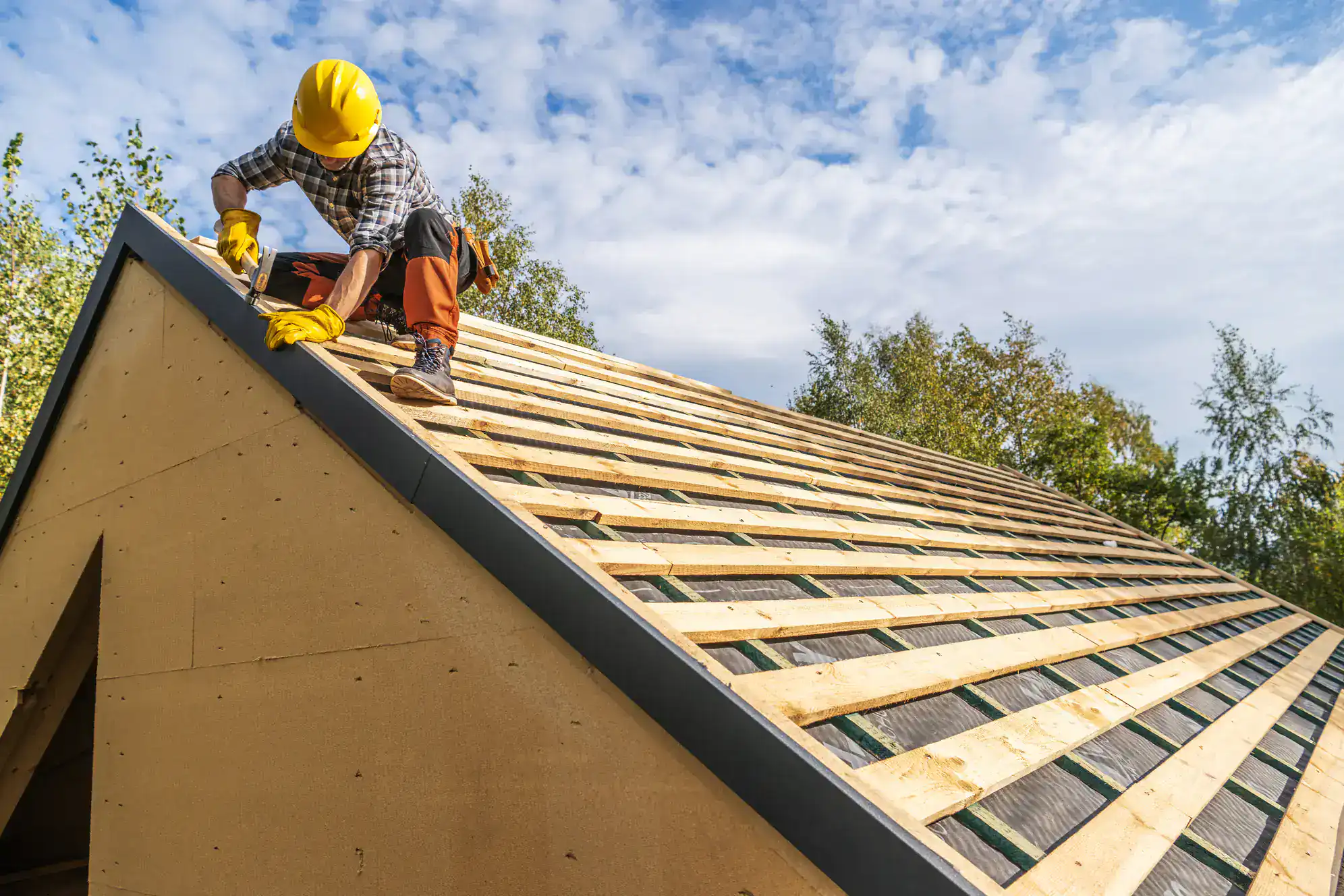
It starts with a free inspection — exterior assessment, attic check, drainage review, and a detailed photo report that’s yours to keep. If you’ve got a 1940s Colonial with original flashing and a chimney that hasn’t been looked at in years, that inspection is going to tell you a lot. You’ll know what’s urgent, what can wait, and what you’re working with before anyone asks you to sign anything.
From there, you get a fully itemized estimate. The price you approve is the price on the final invoice — no surprises mid-job, no materials charges that weren’t discussed. Glen Rock’s Building Department at Borough Hall on Harding Plaza requires permits for roofing work under the NJ State Uniform Construction Code, and we handle that process as part of the job. Permitted work is inspected, documented, and fully defensible if you ever sell — which matters in a Bergen County real estate market where buyers do their homework.
Once the work starts, our crew works through the full scope and handles cleanup completely before leaving your property. If storm damage is involved, we can document everything with photos and support your insurance claim from the start. For urgent situations — a branch through the roof after a nor’easter, an active leak in the middle of the night — emergency service is available around the clock.
Ready to get started?
Roofing Services in Glen Rock, NJ
The core of what we do is roofing — inspections, repairs, full replacements, and flat roofing systems including TPO and EPDM. But for Glen Rock homeowners, the roof rarely exists in isolation. The mature tree canopy throughout the borough — the oaks and maples that make these streets look the way they do — creates a persistent cycle of leaf buildup, gutter clogging, and shingle abrasion from overhanging branches. Addressing the roof without addressing the gutters is a short-term fix at best.
That’s why our inspection covers the full exterior: roof field, valleys, flashing, penetrations, gutters, downspouts, and siding where relevant. If there are multiple issues, they get scoped together so you’re not coordinating three separate contractors or discovering a gutter problem two weeks after the roof is done. For homes built in the 1920s through the 1960s — which describes most of Glen Rock’s housing stock — that kind of comprehensive look is usually where the real story is.
Manufacturer certifications back the work with enhanced system warranties that go well beyond what a standard contractor warranty covers. For a home valued near or above $900,000, that’s not a small distinction. It’s documented protection that stays with the property and transfers at the point of sale — a real, tangible asset in any future transaction.
Do I need a permit to replace my roof in Glen Rock, NJ?
Yes — Glen Rock’s Building Department requires a permit for roofing work, including full replacements, under the NJ State Uniform Construction Code. The Building Department is located at Borough Hall, 1 Harding Plaza, and applications can be submitted in person, dropped at the front drop box, or mailed in. Work cannot legally begin until the permit is issued.
This matters beyond just compliance. A permitted roof replacement is inspected and documented, which protects you if you ever sell your Glen Rock home. In Bergen County’s competitive real estate market, buyers and their attorneys look at permit history carefully. An unpermitted replacement can create real complications at closing — demands for remediation, price reductions, or delays. We handle the permit process as part of every job, so you’re covered from the start.
How do I know if my Glen Rock home's roof actually needs to be replaced?
The honest answer is that most homeowners don’t find out until something has already gone wrong — a leak, a visible stain on the ceiling, shingles in the yard after a storm. By that point, secondary damage is often already underway. Given that over a third of Glen Rock’s housing stock was built before 1939, and a large portion of the rest was built between 1940 and 1969, a significant share of the borough’s homes are working with roofing systems that are at or past the end of their expected service life.
A free inspection gives you a clear, photo-documented picture of what’s actually happening — granule loss, flashing condition, valley wear, chimney integrity, and attic ventilation. You’ll know what’s failing, what’s borderline, and what still has life in it. That information is yours regardless of what you decide to do next. It’s the most useful first step available, and it costs you nothing.
What causes ice dams, and are Glen Rock homes at higher risk?
Ice dams form when heat escapes through the attic and melts snow on the roof. That meltwater runs down toward the cold eaves and refreezes, building up a ridge of ice that traps water behind it. That trapped water then forces its way under shingles and into the building envelope — sometimes hundreds of gallons over the course of a single winter. The damage it causes to insulation, drywall, and structural wood can be significant and expensive.
Glen Rock homes are genuinely at higher risk than newer construction. Homes built in the 1920s through 1960s frequently have attic insulation and ventilation systems that were never designed to modern standards — and in many cases haven’t been updated since original construction. Bergen County’s winters reliably deliver the freeze-thaw conditions that make ice dams form. If your attic isn’t properly ventilated and insulated, it’s not a matter of if — it’s a matter of when. An inspection that includes the attic will tell you whether your home has the ventilation it needs to prevent this.
How long does a roof replacement take for a typical Glen Rock home?
For most single-family homes in Glen Rock — Colonials, Cape Cods, and ranch-style homes that make up the majority of the borough’s housing stock — a full roof replacement typically takes one to two days once the job is underway. More complex rooflines with multiple valleys, dormers, or steep pitches can take longer, and any rotted decking discovered during tear-off will add time and material cost that gets communicated to you before the work continues.
The permit process through Glen Rock’s Building Department adds some lead time before work can begin — generally a few business days to a week depending on current volume. That’s built into the project timeline from the start so there are no surprises. Weather is always a factor in Bergen County, particularly in late fall and winter when nor’easters can move in quickly. Scheduling is planned with that in mind, and if conditions change, you’ll hear about it before our crew shows up.
Will my homeowner's insurance cover storm roof damage in New Jersey?
It depends on the cause and your specific policy, but storm damage from events like nor’easters, hail, and high winds is generally covered under standard homeowner’s insurance policies in New Jersey. What gets claims denied or reduced is usually documentation — not having clear evidence of what caused the damage, when it occurred, and what the full scope of impact is.
This is where having a contractor who can document properly makes a real difference. We can photograph damage in detail, prepare a scope of work that aligns with what adjusters need to see, and communicate directly with your insurance company throughout the process. Bergen County homeowners deal with storm damage claims regularly — nor’easters alone generate significant claim volume every season. Having someone in your corner who understands that process reduces the burden on you considerably and increases the likelihood that your claim reflects the actual damage.
How do I find a legitimate, licensed roofer in Glen Rock and avoid storm chasers?
Affluent Bergen County communities like Glen Rock are specifically targeted by unlicensed, out-of-area contractors after storm events. The pitch is usually a low price and a quick start — and the result is often substandard work, a disappeared contractor, or a job that was never permitted and creates problems when you go to sell. It’s a real and documented pattern in this area.
The simplest protection is verifying the NJ Home Improvement Contractor license before anyone starts work. Every legitimate contractor working on a New Jersey project over $500 is required to hold one. Our license number is #13VH10605800 — searchable directly through the NJ Division of Consumer Affairs website. Beyond the license, ask whether the contractor pulls permits, carries workers’ compensation and general liability insurance, and can name the specific manufacturer certifications they hold. A contractor who can answer all of those questions clearly and specifically — without hesitation — is a contractor operating above board. One who deflects or gets vague is worth walking away from.