
Roof Replacement in Elmwood Park, NJ
Postwar Homes, Bergen County Winters — Your Roof Deserves Better
Hear from Our Customers
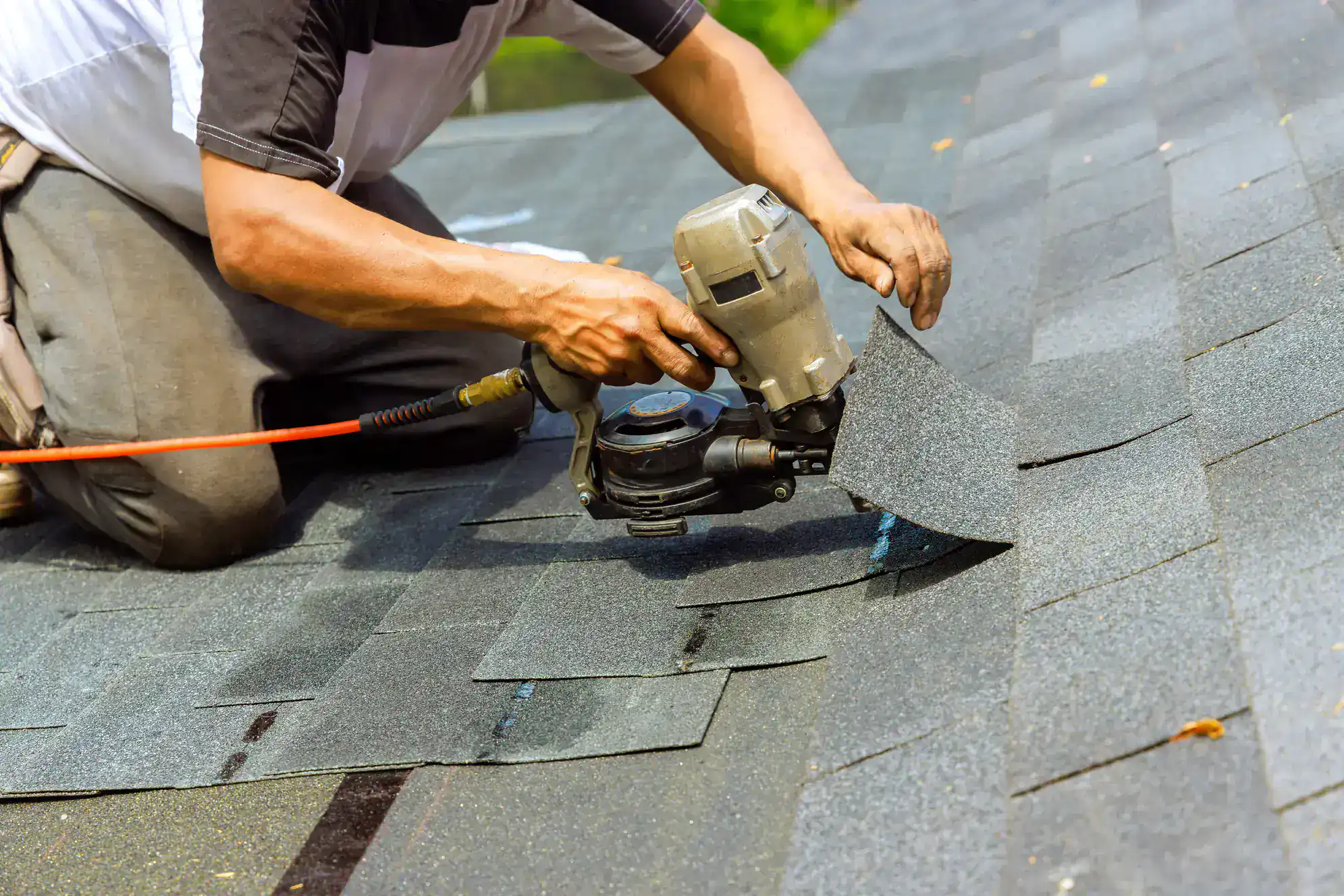
Residential Roof Replacement Elmwood Park, NJ
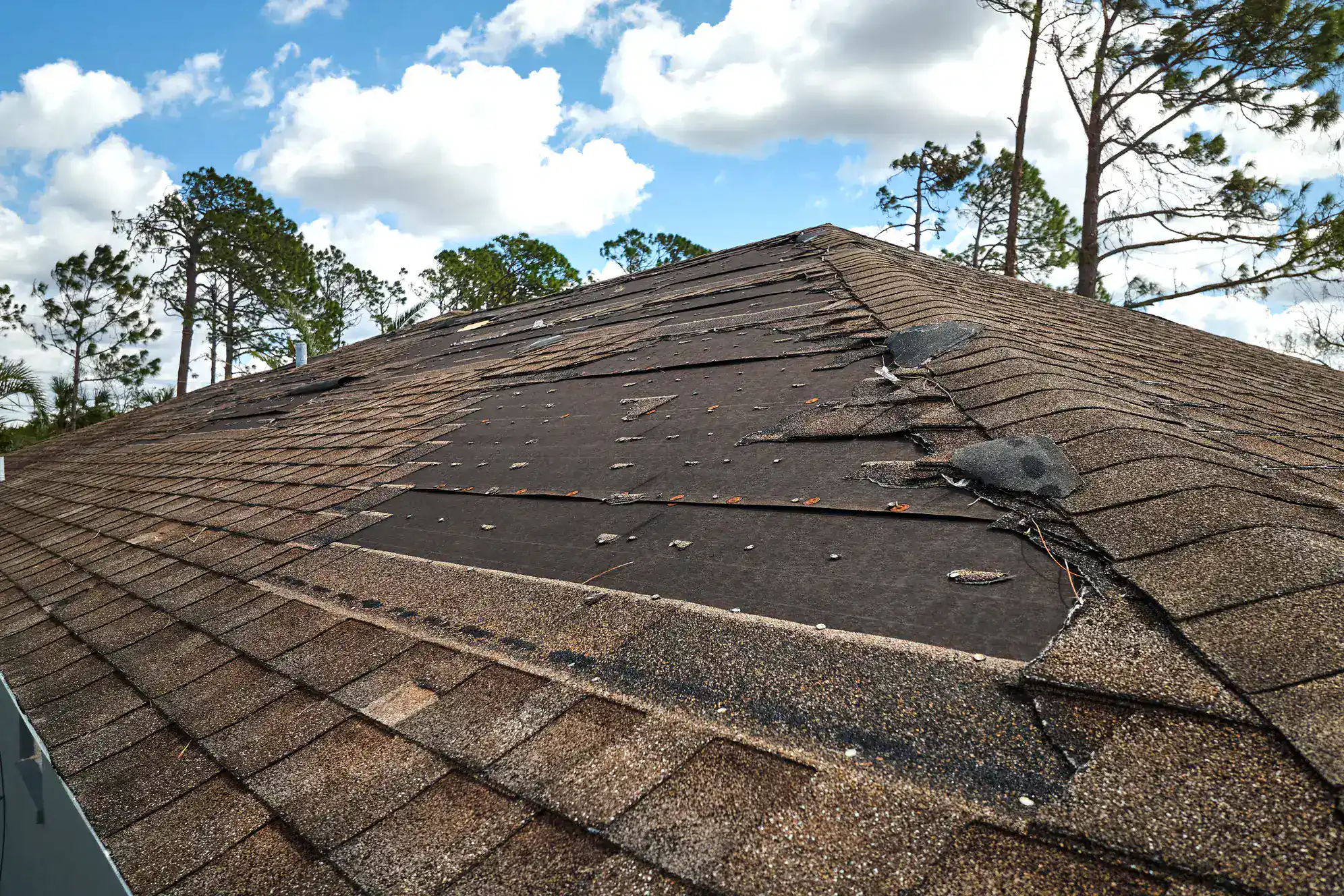
A failing roof doesn’t just leak — it quietly chips away at everything underneath it. Rotted decking, damaged insulation, compromised ceilings. By the time most Elmwood Park homeowners call someone, the damage has already spread further than the roof itself. Getting ahead of it means protecting the structure, not just patching the surface.
Elmwood Park’s housing stock is almost entirely postwar — Cape Cods, split-levels, and ranch homes built in the 1940s through the 1960s. These are beautiful homes, but their rooflines weren’t designed with today’s materials in mind. Steep dormer pitches, multiple roof planes, and aging underlayment make them especially vulnerable to Bergen County’s freeze-thaw cycles, where water finds every micro-crack it can and expands it through the winter.
When the roof is right, everything else settles down. No more water stains appearing after a nor’easter. No more anxiety every time a storm rolls in off Route 46. And with Elmwood Park home values up over 31% year-over-year, a quality roof replacement isn’t just maintenance — it’s one of the most financially sound decisions you can make on a home worth $500,000 to $900,000.
GAF Certified Roofer in Elmwood Park, NJ
We’ve been working across Bergen County for over 17 years — not as a franchise, not as a storm-chaser operation, but as a family-run business that grows through referrals because the work holds up. From the Rosemont section of Elmwood Park to Cherry Hill and out through the 07407 zip code, we know the housing stock, the weather patterns, and what Bergen County winters actually do to a roof.
GAF certification isn’t something every contractor can claim. It requires proper NJ licensing, verified insurance, demonstrated installation quality, and a background check. It also unlocks warranty tiers — covering both materials and workmanship — that non-certified installers simply can’t offer you. That matters when your home is worth what homes in Elmwood Park are worth right now.
Every estimate we provide is written, itemized, and reviewed with you before anything starts. Free inspections come with no pressure and no agenda — if your roof has years left, you’ll hear that too.
Roof Installation Process Elmwood Park, NJ
It starts with a free roof inspection. Someone from our team comes out, gets on the roof, checks the flashing, the valleys, the decking condition, and the underlayment — and tells you exactly what we find. If there’s damage, you’ll see it. If there isn’t, you’ll hear that too. No manufactured urgency, no vague warnings designed to close a sale.
If replacement makes sense, you’ll get a written, itemized estimate before anything is scheduled. Once you’re ready to move forward, we pull the required building permit with the Elmwood Park Building Department at 182 Market Street — because permitted work is inspected work, and inspected work protects you at resale. Contractors who skip permits are cutting a corner that eventually costs you. Every contractor working in Elmwood Park is also required to register annually with the borough’s Building Department, and we stay current on that requirement.
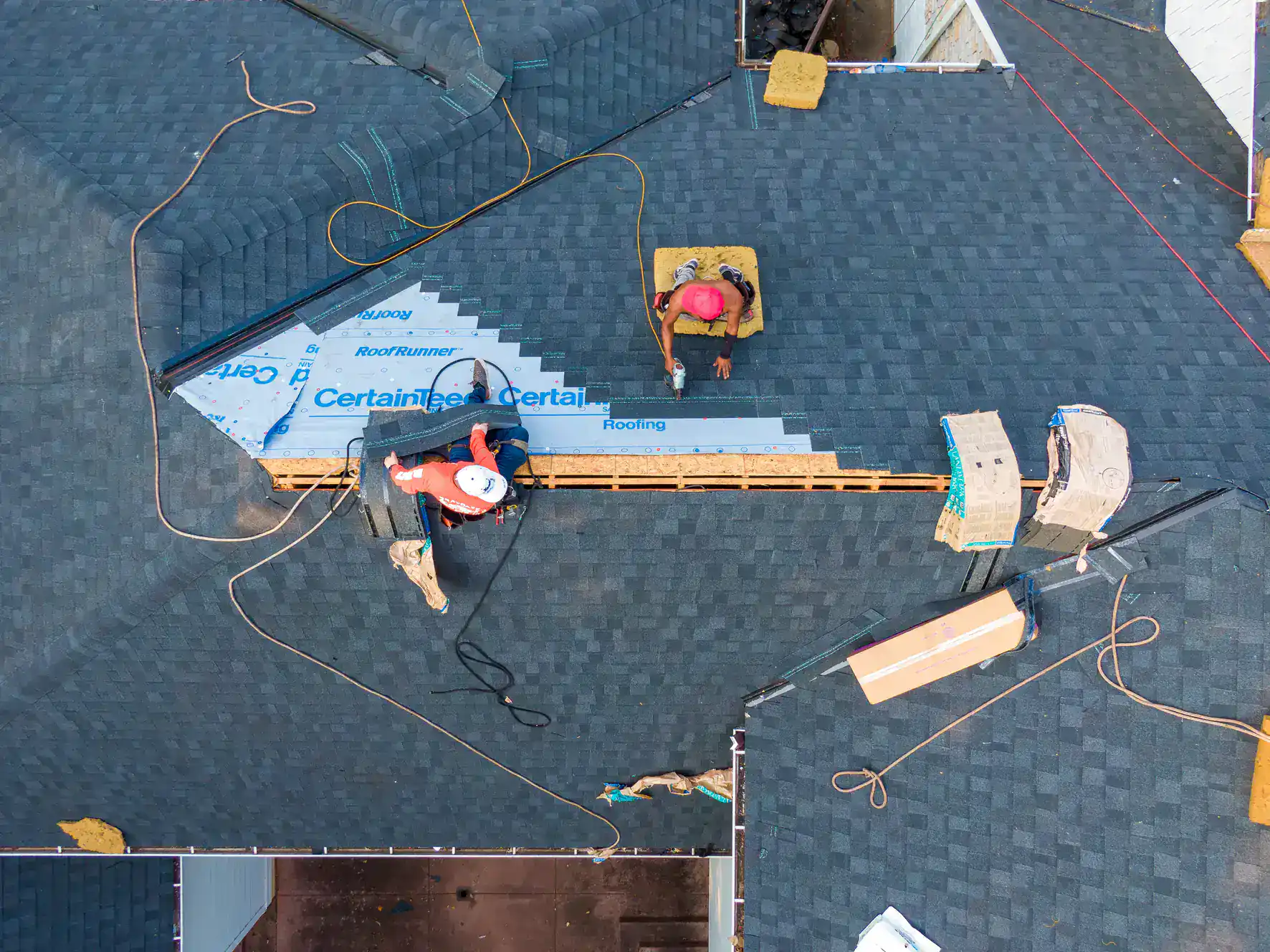
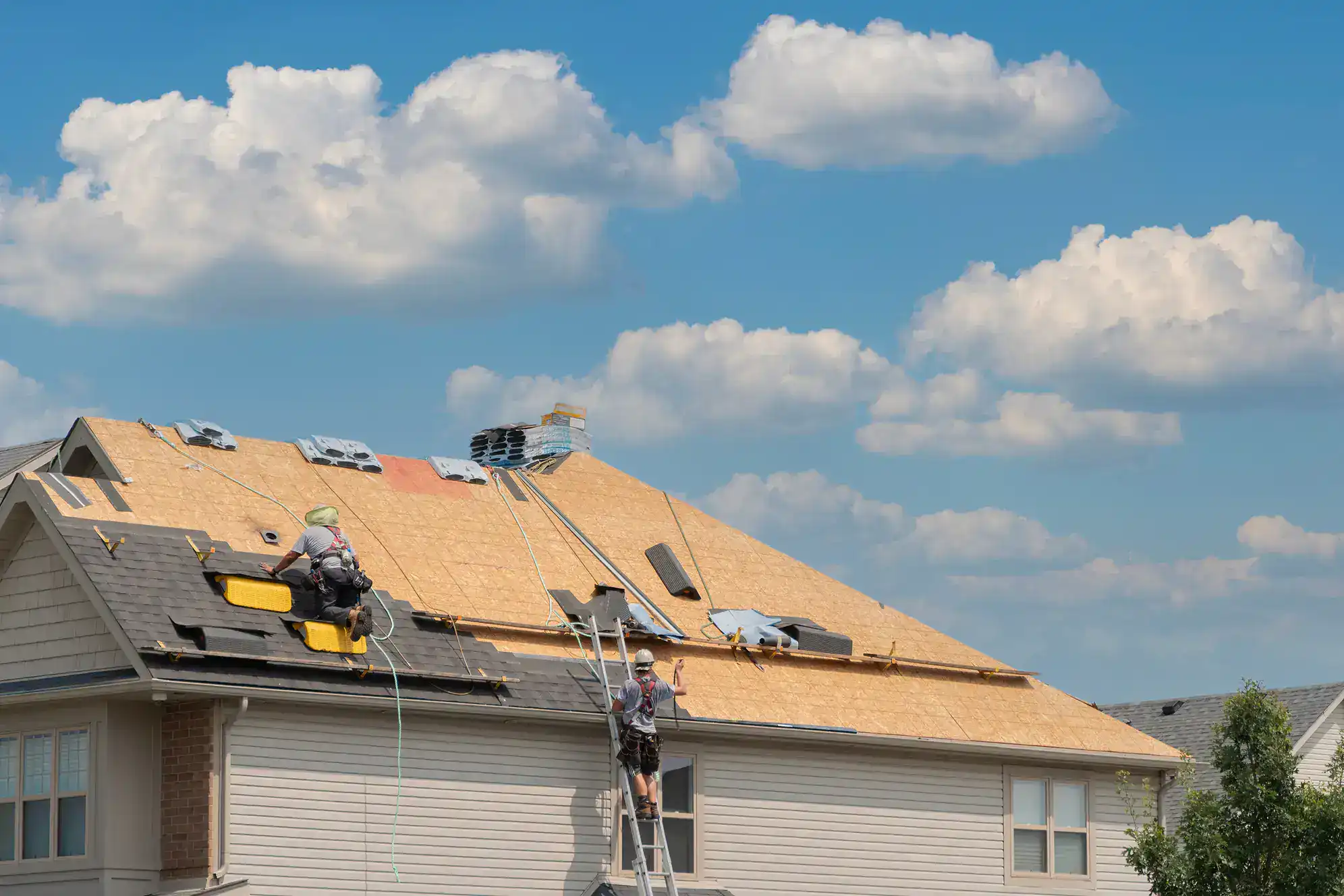
Most residential roof replacements in Elmwood Park are completed in one to two days. The old material comes off, the decking gets inspected for rot or soft spots, ice and water shield goes down at the eaves and valleys — critical for Bergen County winters — and the new system goes on. When our crew leaves, the yard gets a magnetic nail sweep. Your driveway and landscaping should look the same as when we arrived, minus the old roof.
Ready to get started?
Storm Damage Roof Replacement Elmwood Park, NJ
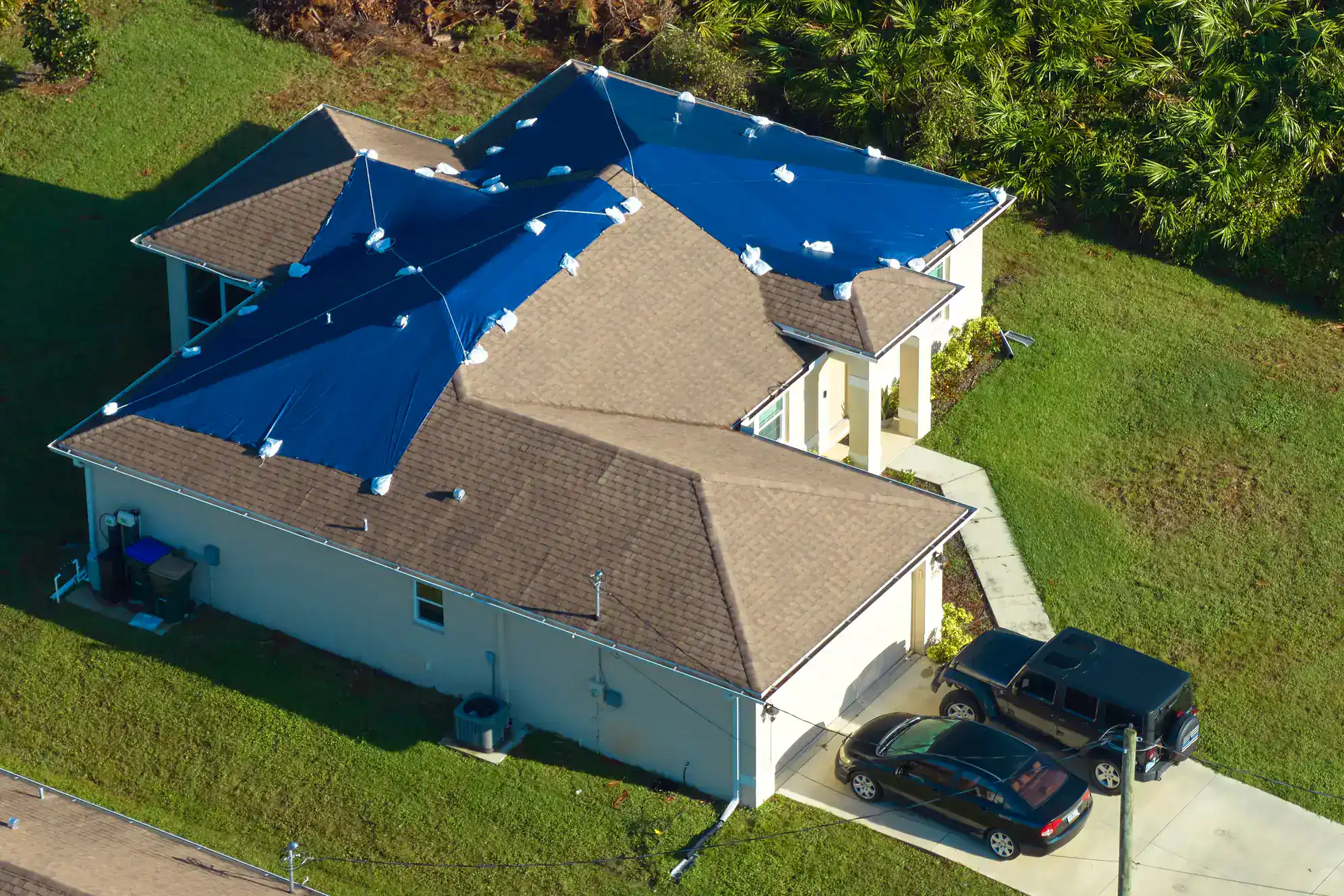
Residential roof replacement in Elmwood Park means working with homes that have real architectural complexity — dormers, multiple pitches, low-slope sections, and decades of layered repairs that need to be properly stripped before anything new goes down. We handle the full scope: tear-off, decking inspection and repair where needed, ice and water shield installation, underlayment, GAF architectural shingles, flashing, ridge cap, and gutter integration. Nothing gets skipped to hit a lower number.
For storm damage roof replacement specifically, we include proper photo documentation and damage assessment that supports your insurance claim from the start. Bergen County homeowners along the I-80 and Route 46 corridors deal with wind events, hail, and nor’easters that insurance companies don’t always pay out fairly on without solid documentation. We help you build that case — not just replace the shingles.
We also offer commercial roof replacement for flat-roofed structures along Elmwood Park’s Route 4 and Route 46 commercial corridors, including TPO and EPDM systems suited for low-slope commercial applications. Whether it’s a single-family Cape Cod in the Dundee Lake area or a commercial property near the Garden State Parkway interchange, our approach is the same: assess honestly, quote transparently, and install correctly the first time.
Does Elmwood Park require a permit for residential roof replacement?
Yes — roof replacement in Elmwood Park requires a building permit under New Jersey’s Uniform Construction Code, and the work will be subject to inspection. This is standard for any significant structural work in the borough. Pulling a permit isn’t a bureaucratic inconvenience — it’s what ensures the job was done to code and protects you when you sell the home. Buyers’ inspectors and title companies flag unpermitted roofing work, and it can complicate or kill a sale.
What’s specific to Elmwood Park beyond the standard NJ permit requirement is the borough’s annual contractor registration rule. Every contractor working in Elmwood Park must register with the Building Department at 182 Market Street each year and provide a current certificate of insurance. Unregistered contractors face a $2,500 fine — and more importantly, they’re leaving you exposed if something goes wrong. Before signing with anyone, ask for their Elmwood Park Building Department registration. We stay current on both the NJ HIC license and the borough’s local registration requirement.
How much does roof replacement typically cost in Elmwood Park, NJ?
For a standard single-family home in Elmwood Park — a Cape Cod, split-level, or ranch — roof replacement typically runs between $8,000 and $18,000, depending on the size of the roof, the number of pitches and planes, the condition of the decking underneath, and the materials selected. Homes with dormers or multiple roof sections run on the higher end of that range because the labor complexity goes up significantly. GAF architectural shingles with a full system warranty will cost more upfront than basic three-tab shingles, but the warranty coverage and longevity difference is real.
What drives costs up unexpectedly is usually what’s found during tear-off — rotted decking, damaged sheathing, or flashing that was never installed correctly in the first place. A written, itemized estimate helps you understand what’s included and what triggers a change order. We review every estimate line by line before the job starts, and if something unexpected is found during tear-off, you’ll see it and approve it before any additional work proceeds. No surprises on the final invoice.
Will my homeowner's insurance cover roof replacement after storm damage?
It depends on the cause and the age of your roof — but in many cases, yes. Bergen County homeowners deal with wind events, hail, and nor’easters that qualify as covered perils under most standard homeowner’s policies. The challenge isn’t usually whether coverage exists — it’s whether the damage is documented well enough to support a full and fair settlement. Insurance adjusters work for the insurance company. Their initial estimate is often the minimum, not the maximum.
Proper documentation makes the difference. That means photos taken from the right angles, a written damage assessment from a licensed contractor, and clear communication about what needs to be replaced versus what can be repaired. We help Elmwood Park homeowners build that documentation from the start of the inspection — not as an afterthought. If your roof took damage from a recent storm along the Route 46 or I-80 corridor, getting a professional assessment before you file is almost always the smarter move than filing first and asking questions later.
How long does a roof last on a Cape Cod or split-level home in Bergen County?
A properly installed architectural asphalt shingle roof in Bergen County will typically last 25 to 35 years under normal conditions. The operative phrase is “properly installed” — and Bergen County winters are not normal conditions for a lot of roofing systems. Freeze-thaw cycling is one of the most destructive forces on a residential roof. Water works into micro-cracks in aging shingles, freezes overnight, expands, and widens those cracks with every cycle through the winter. By spring, what looked like minor granule loss in November has become active moisture infiltration.
Cape Cods and split-levels — the dominant housing style in Elmwood Park — have specific vulnerability points: the valleys between dormers, the flashing at chimney bases, and the eaves where ice dams form when attic heat melts snow that refreezes at the cold roof edge. These are the spots that fail first and fail quietly. If your home was built in the 1950s or 1960s and the roof hasn’t been replaced in the last 20 years, a free inspection is a reasonable and low-risk way to find out where things actually stand.
What does GAF certification actually mean for me as a homeowner?
GAF is the largest roofing manufacturer in North America, and their certification program isn’t just a logo you buy — it requires proper state licensing, verified insurance, demonstrated installation competency, and a background check. Only about 3% of roofing contractors in the U.S. qualify as GAF Master Elite, the top certification tier. What that means for you as a homeowner is access to warranty tiers that non-certified contractors simply cannot offer, regardless of what shingles they use.
The most important of these is the System Plus Limited Warranty, which covers both the materials and the workmanship — not just the shingles themselves. A standard manufacturer’s warranty only covers material defects. If the installation caused the failure, a non-certified contractor’s warranty leaves you with nothing. For a home in Elmwood Park worth $500,000 to $900,000, the difference between a warranty that covers workmanship and one that doesn’t is a meaningful financial protection. You can verify any contractor’s GAF certification status directly on GAF’s website before you sign anything.
How do I know if I need a full roof replacement or just a repair in Elmwood Park?
The honest answer is that it depends on the age of the roof, the extent of the damage, and what’s happening underneath the surface — and you can’t fully assess that from the ground. A targeted repair makes sense when the damage is isolated, the surrounding shingles are in solid condition, and the roof still has meaningful life left. But when a roof is 20-plus years old and showing widespread granule loss, cracked or curling shingles, or recurring leaks in multiple locations, repairs tend to become a cycle of spending money on a system that’s already failing.
In Elmwood Park specifically, where the bulk of the housing stock dates to the 1950s and 1960s, a lot of roofs are on their second or third repair cycle — and each repair is buying less time than the last. A free inspection gives you an honest read on where your roof actually stands. We’ll tell you if a repair is the right call. There’s no incentive to push a full replacement on a roof that doesn’t need one — our business runs on referrals from Bergen County homeowners who got straight answers, not upsells.