
Gutter Replacement in Stony Hill, NJ
Before the First Freeze Finds Your Gutters Failing
Hear from Our Customers
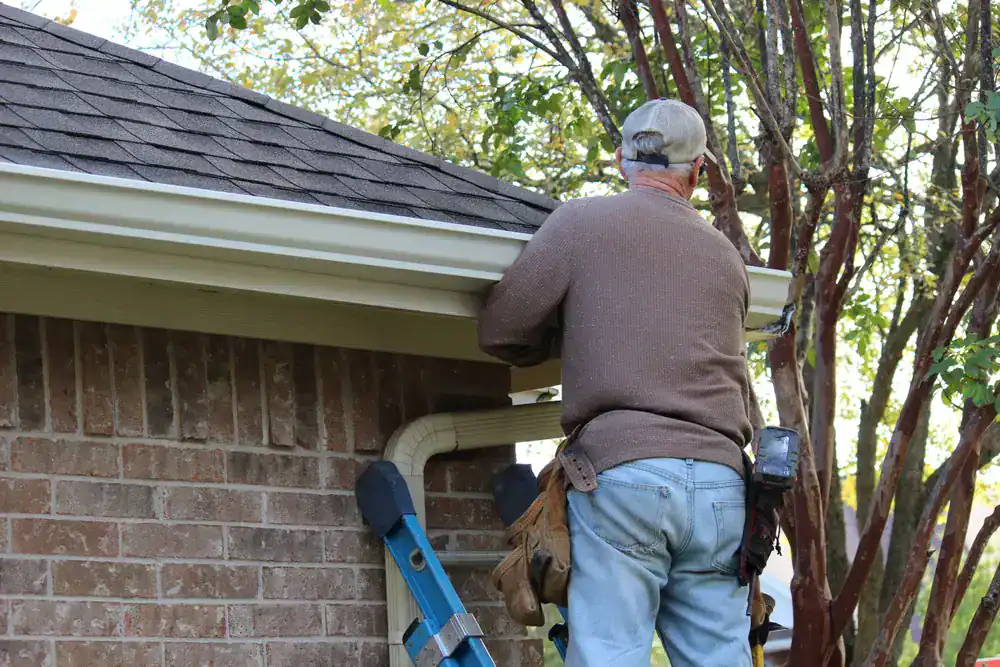
Rain Gutter Replacement Stony Hill, NJ
When gutters fail on a Stony Hill home, the damage doesn’t announce itself. It starts quietly — water pooling against your foundation, saturating the soil, and slowly working its way into your basement. By the time you notice the seepage, the grading around your home may already be compromised, and what started as a gutter problem has become something much more expensive.
The older housing stock in Stony Hill makes this especially common. Homes built in the 1970s and 1980s often still have their original spike-and-ferrule fasteners, which loosen over time and let the gutter trough pull away from the fascia. Once that gap opens, water runs directly behind the gutter instead of through it — and the fascia board starts to rot. Replacing the gutters at that point also means replacing the fascia, which is a much bigger job than it needed to be.
New seamless aluminum gutters with hidden hanger fasteners change the equation. They handle Sussex County’s freeze-thaw cycles without cracking at the seams, they hold their pitch under snow load, and they move water efficiently enough that your foundation stays dry even during the heavy spring runoff that follows a real Sussex County winter. That’s the difference between a home that weathers the season and one that doesn’t.
Gutter Replacement Contractors Stony Hill, NJ
We’ve been doing exterior renovation work across northern New Jersey for over a decade, with deep roots in the Stony Hill area and throughout Sussex County. Roofing is the core of what we do, and that matters for gutter work more than most homeowners realize. When you understand how water moves across a roof — through valleys, over eaves, and into the drainage system — you approach gutter replacement differently than a company that only sees the trough.
That roofing background means every gutter job we do starts with a real look at the full picture: the fascia condition, the downspout placement, the discharge routing away from your foundation. For homes throughout Stony Hill, where older construction and heavy tree canopy are both common, that kind of thorough assessment isn’t optional — it’s how we avoid replacing gutters that fail again in three years because the underlying issues weren’t addressed.
We’re family-owned, and our reputation is built entirely on customer reviews. There’s no franchise behind our name, no national call center taking your inquiry. When you reach out, you’re talking to people who have real skin in the outcome of your project.

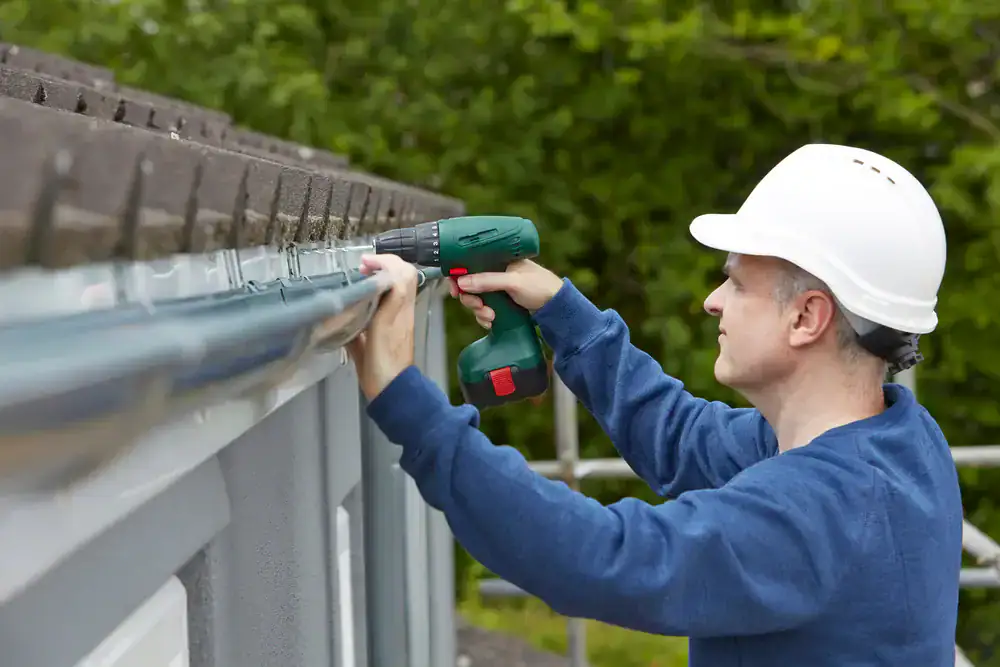
House Gutter Replacement Stony Hill, NJ
It starts with a free inspection. Before any recommendation is made, we take a close look at your existing gutters, the fascia boards behind them, your current downspout configuration, and how water is being directed away from your home. On a lot of Stony Hill homes, that inspection turns up fascia rot that was hidden behind the old gutter channel — and catching it before the new installation goes up saves you from dealing with it again two years down the road.
If replacement is the right call, we custom-fabricate the gutters on-site using seamless aluminum formed to the exact dimensions of your roofline. There are no pre-cut sections being pieced together with seam joints — the run is continuous, which eliminates the most common failure points in a climate that cycles between freezing and thawing all winter. Hidden hanger fasteners are installed every 24 to 36 inches, replacing the old spike-and-ferrule systems that were standard on homes built before the 1990s and are now at the end of their useful life.
In Stony Hill, like-for-like gutter replacement typically doesn’t require a permit, but if the scope involves fascia repair or changes to your drainage routing, it’s worth confirming with the township’s code enforcement office before work begins. We’ll walk you through what applies to your specific project so there are no surprises.

Ready to get started?
Roof Gutter Replacement Stony Hill, NJ
Roof gutter replacement in Stony Hill, NJ covers more than swapping out old aluminum for new. Every project we do includes a full fascia inspection before installation begins, because putting new gutters over rotted wood is a short-term fix that creates a longer-term problem. If rot is present, we flag it and address it as part of the same project — not discovered later by the next contractor.
Downspout placement and termination are evaluated as part of every job. In Sussex County, where stormwater management is actively regulated and wetlands are common throughout the area, directing runoff toward neighboring properties or sensitive areas isn’t just bad practice — it can create real liability. Downspouts should terminate at least four to six feet from your foundation, and the grade around the discharge point should direct water away from the structure. We assess and correct that routing if needed.
For Stony Hill homes surrounded by oak, maple, and hickory — which is most of them — gutter guards are worth discussing as an add-on. Leaf debris accumulates fast in a wooded lot, and gutters that are clogged by October aren’t protecting your home through the winter when it matters most. The inspection is the right time to evaluate whether guards make sense for your specific tree canopy and roofline.

How do I know if my gutters need repair or full replacement?
The honest answer is that it depends on what’s actually failing. Isolated leaks at a seam joint or a single section that’s pulling away from the fascia might be repairable — but if the gutters are sagging along multiple runs, if the spike fasteners are backing out of the fascia in several places, or if there’s visible rust or cracking across more than one section, repair tends to be a short-term fix on a system that’s already past its useful life.
On older homes in Stony Hill — particularly those built in the 1970s or 1980s — the gutters are often original to the house or close to it. Aluminum gutters have an average lifespan of around 20 years under normal conditions, and Sussex County’s freeze-thaw cycles accelerate wear on older sectional systems with seam joints. If the system is that age, a full replacement with seamless aluminum and hidden hangers is almost always the more cost-effective decision over the next five to ten years. The free inspection is the right starting point — you’ll get an honest read on what’s actually going on before any commitment is made.
What does gutter replacement typically cost for a home in Stony Hill, NJ?
For a typical single-family home in Stony Hill, seamless aluminum gutter replacement generally runs somewhere in the range of $1,000 to $2,500, depending on the linear footage, the number of downspouts, and the complexity of the roofline. Homes in Stony Hill tend to run on the higher end of that range compared to smaller suburban homes in denser Bergen or Union County markets — the lots are larger, the rooflines are more complex, and there’s often more linear footage to cover.
If fascia repair is needed — which is common on older Stony Hill homes where gutters have been leaking against the wood for years — that adds to the scope and the cost, but it’s not optional. Installing new gutters over compromised fascia means the new system won’t hold properly. The estimate you receive will be itemized so you know exactly what you’re paying for and why, with no line items that weren’t discussed upfront.
Do I need a permit to replace gutters in Stony Hill?
For a straightforward like-for-like gutter replacement in Stony Hill — same size, same configuration, no structural changes — a permit is generally not required under New Jersey’s home improvement guidelines. That said, if the project involves repairing or replacing fascia boards, modifying the soffit system, or changing how your downspouts are routed, it’s worth a quick check with your local code enforcement office before work begins, because those changes can bring the project into permit territory.
New Jersey also requires that any contractor performing home improvement work be registered with the NJ Division of Consumer Affairs as a Home Improvement Contractor. That registration isn’t optional — it’s the law — and it gives you legal recourse if something goes wrong. Before you hire anyone to work on your Stony Hill home, ask for their HIC registration number. It’s a simple question that separates legitimate contractors from the ones who disappear when there’s a problem.
Why do gutters pull away from the fascia on older homes in Stony Hill?
The most common reason is the fastener system. Homes built before the 1990s were typically installed with spike-and-ferrule fasteners — a long nail driven through the gutter and into the fascia. Over time, especially in a climate with real winters like Sussex County’s, those spikes work loose. The freeze-thaw cycling expands and contracts the wood, the weight of snow and ice in the gutter pulls on the fastener, and eventually the gutter starts to separate from the fascia board.
The fix isn’t to re-drive the old spikes — they’ll just pull out again. The right solution is to replace the entire system with hidden hanger fasteners that screw into the fascia rather than relying on a nail. These hold significantly better under snow load and don’t loosen the same way over time. It’s one of the main reasons seamless gutter replacement with modern fasteners outperforms any attempt to repair an aging spike-fastened system on a Stony Hill home that’s been through twenty or thirty Sussex County winters.
When is the best time of year to replace gutters in Stony Hill, NJ?
Late summer through early fall is the ideal window — before the leaves drop and before the first freeze. If you replace gutters in September or October, the new system is fully functional and properly seated before the heavy leaf season clogs anything and before the temperatures drop below freezing. That timing matters in Stony Hill specifically because the tree canopy here is dense enough that gutters can fill with debris in a matter of weeks once the oaks and maples start dropping.
Spring is the other major window, and it’s typically driven by damage rather than planning. Homeowners who dealt with ice dam problems over the winter — gutters pulling away from the fascia, sections cracked by ice expansion, or water backing up under the eaves — tend to act in March and April once the damage is visible. If that’s your situation, don’t wait until fall to address it. A damaged gutter system going into a wet spring is actively working against your foundation every time it rains.
Can you add gutter guards during a replacement, and are they worth it in this area?
Yes, and for most Stony Hill properties, they’re worth a serious look. The wooded lots throughout the area — heavily lined with oak, maple, hickory, and other deciduous trees — mean gutters accumulate debris faster here than in more open suburban environments. A gutter that’s full of leaves and seed pods by mid-October isn’t doing its job through November, December, and the rest of the winter when runoff and snowmelt are at their peak.
Gutter guards don’t eliminate maintenance entirely, but they significantly reduce how often cleaning is needed and keep the channel clear during the periods when it matters most. The type of guard that makes sense depends on your specific tree canopy and roofline pitch — some guard systems work better on steeper pitches, others are better suited to the shallower slopes common on ranch-style and older colonial homes in Stony Hill. The inspection is the right time to evaluate what’s going to work for your property specifically, so the conversation happens before the installation rather than after.
Other Services we provide in Stony Hill