
Gutter Replacement in Cranford, NJ
Cranford Homes Need More Than a Gutter Swap
Hear from Our Customers
Rain Gutter Replacement Cranford, NJ
When gutters are doing their job, water moves off your roof and away from your home — not into your fascia, not pooling at your foundation, not trickling toward a basement that’s already been through enough. For homeowners in Cranford, that’s not hypothetical. It’s the difference between a dry spring and a very expensive one.
Cranford’s housing stock is older than most people realize. A significant portion of the homes here were built in the 1920s through the 1950s, and a lot of those gutter systems — whether original or first-generation replacements — are held up by spike-and-ferrule fasteners that have been pulling away from the fascia for years. You might not see it from the driveway, but the damage is happening. Overflow during heavy rain, saturated soil along the foundation, rotting wood behind the gutter channel — these are the quiet problems that turn into expensive ones.
Cranford also sits within a mature tree canopy. The Olmsted-designed Rahway River Parkway system runs through Union County with nearly 950 acres of wooded green space, and the residential streets throughout town — from Fairview Manor to Indian Village — are lined with trees that drop significant leaf volume every fall. When gutters are clogged, they don’t just overflow. They hold moisture, they pull away from the roofline, and they accelerate the exact kind of damage you’re trying to avoid. A properly installed replacement system changes all of that.
Gutter Replacement Contractors Cranford, NJ
We’ve been working on homes throughout Cranford and across Union County for over ten years. That’s not a tagline — it’s context. When you’ve spent a decade replacing roofs, gutters, and siding on homes throughout Cranford and the surrounding communities, you stop guessing and start recognizing patterns. We know what the older homes near the Rahway River tend to look like behind the fascia. We know which neighborhoods have the heaviest tree load. We know what questions to ask before we ever pull a single fastener.
We’re family-owned, licensed, and certified by major shingle manufacturers — credentials that require real vetting, not just a check in the mail. Our growth has come from repeat customers and referrals, not advertising. That matters in a town like Cranford, where word travels and neighbors compare notes. Every job is an investment in the next one, and that accountability shows up in how the work gets done.

House Gutter Replacement Cranford, New Jersey
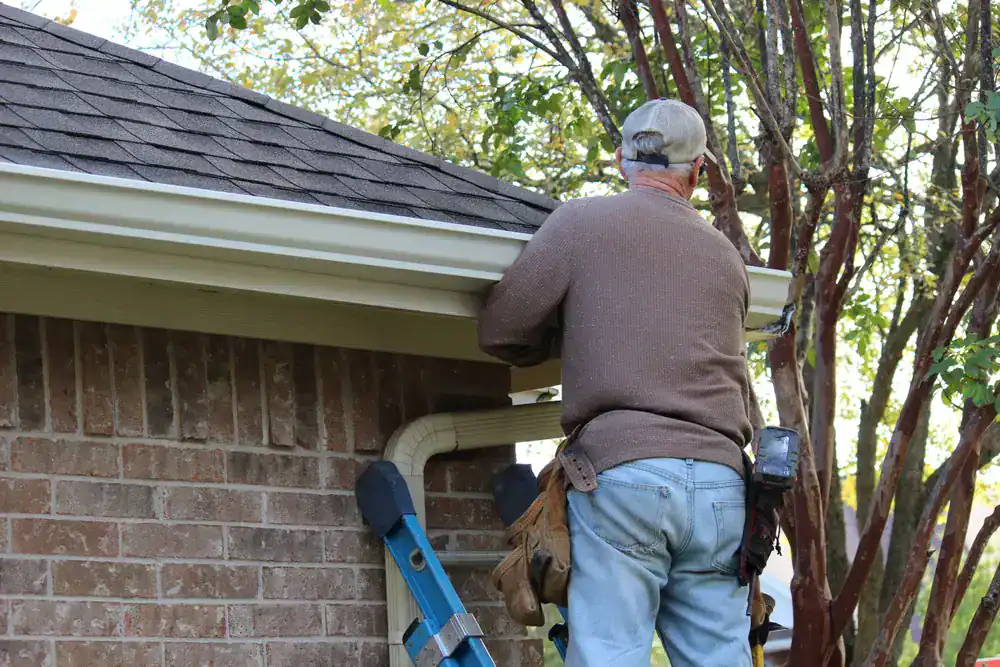
It starts with a free inspection. Not a sales visit — an actual assessment. We get on a ladder, look at your gutters, check the fascia behind them, evaluate the pitch and drainage path, and tell you honestly what we find. For a lot of Cranford homeowners, this is the first time anyone has looked closely at a system that’s been quietly failing for years. You’ll get a clear picture of what needs to happen before any commitment is made.
From there, you receive a transparent, itemized estimate. You’ll know what the gutters cost, what the fasteners cost, how the downspouts are being repositioned, and what happens to the old system. No lump-sum numbers that shift after the crew arrives. Cranford’s Building Department requires permits for certain exterior improvements, and we’re familiar with local requirements — if your project involves fascia replacement or structural changes to the drainage path, that’s a conversation that happens upfront, not after the fact.
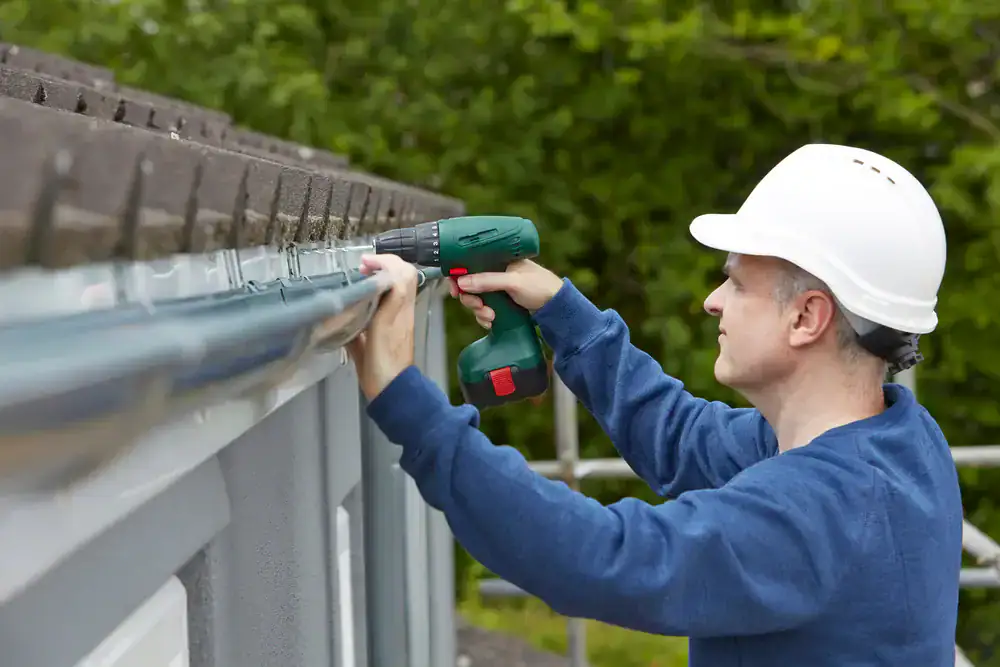
Installation is typically completed in a single day for most residential projects. We custom-fabricate seamless gutters on-site to fit your home’s exact dimensions, which eliminates most of the seam points where sectional systems fail over time. When the job is done, we walk through it with you. You see what was replaced, where the downspouts terminate, and how the system is pitched. Then we clean up and leave. That’s it.

Ready to get started?
Roof Gutter Replacement Company Cranford, NJ
Gutter replacement in Cranford, NJ isn’t a one-size-fits-all job. The age of the home, the condition of the fascia, the pitch of the roof, and the tree coverage around the property all factor into what a proper installation actually requires. We account for all of it — not just the channel itself, but the full drainage path from the roofline to the ground.
Every roof gutter replacement we perform includes removal and disposal of the existing system, installation of seamless gutters custom-fabricated on-site, hidden hanger fasteners rated for load (not the spike-and-ferrule systems common in older Union County homes), and downspout placement designed to direct water well away from the foundation. If the fascia board behind the gutter has rotted — which is common on Cranford homes that have had overflow issues for years — that’s identified during the inspection and addressed before new gutters go up. Putting new gutters on damaged fascia is one of the most common mistakes in this industry, and it’s one we don’t make.
Gutter guard options are also available for homeowners in neighborhoods with heavy tree coverage — particularly relevant in areas near Nomahegan Park or along the Rahway River Parkway corridor where seasonal leaf load is substantial. Guards won’t eliminate maintenance entirely, but they meaningfully reduce how often your gutters need attention between seasons.

How do I know if my Cranford home needs gutter repair or full replacement?
The honest answer is that you often can’t tell from the ground. What looks like a minor sag or a small leak at a seam can turn out to be a fascia board that’s been absorbing moisture for years. Gutters on older Cranford homes — particularly those built in the 1930s through the 1950s — were often installed with spike-and-ferrule systems that loosen over time, pulling the gutter away from the roofline and creating a pitch that sends water toward the house instead of away from it.
If your gutters are overflowing during rain, pulling away from the fascia, showing visible rust or cracks, or if you’re seeing staining on your siding or water pooling near your foundation after storms, those are signs that repair may not be enough. Our free inspection will give you a clear, honest answer — not a recommendation designed to maximize the scope of the job, but an accurate picture of what’s actually going on and what it will take to fix it properly.
What does gutter replacement typically cost for a home in Cranford, NJ?
Cost depends on the size of the home, the linear footage of gutter being replaced, the condition of the fascia, and whether downspout repositioning or fascia repair is part of the scope. For a typical single-family home in Cranford, seamless aluminum gutter replacement generally runs in the range of $1,000 to $2,500 for most standard projects. Larger homes, homes with significant fascia damage, or projects involving premium materials like copper or steel will land higher.
What matters more than the number is what’s included in it. A low estimate that doesn’t account for fascia condition, proper downspout placement, or quality fasteners will cost you more in the long run — especially in a town like Cranford where heavy rain events and the documented flooding history of the Rahway River watershed mean your gutters need to perform under real pressure. We provide itemized estimates so you know exactly what you’re paying for before any work begins.
Do I need a permit to replace gutters in Cranford, NJ?
For a straight like-for-like gutter replacement — same size, same location, no structural changes — a permit is generally not required in most New Jersey municipalities, including Cranford. However, if your project involves replacing damaged fascia boards, altering the drainage path, or making changes that affect the structure of the roofline, that can cross into permit territory under Cranford’s Building Department requirements.
New Jersey also requires that any contractor performing home improvement work hold a current Home Improvement Contractor registration through the Division of Consumer Affairs. This is a state-level requirement, not optional, and it’s one of the first things you should verify before hiring anyone for exterior work on your home. We’ve maintained our NJ HIC registration throughout our decade of operation. If there’s any question about whether your specific project requires a permit, that conversation happens before the work starts — not after.
When is the best time of year to replace gutters in Cranford?
Late summer and early fall tend to be the best window — after the heat of summer, before the leaf load season hits in earnest, and well ahead of the freeze-thaw cycles that stress gutter fasteners and cause separation from the fascia through winter. Cranford’s mature tree canopy means that once October arrives, gutters fill up fast, and trying to schedule a replacement mid-season can mean working around debris and wet conditions.
Spring is the second-best window, particularly for homeowners who discovered ice dam damage or gutter separation over the winter. Post-storm periods — after significant rain events or named storms — also drive a lot of replacement inquiries in Cranford, given the town’s history with major weather events. The practical answer is that the best time is before you have a problem, not after. If your gutters are showing signs of wear, scheduling in late summer gives you the most flexibility and the cleanest installation conditions.
Should I add gutter guards when replacing gutters on my Cranford home?
For a lot of Cranford homeowners, gutter guards are worth a serious conversation — especially if your property is near Nomahegan Park, along the Rahway River Parkway corridor, or in any neighborhood with significant tree coverage. Cranford’s residential streets are lined with mature trees, and the fall leaf load here is not light. Without guards, gutters can fill up in a matter of weeks during peak season, and a clogged gutter in a town with Cranford’s rainfall patterns is a gutter that’s overflowing onto your fascia and foundation.
Gutter guards reduce — but don’t eliminate — maintenance. Fine debris, seed pods, and shingle grit can still accumulate over time, so you’ll still want periodic cleaning. But the frequency drops significantly, and more importantly, the risk of a blockage during a heavy rain event goes down. Whether guards make sense for your specific property depends on the tree coverage around your home, the pitch of your roof, and the type of guard being considered. That’s a conversation worth having during the free inspection.
Why does USA Home Remodeling offer free gutter inspections in Cranford, NJ?
Cranford has a lot of older homes, and a lot of those homes have gutter systems that haven’t been looked at closely in years. The damage that drives gutter replacement — rotting fascia, improper pitch, failing fasteners — is almost never visible from the driveway. It’s behind the gutter, at the roofline, in places that require a ladder and a trained eye. Most homeowners don’t find out there’s a problem until water shows up somewhere it shouldn’t.
The free inspection exists because it’s the most useful thing that can happen at the start of this process. You get an honest assessment of what you’re actually dealing with — not a pressure pitch, not a worst-case scenario designed to sell the largest possible job. If your gutters need repair rather than replacement, that’s what you’ll hear. If the fascia behind them is rotted and needs to be addressed before anything else goes up, you’ll know that too. For homeowners in a community with documented water damage concerns, having that information before committing to anything is genuinely valuable — and it costs you nothing to find out.
Other Services we provide in Cranford