
Gutter Installation in Stony Hill, NJ
Built for Watchung Slopes, Not Generic Suburbs
Hear from Our Customers
Rain Gutter Installation in Stony Hill
The most obvious sign of a gutter problem isn’t always the gutters themselves. It’s the water stain creeping down your siding, the soft spot developing in your fascia board, or the damp corner in your basement after every hard rain. By the time those things show up, the gutters have usually been failing quietly for a while.
For homes in Stony Hill and the surrounding Berkeley Heights neighborhoods, that failure tends to happen faster than it does elsewhere. The Second Watchung Mountain terrain means stormwater doesn’t just fall on your roof — it concentrates and picks up speed as it runs downhill toward your foundation. A gutter system that was sized for flat suburban lots simply can’t keep up with that kind of load, especially during the fast-moving thunderstorms Union County sees in the summer months.
The tree canopy here makes it worse. Stony Hill sits within Berkeley Heights, which is specifically documented as having higher tree coverage than most communities in the region. That means gutters fill with leaf debris, seed pods, and organic matter at a rate that accelerates structural wear. When a gutter system is properly installed — right size, right slope, right downspout placement — water moves away from your home the way it’s supposed to. Your foundation stays dry. Your siding stays clean. And you stop dreading the forecast.
Gutter Contractors in Stony Hill, NJ
We’re based in Elizabeth, NJ — Union County — and have been doing exterior work across this county for over a decade. That matters here because Stony Hill and the broader Berkeley Heights area aren’t flat-terrain jobs. The Watchung Mountain landscape, the mature wooded lots, the mid-century housing stock — these are conditions we’ve worked in repeatedly, not something we’re figuring out on your property.
We hold NJ Home Improvement Contractor License #13VH10605800, verifiable through the NJ Division of Consumer Affairs, along with certifications from major manufacturers that qualify installations for manufacturer-backed warranty coverage. That’s a different level of accountability than a contractor who shows up without verifiable credentials.
Roofing is the core of what we do, and gutters are part of that same exterior system. When we look at your Stony Hill home, we’re evaluating the fascia, the roofline, the downspout drainage paths — not just the gutters in isolation. That integrated approach is what separates a gutter installation that lasts from one that fails within a few years because the underlying issues were never addressed.
Home Gutter Installation in Stony Hill, NJ
It starts with a free inspection. We come out, walk the property, and look at the full picture — not just the gutters, but the fascia boards they mount to, the roofline above them, and where the downspouts are currently directing water. On a Stony Hill home with mature trees and sloped terrain, that site-level assessment is what determines whether your new system will actually perform or just look new for a season.
From there, you get a written estimate that itemizes everything — materials, scope, and cost — before any work begins. No vague line items, no “we noticed something else while we were up there” charges without your approval. If repair is the right call instead of full replacement, that’s what we’ll tell you.
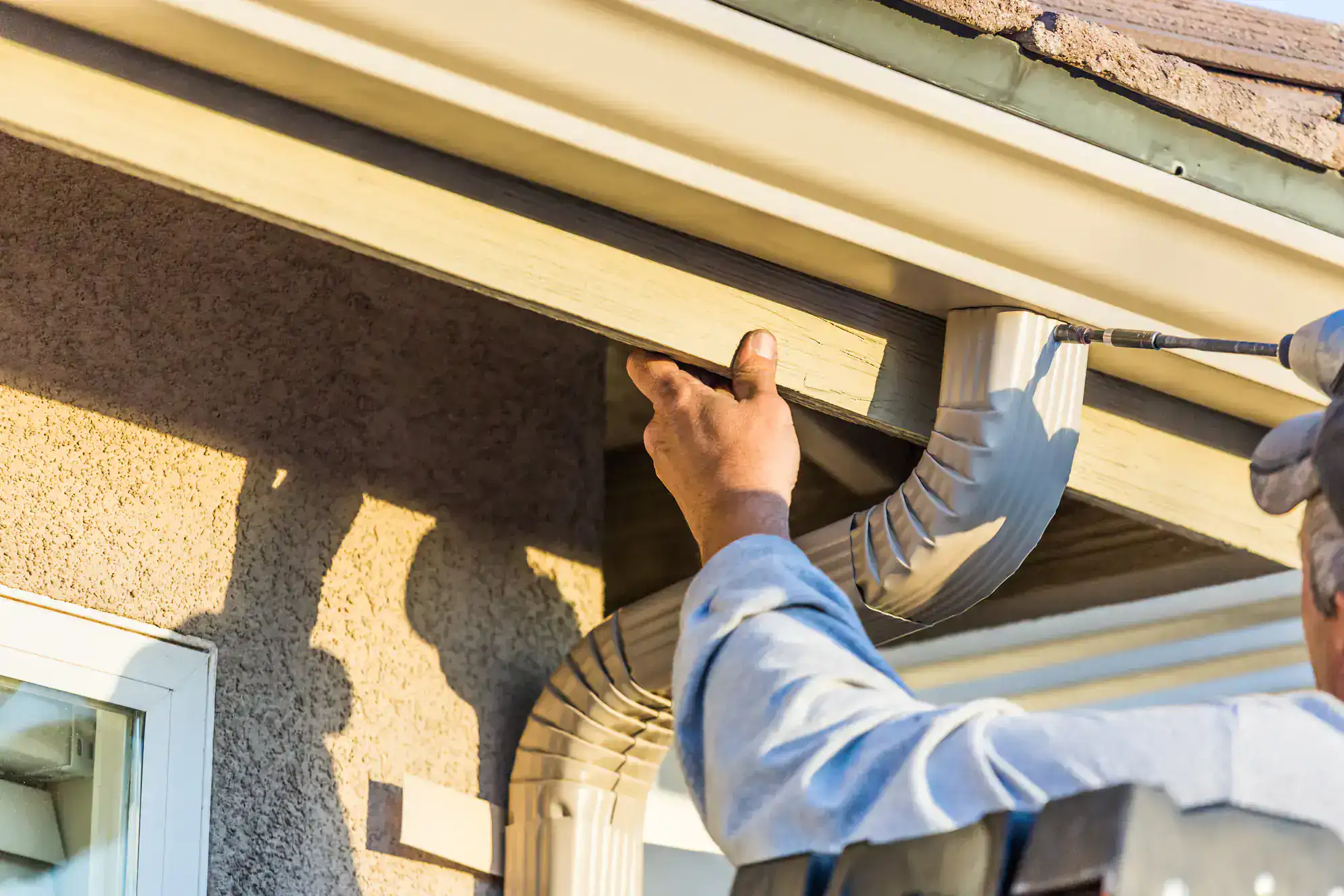
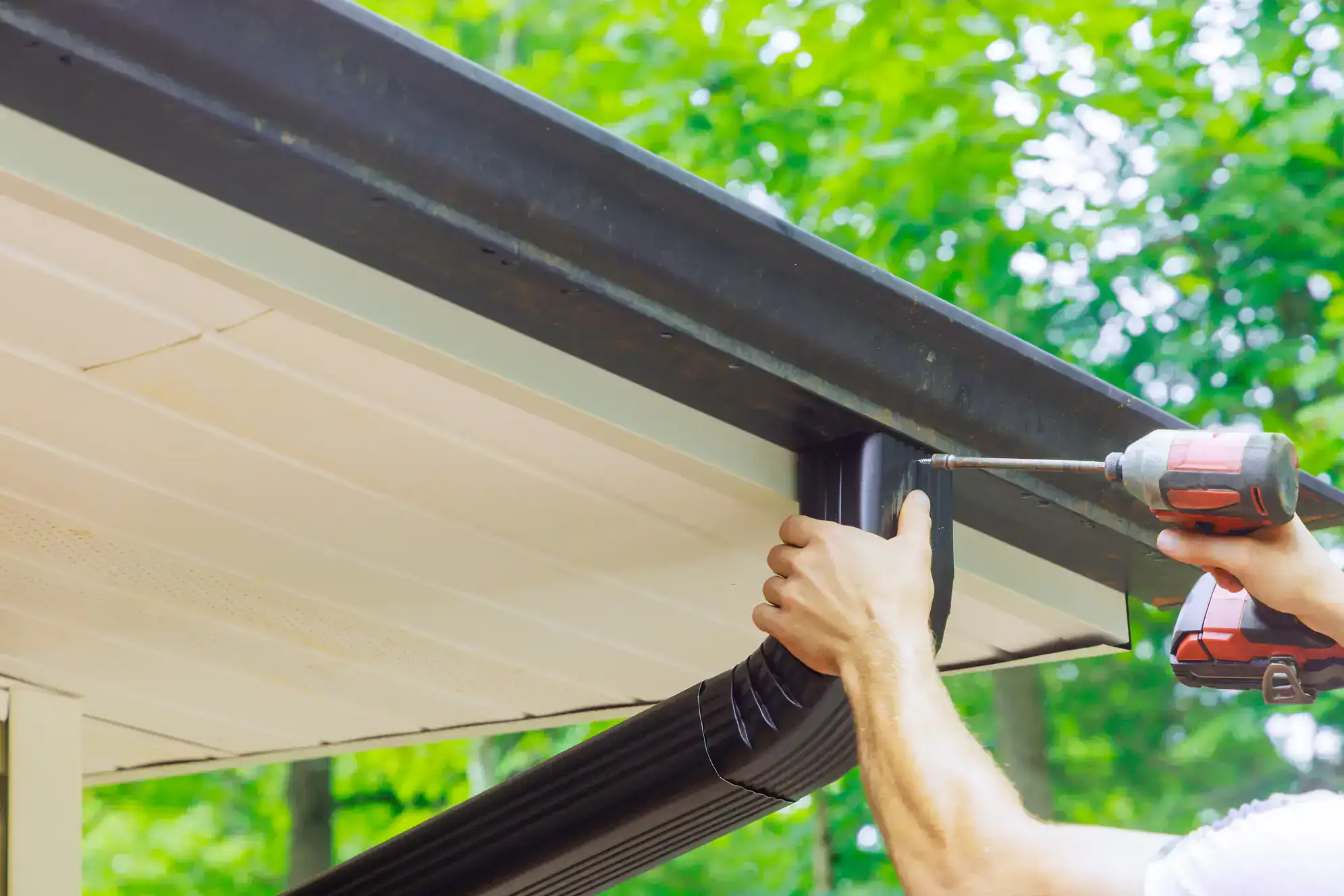
When the installation begins, your gutters are fabricated on-site as seamless runs custom-cut to your roofline’s exact measurements. No store-bought sectional pieces, no joints every ten feet waiting to leak. For Stony Hill homes, we also account for the hillside runoff load when sizing downspouts — a detail that makes a real difference when a summer storm drops two inches of rain in an hour. Like-for-like gutter replacements in New Jersey typically don’t require a separate building permit, but we handle that determination as part of the process so you don’t have to navigate it yourself.
Ready to get started?
Roof Gutter Installation in Stony Hill, NJ
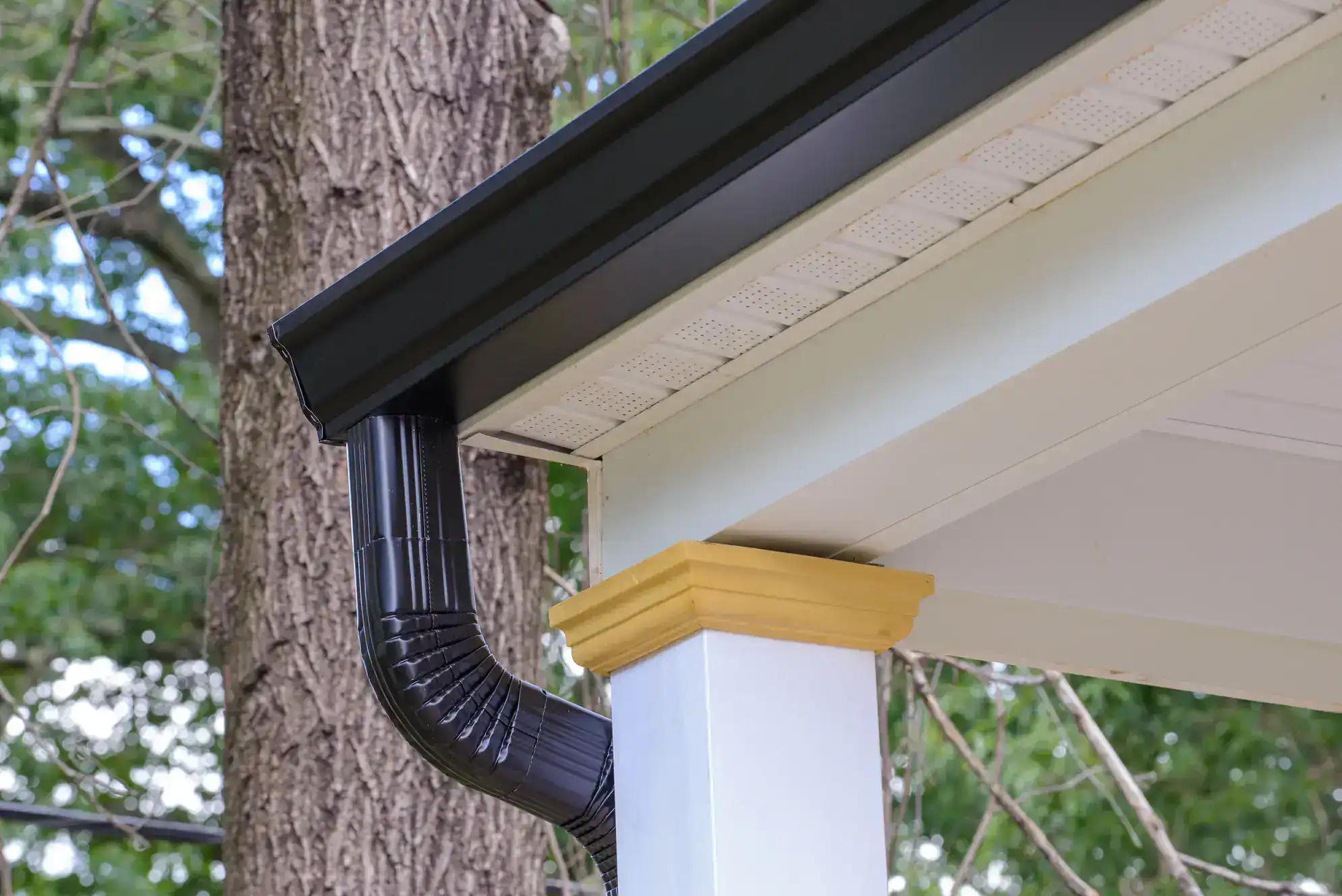
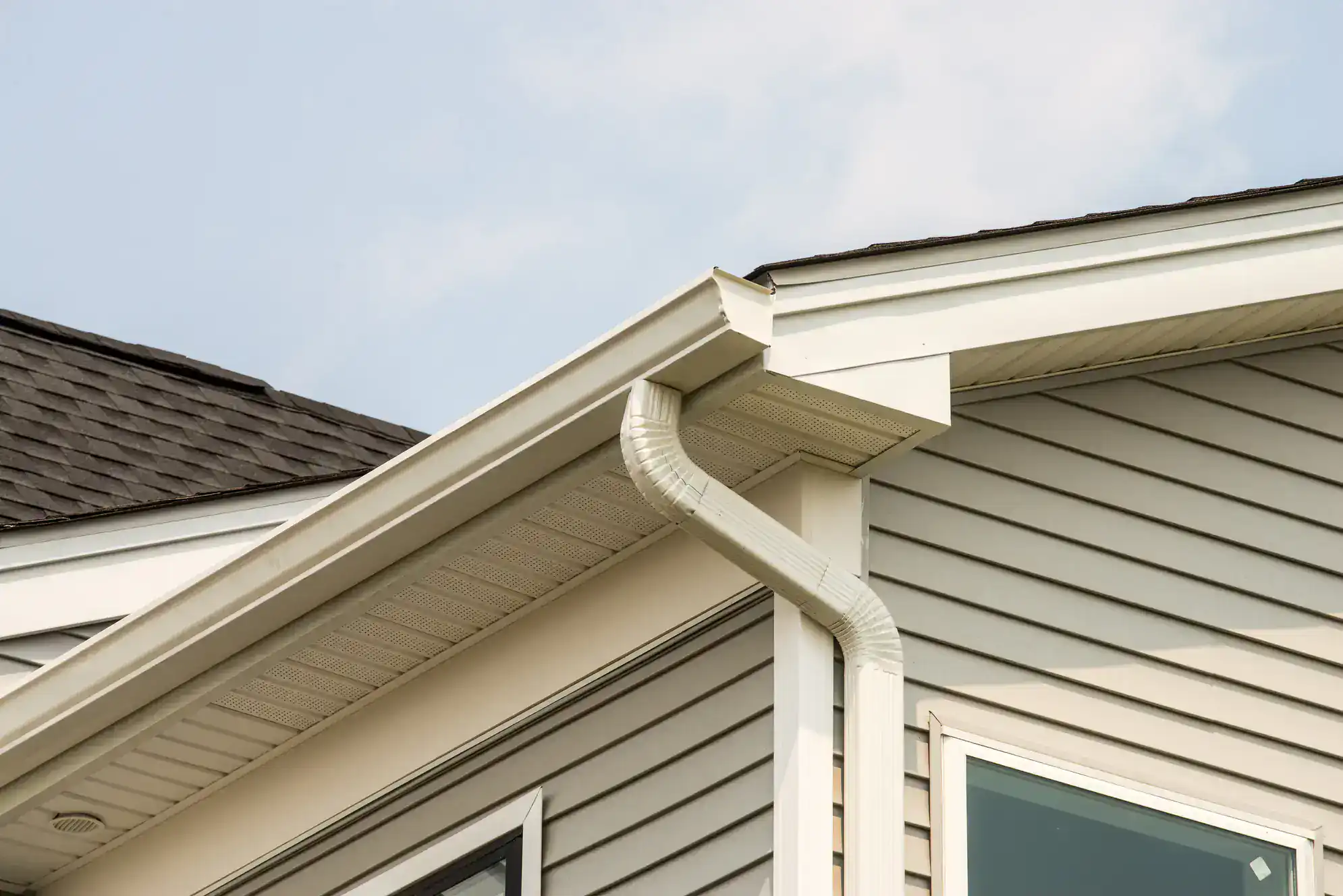
The standard for residential gutter installation in Stony Hill is seamless aluminum — fabricated on-site from a single continuous run with no joints except at corners and downspout connections. That design eliminates the most common failure point in sectional systems, which is the seam. On a home in Stony Hill dealing with freeze-thaw cycles through January and February, heavy debris loads from the surrounding tree canopy, and periodic extreme rain events, fewer seams means fewer leak points and a longer service life.
Every installation includes a full assessment of your fascia boards before a single bracket goes in. Rotted or deteriorated fascia is one of the most common reasons new gutters fail prematurely — mounting a new system on compromised wood just delays the next problem. We address it before it becomes your problem again.
Downspout placement and extension are part of the job, not an afterthought. For homes near the Passaic River Valley side of Stony Hill, or on any of the sloped streets running through the neighborhood, getting water away from your foundation and directed toward appropriate drainage isn’t optional — it’s the whole point. If your situation involves storm damage from wind, a fallen branch from your tree canopy, or ice damage from a hard winter, we also work directly with insurance adjusters and can document the damage in a way that gives you the best chance at coverage you’ve already paid for.
Do I need a permit for gutter installation in Stony Hill, NJ?
For most gutter replacement projects in Stony Hill — where you’re swapping out an existing system for a new one — a separate building permit is typically not required. The work falls under routine home maintenance rather than structural modification, so it doesn’t trigger the same review process as an addition or a major renovation would.
That said, there are situations where it’s worth confirming with the Berkeley Heights Township Building Department directly: if your home didn’t previously have gutters and you’re adding them for the first time, or if the project involves significant changes to the roofline or fascia structure. As a licensed NJ contractor under HIC License #13VH10605800, we handle this determination as part of the estimate process. You won’t need to make calls to the building department yourself — we’ll let you know upfront what applies to your specific Stony Hill property.
How do I know if my gutters need repair or full replacement?
The honest answer is that it depends on what’s actually failing and why. Isolated issues — a loose bracket, a single leaking seam, a downspout that’s come disconnected — are often repairable without replacing the whole system. But when you’re dealing with gutters that are sagging along multiple runs, pulling away from the fascia in several spots, or showing visible rust and corrosion throughout, repair tends to be a short-term fix on a system that’s already past its useful life.
For Stony Hill homes built between the 1940s and 1960s, the math often points toward replacement. Original gutter systems on mid-century homes in this neighborhood have been dealing with heavy tree load, hillside runoff, and hard NJ winters for decades. Even a first-replacement system installed 15 to 20 years ago is likely approaching the end of its service life under those conditions. The free inspection we offer is specifically designed to give you a straight answer on this — not a sales pitch, just an honest assessment of what the system actually needs.
Why do my gutters overflow during heavy rain even though they look clean?
Clean gutters that still overflow during heavy rain usually have one of three problems: they’re undersized for the roof area they’re draining, they’re not sloped correctly toward the downspouts, or the downspouts themselves don’t have enough capacity to move the volume of water coming off the roof.
In Stony Hill, there’s a fourth factor that doesn’t apply to most flat-terrain suburbs: hillside runoff. Homes positioned on or near the Second Watchung Mountain don’t just receive rainfall directly on the roof — they also collect accelerated sheet flow coming off the slope above. A gutter system that was sized for a flat lot in a different town can be dramatically undersized for a home in Stony Hill’s terrain. When we evaluate an overflowing gutter situation in this neighborhood, we’re not just checking for clogs — we’re looking at whether the system was ever appropriately sized for the actual drainage load your specific property receives.
How much does gutter installation cost in Stony Hill, NJ?
Full gutter replacement for a residential home in Stony Hill typically runs somewhere between $2,800 and $5,200, depending on the size of the home, the number of stories, the gutter profile and material selected, and whether any fascia repair work is needed before installation. Seamless aluminum — the standard for this type of home — generally runs $8 to $12 per linear foot installed, though homes with more complex rooflines or significant fascia deterioration will land higher in that range.
The wide spread in quotes you might see from different contractors usually comes down to what’s actually included. A low number that doesn’t account for fascia condition, proper downspout sizing, or on-site fabrication of seamless runs will often cost more in the long run when those issues resurface. The written estimate you receive from us breaks down exactly what’s included so you can compare accurately — not just compare the bottom line number without knowing what’s behind it.
Can storm damage to my gutters in Stony Hill be covered by homeowner's insurance?
Yes — and more Stony Hill homeowners qualify than realize it. If your gutters were damaged by a covered peril — wind from a summer thunderstorm, a branch falling from one of the mature oaks or maples on your property, hail impact, or ice damage from a hard freeze — your homeowner’s insurance policy may cover repair or full replacement. The challenge is that most insurance claims for gutter damage go unfiled simply because homeowners don’t know the damage qualifies, or they don’t know how to document it in a way that an adjuster will accept.
We work directly with insurance adjusters and can document the damage with the specificity the claims process requires. Union County has seen documented severe storm events — including systems that dropped four to six inches of rain in a matter of hours across the Stony Hill area — and the resulting wind and debris damage to gutter systems is exactly the kind of loss a homeowner’s policy is designed to cover. If there’s any possibility your damage is storm-related, it’s worth having us take a look before you assume it’s out-of-pocket.
How long do seamless aluminum gutters last on a home in Stony Hill, NJ?
Under normal conditions, seamless aluminum gutters have a functional lifespan of 20 to 30 years. In Stony Hill, “normal conditions” is doing a lot of work in that sentence. The combination of above-average tree canopy loading, hillside stormwater concentration, and the freeze-thaw cycles that run through January and February puts more cumulative stress on a gutter system here than the same system would experience in a lower-canopy, flat-terrain community.
That doesn’t mean you can’t get 25-plus years out of a well-installed seamless aluminum system in Stony Hill — you can. But it does mean that installation quality matters more here than it does in less demanding environments. Proper slope, correct downspout sizing for the actual runoff load, secure bracket spacing, and sound fascia underneath all affect how long the system holds up. A gutter that was installed correctly on a properly prepared fascia board, sized for the terrain your home sits on, will significantly outlast one that was installed fast and cheap on whatever was already there.
Other Services we provide in Stony Hill