
Gutter Installation in Cranford, NJ
Cranford Homes Need More Than a Basic Gutter Swap
Hear from Our Customers
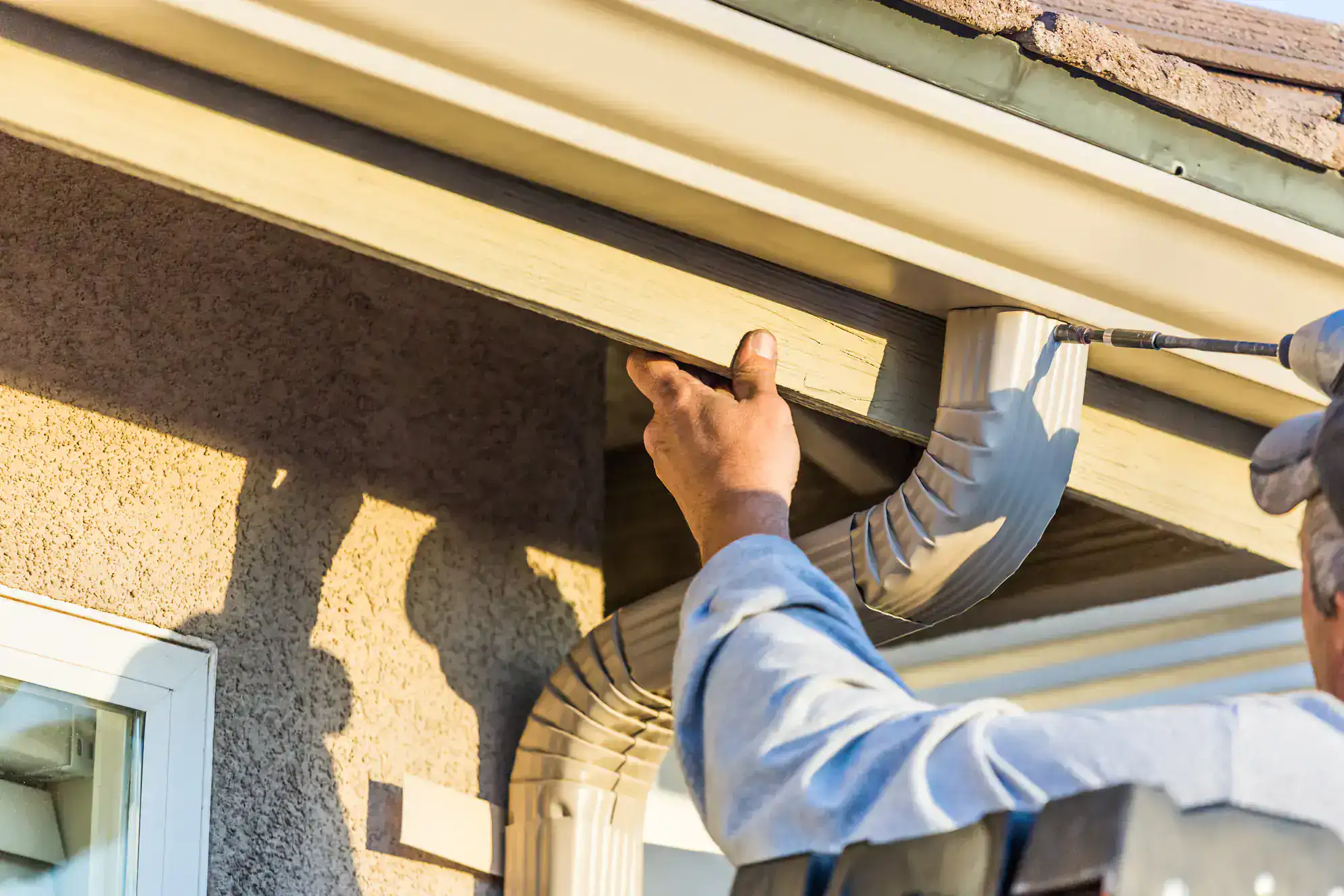
Rain Gutter Installation Cranford, NJ
Cranford has a flooding history that most NJ towns don’t. The Rahway River runs right through the center of town, and when storms hit — and they do, hard — homes along Springfield Avenue, South Union Avenue, and throughout the township feel it first. A properly installed gutter system doesn’t just protect your roofline. It controls where water goes, keeps it away from your foundation, and reduces the risk of the kind of basement intrusion that costs far more to fix than the gutters ever would have.
Most homes in Cranford were built before 1960. That means the gutter systems on a lot of these houses were sized and installed for a different era — smaller channels, outdated mounting hardware, and fascia boards that have been quietly deteriorating for decades. When you upgrade to a correctly sized seamless system with proper slope and downspout placement, you’re not just replacing old metal. You’re giving your home the drainage capacity it was never originally built with.
The result is straightforward: water moves where it’s supposed to, your foundation stays dry, and you stop worrying every time a storm rolls through Union County.
Gutter Contractors in Cranford, NJ
We’re based in Elizabeth, NJ — about five miles east of Cranford on Route 28. We’re not a national franchise routing calls through a regional office. We’re a Union County exterior contractor that has been doing this work for over ten years, and we know the housing stock, the weather patterns, and the building department expectations in Cranford and the surrounding area.
We hold NJ Home Improvement Contractor License #13VH10605800 — a credential Cranford’s own Building Department tells homeowners to verify before hiring anyone. We also carry manufacturer certifications that back the materials we install with real warranty coverage, not just a handshake.
Every job starts with a free inspection and ends with a written estimate. No vague quotes, no surprise charges at the invoice stage. If your fascia needs attention before the gutters go up — which is common on older Cranford homes — we’ll tell you that upfront, not halfway through the job.
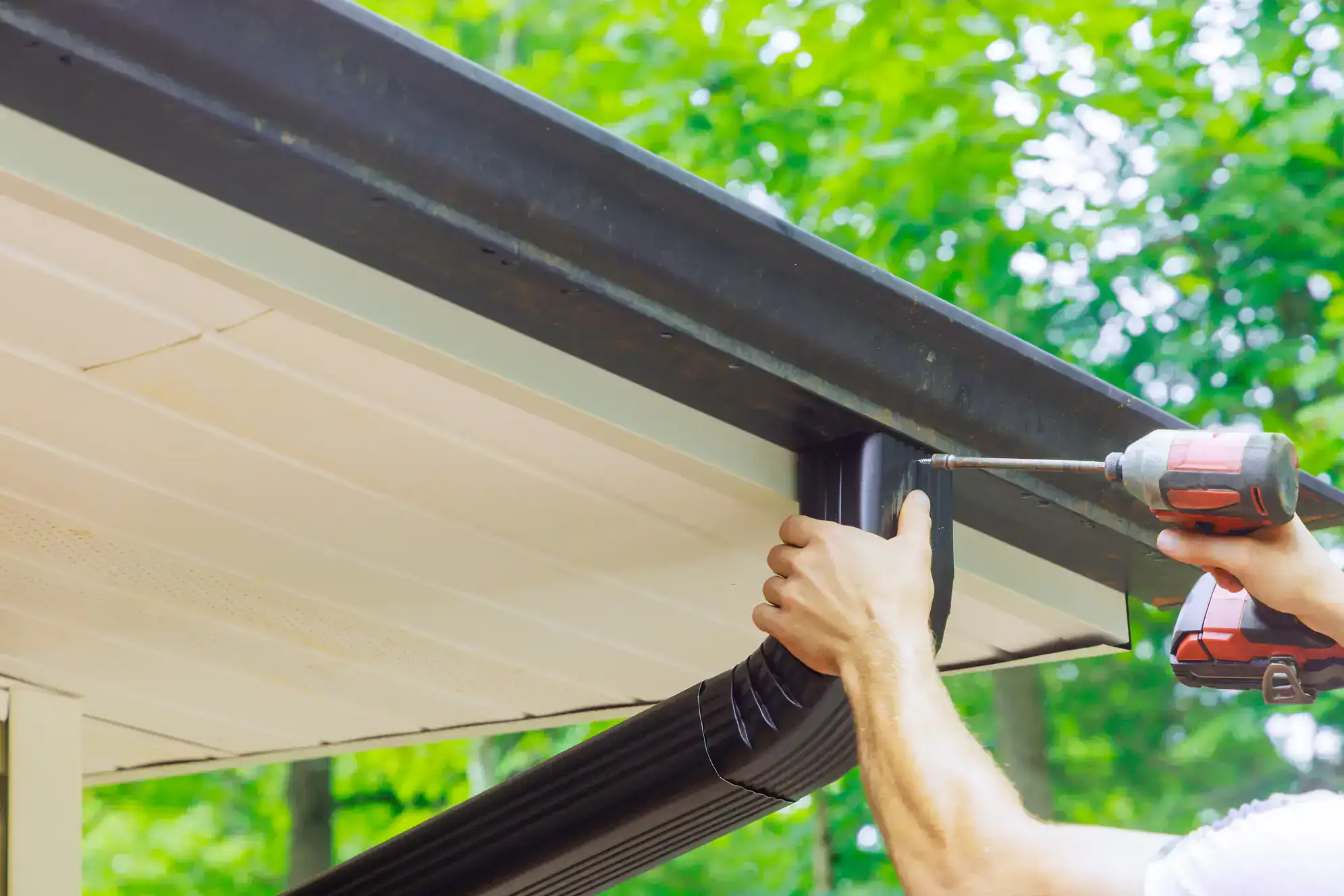
Home Gutter Installation Cranford, NJ
It starts with a free inspection. We come out, look at your existing gutter system, check the fascia and soffit condition, evaluate the slope and downspout positioning, and give you an honest picture of what’s there and what it needs. On a pre-war or mid-century Cranford home, this step matters more than most people expect — because what looks like a simple gutter replacement often involves rotted fascia, failed mounting hardware, or undersized channels that were never right for the roof’s actual drainage load.
From there, you get a written estimate. Once you’re ready to move forward, we schedule the installation and fabricate your seamless gutters on-site, cutting each run to the exact length of your roofline. No pre-cut sections, no mid-run seams that can separate under pressure. We mount everything with hidden hangers — the current standard — set the correct slope toward each downspout, and position extensions to carry water well clear of your foundation.
In Cranford, that last detail is not optional. With the flood vulnerability this town has documented at the federal level, downspout placement and extension length are part of the job, not an afterthought. When we’re done, we walk the system with you and make sure everything looks right before we leave.
Ready to get started?
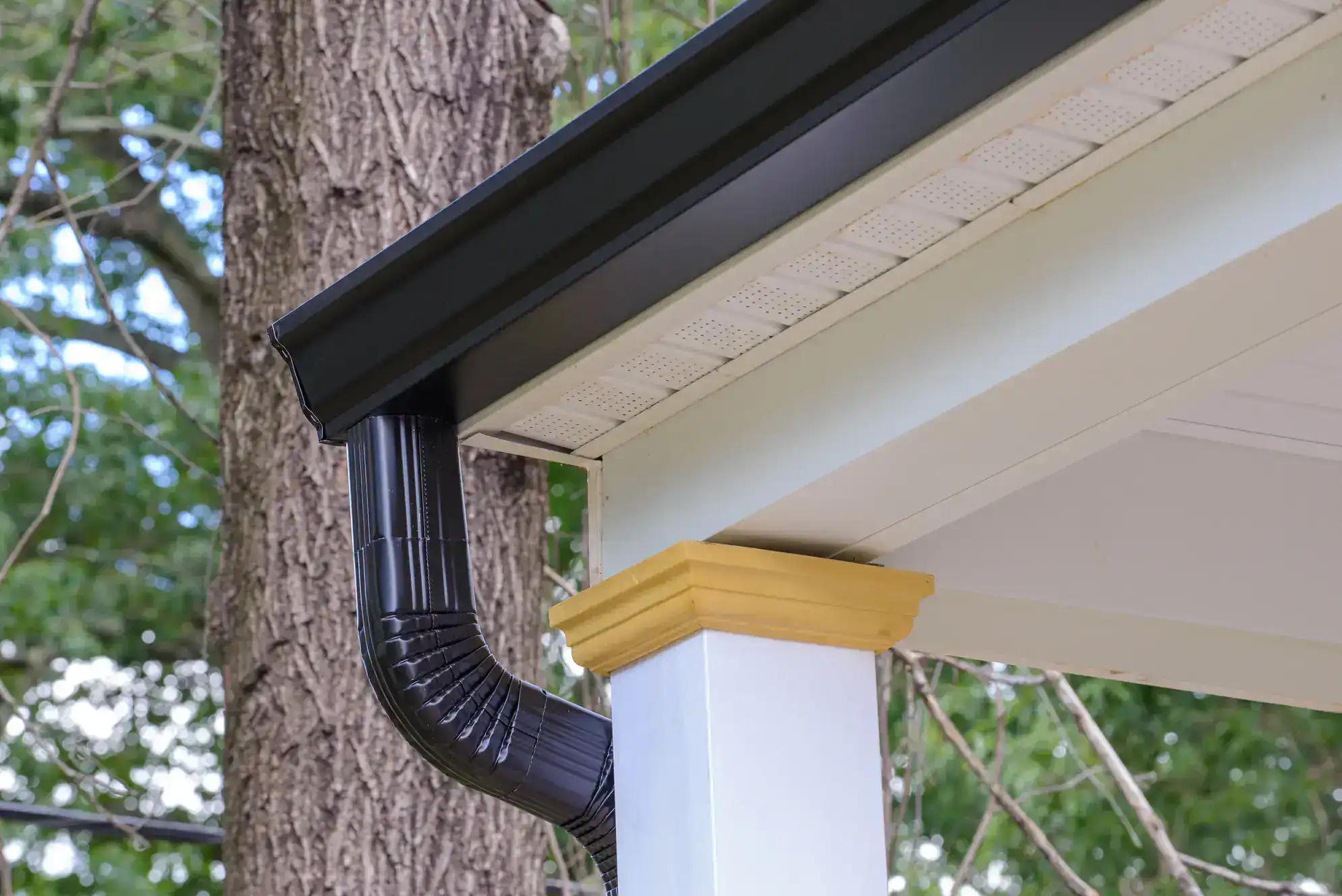
Roof Gutter Installation Cranford, NJ
Every gutter installation we do in Cranford is seamless aluminum, fabricated on-site to fit your home exactly. We size the system based on your roof’s actual square footage and pitch — not a one-size-fits-all approach. For many older Cranford homes, that means recommending 6-inch gutters instead of the 5-inch systems that were standard decades ago, because the summer convective storms that now regularly trigger flash flooding on streets like Burnside Avenue and Hillcrest Avenue produce water volume that smaller channels simply can’t handle fast enough.
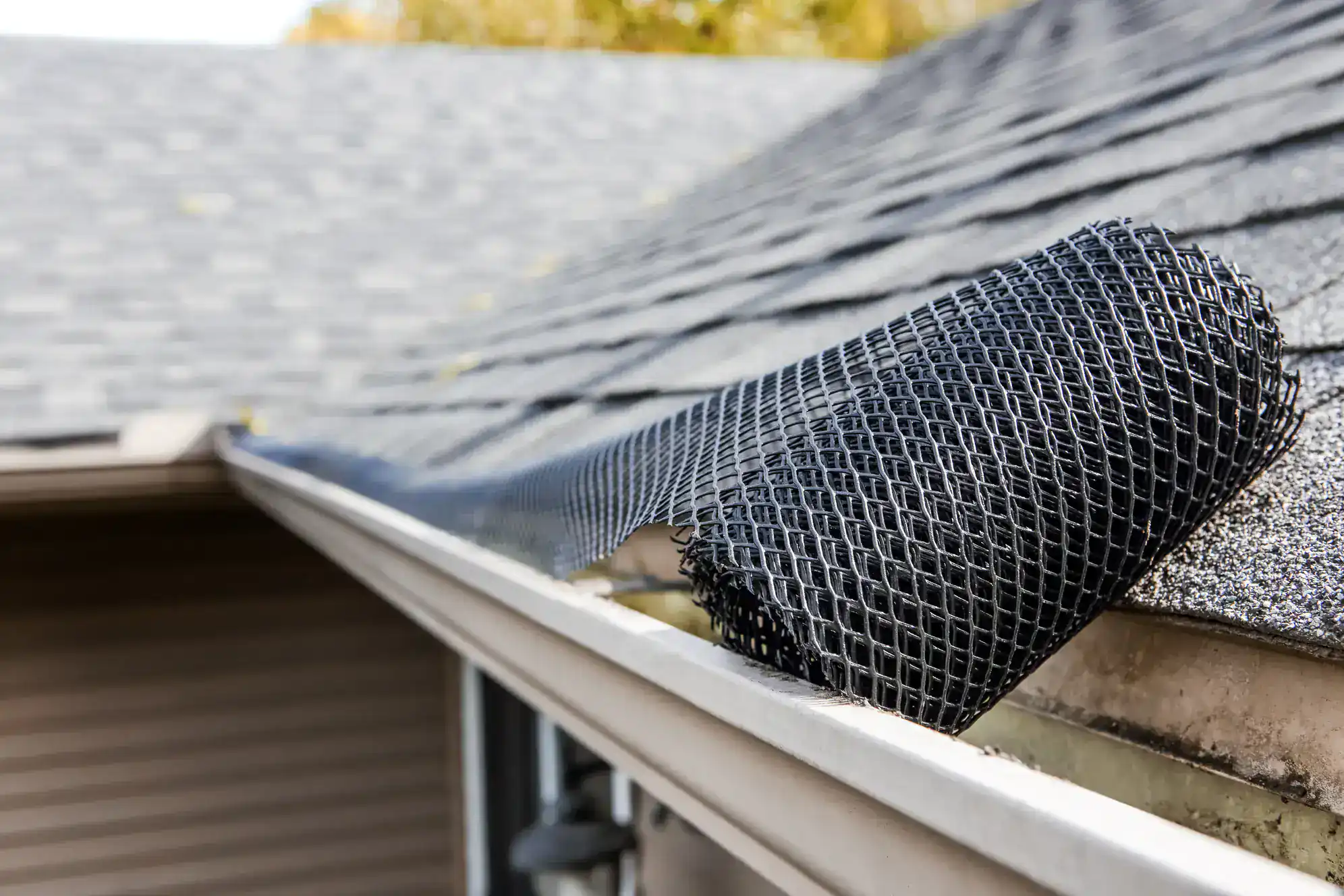
We also look at your tree exposure. Cranford’s mature residential streets — the kind you find through Lincoln Park, Centennial Village, and Roosevelt Manor — put serious leaf load into gutters every fall. If your home sits under heavy canopy, we’ll talk to you about gutter guard options that reduce cleaning frequency and keep the system functional through the full seasonal cycle, including the freeze-thaw months that stress gutter seams and connections every winter.
Every installation includes a full fascia assessment, hidden hanger mounting, correct slope calibration, and downspout extensions positioned to move water away from your foundation. If your home has storm damage and you’re dealing with an insurance claim, we work directly with adjusters to document what’s there and help you get the coverage your policy allows.
Do I need a permit for gutter installation in Cranford, NJ?
For a standard like-for-like gutter replacement on a residential home, a separate building permit is typically not required in New Jersey. That said, Cranford’s Building Department does require permits for construction work that involves structural changes — so if your fascia boards need significant repair or replacement as part of the project, that work may fall under a different threshold.
What Cranford’s Building Department is clear about is that your contractor needs to be licensed. Their own website tells homeowners to verify that before hiring anyone. We hold NJ HIC License #13VH10605800, which is publicly verifiable through the NJ Division of Consumer Affairs. If your specific project raises any permit questions, we’ll confirm what’s required with the Building Department before work begins — you won’t be left guessing.
How much does gutter installation cost for a Cranford home?
For a standard single-family home in Cranford, a full seamless gutter installation typically runs somewhere between $2,800 and $5,200 depending on the size of your home, the number of downspouts, and whether any fascia work is needed beforehand. Linear footage pricing for seamless aluminum generally falls in the $8 to $28 per foot installed range — the spread comes down to home complexity, access, and what the inspection reveals about your existing system.
Given that Cranford’s median home value is hovering around $770,000 to $795,000 right now, most homeowners here are protecting a significant asset. When you frame it that way, a $4,000 gutter installation that prevents a $15,000 foundation repair — or that supports a storm damage insurance claim — isn’t really a cost. It’s a return. We give you a written estimate after the free inspection so you know exactly what you’re paying and why before anything gets scheduled.
Can clogged or failing gutters actually cause basement flooding in Cranford?
Yes — and in Cranford specifically, this connection is more direct than in most NJ towns. When gutters overflow or drain against the foundation instead of away from it, that water saturates the soil around your basement walls. Over time, that pressure finds its way in. In a town where the Rahway River has caused documented flooding events affecting roughly one-fifth of all homes — and where flash flooding hit streets across the township as recently as July 2025 — your home’s drainage system is doing real work during every significant storm.
Clogged gutters are a common contributor that homeowners underestimate. Cranford’s mature tree canopy means gutters can fill with leaves in a matter of weeks during October and November. A blocked gutter in fall becomes an ice dam problem in January and a foundation seepage problem in March. Keeping your system clean, correctly sloped, and properly extended at the downspouts is the most straightforward thing you can do to reduce water intrusion risk — especially in a flood-adjacent community like this one.
What's the difference between seamless and sectional gutters, and which is better for my home?
Sectional gutters come in pre-cut lengths that are joined together on-site, which means every joint is a potential leak point. Over time — especially through New Jersey’s freeze-thaw cycles — those seams expand and contract, separate, and start letting water through in exactly the wrong places. Seamless gutters are fabricated from a single continuous run of aluminum, cut to the exact length of your roofline. There are no mid-run joints, so there’s nothing to separate.
For Cranford homes, seamless is the right call for a few reasons. The intense summer storms that have repeatedly triggered flash flooding across the township produce water volume that exposes any weakness in a gutter system fast. And with most Cranford homes being 60 to 100+ years old, the original sectional systems — if they haven’t been replaced already — are likely well past the point where the seams are holding reliably. Seamless aluminum is more durable, looks cleaner, and handles real water volume better. It’s what we install on every job.
How do I know if my gutters need to be replaced or just repaired?
The honest answer is that it depends on what the inspection finds. Gutters that are pulling away from the fascia, visibly sagging, or showing rust and holes along the channel are typically past the point where a repair makes financial sense — especially if the underlying fascia board is also deteriorated. A repair on a compromised fascia is a temporary fix that will fail again, usually at the worst possible time.
On older Cranford homes — and a lot of them were built before World War II — the original spike-and-ferrule mounting systems are commonly found to have pulled out of the fascia over decades of use. That’s not a patchable problem. What we do during the free inspection is tell you honestly what we find: if a section can be repaired cleanly and the rest of the system is sound, we’ll say so. If the system is at the end of its useful life and replacement is the smarter move, we’ll show you why. You’ll have the full picture before you make any decision.
Does homeowner's insurance cover gutter damage from storms in New Jersey?
It can, and more Cranford homeowners than you’d expect are leaving coverage on the table because they don’t realize it. Standard homeowner’s insurance policies in New Jersey typically cover sudden, accidental damage caused by wind, hail, falling branches, or storm events — which means gutters that were damaged or torn off during a storm may be a covered claim. What’s not covered is damage from deferred maintenance or gradual deterioration, so the distinction matters.
Given Cranford’s storm history — including the July 2025 flash flooding event that hit streets across the township — insurance claims for exterior storm damage are not uncommon here. We work directly with homeowner’s insurance adjusters to document storm damage to your gutter system, photograph the condition, and help you submit a claim that reflects what actually happened. If you’re not sure whether your damage qualifies, the free inspection is a good starting point — we’ll tell you what we see and whether it looks like something worth running through your insurance carrier.