
Roofer in Stony Hill, NJ
Watchung Mountain Weather Has a Way of Finding Every Weak Spot
Hear from Our Customers
Local Roofing Company Stony Hill, NJ
A lot of Stony Hill homes were built between 1940 and 1969. That’s a beautiful housing stock — solid construction, mature lots, real character. But those roofs have been through decades of New Jersey winters, and many of them are showing it whether the homeowner knows it or not. Granule loss, compromised flashing around chimneys, soft spots in the decking — these things don’t announce themselves until water is already inside.
When your roof is in real shape, you stop worrying every time a storm rolls in off the mountain. You stop seeing water stains creep across your ceiling after a nor’easter. You stop wondering whether that damp smell in the attic is something you should be dealing with. That kind of peace of mind isn’t abstract — it’s what happens when the primary moisture barrier on a home worth close to a million dollars is actually doing its job.
Stony Hill has had its share of serious weather — including a confirmed tornado that touched down in the area and flash flooding severe enough to bring significant damage to the neighborhood. When the next storm hits, a roof that’s been properly inspected, maintained, and replaced when it needed to be is the difference between a dry house and a damage claim.
Roofing Company Stony Hill, NJ
We’re based in Elizabeth — same county as Stony Hill, same county as you. That’s not a coincidence. We’ve been working on Union County homes for over a decade, which means we know the housing stock in Stony Hill and the surrounding area, the weather patterns that come off the Watchung Mountain, and what that elevation actually does to roofing materials over time. We’re not adding Stony Hill to a list of towns we claim to serve from three counties away.
We hold NJ Home Improvement Contractor License #13VH10605800 — publicly verifiable through the NJ Division of Consumer Affairs in about thirty seconds. We also carry certifications from major shingle manufacturers, which means we can offer enhanced warranty tiers that most contractors in this area simply cannot. When you hire us, you’re not just getting a new roof. You’re getting a manufacturer-backed warranty that transfers with the home if you ever sell — a real asset in a market where Stony Hill homes command strong prices.
This is a family business. Every job carries our name, and we intend to keep that name worth something.
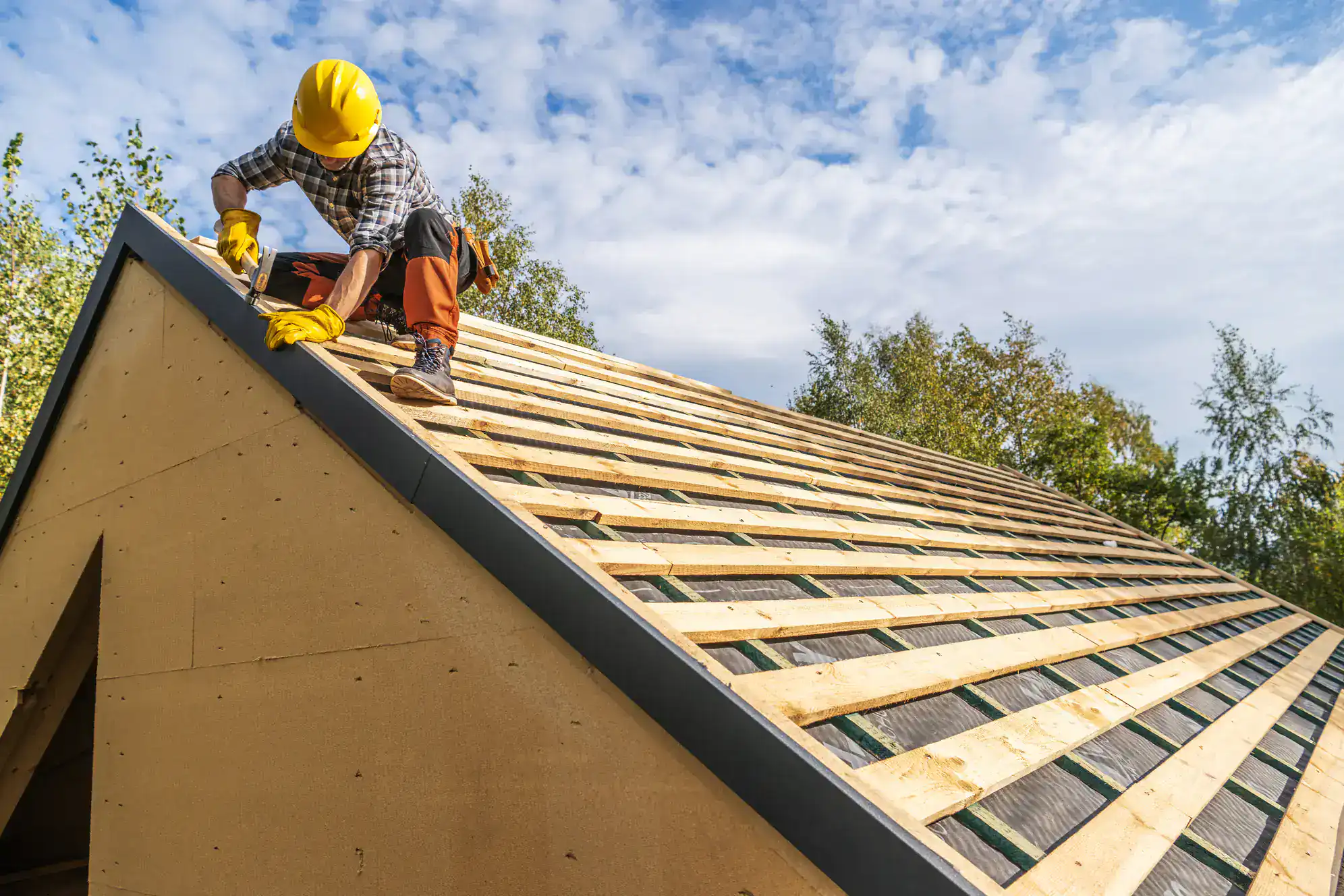
Emergency Roof Repair Stony Hill, NJ
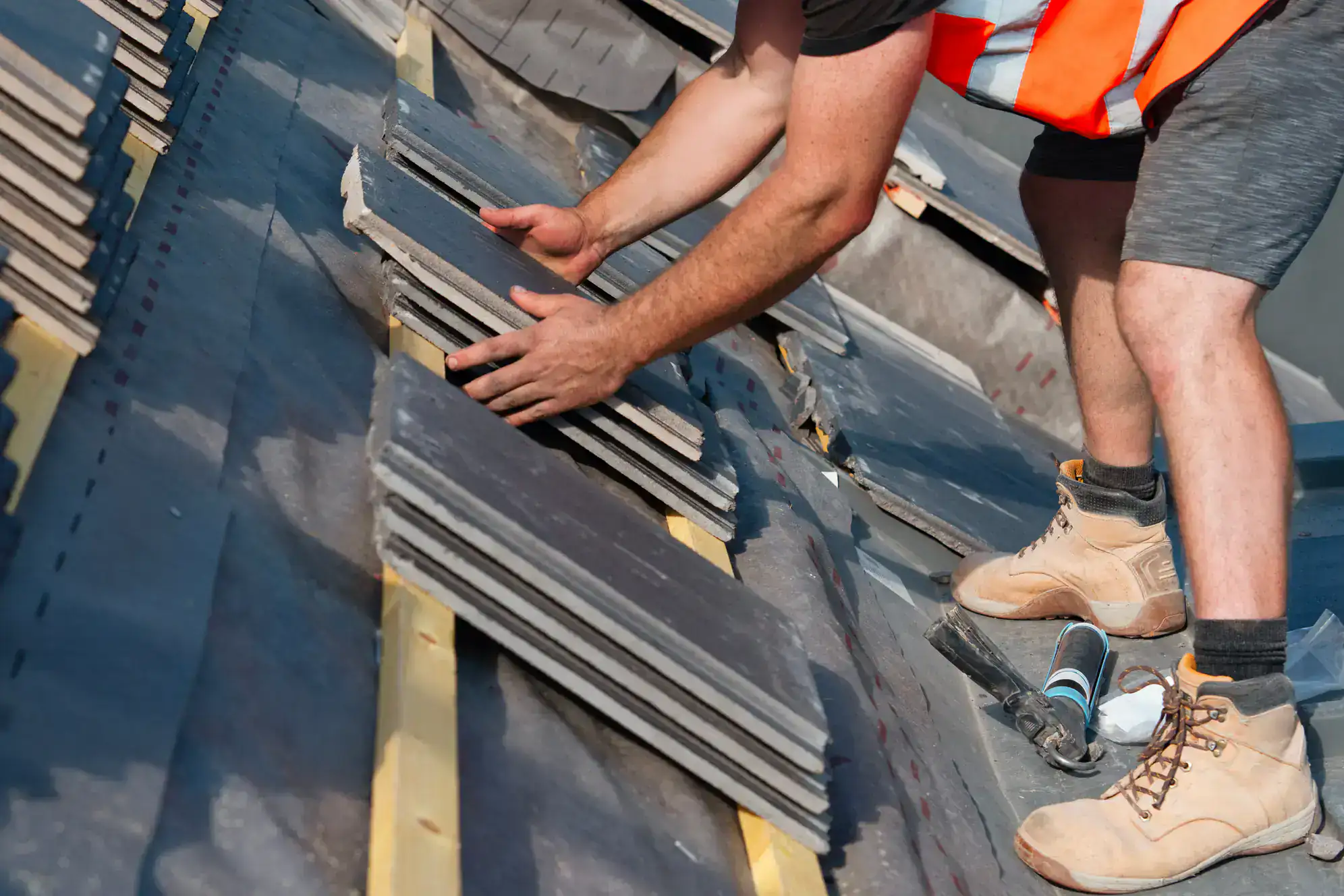
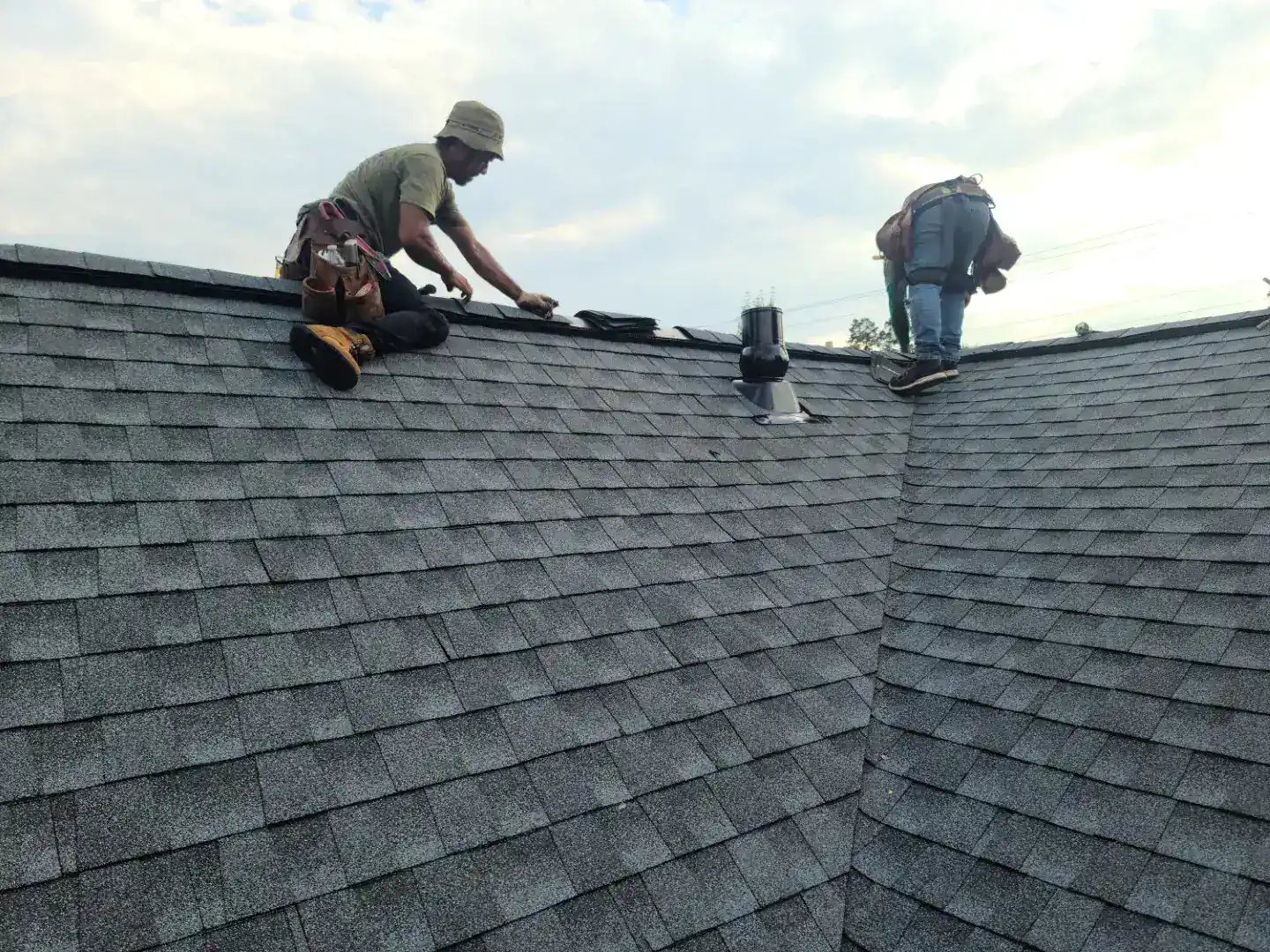
It starts with a free inspection. We come out, get on the roof, check the attic, assess the drainage, and look at every flashing point, valley, and penetration. You get a detailed photo report of what we find — yours to keep, yours to submit to your insurance company if a storm caused the damage. There’s no pressure, no obligation, and no sales pitch disguised as an assessment.
If work is needed, you get a complete written estimate before anything starts. Every line item is explained. The price you approve is the price you pay — no mid-project surprises, no “we found additional damage” charges that weren’t disclosed upfront. For full roof replacements in Stony Hill, we handle the building permit through the township’s Construction Code office, because a licensed contractor pulling the proper permits is what protects you legally and ensures the work is inspected correctly.
Once the job is underway, we communicate. You know what day the crew arrives, what materials are being used, and when the job will be done. Cleanup is part of the job — not an afterthought. When we leave, your yard looks the way it did before we got there. And if something comes up during a storm at 2 a.m., our emergency line is real. Someone answers.
Ready to get started?
Affordable Roofers Stony Hill, NJ
Stony Hill homes aren’t simple boxes. The mid-century colonials and cape cods that define this neighborhood come with multiple pitches, dormers, chimneys, and rooflines that demand real attention to detail — especially at the flashing points where most leaks actually start. Our inspections and installations account for the specific complexity of homes like yours, not a generic checklist built for a flat suburban tract house.
Our core services cover the full range: full roof replacement, repair, inspection, flat and TPO systems for any low-slope sections, gutters, and siding. We work on both residential and commercial properties. If your roof took storm damage, we document everything in a format your insurance adjuster can use. If you’re getting ready to list your home in a market where Stony Hill properties are moving at strong valuations, a clean roof inspection report — or a fresh installation with a transferable manufacturer warranty — can be the difference between a smooth sale and a negotiated price reduction.
We’re not the lowest bid in Union County, and we’re not trying to be. What you get instead is transparent pricing, licensed work, manufacturer-certified installation, and a contractor who will still be here if something needs attention after the job is done. That’s what fair actually looks like.
Do I need a permit to replace my roof in Stony Hill, NJ?
Yes. Full roof replacements in Stony Hill require a building permit through the township’s Building Department under New Jersey’s Uniform Construction Code. The permit fee is calculated based on the estimated project cost, and the work is subject to inspection by the township’s Construction Code Official once complete.
This matters more than most homeowners realize. When an unlicensed contractor skips the permit process — and many do — the liability falls on you as the homeowner. If you ever sell, an unpermitted roof replacement can surface during the buyer’s inspection and become a significant negotiating issue. A licensed contractor like us handles the permit process as a standard part of the job, so you’re covered legally and the installation is verified by a third-party inspection.
How do I know if I need a full roof replacement or just a repair in Stony Hill?
The honest answer is that you usually can’t tell from the ground, and neither can a contractor who only does a visual walk-around from the driveway. A real assessment means getting on the roof, checking the attic for moisture infiltration, and looking at the decking condition — not just the shingles.
For Stony Hill homes built in the 1940s through 1960s, there are specific things we look for: original or early-replacement decking that may have taken on moisture over decades, flashing around chimneys and dormers that’s been patched multiple times, and granule loss patterns that indicate a shingle system that’s past its functional life. A repair makes sense when the damage is isolated and the underlying system is still sound. When the shingles are aging out uniformly, the flashing is failing in multiple spots, or the decking shows soft areas, a replacement is almost always the more cost-effective answer over a three-to-five-year horizon.
What does storm damage to a Stony Hill roof actually look like?
It depends on the storm type. After a high-wind event — like severe weather that has tracked through the Stony Hill area — you’re looking for lifted or missing shingles, damaged ridge caps, and debris impact points. These are often visible from the ground. What isn’t visible is the secondary damage: shingles that look intact but have broken the seal strip, flashing that shifted just enough to let water in at the next heavy rain, and granule loss from hail that only shows up under close inspection.
After a heavy rain event — and the Stony Hill area has experienced flash flooding that dropped significant rainfall in short periods — the damage shows up differently. You’re looking for water stains on ceiling drywall, moisture in the attic insulation, and rust streaks around chimney flashing or pipe boots. The storm itself may be weeks in the past before the interior signs appear. That’s why a post-storm inspection matters even if your roof looks fine from the street.
How does the Watchung Mountain location affect how long a roof lasts?
More than most homeowners expect. Homes on or near the crest of the Second Watchung Mountain — which includes Stony Hill — experience higher sustained wind speeds than valley communities during storm events. That wind-driven rain gets into places that standard rain doesn’t, particularly around flashing, ridge vents, and any penetration point on the roof surface.
The elevation also means more pronounced freeze-thaw cycling in winter. Every time temperatures drop below freezing after a warm spell, any water that’s worked its way under a shingle or into a small flashing gap expands. Do that dozens of times over a single winter and you accelerate the deterioration significantly. Add in the heavy tree canopy around most Stony Hill properties — which keeps north-facing roof sections damp longer and clogs gutters with debris — and you have conditions that consistently shorten the effective lifespan of a standard asphalt shingle system compared to what the manufacturer’s rating suggests.
How much does a roof replacement typically cost in Stony Hill, NJ?
For a standard asphalt shingle replacement on a single-family home in Stony Hill, most homeowners are looking at a range somewhere between $12,000 and $22,000 depending on roof size, pitch complexity, the number of penetrations (chimneys, skylights, dormers), and whether the decking needs any replacement. Homes in Stony Hill tend to sit on the higher end of that range because of the roofline complexity common to mid-century colonials and capes — multiple pitches, dormers, and chimneys add labor and material time.
Premium shingle systems with manufacturer-certified installation — which unlock enhanced warranty coverage — carry a higher upfront cost than standard shingles installed by a non-certified contractor. That difference in cost is real. So is the difference in what you’re protected against. A manufacturer-backed transferable warranty on a Stony Hill home is a tangible asset, not a line item to cut. We give you a complete written estimate before any work begins so you can evaluate the full picture before committing to anything.
Can a roofing contractor help me with my homeowner's insurance claim in Stony Hill?
A qualified contractor can be one of the most useful resources you have during a storm damage claim — and in a community with Stony Hill’s documented storm history, this comes up more than it should have to. What we can do is provide a detailed written damage assessment and a professional photo report that documents exactly what was damaged, where, and how. That documentation is what insurance adjusters use to evaluate your claim, and a thorough report from a licensed contractor carries significantly more weight than photos you take yourself from the ground.
We cannot negotiate with your insurance company on your behalf — that’s the role of a public adjuster if you need one. But we can make sure the damage is accurately and completely documented so your adjuster has everything they need to process a fair claim. Many homeowners in Union County have left money on the table after storm events simply because the damage wasn’t fully documented before temporary repairs were made. Our free inspection includes that photo report at no cost to you, whether or not you end up hiring us for the repair.
Other Services we provide in Stony Hill