
Roof Repair in Ho-Ho-Kus, NJ
Ho-Ho-Kus Homes Deserve More Than a Quick Patch

Hear from Our Customers
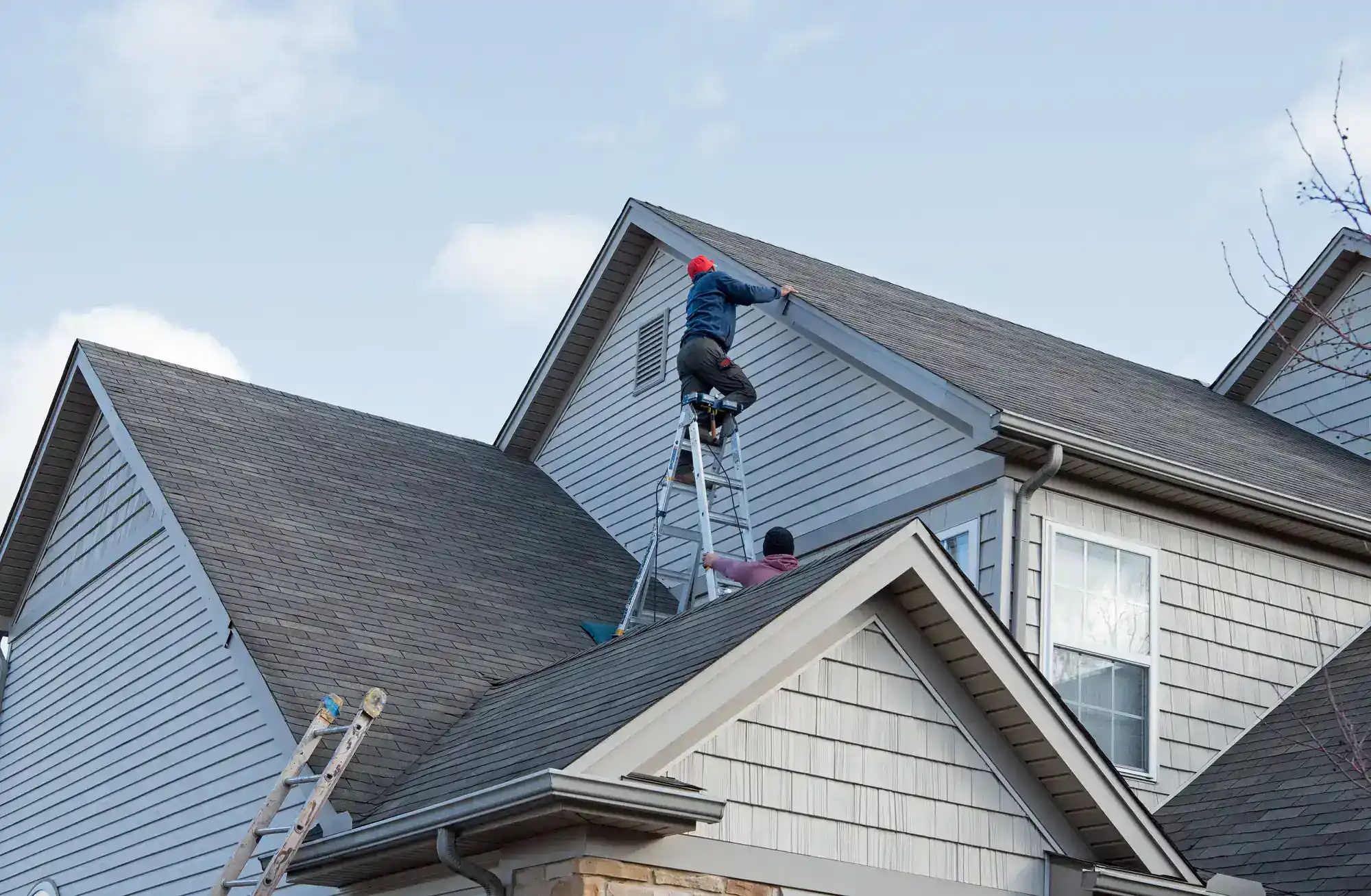
Bergen County Roof Repair Results
Ho-Ho-Kus gets the full treatment from Mother Nature. Nor’easters roll through Bergen County every winter, summer storms bring wind and hail, and the freeze-thaw cycles in between work on every weak point your roof has. When we repair a roof right, you stop chasing the same leak every spring. You stop finding water stains in new places after every storm. That’s the outcome — not just a fix, but a roof that actually performs through what this area throws at it.
The mature tree canopy that makes Ho-Ho-Kus so visually distinctive also creates real roofing challenges. Shade from dense trees slows down the natural drying process, which promotes moss and algae growth that quietly degrades shingles over time. Debris settles into valleys and gutters, trapping moisture against the deck. A repair that accounts for these underlying conditions — not just the visible damage — is the difference between a fix that lasts and one you’re revisiting in eighteen months.
For homeowners in the Cheelcroft neighborhood, where brick and flagstone Tudors sit on the National Register of Historic Places, the stakes are even higher. Mismatched shingles or careless material selection on a home with that kind of architectural history isn’t a minor issue. Getting it right — matching profiles, colors, and materials to what was already there — matters here in a way it simply doesn’t in a generic subdivision.
Ho-Ho-Kus NJ Roofing Contractor
We’ve been working on Bergen County homes for over ten years. Not franchise territory. Not a storm-chasing crew that shows up after a major weather event and disappears after the deposit. A family-run operation that’s built our reputation on doing the work right and being reachable when something comes up.
Ho-Ho-Kus is a small borough — 1.74 square miles, roughly 4,200 residents — and in a community that tight, reputation travels fast. That’s exactly the kind of accountability that shapes how we operate. When your neighbors can verify who worked on your roof, the standard of work has to be consistent, every single time.
We hold contractor licenses required under New Jersey law and carry certifications from major shingle manufacturers — credentials that allow for manufacturer-backed warranty coverage that unlicensed or non-certified contractors simply can’t offer. Every job comes with a written estimate that matches the final invoice. No surprises, no add-ons, no vague scope of work that leaves room for a bigger number at the end.

Roof Repair Process in Ho-Ho-Kus
It starts with a free inspection. A real one — not a sales visit dressed up as an assessment. Our goal is to understand what’s actually happening with your roof: where the damage is, what caused it, and whether repair or replacement makes more sense for your situation. If it’s a repair, you’ll know exactly what that looks like before anyone picks up a tool.
From there, you get a written, itemized estimate. Everything is spelled out — materials, scope, labor, timeline. Because many Ho-Ho-Kus homeowners are commuting into the city during the week, we handle scheduling around your availability, and you’ll know exactly when the crew is showing up and what to expect each day. You don’t have to be home to babysit the project, but you’ll never be left wondering what’s happening either.
Once the work is done, we do a full cleanup of the property — nails, debris, felt paper, all of it. Ho-Ho-Kus homeowners take their properties seriously, and the job isn’t finished until the yard looks the way it did before the crew arrived. If the project requires a permit under New Jersey’s Uniform Construction Code — which applies to most full replacements and significant repair scopes — we handle that as part of the process. The Ho-Ho-Kus Construction Department advises homeowners not to release final payment until work has been inspected and approved, and that’s exactly how a properly permitted job works.
Ready to get started?
Roof Repair Services in Ho-Ho-Kus, NJ
Roof repair in Ho-Ho-Kus covers a wide range of situations — and the right scope depends entirely on what’s going on with your specific roof. Shingle roof repair is the most common call, whether it’s a handful of lifted shingles after a wind event, granule loss from a summer hail storm, or cracked and curling shingles on a roof that’s been through one too many Bergen County winters. We handle shingle matching carefully here, because a visible patch on a well-maintained colonial or Tudor is not an acceptable outcome.
Roof leak repair is often traced back to flashing failures — around chimneys, skylights, dormers, and valleys — rather than the shingles themselves. These are the spots that fail first on older homes, and Ho-Ho-Kus has a lot of older homes. Many of the borough’s housing stock dates to the 1940s and 1950s, and even homes that have been well-maintained can have original or aging flashing that’s reached the end of its service life. Identifying the actual source of a leak — not just patching the most visible symptom — is where the diagnostic work matters.
We offer emergency roof repair in Ho-Ho-Kus, NJ when storm damage can’t wait. Temporary protective measures, including tarping and emergency patching, stop active water intrusion while a permanent repair plan is put together. Flat roof repair is also handled for garages, additions, and any low-slope sections of residential properties in the area. Whatever the scope, the estimate is written, the materials are specified, and the warranty coverage — backed by the manufacturer when applicable — is clearly explained before work begins.
How do I know if my Ho-Ho-Kus home needs roof repair or full replacement?
This is the right question to ask before anyone starts talking numbers. The honest answer is that it depends on the age of the roof, the extent of the damage, and what the underlying decking looks like once a proper inspection is done. A roof that’s 15 years old with isolated shingle damage from a recent storm is almost always a repair candidate. A roof that’s 25 or 30 years old with widespread granule loss, multiple leak points, and soft spots in the decking is telling you something different.
In Ho-Ho-Kus specifically, a lot of the housing stock was built in the 1940s and 1950s. If a roof on one of those homes hasn’t been replaced in the last two to three decades, the inspection is going to look at more than just surface damage — it’s going to assess whether the structure underneath is still sound. The free inspection is exactly the right starting point, because you get an honest read on where things stand before any commitment is made.
What does roof repair typically cost in Ho-Ho-Kus, NJ?
Repair costs vary based on what’s actually wrong, how accessible the damaged area is, and what materials are needed to match the existing roof. Minor repairs — sealing a flashing joint, replacing a small section of shingles — can run a few hundred dollars. More involved repairs, like replacing a significant section of shingles on a steep-pitch colonial with a complex roofline, or addressing decking damage underneath, can reach into the $1,500 to $3,000 range depending on scope.
What’s worth knowing for Ho-Ho-Kus homeowners is that deferred repairs almost always cost more than addressing the issue when it’s first identified. A $500 flashing repair left alone for a season can turn into a $3,000 job once water has worked its way into the decking and insulation. The free estimate gives you a clear number before any work starts — and that number doesn’t change unless the agreed scope changes.
Does roof repair in Ho-Ho-Kus require a permit from the borough?
It depends on the scope of work. Under New Jersey’s Uniform Construction Code, minor repairs — patching a small number of shingles, sealing a flashing joint — generally don’t require a permit. Full roof replacements do. Significant repair work that involves replacing large sections of shingles or decking typically falls into permit territory as well, and the Ho-Ho-Kus Construction Department is the definitive authority on where that line is for a specific project.
The Ho-Ho-Kus Construction Department specifically advises homeowners not to make final payment to a contractor until the work has been inspected and final approvals have been granted. That guidance exists because permit compliance protects you — it ensures the work meets code and that there’s an official record of it, which matters when you sell the property or file an insurance claim. A contractor who pulls permits and schedules inspections as a standard part of the job is doing it the right way. One who discourages permits or doesn’t mention them at all is a flag worth paying attention to.
How does storm damage roof repair work with a homeowners insurance claim?
After a storm — whether it’s a nor’easter, a summer hail event, or a wind storm that lifted shingles — the first step is documenting the damage before anything is touched. Photographs, written notes, and a professional inspection report all factor into what an insurance adjuster will accept when evaluating your claim. The way damage is documented makes a real difference in how the claim is processed.
Bergen County sees enough severe weather that storm damage claims are a regular part of the roofing landscape here. The process involves coordinating with your insurance adjuster, making sure the scope of the repair aligns with what your policy covers, and understanding what the claim will and won’t pay for. Temporary protective measures — tarping, emergency patching — can be put in place quickly to stop active damage while the permanent repair plan and claim process move forward. Having a contractor who has been through this process many times is genuinely useful when you’re navigating it for the first time.
What causes roof leaks in older Ho-Ho-Kus homes, and where do they usually start?
In older Bergen County homes — and Ho-Ho-Kus has a lot of them, with much of the borough’s housing stock dating to the 1940s and 1950s — the most common leak sources are flashing failures, not shingle failures. Flashing is the metal material that seals the transitions around chimneys, dormers, skylights, and roof valleys. It’s also the component that tends to fail first on an aging roof, and it’s often the last thing a homeowner thinks to look at when they’re trying to trace a leak.
Older homes in Ho-Ho-Kus also tend to have more complex roof geometries — multiple valleys, dormers, varying pitches — which means more transition points where water can find its way in. Ice dams are another common culprit in Bergen County winters: when heat escapes through the roof deck and melts snow that refreezes at the eaves, it backs water up under the shingles. Homes with inadequate attic ventilation are especially vulnerable to this, and it’s something a thorough inspection will catch.
Why does shingle matching matter so much for roof repair in Ho-Ho-Kus?
In most places, a visible patch on a repaired roof is a cosmetic inconvenience. In Ho-Ho-Kus, it’s a bigger deal than that. This is a borough where properties are maintained meticulously, where median home values exceed $1 million, and where neighborhoods like Cheelcroft — with its historic Tudors and colonials on the National Register of Historic Places — have a level of architectural character that demands careful material selection. A repair that leaves a visibly mismatched section on a home like that isn’t just an eyesore; it’s a real impact on a property you’ve invested significantly in.
Shingle matching involves more than just color. Profile, texture, granule surface, and dimensional thickness all factor into whether a repaired section blends with the existing roof or stands out. Manufacturer product lines change over time, which means finding a close match on an older roof takes more effort than pulling from whatever’s in stock. It’s worth asking any contractor you’re considering exactly how they approach shingle matching — the answer tells you a lot about how seriously they take the finished result.