
Gutter Installation in Ho-Ho-Kus, NJ
Ho-Ho-Kus Homes Are Too Valuable for Gutters That Quit

Hear from Our Customers
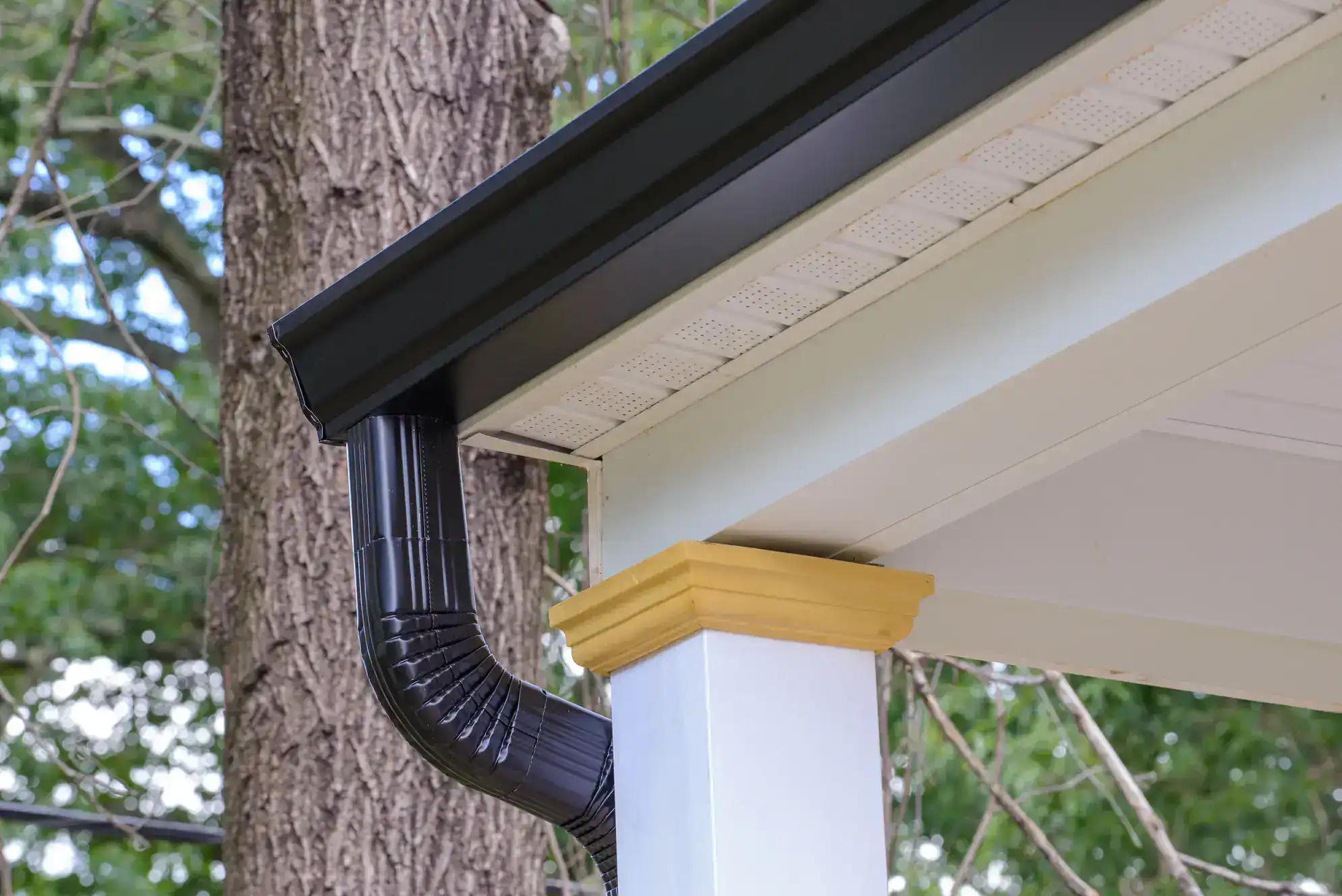
Rain Gutter Installation in Ho-Ho-Kus
Most homeowners don’t think about their gutters until something goes wrong — a waterfall over the edge during a summer storm, a soft spot on the fascia board, or water pooling against the foundation after a heavy rain. By that point, the gutter itself is usually the least expensive part of the fix.
Ho-Ho-Kus gets hit from every angle. Bergen County summers bring intense, short-burst thunderstorms that overwhelm undersized or clogged systems fast. Fall drops a full season of leaf load from the borough’s mature tree canopy directly into your gutters — and once that debris builds up, standing water follows. Standing water accelerates rust in older systems, works apart seam joints, and sets up the ice dam conditions that cause real interior damage every winter.
The homes here are mostly colonials, Tudors, and Cape Cods built between the 1940s and 1960s. Many of them are still running on original or early-replacement gutter systems that are well past their functional lifespan. When we install a properly sloped, correctly sized seamless system, you stop chasing the same seasonal problems every year — and you protect a home that’s worth protecting.
Gutter Contractors in Ho-Ho-Kus, NJ
We’ve been doing exterior work across Bergen County for over a decade. We’re not a national franchise rotating crews through Ho-Ho-Kus — we’re a licensed NJ home improvement contractor (License #13VH10605800) that built its reputation through referrals and repeat customers, not paid lead generation.
In a borough the size of Ho-Ho-Kus — 1.76 square miles, roughly 4,400 residents — word travels. The homeowner you talk to at the Ho-Ho-Kus train station or at school pickup has probably heard about your contractor before you even call them. We know that, and we work accordingly.
We also carry manufacturer certifications from major building material manufacturers, which means your installation meets the standards required for manufacturer-backed warranty coverage. You get a written estimate before any work starts, no hidden fees, and a free inspection that tells you exactly what’s going on before you commit to anything.
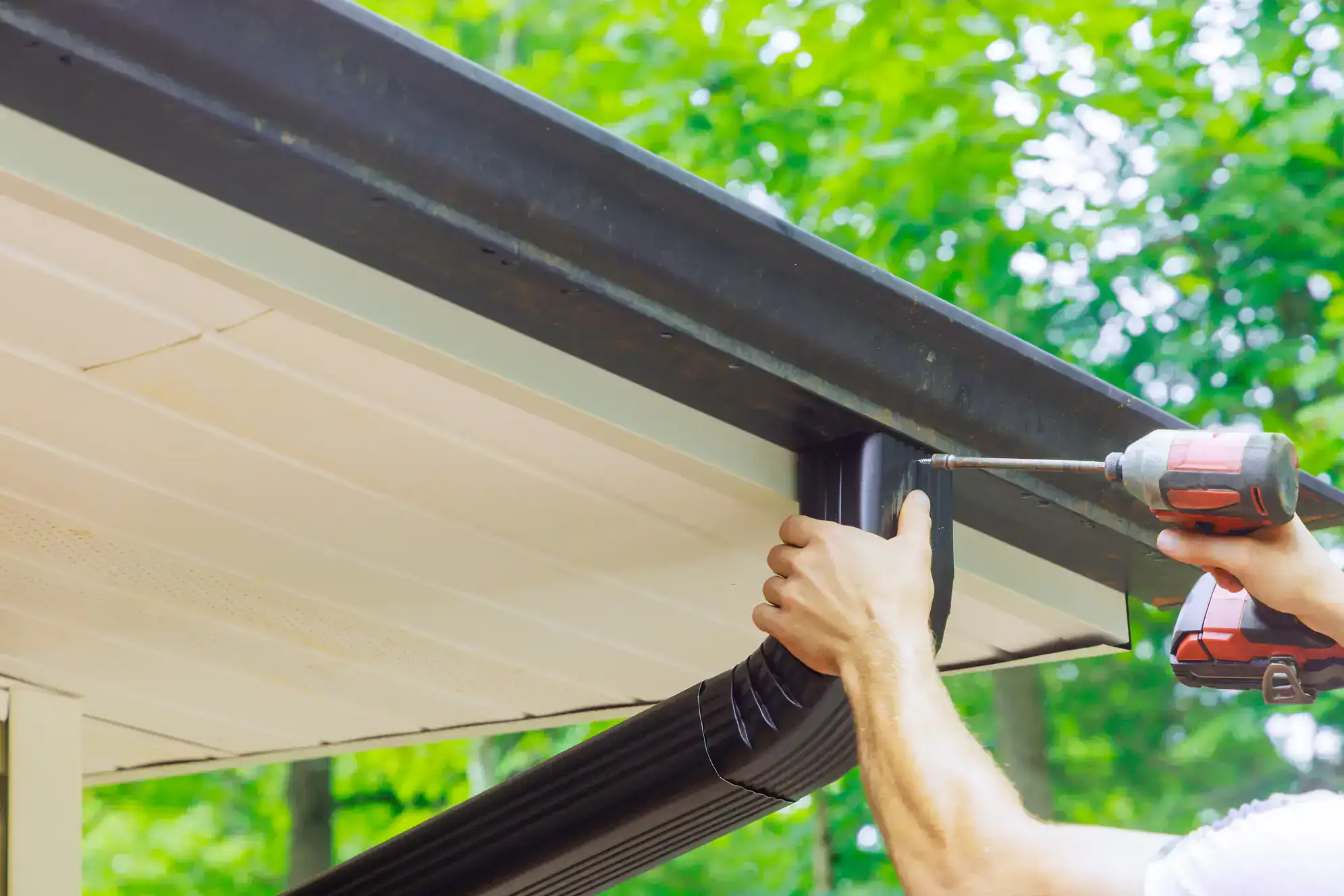
Home Gutter Installation Ho-Ho-Kus, NJ
It starts with a free inspection. A licensed professional comes out, walks your roofline, checks your existing gutters, fascia, and downspout placement, and looks at the full picture — not just the section that’s visibly failing. On older Ho-Ho-Kus homes especially, gutter problems rarely travel alone. A rotted fascia board, a downspout that drains two feet from your foundation, or a roofline that’s shedding more water on one side than the other — these are things that affect how your new system needs to be designed, and a gutter-only contractor will miss them.
After the inspection, you get a written estimate. Specific, itemized, no vague line items. If your home is in the Cheelcroft district or another historically sensitive area of the borough, we factor in material and color matching from the start — not as an afterthought.
Installation day, we fabricate your seamless gutters on-site, cut to the exact measurements of your roofline. No pre-cut sections, no exposed seams. We calculate slope before a single bracket goes in, size your downspouts to your roof’s actual drainage load, and extend them far enough from your foundation to prevent the soil erosion and basement seepage that quietly undermines even a well-maintained home. When we’re done, the site is clean and you know exactly what was installed and why.
Ready to get started?
Roof Gutter Installation Company in Ho-Ho-Kus
Every gutter installation we do in Ho-Ho-Kus starts with seamless aluminum fabricated on-site. That means no joints along the run — which is where sectional systems always fail first, especially on homes that have been through 60-plus Bergen County winters. We offer standard and oversized profiles depending on your roof’s drainage requirements, and we match gutter color to your home’s exterior so the finished result looks intentional, not bolted on.
For homes in the Cheelcroft district — the National Register neighborhood of brick and flagstone Tudors along Route 502 — we take extra care with bracket placement, downspout routing, and finish selection. These homes have architectural character that deserves more than a one-size-fits-all approach, and we’ve worked on enough historic Bergen County properties to know the difference.
Beyond the gutters themselves, we evaluate fascia condition, soffit integrity, and how your drainage system connects to your grading and foundation. If your roof or siding is showing related wear, we can assess that too — we’re a full exterior contractor, not just a gutter installation company. And if your gutters were damaged in a storm, we work directly with insurance adjusters to document the damage and help you get the coverage you’re entitled to under your homeowner’s policy.
Do I need a permit for gutter installation in Ho-Ho-Kus, NJ?
For most standard gutter replacements in Ho-Ho-Kus — same system, same footprint — a separate construction permit is typically not required under New Jersey’s Uniform Construction Code. Routine replacement-in-kind is generally classified as ordinary building maintenance. That said, if your project involves significant changes to your drainage system, downspout rerouting that affects grading, or your home sits in or near a flood hazard area, it’s worth checking with the Ho-Ho-Kus Construction Department before work begins.
It’s also worth knowing that Ho-Ho-Kus adopted a floodplain management ordinance in 2025, which reflects the borough’s active attention to drainage and flood risk. If your property has any flood zone designation, that’s something we’ll flag during your inspection so there are no surprises. Our job is to make sure the installation is done right and compliant — not just fast.
How much does gutter installation cost for a home in Ho-Ho-Kus?
For most homes in Ho-Ho-Kus, a full seamless aluminum gutter replacement runs somewhere between $2,800 and $5,200 depending on linear footage, the number of stories, downspout count, and whether any fascia work is needed alongside it. Larger homes on the east side of the borough — where lot sizes and rooflines tend to be more expansive — can run higher simply because there’s more linear footage to cover.
The free inspection is the only way to give you a number that actually means something. Gutter quotes based on square footage estimates without seeing the home are often wrong in one direction or the other. We’d rather spend 30 minutes on your property and give you a written number you can count on than throw out a range that ends up being inaccurate once we get on a ladder.
How do I know if my gutters need to be replaced or just repaired?
The honest answer is that it depends on what’s actually failing. A single section with a separated seam or a loose bracket is usually a repair. But if you’re seeing consistent overflow in multiple spots during rain, visible sagging along the run, rust staining on the fascia, or water pooling against your foundation after storms, those are signs the system itself is past its useful life — not just one bad section.
For Ho-Ho-Kus homes built in the 1940s through 1960s, which make up a significant portion of the borough’s housing stock, the more relevant question is often how long the current system has been in place. Aluminum gutters have a functional lifespan of 20 to 30 years under normal conditions. If yours are original or haven’t been replaced in that window, a full inspection will tell you whether you’re maintaining a system that’s worth saving or putting money into something that’s already on borrowed time.
What gutter size is right for my colonial or Tudor in Bergen County?
The standard residential gutter is a 5-inch K-style profile, and it handles normal drainage loads on most single-family homes just fine. But if your home has a steeper pitch, a larger roof surface area, or sits under a heavy tree canopy — all common conditions in Ho-Ho-Kus — a 6-inch profile is often the better call. The difference in material cost is modest, and the difference in performance during a hard Bergen County summer storm is real.
Downspout sizing matters just as much. A gutter that drains into an undersized downspout backs up under heavy rain regardless of how well the gutter itself is installed. During your inspection, we calculate your roof’s actual drainage load and size the full system — gutters and downspouts together — to handle what your specific home actually sheds. It’s not a complicated calculation, but it’s one a lot of contractors skip.
Will my homeowner's insurance cover gutter damage from a storm in Ho-Ho-Kus?
It depends on the cause. Most standard homeowner’s insurance policies in New Jersey cover gutter damage resulting from a sudden, accidental event — wind, hail, a falling branch, or storm-driven debris. What they typically don’t cover is damage from gradual deterioration, deferred maintenance, or normal wear over time. So if a nor’easter tears your gutters off the fascia, that’s likely a covered claim. If they’ve been slowly pulling away from the house for three years, that’s usually not.
The challenge with insurance claims is documentation. Adjusters are working from photos and reports, and the difference between a well-documented storm damage claim and an underpaid one often comes down to how thoroughly the damage is recorded. We work directly with insurance adjusters on storm-related gutter and roofing claims, and we know what documentation is needed to support a complete assessment. If you’re not sure whether your damage qualifies, the inspection is the right first step.
Why do so many Ho-Ho-Kus homes have gutter problems every fall?
Because the tree canopy in Ho-Ho-Kus is exceptional — and exceptionally hard on gutters. The oak, maple, and elm trees that line the streets of the borough are part of what makes it look the way it does. They’re also one of the primary reasons gutters fail prematurely here. Every fall, those trees shed significant volumes of leaves, seed pods, and debris directly into gutter runs. Once that material accumulates, water backs up instead of draining. Backed-up water sits against the fascia, works into seam joints, and freezes in place once temperatures drop — which is exactly how ice dams form and how interior water damage starts.
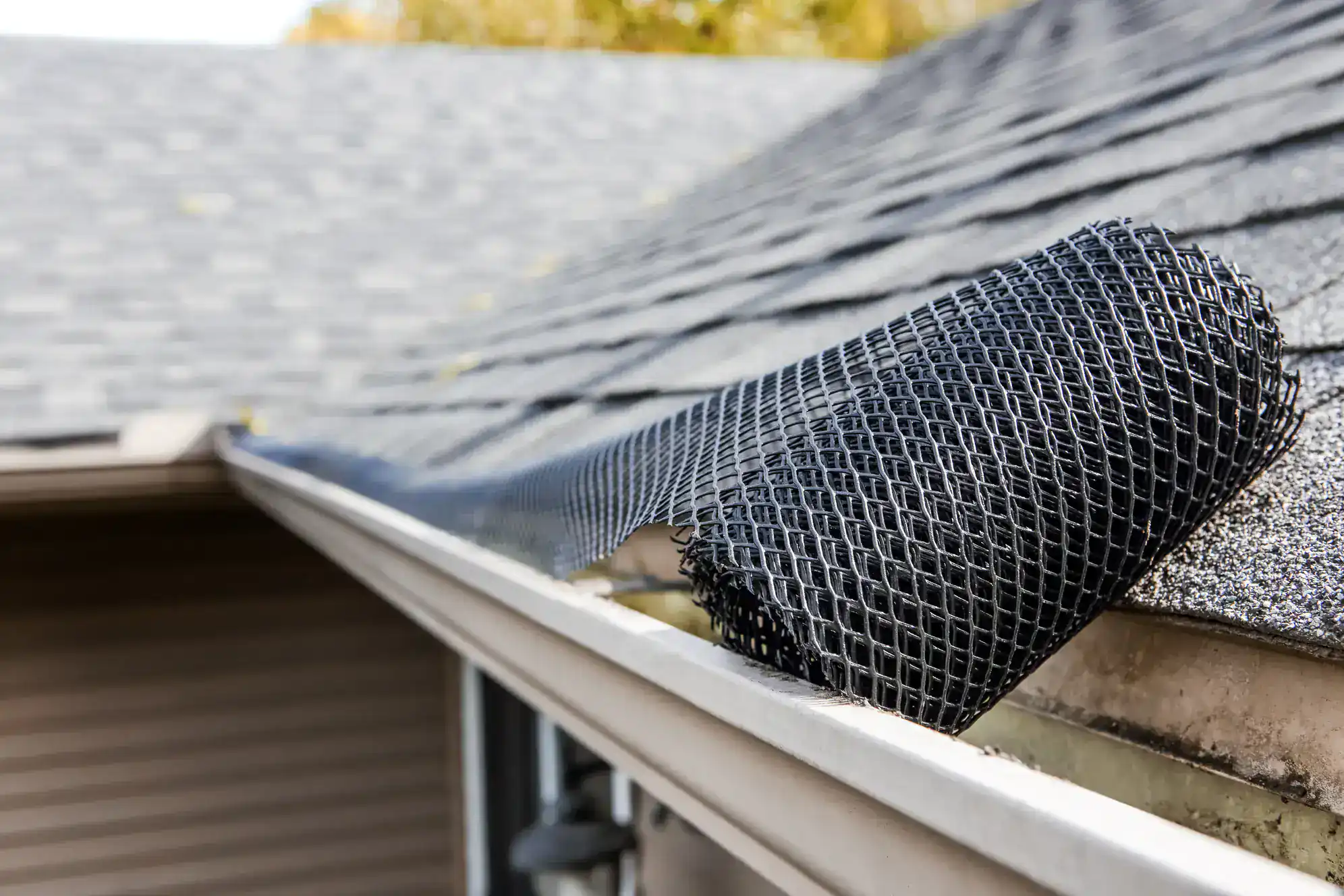
The structural fix is a properly sloped seamless system combined with a quality gutter guard that keeps debris out without restricting flow. It doesn’t eliminate the need for occasional maintenance, but it changes the cycle from an annual problem to an occasional check. For homeowners in Ho-Ho-Kus who’ve been cleaning gutters twice a year for the past decade, that’s a meaningful difference.