
Roofer in Ho-Ho-Kus, NJ
Ho-Ho-Kus Homes Deserve More Than a Patch Job
Hear from Our Customers
Local Roofing Company in Ho-Ho-Kus
In Ho-Ho-Kus, a roof isn’t just keeping rain out. It’s protecting a home that’s likely worth over a million dollars, sitting under a mature tree canopy that deposits debris year-round, and taking the full force of every nor’easter that barrels through northern Bergen County. When your roof is done right, you stop losing sleep over what’s happening up there.
The older housing stock in Ho-Ho-Kus — colonials, cape cods, and custom-built homes, many from the mid-20th century — means a lot of roofs in this borough are at or past the end of their lifespan. A roof that was replaced in the mid-1990s is now 30 years old. That’s not a repair situation. That’s a replacement conversation, and the longer it waits, the more it costs when water finds its way into framing, insulation, and drywall.
What changes after the work is done? You have a documented warranty — one backed by the manufacturer, not just a contractor’s handshake. You have a roof that was installed to handle freeze-thaw cycles, ice dam conditions, and the kind of wind-driven rain that northern Bergen County gets every winter. And you have a clear record of the work, fully permitted through Ho-Ho-Kus’s Construction Department, so there are no surprises when it’s time to sell.
Roofing Company in Ho-Ho-Kus, NJ
We’re a family-owned exterior renovation contractor with over a decade of hands-on experience working on NJ homes. That means real winters, real nor’easters, and real consequences when a roof isn’t installed correctly. We hold NJ Home Improvement Contractor License #13VH10605800 — a number you can look up right now through the NJ Division of Consumer Affairs.
Beyond the license, we carry certifications from major shingle manufacturers. That matters because those certifications unlock enhanced system warranties — 30 to 50 years — that most contractors in Bergen County simply cannot offer. It’s not a marketing angle. It’s a credential held by roughly 2–3% of roofing contractors in the country.
We serve homeowners across northern NJ, including communities throughout Bergen County like Ho-Ho-Kus and its neighbors along the Saddle River corridor. Our reputation is built on repeat customers and referrals — not ad spend. In a borough of just over 4,000 residents where word travels fast, that’s the only kind of growth that actually means something.
Emergency Roof Repair in Ho-Ho-Kus, NJ
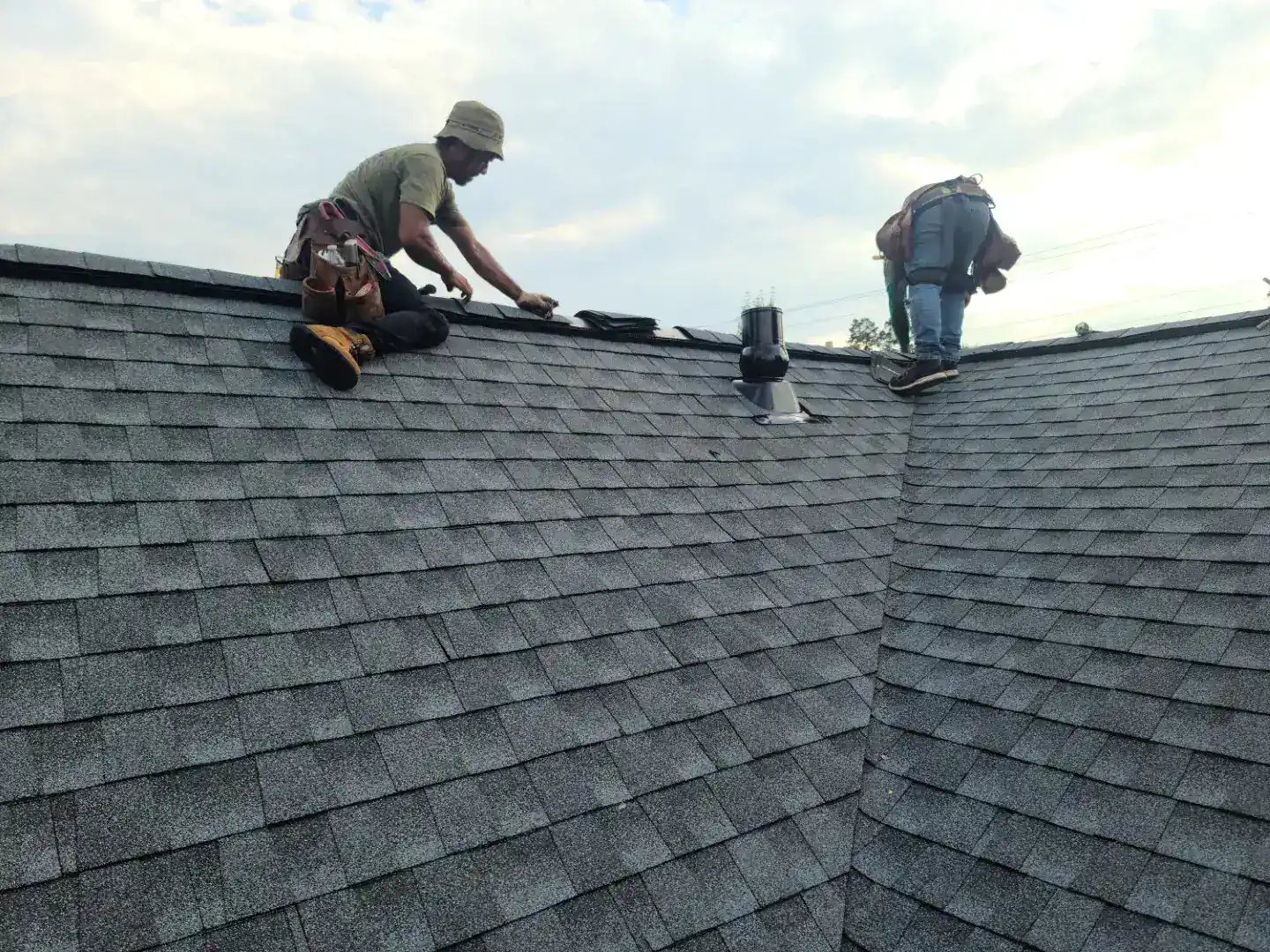
It starts with a free roof inspection — a real one, not a sales visit with a clipboard. One of our licensed contractors walks your roof, checks your attic, reviews your drainage, and puts everything into a photo report you keep. No obligation. No pressure. Just a documented picture of what’s actually going on up there. For a lot of Ho-Ho-Kus homeowners, this is the first time they’ve had professional eyes on their roof since they bought the house.
If work is needed, you get a clear, itemized estimate before anything is scheduled. The scope is agreed on, the price is locked in, and there are no surprise line items at the end. For roof replacements in Ho-Ho-Kus, that process includes pulling the required permit through the borough’s Construction Department — because under the NJ Uniform Construction Code, a full replacement requires a building permit, and the borough’s own guidance is explicit: don’t release final payment until the work has been inspected and approved. We handle that process correctly, every time.
Once the job is underway, our crew works efficiently and leaves the property clean — no nails in the lawn, no debris in the driveway. When it’s done, you get your warranty documentation, your permit sign-off, and a roof that was built for what New Jersey winters actually look like.
Ready to get started?
Affordable Roofers in Ho-Ho-Kus, NJ
We handle the full exterior — roofing, gutters, and siding — which matters more in Ho-Ho-Kus than in most places. The borough’s mature tree canopy isn’t just a landscaping feature. It’s a year-round maintenance factor. Leaves, seeds, and debris collect in gutters and roof valleys, hold moisture against shingles, and accelerate the conditions that lead to ice dams every winter. Addressing the roof without addressing the gutters is solving half the problem.
For roofing specifically, our work covers inspections, repairs, full replacements, and emergency response. Whether it’s a flashing failure around a chimney on one of Ho-Ho-Kus’s older colonial homes, wind damage after a storm, or a full system replacement on a mid-century cape cod that’s simply reached the end of its life — the process is the same: honest assessment, clear pricing, quality materials, and installation that meets NJ code requirements.
Our manufacturer certifications mean customers receive access to enhanced warranty tiers that aren’t available through uncertified contractors. In a market where homes frequently sell for seven figures and buyers scrutinize every transferable document at closing, that warranty is a real asset — not a formality. And if you’re comparing quotes, we’ll match or beat a competing licensed contractor’s price. You shouldn’t have to choose between quality and fairness.
Do I need a permit for a roof replacement in Ho-Ho-Kus, NJ?
Yes — a full roof replacement in Ho-Ho-Kus requires a building permit under the New Jersey Uniform Construction Code. This isn’t optional, and it’s not just bureaucratic paperwork. The Borough of Ho-Ho-Kus’s Construction Department is explicit about it: homeowners should not release final payment to a contractor until the work has been inspected and a final approval has been issued.
What that means practically is that your contractor needs to know the local process, submit the correct documentation, and deliver work that actually passes inspection. We handle all of that as part of the job. The Construction Official in Ho-Ho-Kus has limited office hours — Tuesday and Thursday afternoons — so permit timelines require planning. A contractor who skips this step or isn’t familiar with the borough’s process creates real liability for you, especially if you’re planning to sell a home valued at over a million dollars and an unpermitted roof shows up in the buyer’s inspection.
How much does a roof replacement cost in Ho-Ho-Kus, NJ?
Roof replacement costs in Ho-Ho-Kus vary based on the size of the home, the pitch and complexity of the roofline, the materials selected, and whether there’s any underlying damage — like rotted decking or failed flashing — that needs to be addressed before new shingles go down. For a typical single-family colonial or cape cod in Ho-Ho-Kus, you’re generally looking at a range that reflects both the size of these homes and the quality of materials required to hold up through NJ winters.
What you should expect from any reputable contractor is a clear, itemized estimate before work begins — not a rough number over the phone and a higher invoice at the end. We provide transparent, written estimates with no hidden fees, and will match or beat a competing licensed contractor’s price if you have a comparable quote in hand. The free inspection is the right starting point because it tells you exactly what you’re working with before any numbers are discussed.
What causes ice dams, and are they a problem for Ho-Ho-Kus homes?
Ice dams are a real and recurring issue for homes in Ho-Ho-Kus, and the borough’s conditions make them more likely than in many other parts of NJ. The combination of northern Bergen County’s heavier snow accumulation, the mature tree canopy that deposits debris in gutters and valleys, and the older housing stock — much of which has attic insulation that doesn’t meet current energy standards — creates exactly the conditions where ice dams form.
Here’s what happens: heat escapes through the roof deck, melts the bottom layer of snow, and that meltwater runs down to the cold eave line where it refreezes. Once an ice dam builds up, it forces water back under the shingles and into the building envelope. The damage that follows — to insulation, framing, drywall, and ceilings — can be significant and expensive. Proper ice and water shield installation during a roof replacement, combined with adequate attic ventilation and clean gutters, is the combination that prevents it.
How do I know if I need a full replacement or just a repair?
This is genuinely the most important question to get right, and the honest answer is that you need a professional inspection to know for certain. There are signs that point toward repair — isolated shingle damage, a single flashing failure, a small area of granule loss — and signs that point toward replacement, like widespread curling, cracking across large sections, shingles that are 25 to 30 years old, or visible sagging in the roof deck.
For a lot of Ho-Ho-Kus homes, the age of the housing stock is the deciding factor. A home built in the 1960s or 1970s that received its last roof in the 1990s is now well past the typical lifespan of an asphalt shingle system. Repairs on a roof that old often become a cycle — you fix one area and another fails six months later. Our free inspection gives you a photo-documented assessment of the actual condition so you’re making a decision based on real information, not a contractor’s guess or a sales pitch.
What should I do if a storm damages my roof in Ho-Ho-Kus?
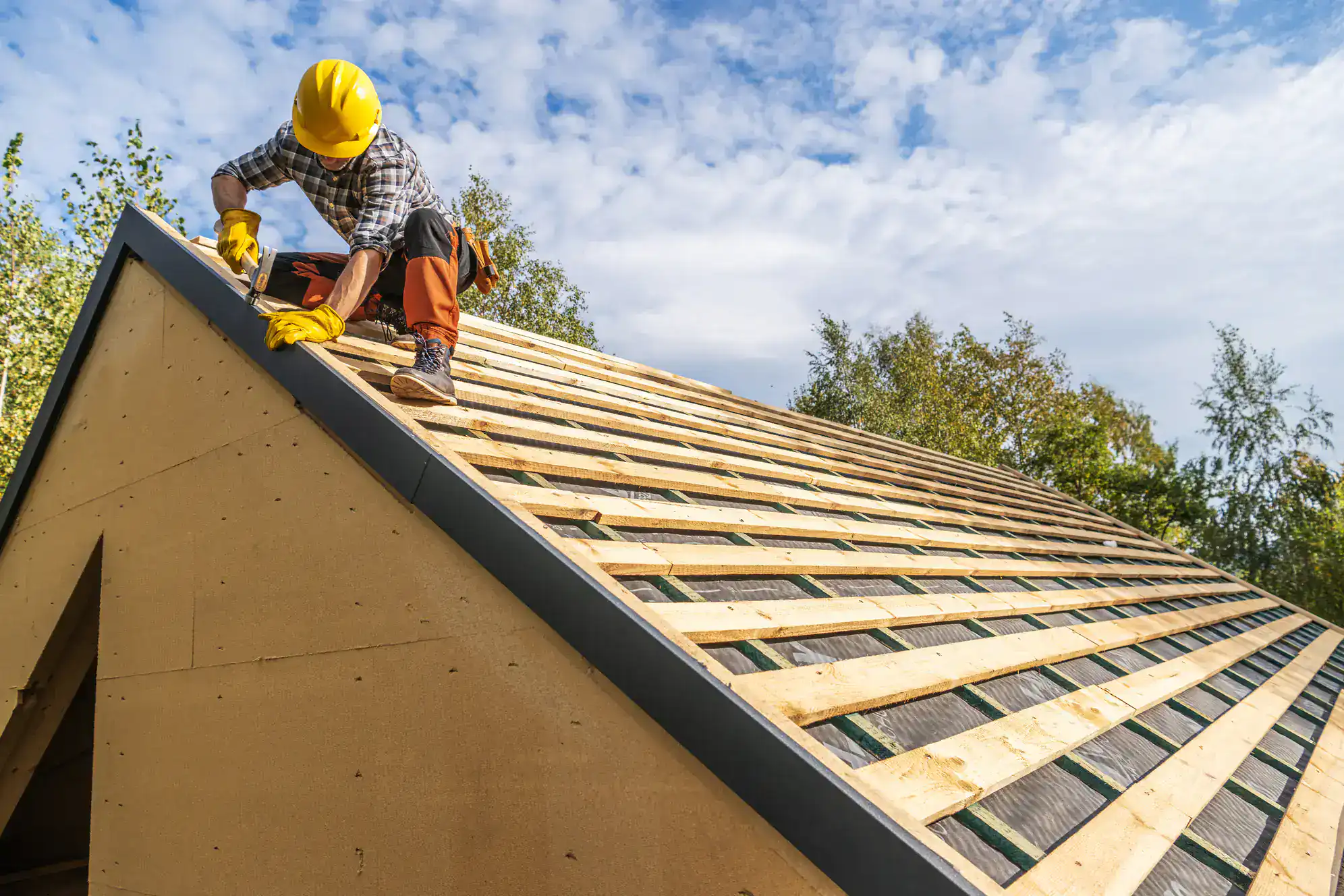
The first priority after storm damage is limiting additional exposure. If a section of shingles has been lifted or a branch has caused impact damage, every hour of unprotected exposure is an opportunity for water to get into the structure. We offer 24/7 emergency roof repair in Ho-Ho-Kus, NJ — which means a licensed contractor can respond to tarp exposed sections, stabilize the damage, and document everything for your insurance claim regardless of when the storm hits.
On the insurance side, documentation matters enormously. A detailed photo report of the damage — taken by a licensed contractor before any temporary repairs are made — is what supports a successful claim. Ho-Ho-Kus sits in the northern Bergen County upland, where storm systems moving through the Hudson River valley can produce intense localized wind and precipitation. After a nor’easter or a severe summer storm, response time and proper documentation are the two things that determine how smoothly the repair process goes.
Why should I hire a certified roofer instead of a general contractor in Ho-Ho-Kus?
The practical difference comes down to what warranty coverage is available to you. A general contractor or an uncertified roofer can install shingles — but they cannot offer the enhanced manufacturer system warranties that certified contractors unlock. Those warranties, which can run 30 to 50 years and cover both materials and labor, are tied specifically to the installer’s certification status. If your contractor isn’t certified, that tier of coverage simply isn’t on the table.
For Ho-Ho-Kus homeowners, this matters in two concrete ways. First, a home in this borough is likely worth over a million dollars, and a long-term manufacturer-backed warranty is a real, transferable asset that holds value at resale. Second, Bergen County’s winters are hard on roofing systems — freeze-thaw cycles, ice loading, wind-driven rain — and a warranty that covers labor means you’re protected if something fails, not just handed a bag of replacement shingles. We hold certifications from major shingle manufacturers specifically so customers in Ho-Ho-Kus have access to the strongest coverage available.