
Gutter Installation in Villa Marie Claire, NJ
Estate Rooflines in Villa Marie Claire Don't Forgive a Bad Gutter System
Hear from Our Customers
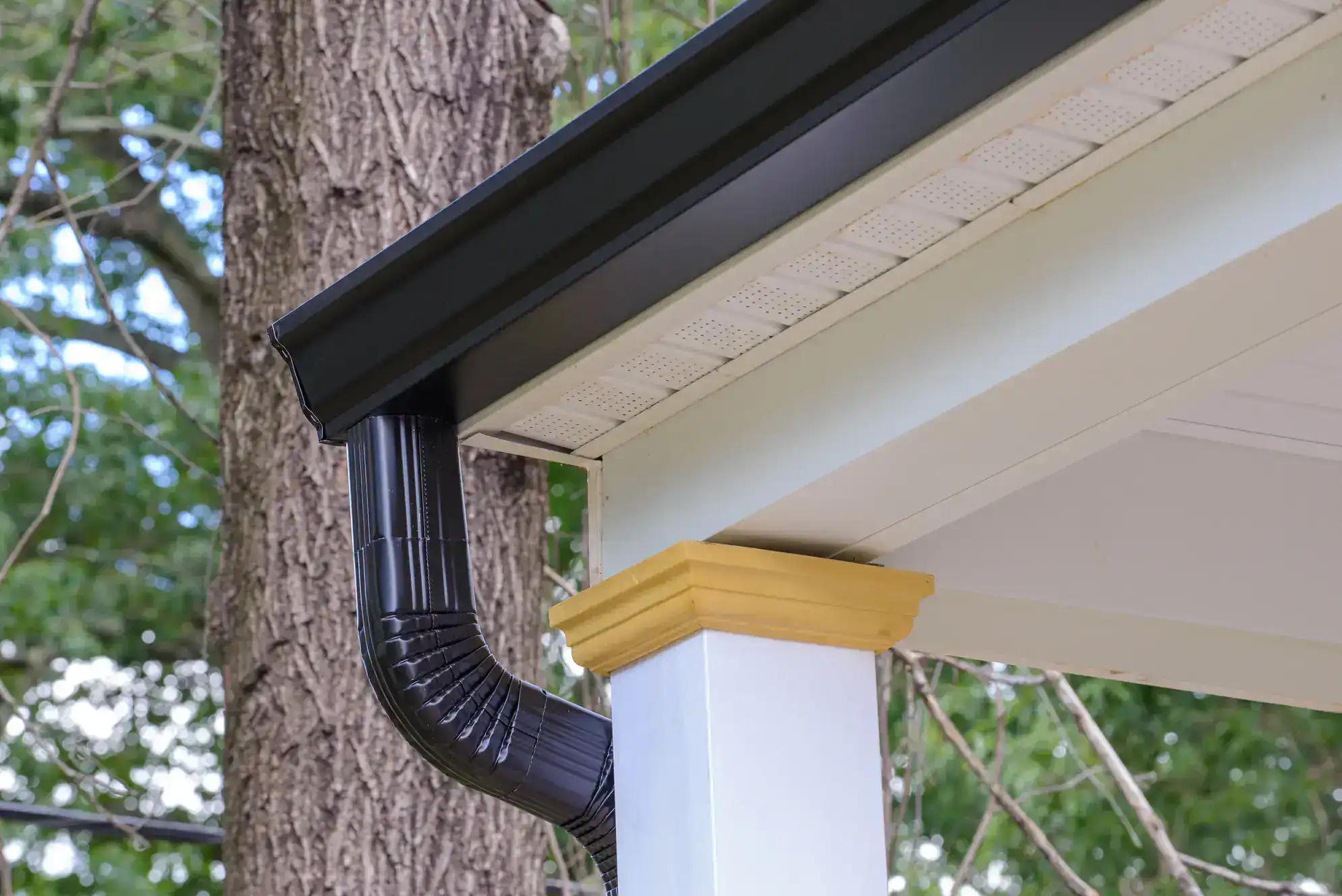
Rain Gutter Installation, Bergen County NJ
Most homeowners don’t think about their gutters until something goes wrong — a waterfall over the edge during a summer storm, paint peeling off the fascia, or worse, water pooling against the foundation. By that point, the gutter wasn’t the only thing that failed. The damage already spread.
In Villa Marie Claire, the stakes are higher than most. The mature tree canopy on Saddle River’s estate lots — oaks, maples, beeches, conifers — drops a debris load that overwhelms undersized or improperly sloped gutters fast. Add Bergen County’s 46 to 50 inches of annual rainfall, including those short, intense summer storms that dump inches in under an hour, and a gutter system that’s just “good enough” isn’t good enough at all.
When your gutters are properly installed — right size, right slope, right downspout placement — water moves the way it’s supposed to. Your fascia stays dry. Your foundation stays stable. Your landscaping doesn’t erode. And when winter comes and the freeze-thaw cycle starts, gutters that are correctly pitched and firmly fastened don’t hold standing water that turns into ice and pulls the whole system off the roofline.
Gutter Contractors in Villa Marie Claire, NJ
We’ve been serving Northern New Jersey homeowners for over a decade, and Bergen County has been a core part of that work from the beginning. We hold an active NJ Division of Consumer Affairs Home Improvement Contractor license — #13VH10605800 — along with manufacturer certifications that mean your installation meets real warranty standards, not just our word for it.
We’re not a national franchise routing calls through a 1-800 number. We’re a family-run business that grew through referrals, and that means every job we do in Villa Marie Claire reflects directly on us. The homes here — many of them estate-scale properties along West Saddle River Road and throughout the Saddle River Borough — are significant investments. We treat them that way.
You get a free inspection, a written estimate with no hidden line items, and a contractor who looks at your full exterior — roof, fascia, downspouts, drainage — before recommending anything.
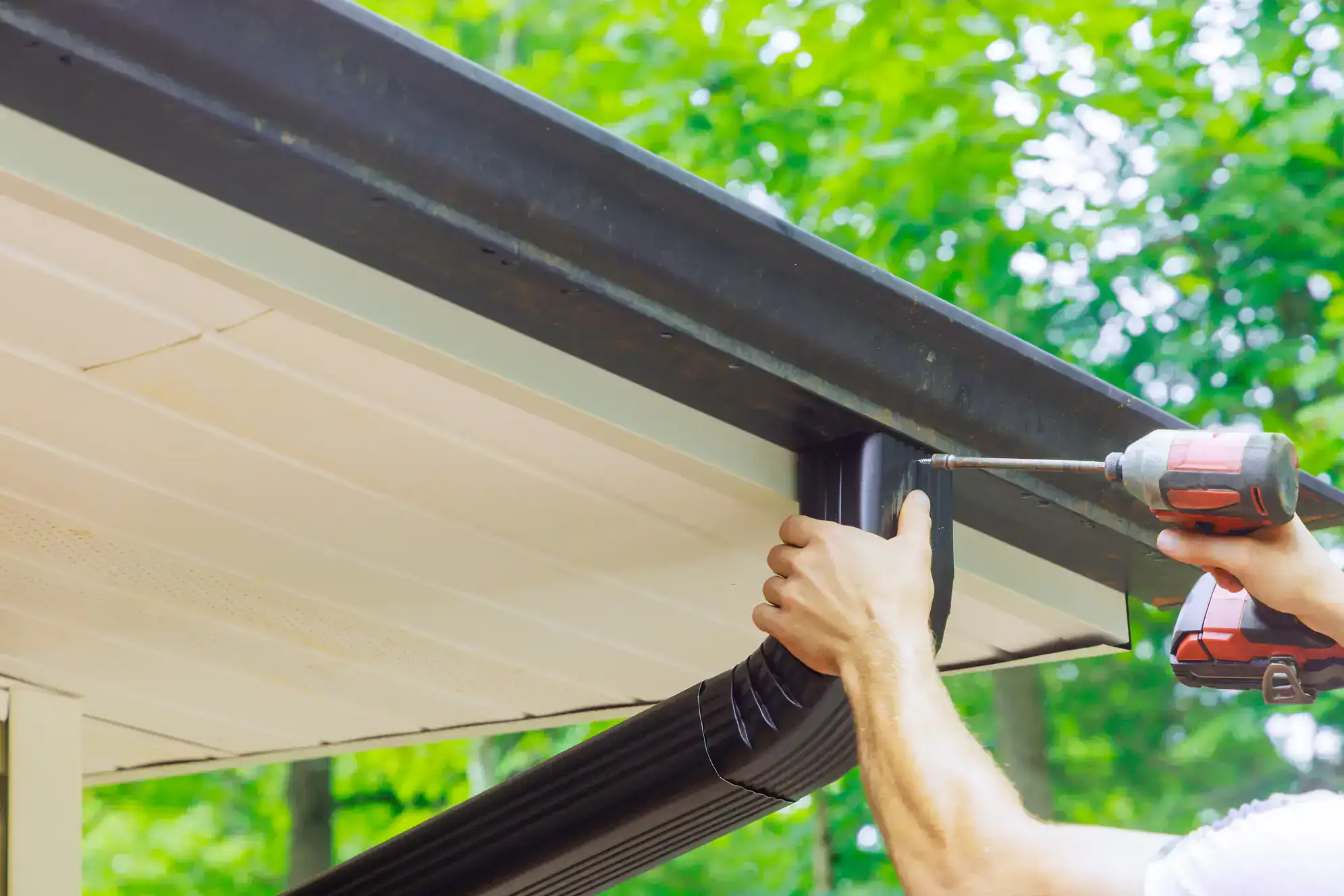
Home Gutter Installation Process, Villa Marie Claire
It starts with a free inspection. We come out, walk the roofline, and look at what’s actually happening — not just the gutters, but the fascia condition, how water is moving across the roof, where it’s concentrating, and where the downspouts are sending it. On the estate properties common to Villa Marie Claire, that last part matters more than most contractors acknowledge. Downspouts that drain toward a foundation or into formal garden beds cause real damage on large, wooded lots where drainage isn’t as forgiving as a standard suburban yard.
From there, you get a written estimate that spells out the scope, the materials, and the cost. No verbal quotes that shift after the job starts. If your home has underground drainage infrastructure — which some Saddle River properties do — we account for that in the plan before a single bracket goes up.
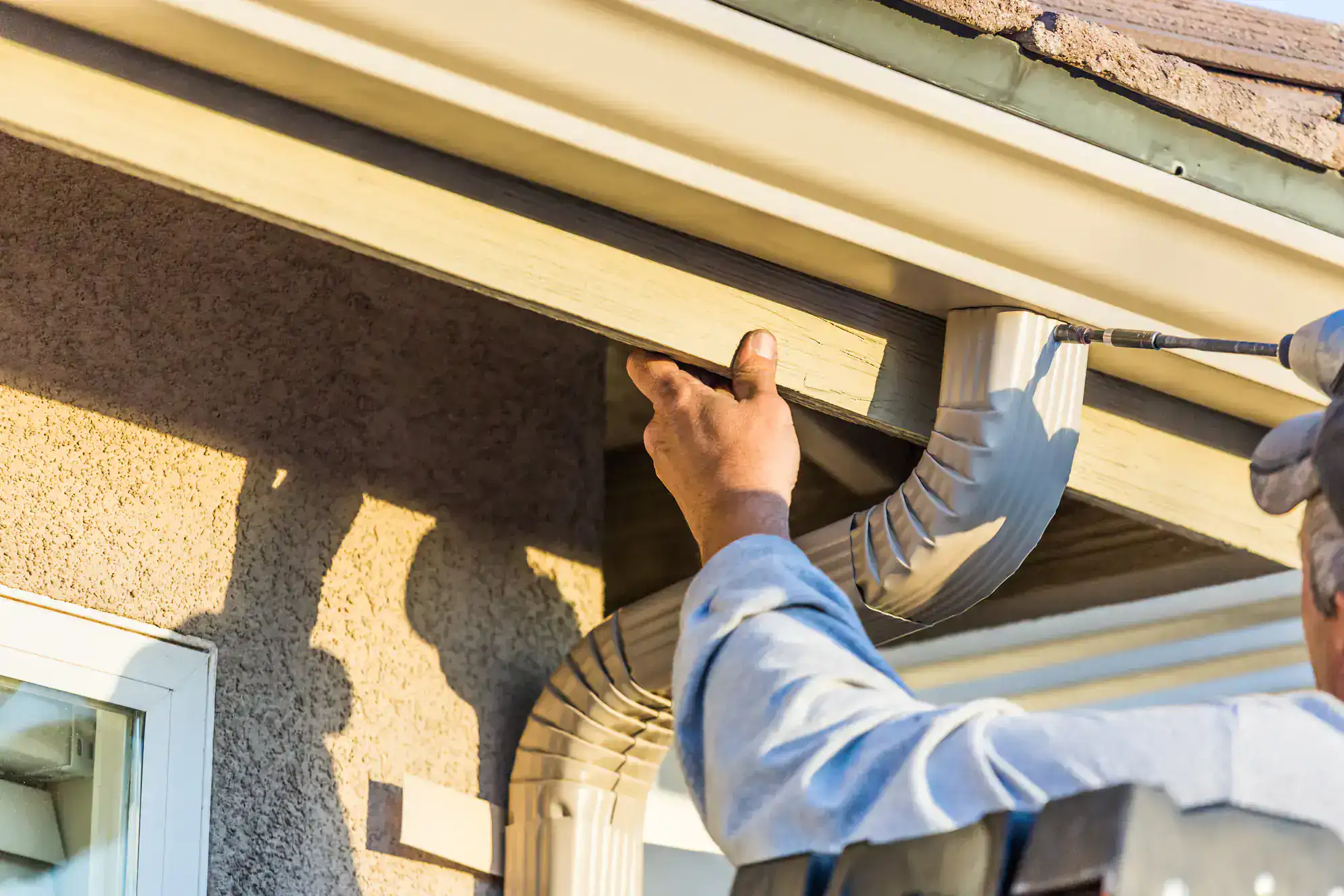
Installation day is straightforward. We custom-fabricate seamless gutters on-site to the exact dimensions of your roofline, set the correct pitch for complete drainage, and fasten everything with hidden hangers that hold through freeze-thaw cycles — not the spike-and-ferrule systems that work loose over time. When we’re done, we walk the job with you. If something isn’t right, we fix it before we leave.
Ready to get started?
Roof Gutter Installation Company, Villa Marie Claire NJ
Standard gutter systems are designed around average suburban homes. The properties in Villa Marie Claire aren’t average. When you’re working with a 5,000-plus square foot roofline, multiple valleys, dormers, and a tree canopy that drops oak leaves, maple seeds, pine needles, and pine cones from October through December, the system has to be sized and installed for those actual conditions — not what works on a quarter-acre lot in a different part of the county.
Every gutter installation we do in this area uses seamless aluminum fabricated on-site, pitched to the industry standard of a quarter inch per ten feet of run, and fastened with hidden hanger systems rated to handle the weight of standing water and ice. For homeowners with historic or architecturally significant properties — and there are several along East Saddle River Road with National Register designations — we can discuss material options including copper systems that complement the home’s character and outlast standard aluminum by decades.
We also handle storm damage insurance claims directly. Bergen County’s summer storms cause gutter damage that most homeowner policies cover, and most homeowners either don’t know that or don’t want to deal with the adjuster process. We document the damage, work with your insurer, and handle the back-and-forth so you don’t have to. That’s included — not an upsell.
Do I need a permit for gutter installation in Villa Marie Claire, NJ?
For standard gutter replacement on an existing home, a separate building permit is typically not required in most New Jersey municipalities, and Saddle River is generally consistent with that. However, if the work involves structural changes to the fascia, soffit, or roofline — which can come up on older estate properties with deteriorated wood framing behind the gutters — that scope may fall under the Saddle River Borough Construction Department’s jurisdiction and require a permit before work begins.
Saddle River’s construction code also has specific provisions around site drainage, including requirements that water runoff not wash onto adjacent properties or public streets. On large two-acre lots where downspout placement significantly affects where water ends up, that’s worth understanding before installation. We review drainage direction as part of every estimate, and if there’s any question about permit requirements for your specific project, we’ll tell you upfront — not after the job is done.
How often do gutters need to be cleaned on wooded properties in Villa Marie Claire?
More often than most people expect. The estate lots in Villa Marie Claire are surrounded by mature hardwoods and conifers — oak, maple, beech, and pine — and the debris load those trees produce is substantial. Leaf fall alone can fill a gutter in days during peak October and November drop. But it’s not just leaves. Pine needles pack tightly and restrict flow even when the gutter looks clear from the ground. Pine cones can physically block downspout openings. Some local gutter service providers working in this area recommend cleaning as frequently as five times a year for homes with significant pine coverage.
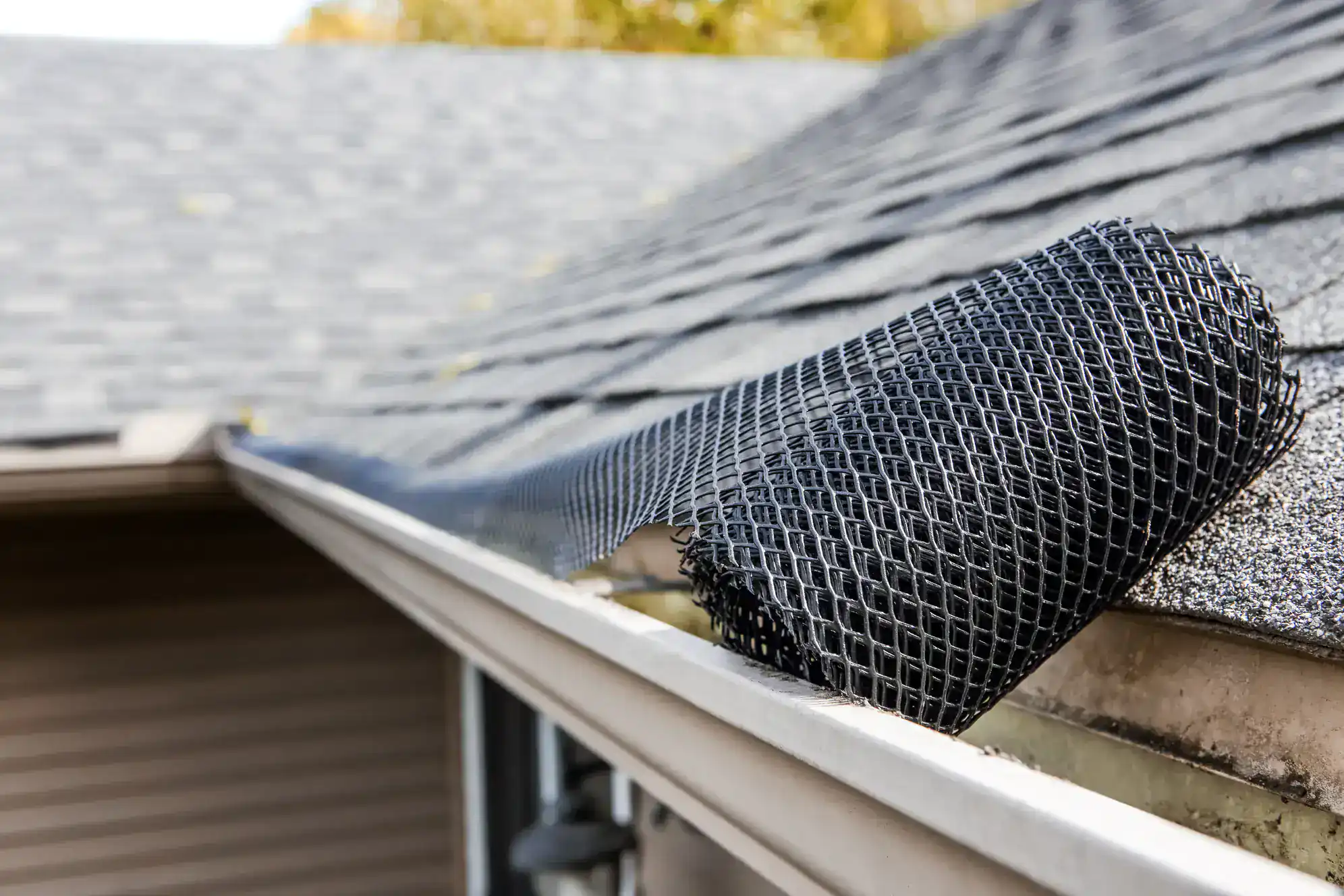
If you’re replacing gutters on a heavily wooded property, it’s worth having a conversation about gutter guards at the same time. A quality guard system doesn’t eliminate maintenance entirely, but it meaningfully reduces how often you’re up on a ladder — or paying someone else to be. We can walk you through what makes sense for your specific tree situation during the estimate.
What gutter size do I actually need for a large estate home?
The standard residential gutter is a five-inch K-style profile, and it works fine for a typical home with a modest roof surface area. But the estate properties in Villa Marie Claire are a different situation. When you’re dealing with a roof that spans several thousand square feet — with multiple valleys concentrating water at specific points — a five-inch gutter may be undersized for what your roof is actually sending its way during a heavy rain event.
Six-inch gutters move significantly more water volume, and on larger or more complex rooflines, they’re often the right call. Downspout sizing matters just as much. A correctly sized gutter run connected to an undersized downspout still overflows. We calculate water flow based on your actual roof geometry and Bergen County’s rainfall intensity data — not a one-size-fits-all recommendation. The goal is a system that handles your worst-case storm, not your average drizzle.
Can gutters actually cause foundation damage on a property like mine?
Yes — and on a property worth close to two million dollars, that’s not a theoretical risk. When gutters overflow consistently, water saturates the soil directly against the foundation. Over time, that repeated saturation causes settlement, cracks, and in serious cases, structural failure that costs tens of thousands of dollars to remediate. The problem is that the connection isn’t always obvious. Homeowners see overflowing gutters as an inconvenience, not as a foundation threat — until the damage shows up.
On the large estate lots in Villa Marie Claire, downspout placement is equally important. Even a functioning gutter system can cause foundation problems if the downspouts are directing water toward the house rather than away from it. Some properties in this area also have formal landscape drainage or underground systems, and new gutters need to work with that existing infrastructure, not against it. We look at the full drainage picture during every inspection — not just the gutters themselves.
What causes ice dams, and how does the right gutter installation help prevent them?
Ice dams form when heat escaping from the upper portion of a roof melts snow, and that meltwater runs down to the colder eave line where it refreezes. The ice buildup creates a barrier that traps more water behind it, which then has nowhere to go except under the shingles — leading to interior water damage that often doesn’t show up until well after the storm.
Bergen County’s inland location and elevation make this a real seasonal risk, not just a theoretical one. Gutters don’t cause ice dams — inadequate attic insulation is the root issue — but gutters that are improperly pitched, sagging, or fastened with aging spike systems make the problem significantly worse. Standing water in a gutter freezes, expands, and adds weight that pulls the system out of alignment. Our hidden hanger installations keep gutters properly positioned through multiple freeze-thaw cycles, and we’ll flag any attic ventilation concerns we notice during the inspection so you have the full picture going into winter.
How do I know if my gutters need to be replaced or just repaired in Villa Marie Claire?
It depends on what’s actually failing. Isolated issues — a separated joint, a single sagging section, a downspout that came loose — are often repairable without replacing the whole system. But there are patterns that point toward replacement being the smarter call. If your gutters are sectional aluminum that’s been on the house for fifteen or twenty years, the seams are likely failing in multiple places, and patching one tends to reveal the next. Widespread rust, fascia rot behind the gutters, or gutters that are visibly pulling away from the roofline in several spots usually mean the system is past the point where repairs make economic sense.
On the estate properties in Villa Marie Claire, there’s also the question of whether the existing system was ever correctly sized for the home. Many older installations used five-inch gutters on rooflines that genuinely need six-inch profiles given the roof area and Bergen County’s rainfall patterns. A repair that keeps an undersized system running isn’t really solving the problem. The free inspection we offer is specifically designed to give you an honest answer on that — replace, repair, or leave it alone — before you spend anything.