
Roof Repair in Villa Marie Claire, NJ
Estate Roofs in Villa Marie Claire Don't Forgive a Sloppy Fix

Hear from Our Customers
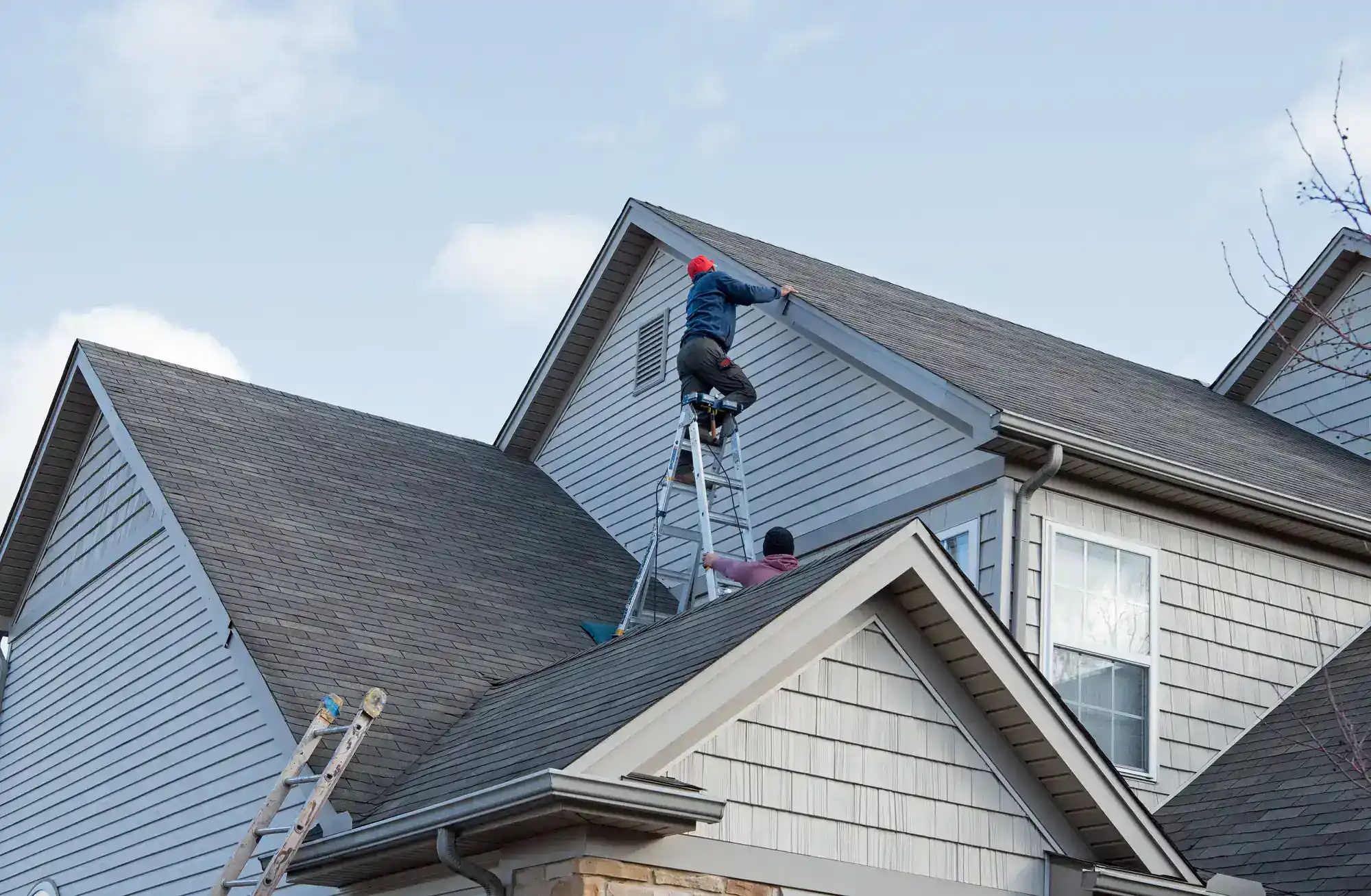
Roof Leak Repair in Villa Marie Claire, NJ
When a nor’easter rolls through Bergen County and drops two feet of snow on a multi-plane estate roof, the weak spots don’t hide. Ice builds up in the valleys, meltwater backs up under shingles, and by the time you see a water stain on the ceiling, the damage has already been working for weeks. A properly executed roof repair stops that cycle before it starts — not just for this winter, but for the ones after it.
The large, mature trees that define the character of properties throughout Villa Marie Claire add a layer of complexity that most homeowners don’t think about until something goes wrong. Overhanging branches shed debris into gutters and valleys, shade the roof surface long enough to encourage moss growth, and in a bad storm, they come down on the roof entirely. Addressing those vulnerabilities as part of a repair — not as an afterthought — is what separates a fix that lasts from one that just looks good for a season.
Beyond the structural piece, there’s the visual one. On a home worth what homes here are worth, a patch job that doesn’t match the surrounding shingles in color, profile, and texture is its own kind of problem. The goal isn’t just a roof that doesn’t leak. It’s a roof that looks like it was never touched.
Roof Repair Contractor in Villa Marie Claire, NJ
We’ve been doing exterior work across Bergen County for over a decade — roofing, gutters, siding — for homeowners in Villa Marie Claire and surrounding communities who expect the job to be done right and don’t have patience for contractors who disappear after the deposit clears. That track record wasn’t built on advertising. It was built on reviews from real customers in Villa Marie Claire, Upper Saddle River, and the surrounding areas who called back, referred neighbors, and didn’t have to chase anyone down to finish the job.
We hold contractor licenses required by the State of New Jersey, carry full liability insurance and workers’ compensation, and are certified by major shingle manufacturers — certifications that aren’t handed out freely and that unlock warranty coverage most contractors in this market simply can’t offer. For a homeowner in Villa Marie Claire protecting a significant investment, those aren’t minor details. They’re the baseline for who you should be calling in the first place.

Shingle Roof Repair in Villa Marie Claire, NJ
It starts with a free inspection. One of our technicians gets on your roof, looks at what’s actually happening — not just what’s visible from the driveway — and gives you an honest assessment. If it’s a targeted repair, that’s what you’ll hear. If something larger is going on underneath, we’ll show you what we found and explain why. No pressure, no inflated scope, no appointment that turns into a sales pitch.
Once the scope is agreed on, we handle the permit process with the Saddle River Borough Construction Department so you don’t have to. For repairs that cross the threshold requiring a permit under New Jersey’s Uniform Construction Code, we take care of the paperwork, the submission, and the inspection coordination. You get a written, itemized estimate before any work begins — and the final invoice matches it, because that’s how it should work.
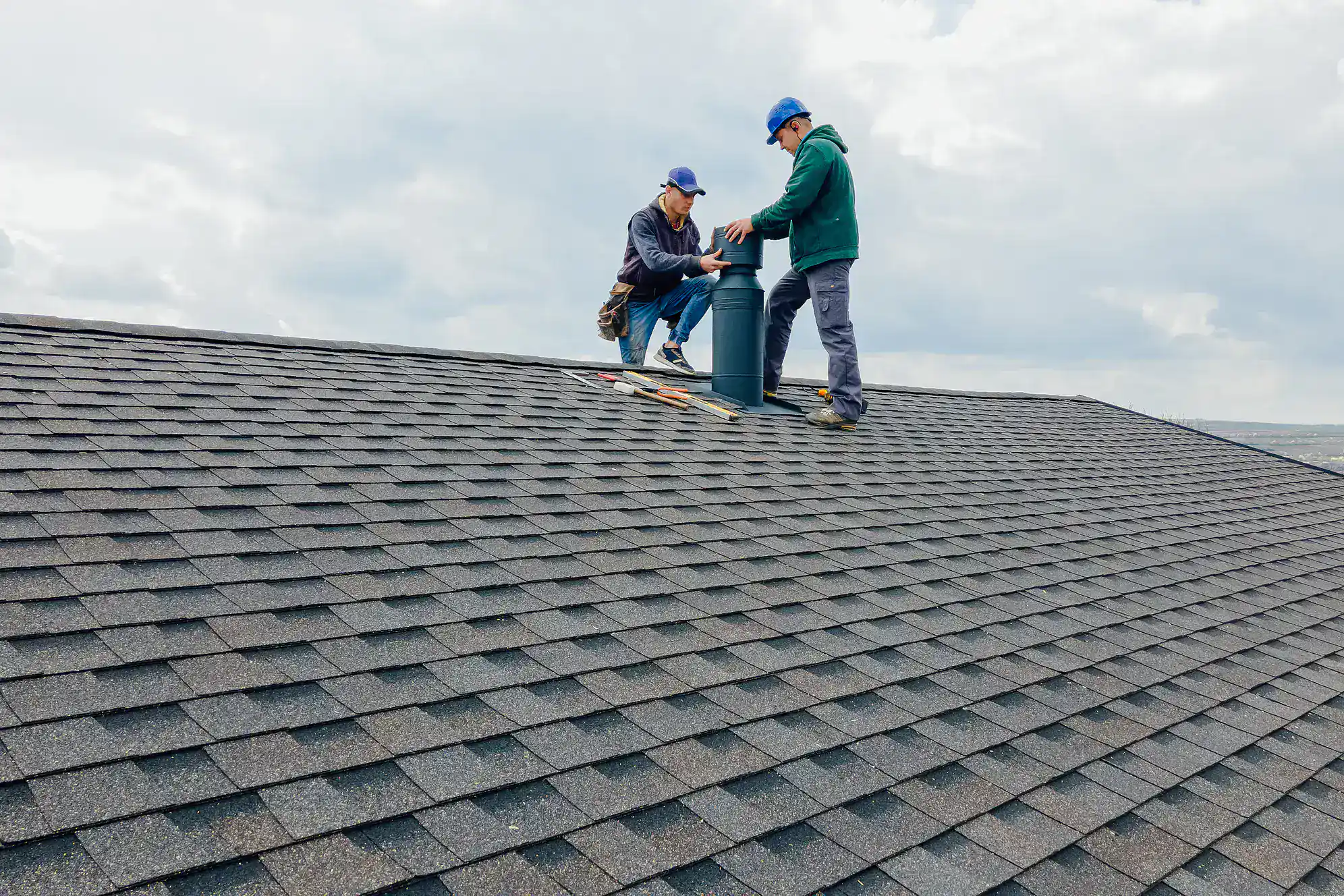
The repair itself is executed with attention to the details that matter on a property like yours: proper flashing at penetrations, shingle matching by color and profile, ice and water shield in vulnerable valley and eave areas, and thorough cleanup when the job is done. Magnetic nail sweeps on the driveway and lawn, all debris removed from the property. When we leave, it should look like we were never there — except the problem is gone.
Ready to get started?
Storm Damage Roof Repair in Villa Marie Claire, NJ
Bergen County’s storm seasons are not gentle. Summer hail events strip granules from shingles and accelerate UV degradation in ways that aren’t visible from the ground but show up fast in the next season’s leak calls. High winds displace shingles and compromise flashing at chimneys, skylights, and dormers — exactly the features that estate homes throughout Villa Marie Claire tend to have in abundance. Emergency roof repair after a storm means getting out quickly, assessing the full scope of damage, and deploying protective measures — including professional tarping of exposed areas — before the next system moves through.
For homeowners navigating an insurance claim alongside the repair, we document damage thoroughly: photographs, written assessments, and the kind of detail that insurance adjusters need to process a claim accurately. That process matters more on a high-value property, where an incomplete claim can leave a significant gap between what you’re owed and what you receive.
Flat roof repair, shingle roof repair, leak diagnosis, ice dam damage, post-storm inspections, flashing repair — it’s all under one roof. And because we also handle gutters and siding, if a storm that damaged your shingles also compromised your gutters or exterior cladding, you’re not coordinating three separate contractors to address it. One call, one company, full exterior scope.
Do I need a permit for roof repair in Villa Marie Claire, NJ?
Whether a permit is required depends on the scope of the work. Under New Jersey’s Uniform Construction Code, a building permit is generally required when a roofing project replaces more than 25% of the total roof area, involves structural modifications, or includes decking replacement. Minor repairs using like materials that fall below that threshold may qualify as ordinary maintenance and not require a permit — but that determination should always be confirmed before work begins, not assumed.
In Villa Marie Claire, all roofing permits fall under the jurisdiction of the Saddle River Borough Construction Department, which administers the NJ UCC at the local level. The borough requires that inspection requests be submitted in writing, and permits are not issued after 2:00 PM. We handle the permit process as part of the job — so you’re not navigating borough requirements on your own while also managing a repair on your property.
How do I know if I need a roof repair or a full replacement?
This is the question most homeowners are actually worried about when they call a roofer — because the fear of being oversold into a replacement when a repair would do is legitimate. The honest answer is that it depends on the age of the roof, the extent of the damage, and what’s happening at the deck level underneath the shingles.
A roof with isolated damage — a few displaced shingles, compromised flashing at a chimney, a small section of ice dam deterioration near an eave — is often a strong candidate for targeted repair. A roof that’s 25 to 30 years old, showing widespread granule loss, multiple failing sections, or decking damage beneath the surface is typically past the point where repair makes financial sense. On an estate home in Villa Marie Claire, where the roof geometry is complex and the cost of materials and labor is proportionally higher, getting that call right matters. Our free inspection is designed to give you that honest answer — with documentation you can see — before you commit to anything.
What causes roof leaks in Villa Marie Claire homes during winter?
The most common culprit in Bergen County winters is ice dam formation, and it’s particularly relevant for the types of homes found throughout Villa Marie Claire. Ice dams form when heat escapes through the roof deck, melts snow near the ridge, and that meltwater runs down to the cold eave where it refreezes. The ice ridge that builds up forces water back under the shingles, saturating the underlayment and eventually the decking — and the interior damage that follows often doesn’t show up until weeks after the storm.
The multi-plane roof geometries common on Villa Marie Claire estate homes — with multiple valleys, dormers, and varying pitches — create more opportunities for ice dam formation than simpler roof profiles. Valleys and eave areas are the most vulnerable zones. Proper ice and water shield installation in those areas is the most effective long-term defense, and it’s a standard part of how we approach repairs in sections of the roof where ice dam history is present. If you’ve had a leak appear in late winter or early spring, ice dams are the first thing worth investigating.
How long does a roof repair typically take to complete?
For most targeted repairs — a section of damaged shingles, a flashing repair at a chimney or skylight, a valley repair after ice dam damage — the work itself is typically completed in a single day. More extensive repairs involving multiple roof sections, decking replacement, or permit-required work may take longer, and the permit process with the Saddle River Borough Construction Department adds lead time that should be factored into the schedule.
Seasonal timing matters here too. Spring is peak inspection season in Bergen County, when homeowners are discovering what winter left behind. Fall books up quickly as well, because nobody wants to head into a nor’easter with a known problem on the roof. If you’re dealing with active damage or a known leak, getting an inspection scheduled sooner rather than later is always the right move — not because of any urgency tactic, but because water damage compounds quietly and quickly, and the cost of waiting is rarely zero.
Can roof repair in Villa Marie Claire, NJ be covered by homeowners insurance?
In many cases, yes — particularly when the damage is the result of a covered event like a hail storm, high winds, or a nor’easter. Homeowners insurance policies in New Jersey generally cover sudden and accidental damage from these types of events, though the specific terms of your policy, your deductible, and the insurance company’s assessment of the damage all factor into what’s actually paid out.
Where homeowners run into problems is documentation. An adjuster assessing a claim on a high-value Villa Marie Claire property needs clear evidence of the cause, the scope, and the extent of the damage. Vague descriptions and a handful of photos rarely produce the best outcome. We document storm damage thoroughly — photographs, written condition assessments, and a detailed scope of the repair — so that your claim reflects the actual damage accurately. That documentation process is part of what we do on storm-related calls, not something you have to request separately.
Why does moss and algae grow on roofs in this area, and should I be concerned?
The wooded, estate character of Villa Marie Claire is part of what makes the area what it is — but those large, mature trees that shade the property and create the landscape homeowners love also create ideal conditions for moss and algae growth on the roof. Shaded roof surfaces stay damp longer after rain, and that persistent moisture is exactly what moss and algae need to take hold. Once established, moss retains water against the shingle surface and, over time, works its way under shingle edges and accelerates deterioration.
It’s worth taking seriously, especially on a roof that already has age on it. Moss and algae growth doesn’t cause immediate catastrophic failure, but it shortens roof lifespan measurably — and on a home of this value, that means an earlier and more expensive replacement than you’d otherwise face. Treatment and prevention are straightforward when addressed early: cleaning the affected areas, applying appropriate treatments, and in some cases installing zinc or copper strips near the ridge to inhibit future growth. If you’ve noticed dark streaking or green patches on your roof and haven’t had it looked at, that’s a reasonable thing to add to your inspection checklist.
Other Services we provide in Villa Marie Claire