
Gutter Installation in Englewood, NJ
Englewood's Older Homes Deserve Gutters That Actually Work
Hear from Our Customers
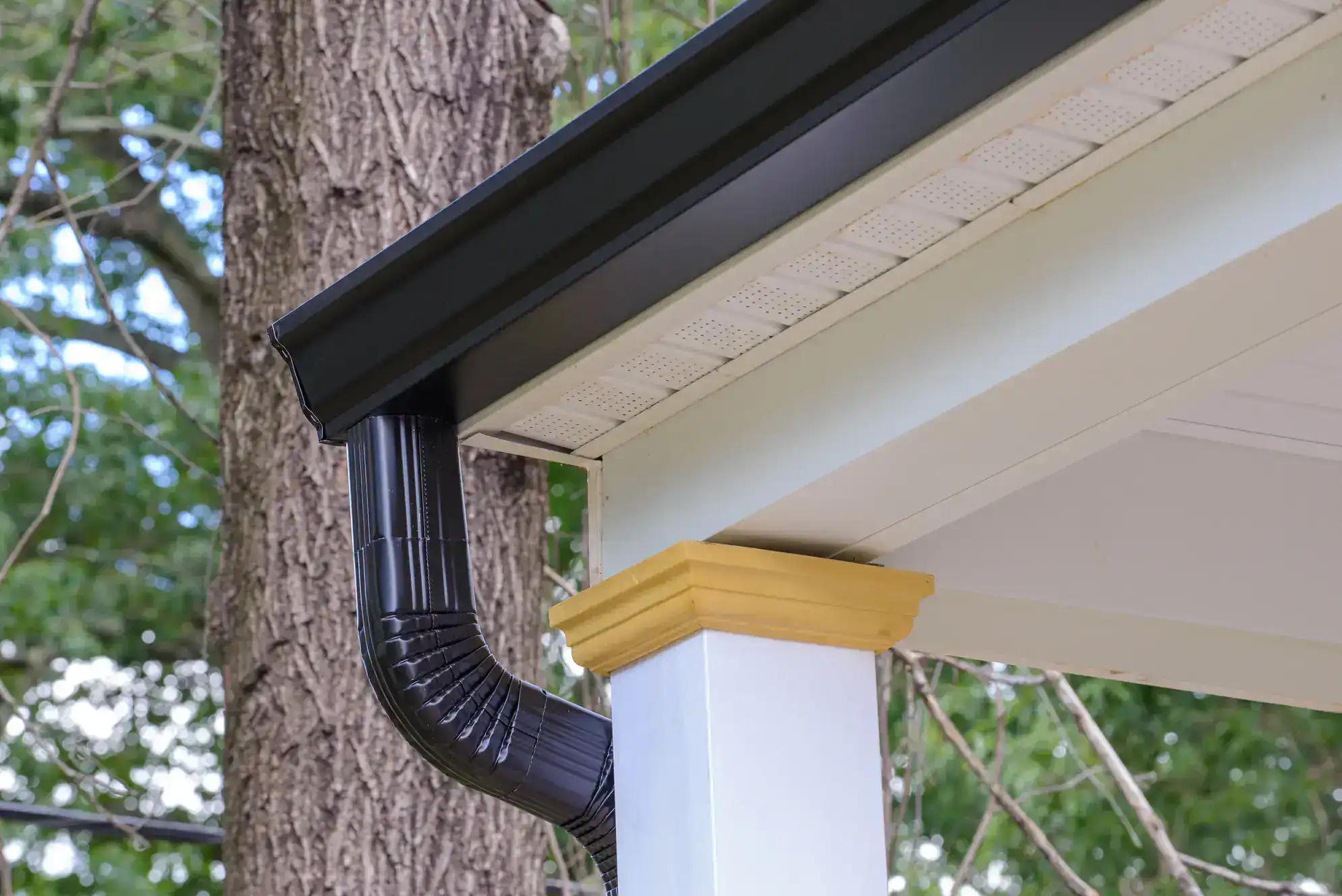
Rain Gutter Installation in Englewood, NJ
The most obvious sign of a gutter problem isn’t the gutter itself — it’s the water stain creeping down your siding, the soft fascia board you noticed last fall, or the corner of your basement that gets damp every time it rains hard. Once the system is working correctly, those problems stop compounding.
Englewood’s tree-lined streets are part of what makes this city worth living in. They’re also the reason your gutters need to be sized and sloped properly. Mature oaks and maples drop heavy leaf loads every fall, and when gutters pool water instead of moving it, they clog faster, corrode sooner, and pull away from the house before you’ve gotten five years out of them. A correctly installed seamless gutter — pitched at the right angle, matched to your roof’s actual water volume — handles that seasonal load without turning into a maintenance problem every October.
Englewood also has a documented stormwater challenge. The city manages active flood control areas around Flat Rock Brook and has received federal funding specifically for stormwater runoff infrastructure. When a summer storm drops an inch of rain in twenty minutes, your gutters and downspouts are the first line of defense between that water and your foundation. Homes with undersized or failing gutters in Englewood aren’t dealing with a hypothetical risk — they’re dealing with a real one that the city itself has been working to address for years.
Gutter Contractors in Englewood, NJ
We are a licensed New Jersey home improvement contractor (NJ HIC License #13VH10605800) with over ten years of hands-on exterior renovation experience serving residential homeowners across Bergen County. That license number isn’t just a credential — it’s verifiable on the NJ Division of Consumer Affairs website in about thirty seconds, which is exactly what a careful homeowner in Englewood should do before letting anyone near their roofline.
We’ve built our reputation through referrals and genuine customer reviews, not paid lead generation. In a city like Englewood — where neighbors on the same block talk, and a bad job on a visible Victorian is hard to miss — that kind of accountability matters. When the work is done, it has to hold up to the scrutiny of the community it was done in.
Every estimate we provide is free, written, and transparent. No vague ballpark figures, no surprise charges after the job is finished. If a repair solves your problem, that’s what you’ll hear. If replacement is the right call, you’ll understand exactly why before anything gets scheduled.
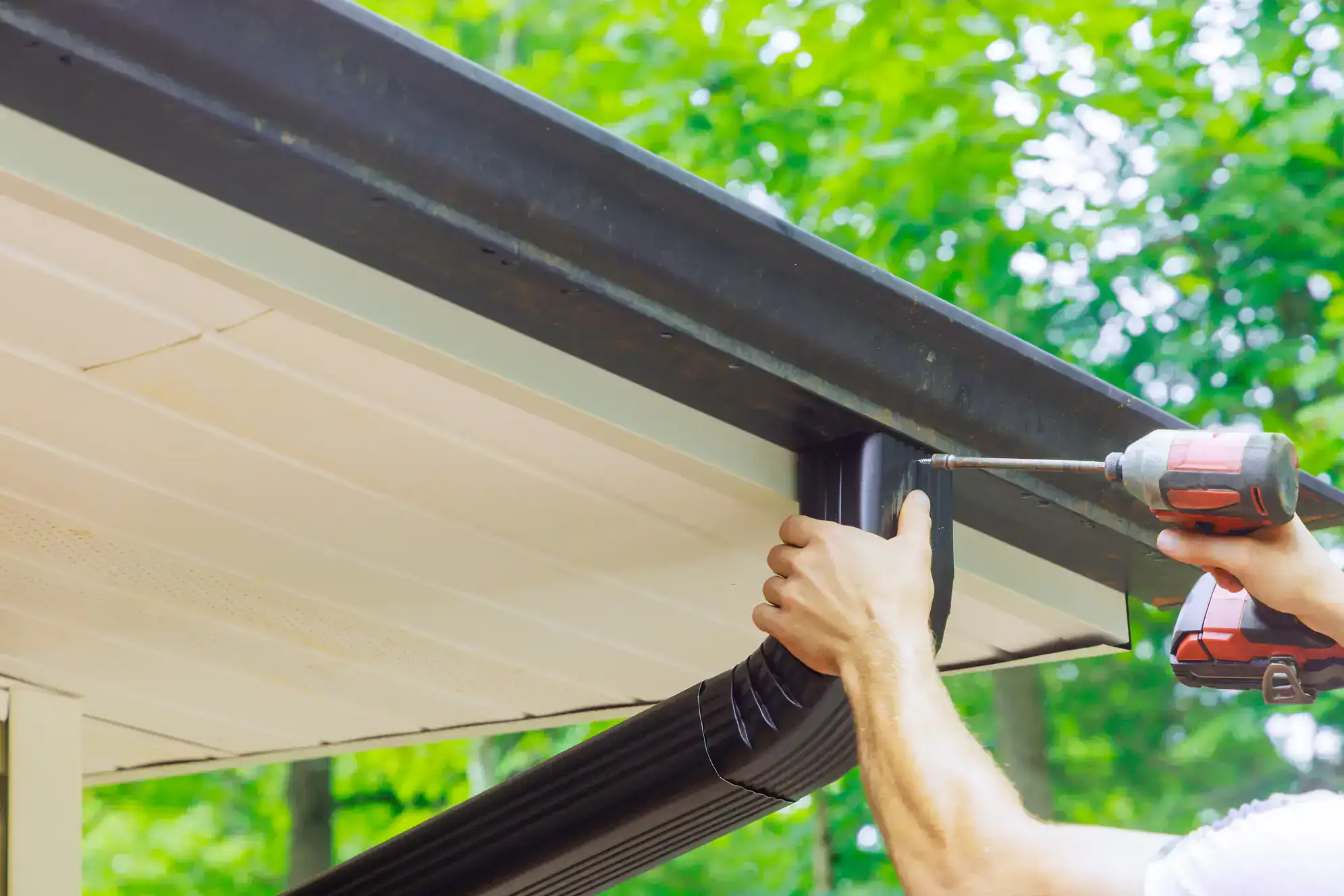
Home Gutter Installation in Englewood, NJ
It starts with a free on-site inspection. Before any measurements are taken or materials are ordered, we evaluate the full system — roof pitch, water volume based on actual roof square footage, existing fascia condition, and where the water currently goes when it leaves your roof. On a pre-war Colonial or Victorian in Englewood, this step isn’t optional. Homes built in the 1930s or earlier often have rooflines that have been modified over the decades, and what looks like a simple gutter run can have three or four variables that affect how the system needs to be sized.
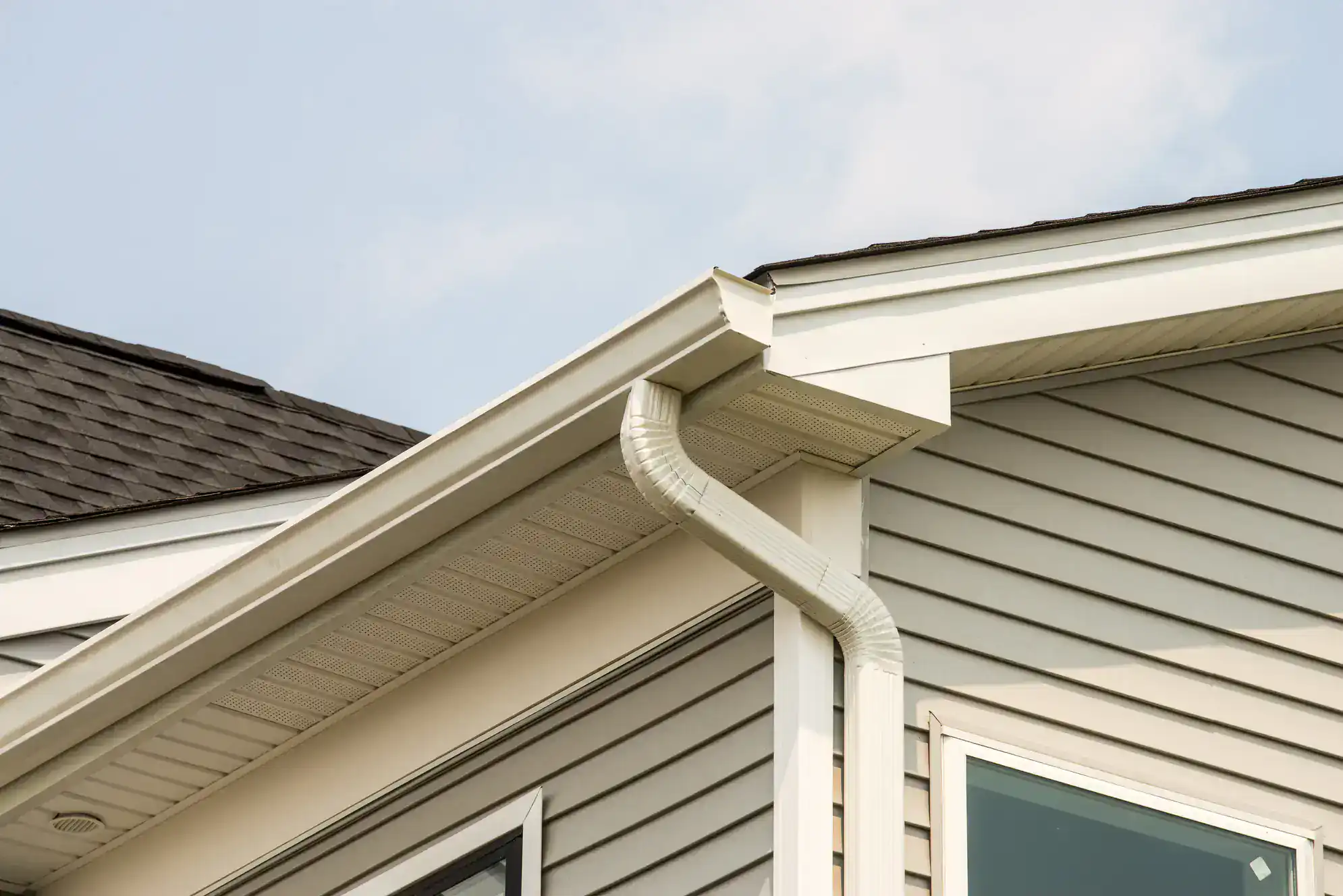
Once the assessment is done, we custom-fabricate the gutters on-site from a single continuous piece of aluminum — cut to the exact length of each run, with no seams or joints where water can eventually work its way through. Slope is calculated before the first bracket goes in, not eyeballed after the fact. Industry standard is a quarter inch of drop per ten feet toward the downspout, and getting that wrong means standing water, faster corrosion, and overflow during the kind of heavy summer storms Bergen County sees regularly.
Downspout placement and extension are part of the same conversation. Water that exits the downspout and drains toward the foundation — rather than away from it — defeats the purpose of the whole system. The job isn’t done until the water has a clear, correct path away from your home.
Ready to get started?
Roof Gutter Installation Company in Englewood, NJ
Englewood’s housing stock is not the same as a newer development in Montvale or Woodcliff Lake. The dominant housing character here is Victorian and early Colonial — steep pitches, dormers, multiple roof valleys, and rooflines that generate concentrated water runoff at specific, unpredictable points. A standard 5-inch sectional gutter system installed by a contractor who primarily works on new construction is often the wrong tool for these homes. We install seamless aluminum gutters in both 5-inch and 6-inch profiles, matched to your roof’s actual geometry and water load.
Every installation we perform includes a full assessment of fascia board condition before mounting. On older Englewood homes, deteriorating fascia is one of the most common reasons gutters fail within a few years of installation — the brackets pull out of soft wood and the whole run sags or separates. If the fascia needs to be addressed before the gutters go up, you’ll know that upfront, not after the job is done.
For homeowners dealing with storm damage, we also assist with the insurance claims process — documenting the damage, working with adjusters, and helping you understand what your homeowner’s policy is likely to cover. Bergen County storms are real events, and navigating a claim shouldn’t fall entirely on your shoulders. The entire scope of work, from inspection to final downspout extension, is covered under a written estimate with no hidden fees.
How much does gutter installation typically cost for homes in Englewood, NJ?
For a typical single-family home in Englewood, gutter installation generally runs somewhere between $2,800 and $5,500 depending on the size of the home, the complexity of the roofline, and whether the fascia boards need any attention before installation. Homes with more architectural detail — dormers, multiple valleys, steep pitches — take more time to measure, fabricate, and install correctly, which is reflected in the cost.
Englewood’s housing stock skews older and more architecturally complex than many surrounding towns, which means the lower end of that range is less common here than it might be elsewhere. What’s worth keeping in mind is the comparison: a properly installed gutter system that handles Bergen County’s rainfall and keeps water away from your foundation is significantly less expensive than foundation repair, which can run $5,000 to $30,000 or more depending on the severity. Getting a free, written estimate is the only way to know your actual number — and it costs you nothing to find out.
What is the difference between seamless and sectional gutters, and which is better?
Sectional gutters come in pre-cut lengths that are joined together on-site with connectors and sealant. The joints are where they eventually fail — sealant breaks down, sections separate, and water finds its way through. On a home that’s been through decades of Bergen County winters, freeze-thaw cycles accelerate that process significantly. Seamless gutters are fabricated from a single continuous piece of aluminum, cut to the exact length of each run. There are no mid-run joints, which means there are far fewer points of failure.
For Englewood’s older homes specifically, seamless gutters are almost always the better choice. Victorian and Colonial homes with complex rooflines have enough variables in the installation process without adding the long-term liability of sectional joints. Seamless systems also tend to look cleaner on historic homes where exterior appearance matters — and in a city with home values between $500,000 and several million dollars, the visual detail is not a small thing.
Do I need a permit for gutter installation or replacement in Englewood, NJ?
In most cases, straight gutter replacement in kind on a residential property in New Jersey does not require a separate building permit. The work falls under home improvement contractor scope, which is why the contractor’s NJ HIC license is the more important credential to verify — not the permit. Englewood does have an active construction code enforcement office and a formal stormwater management ordinance, so if your project involves significant changes to how water drains off your property or toward the street, it’s worth a quick call to the city’s construction department to confirm requirements for your specific situation.
What does matter in Englewood from a regulatory standpoint is that whoever does the work holds a valid NJ Division of Consumer Affairs Home Improvement Contractor registration. Unlicensed work can void your homeowner’s insurance coverage and leave you without recourse if something goes wrong. Our license number is #13VH10605800 — verifiable directly through the NJ Consumer Affairs website before you sign anything.
How do I know if my gutters need to be replaced or just repaired?
The honest answer is that it depends on what’s actually failing. Isolated leaks at a joint or end cap, a single section that’s pulling away from the fascia, or a downspout that’s come loose — these are often repairable without replacing the whole system. But if you’re seeing widespread sagging, multiple separation points, gutters that overflow consistently during normal rain events, or significant rust and corrosion on older metal systems, repair becomes a short-term fix on a system that’s already telling you it’s done.
On Englewood homes built in the 1930s and earlier, the more common scenario is a system that’s been patched over the years and is now past the point where another repair makes financial sense. A free inspection will tell you which situation you’re actually in. The goal isn’t to sell you a replacement you don’t need — it’s to give you an honest read on whether repair or replacement is the smarter investment for your specific home and what it would cost either way.
What gutter size should I use on my older Englewood home?
The standard residential gutter size is 5 inches, and it works fine on a lot of homes. But for older Englewood homes with steep roof pitches, large surface areas, or multiple roof planes that concentrate runoff at specific points, a 5-inch gutter is often undersized. During the kind of intense convective storms Bergen County sees in summer — events that can drop an inch or more of rain in under an hour — an undersized gutter overflows even when it’s clean and properly sloped.
The right answer depends on your roof’s actual square footage and pitch, not a general rule. A 6-inch gutter moves roughly 40% more water than a 5-inch system, which on the right home makes a meaningful difference in performance. This is something that gets evaluated during the on-site inspection — not assumed based on what the previous contractor installed. If the prior system was consistently overflowing during heavy rain and nobody ever questioned the sizing, that’s usually the first place to look.
Does homeowner's insurance cover gutter damage from storms in Englewood, NJ?
It can, depending on your policy and the nature of the damage. Most standard homeowner’s insurance policies cover sudden storm damage — wind, hail, falling branches — but they typically don’t cover damage that resulted from neglect or gradual deterioration over time. The distinction matters, and how the damage is documented and presented to your adjuster can affect what gets approved.
Englewood has a documented history of significant storm events, and Bergen County homeowners deal with real weather — not just occasional inconvenience. If a storm has damaged your gutters, we can assist directly with the claims process: documenting what happened, communicating with the adjuster, and making sure nothing gets missed in the assessment. It doesn’t guarantee a specific outcome — insurance decisions ultimately rest with your carrier — but having a licensed contractor in your corner who knows how to present the damage correctly gives you a better shot at a fair result.