
Siding Installation in Englewood, NJ
Englewood Homes Deserve More Than a Quick Fix
Hear from Our Customers
Vinyl Siding Contractors in Englewood, NJ
When siding fails on an Englewood home, it rarely fails quietly. You get water behind the panels, damage to the sheathing underneath, and sometimes rot that doesn’t show itself until a contractor is already pulling boards off the wall. Good siding installation stops that chain before it starts — and on a home worth $600,000 or more, that’s not a small thing.
Englewood’s freeze-thaw cycles hit harder than most homeowners expect. From November through March, temperatures in Bergen County regularly cross back and forth over freezing, and that movement puts real stress on older siding that’s lost its flexibility. Add in the nor’easters that push wind-driven rain horizontally into every gap and seam, and you start to understand why so many homes here need full replacement rather than a patch job.
The other thing that changes with quality siding is simpler: your home looks the way it should. East Hill properties especially carry architectural character worth protecting. The right material, installed correctly, doesn’t just weatherproof your home — it keeps it looking like it belongs in the neighborhood it’s in.
Local Siding Company Serving Englewood, NJ
We’ve been working on Bergen County homes for close to ten years. That’s not a tagline — it’s the reason we understand what homes in Englewood actually go through across seasons, and why we don’t cut corners on moisture barriers, flashing, or substrate prep.
We’re family-operated, which means the people making decisions about your project are the same people accountable for the outcome. There’s no layer of management between you and the crew. When something needs to be addressed, it gets addressed — not routed through a call center.
Englewood homeowners, from the East Hill estates near Flat Rock Brook to the residential streets closer to downtown, have trusted us with their exterior work because we bring roofing-level knowledge to every siding job. That combination matters more than most people realize until you’re standing in front of a wall that wasn’t properly sealed.

Residential Siding Contractors in Englewood, NJ
It starts with a free inspection. Not a sales pitch — an honest look at what your siding is doing, what’s underneath it, and whether you need a full replacement or something more targeted. For homes built before 1950, which account for a significant portion of Englewood’s housing stock, that inspection often turns up conditions that aren’t visible from the street. Better to know before the project starts than after.
Once the scope is clear, you get a written estimate with a real number. That number doesn’t change unless something genuinely unexpected comes up — and if it does, you hear about it before any additional work happens. We handle the permit process through Englewood’s Central Permit Office, which matters more than people expect. The city requires a Certificate of Continued Occupancy before any home sale, and unpermitted siding work can hold that up. Getting the permit pulled correctly from the start protects your ability to sell when the time comes.
Installation itself is scheduled around Bergen County’s weather patterns. Spring and early fall are the most favorable windows, but work happens year-round when conditions allow. After the job is done, you get a walkthrough — not a handshake and an invoice. If something isn’t right, it gets fixed.

Ready to get started?
Siding Installation and Contractors in Englewood, NJ
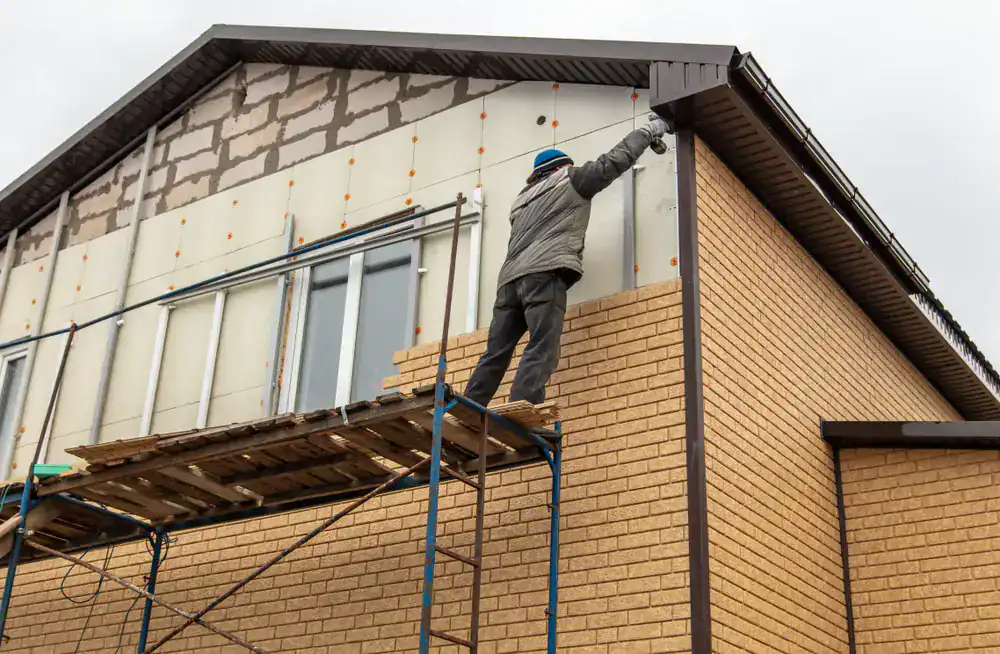
Siding installation with us covers the full scope — removal of existing material, inspection of the substrate beneath, proper installation of housewrap or moisture barrier, and installation of new panels with correct expansion gaps and flashing at every window, door, and roof-wall intersection. In Bergen County’s climate, those details aren’t optional. They’re what separates siding that lasts twenty years from siding that starts failing in five.
On the material side, the most common choices for Englewood homeowners are vinyl and fiber cement. Vinyl remains the most cost-effective option and has improved significantly in quality — insulated vinyl in particular adds a layer of thermal performance that older homes in Englewood can genuinely benefit from. Fiber cement, including James Hardie products, is the better fit for East Hill properties where architectural character matters and where the investment in the home justifies a premium material with a longer lifespan and stronger impact resistance.
Every installation is backed by both a manufacturer product warranty and a workmanship warranty. Because we hold manufacturer certifications, those product warranties are fully activated — not voided by improper installation technique. You also get a contractor that’s licensed and registered with the State of New Jersey, which is a requirement the City of Englewood’s own building code enforcement division spells out plainly. That registration is your legal protection if anything goes wrong.

Do I need a permit for siding replacement in Englewood, NJ?
Yes, in most cases. The City of Englewood follows New Jersey’s Uniform Construction Code, and full siding replacement — as opposed to minor spot repairs — typically falls under the permit requirement. You’ll need to submit an application through Englewood’s Division of Building Regulations at the Central Permit Office. If you’re unsure whether your specific project triggers the requirement, Englewood’s Code Enforcement office can clarify based on the scope of work.
This matters especially if you’re planning to sell. Englewood requires a Certificate of Continued Occupancy before any residential property can change hands, and unpermitted exterior work can delay or block that process entirely. We handle the permit application as part of the project — so you’re not navigating that on your own or discovering a problem at closing.
How much does siding installation typically cost in Englewood, NJ?
The honest answer is that it depends on the size of your home, the material you choose, and what’s found underneath the existing siding once removal starts. For a typical single-family home in Englewood, vinyl siding installation generally runs somewhere in the range of $8,000 to $18,000. Fiber cement — which is a more common choice on larger East Hill properties — tends to run higher, often $15,000 to $30,000 or more depending on square footage and complexity.
What drives cost up unexpectedly is substrate damage. Homes built before 1960, which make up a large portion of Englewood’s housing stock, sometimes have deteriorated sheathing or failed housewrap underneath the existing cladding. A free inspection before the project starts can give you a much clearer picture of what you’re actually dealing with — and help you budget accurately rather than getting hit with surprises mid-project.
What siding material holds up best in Bergen County's climate?
For most Englewood homeowners, the choice comes down to insulated vinyl or fiber cement, and both perform well when installed correctly. Insulated vinyl handles the freeze-thaw cycling that Bergen County winters produce better than standard vinyl because the foam backing reduces expansion and contraction stress on the panels. It also adds real thermal value to older homes that weren’t built with modern energy efficiency in mind.
Fiber cement — James Hardie being the most widely recognized brand — is harder, more impact-resistant, and holds paint longer. It’s a better fit for homes where aesthetics matter as much as performance, which is often the case on the East Hill. It doesn’t warp in humidity, it doesn’t crack under impact from storm debris, and it’s non-combustible. The tradeoff is cost and installation complexity, which is why material selection really should start with an honest conversation about your home, your budget, and your long-term plans for the property.
How do I know if my siding needs full replacement or just repairs in Englewood?
This is one of the most common questions, and the answer isn’t always obvious from the outside. Visible cracking, warping, or fading around windows and corners can mean localized damage that’s repairable — or it can be the surface sign of a larger moisture problem that’s been working its way through the wall assembly for years. The only way to know for certain is to get a professional look at what’s underneath.
On homes built before 1960 — which covers a significant share of Englewood’s residential properties — the original siding has often been layered over once or twice already. That adds weight to the wall, can trap moisture, and makes it harder to assess the condition of the substrate. A free inspection will tell you whether you’re dealing with isolated panel failure or a system-wide issue. If it turns out repairs are all you need, that’s what you’ll hear. There’s no incentive to push a full replacement when it isn’t warranted.
How long does siding installation take on a typical Englewood home?
For a standard single-family home in Englewood, most siding installations run between three and seven days of active work. Larger homes — particularly the estate-scale properties on the East Hill — can take longer depending on architectural complexity, the number of stories, and whether significant substrate repair is needed once the old material comes off.
Weather is the variable that most commonly affects scheduling in Bergen County. Spring and early fall are the most predictable windows for exterior work, and those periods tend to book up four to eight weeks out. If you’re planning a project before a home sale — and you need to pass Englewood’s Certificate of Continued Occupancy inspection — building in lead time for both the installation and the permit inspection is important. Getting on the schedule early gives you the most flexibility, especially if you’re targeting a spring listing.
Why does it matter that my siding contractor is licensed in New Jersey?
New Jersey requires all home improvement contractors to register with the state under the Consumer Fraud Act. That registration isn’t just a formality — it’s the legal mechanism that gives you recourse if a contractor takes your deposit and disappears, does substandard work, or refuses to honor a warranty. Without it, your options for recovering money or forcing corrective work are significantly limited.
The City of Englewood takes this seriously. The city’s own building code enforcement page explicitly states that all home improvement contractors must carry state registration before working on residential properties here. For Englewood homeowners specifically, this connects directly to the CCO requirement — if work is done by an unregistered contractor and the permit process wasn’t followed, it can create real legal and financial complications when you go to sell. Working with a licensed, registered contractor from the start is the straightforward way to avoid that entirely.