
Gutter Replacement in Villa Marie Claire, NJ
When Your Trees Are Beautiful and Your Gutters Are Losing the Battle
Hear from Our Customers
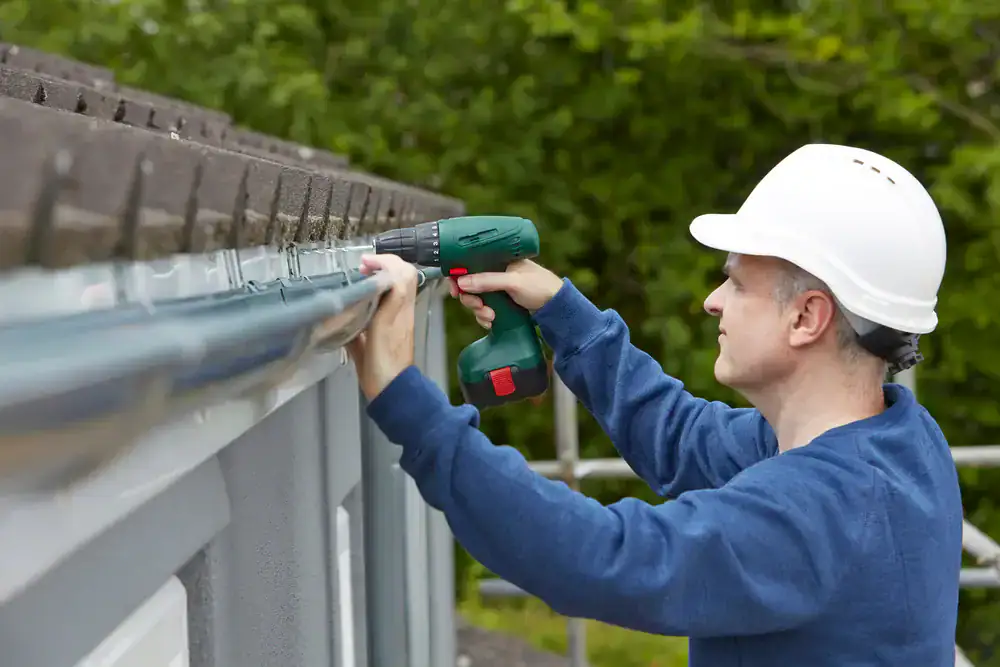
Rain Gutter Replacement in Bergen County
Water goes where it’s supposed to go — away from your foundation, your fascia, and your finished basement. That might sound simple, but on a large estate property in Villa Marie Claire, where mature tree canopies drop debris all fall and winter temperatures regularly dip into the low 20s, a gutter system that can’t keep up creates real damage fast. Fascia rot, soffit deterioration, and foundation seepage don’t announce themselves — they build quietly behind a system that looks functional but isn’t.
The wooded character of Villa Marie Claire is one of its defining qualities. It’s also one of the most demanding environments a gutter system can face. Leaves, seed pods, and organic debris accumulate faster here than in open suburban neighborhoods, and when that debris sits in a compromised gutter through a freeze-thaw cycle, the weight and moisture accelerate every failure point — hangers, seams, end caps, and the fascia boards behind them.
After a proper replacement, you stop watching the overflow during heavy storms. You stop finding soggy soil against your foundation every spring. And on a home worth what homes in this area are worth, that kind of protection isn’t a luxury — it’s maintenance that pays for itself.
Gutter Replacement Contractors in Villa Marie Claire, NJ
We’ve been doing exterior work across Bergen County for a decade. That means we’ve replaced gutters on large wooded-lot properties throughout Villa Marie Claire and the surrounding Saddle River area — homes with complex rooflines, long eave runs, and the kind of mature tree canopy that puts a gutter system through its paces every single fall. We know what these homes demand, and we’ve built a process around delivering it consistently.
We’re family-owned, which means the people responsible for your job are the same people whose reputation depends on it. No layers between you and accountability. We carry full liability insurance and workers’ compensation coverage, hold contractor licenses, and are certified by major manufacturers — not because it’s required, but because it’s the standard we hold ourselves to.
Free estimates and inspections are part of how we operate. You’ll know exactly what’s wrong, what’s needed, and what it costs before a single decision is made.

House Gutter Replacement in Villa Marie Claire, NJ
It starts with a free inspection. A technician walks your property, evaluates the existing gutters, checks the fascia boards behind them, assesses downspout placement, and looks at how the entire drainage system is functioning — or not. On a large estate property in Villa Marie Claire, that inspection matters more than it would on a smaller home. More linear footage means more potential failure points, and a thorough look upfront is what keeps the scope honest.
From there, you get a clear, itemized estimate. No vague numbers, no line items you have to ask about. If fascia boards have been compromised by years of water contact — which is common on heavily wooded properties where gutters have been clogged repeatedly — that gets identified before the job starts, not during it.
Installation day is straightforward. We fabricate seamless aluminum gutters on-site to the exact measurements of your roofline, install with hidden hangers spaced to handle the freeze-thaw stress Bergen County winters deliver, and set proper pitch toward downspouts so water moves the way it should. When the job is done, we walk the completed system with you — every section, every downspout, every sealed corner — so you leave with full confidence in what was installed.

Ready to get started?
Roof Gutter Replacement Company in Villa Marie Claire, NJ
Gutter replacement on a Villa Marie Claire property isn’t the same job it is on a standard suburban home. The homes here are larger, the rooflines are more complex, and the surrounding landscape creates a debris load that a poorly installed or undersized system simply cannot manage. Every replacement we do is sized and configured for the actual property — not a one-size approach applied across different homes with different demands.
We install seamless aluminum gutters as the standard, fabricated on-site so there are no pre-cut seam joints to fail under ice or heavy debris weight. Hidden hangers replace the old spike-and-ferrule systems that loosen in freeze-thaw cycles, and every end cap, miter, and outlet is sealed to hold through what northern Bergen County winters actually look like. Downspout placement gets evaluated as part of the job — not as an afterthought — because where water exits the system matters as much as how it flows through it.
Because our background is roofing, we approach gutter replacement with an understanding of how water moves across a roof before it ever reaches the gutter. That perspective shows up in the installation details — pitch, hanger spacing, downspout positioning — and it’s the difference between a system that performs and one that looks fine until the first major storm.

How do I know if I need gutter replacement or just a repair in Villa Marie Claire?
The honest answer is that it depends on what’s actually failing — and that’s exactly what a free inspection is for. Repairs make sense when the issue is isolated: a single section pulling away from the fascia, a downspout that’s disconnected, a sealed joint that’s opened up. Those are fixable problems. Replacement becomes the right call when the system is showing widespread issues — multiple sections sagging, consistent overflow during normal rain, fascia boards that have started to soften or rot behind the gutters, or a system that’s been patched repeatedly and is still underperforming.
On the heavily wooded properties throughout Villa Marie Claire, gutter systems tend to degrade faster than the industry average because of the debris load and the repeated freeze-thaw stress every winter. A system that might last 25 years in a more open environment can show serious wear in 15 on a wooded lot. If your gutters are more than 15 years old and you’re seeing overflow, separation, or visible rust and sagging, a full replacement is usually the more cost-effective decision over continued repairs.
What type of gutters work best for large, wooded properties in Bergen County?
Seamless aluminum is the right choice for most homes in this area, and it’s what we install as the standard. The seamless design eliminates the joint seams that come with sectional gutters — and seams are where leaks start, especially after repeated freeze-thaw cycles compress and expand the metal. On a large Villa Marie Claire property with long eave runs and heavy debris loads, fewer seams means fewer failure points and a system that holds up longer without intervention.
The size of the gutter profile also matters more than most homeowners realize. Standard 5-inch K-style gutters are fine for typical suburban homes, but many of the larger estate properties in Villa Marie Claire benefit from 6-inch profiles that handle higher water volume during the heavy summer thunderstorms and spring snowmelt events that northern Bergen County regularly sees. During your inspection, we’ll assess your roof’s drainage area and recommend the right sizing for your specific property — not a default that works on average.
How much does gutter replacement typically cost for a home in Villa Marie Claire, NJ?
Cost is driven primarily by linear footage, and the estate-scale homes in Villa Marie Claire tend to require significantly more footage than a standard suburban home. For a typical single-family home in this area, gutter replacement generally falls in the range of $1,500 to $4,000 or more depending on the size of the roofline, the number of downspouts, and whether any fascia repair is needed before installation. Larger properties with complex rooflines or multiple stories will naturally sit toward the higher end of that range.
The other factor that affects cost in this area specifically is fascia condition. On heavily wooded properties where gutters have been clogged and overflowing for extended periods, the fascia boards behind the gutters are often compromised by water contact. If they need to be replaced before new gutters can be installed properly, that adds to the scope. It’s not a hidden cost — it’s something we identify during the inspection and include in your estimate upfront so there are no surprises when the job starts.
Do I need a permit for gutter replacement in Saddle River Borough?
In most New Jersey municipalities, gutter replacement is considered routine exterior maintenance and does not require a building permit — it falls outside the scope of structural work that typically triggers permit requirements. That said, permit requirements are set at the municipal level, and Saddle River Borough’s construction office is the definitive source for confirming whether any permit applies to your specific project scope.
What is required across all of New Jersey — regardless of municipality — is that any home improvement contractor performing exterior work be registered under the state’s Home Improvement Contractor (HIC) Registration program, administered by the New Jersey Division of Consumer Affairs. This registration is a baseline consumer protection requirement that separates licensed, insured contractors from unlicensed operators. We carry full contractor licensing, general liability insurance, and workers’ compensation coverage. If you want documentation of any of these before work begins, we provide it without hesitation — it’s a reasonable thing to ask for.
How often should gutters be replaced on a heavily wooded property in northern NJ?
The commonly cited lifespan for aluminum gutters is 20 years, but that number assumes reasonable maintenance and a relatively open environment. For properties in Villa Marie Claire and the surrounding Saddle River area — where mature tree canopies deposit heavy debris loads every fall, where gutters are under freeze-thaw stress every winter, and where many homes have long eave runs that put more weight and volume demand on the system — the realistic lifespan is often closer to 15 years for a system that hasn’t been consistently maintained.
The more useful question isn’t “how old are my gutters” — it’s “how are they performing.” If you’re seeing overflow during moderate rain, sections pulling away from the fascia, standing water near your foundation after storms, or visible sagging and rust, those are functional failures regardless of age. A gutter system on a large wooded-lot property in this area should be inspected every few years, and any system showing multiple signs of deterioration should be evaluated for replacement rather than continued repair.
Does USA Home Remodeling offer free inspections for gutter replacement in Villa Marie Claire?
Yes — every gutter replacement project starts with a free professional inspection, and it’s not a formality. On a property in Villa Marie Claire, where the homes are large, the lots are heavily wooded, and the stakes of getting it wrong are real, a thorough inspection upfront is what makes the rest of the process honest. The technician evaluates the existing gutter system across the full roofline, checks the condition of the fascia boards behind the gutters, assesses downspout placement and drainage flow, and identifies any underlying issues that would affect the replacement scope.
What you get from that inspection is a clear picture of what’s actually going on — not a sales pitch designed to maximize the invoice. If repairs are the right call, that’s what we’ll tell you. If the system needs full replacement, we’ll explain specifically why and show you what we found. The estimate that follows is itemized and fully explained before any decision is made. For a homeowner in this area who’s managing a significant property investment, that kind of transparency at the start of the process is exactly how this should work.