
Gutter Replacement in Ridgewood, NJ
When Ridgewood's Trees Win, Your Gutters Lose
Hear from Our Customers
Rain Gutter Replacement in Bergen County
Most gutter problems don’t announce themselves — they show up quietly as a water stain on your siding, a soft spot on your fascia, or a basement that floods every time it rains hard. By the time it’s obvious, the damage has usually been building for a while. Getting ahead of it is almost always cheaper than catching up to it.
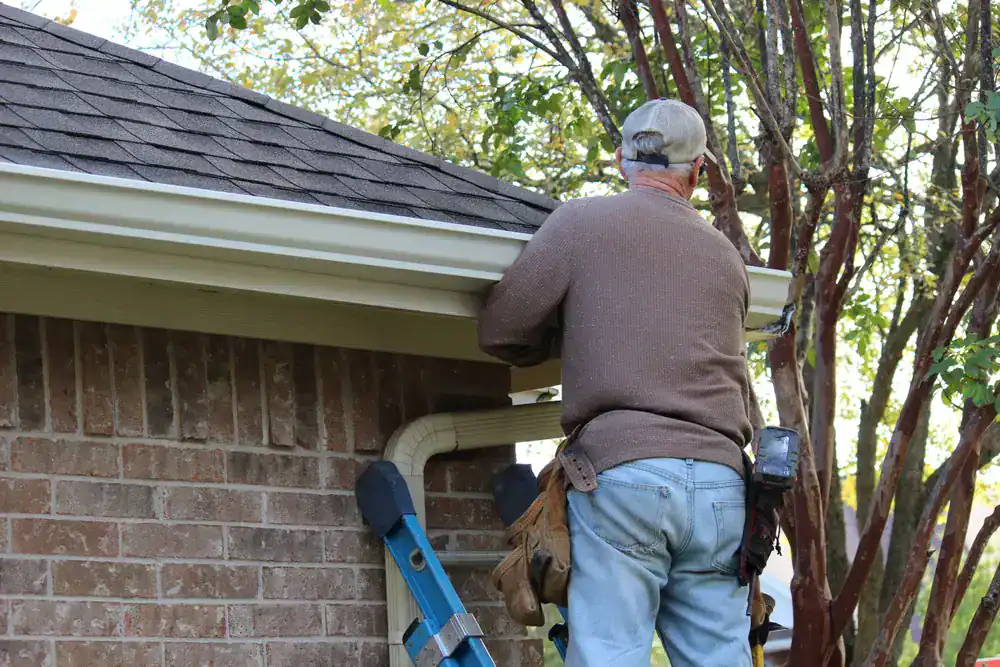
Ridgewood’s Shade Tree Commission has been planting and managing the village’s tree canopy since 1911. Those mature oaks and maples are beautiful — and they drop an enormous amount of debris into your gutters every fall. When gutters clog and hold standing water, then freeze through January and February, the weight and expansion damages the system from the inside out. This isn’t a general concern — it’s what actually happens on streets like those in Old Ridgewood every single year.
With more than 37% of homes in Ridgewood built before 1939, there’s a real chance your gutters — and the fascia behind them — are overdue. A properly installed seamless gutter system moves water away from your foundation efficiently, handles the seasonal leaf load this village is known for, and protects a home that, in this market, is likely worth close to or well over a million dollars. That’s not a small thing to leave to a failing system.
Gutter Replacement Contractors in Ridgewood, NJ
We’re a family-owned exterior renovation company that’s been serving Northern New Jersey homeowners for over a decade. Roofing is the core of what we do, which means when we look at your gutters, we’re thinking about your entire drainage system — not just the visible channel on your roofline. That perspective makes a real difference in how the work gets done.
We hold contractor licenses and manufacturer certifications that require documented experience, active insurance, and professional standards that aren’t self-awarded. Every project comes with transparent pricing, clear communication throughout, and a free inspection up front — so you know what you’re actually dealing with before committing to anything.
For homeowners in Ridgewood and across Bergen County, that combination of credentials, honest process, and a reputation built on real customer reviews is exactly what makes the difference between a contractor you call once and one you refer to your neighbors.

House Gutter Replacement Process in Ridgewood
It starts with a free inspection. One of our technicians gets eyes on your existing gutters, checks the fascia boards behind them, looks at how water is currently moving — or not moving — away from your home, and gives you an honest read on what needs to happen. In Ridgewood, where a significant portion of homes were built before World War II, that inspection often turns up fascia deterioration that isn’t visible from the ground. You’ll know what’s there before any work begins.
From there, you get a clear, itemized estimate. No vague line items, no numbers that shift after the job starts. If you decide to move forward, seamless gutters are fabricated on-site to fit your home’s exact dimensions — not cut from stock sections that leave seam points where leaks start. Ridgewood’s architectural diversity means this matters more here than in newer subdivisions. Victorian rooflines, Dutch Colonial dormers, and Tudor Revival gables all have their own quirks, and a one-size approach doesn’t cut it.
Installation is clean, efficient, and followed by a walkthrough so you can see exactly what was done and why. New Jersey requires all home improvement contractors to be registered with the Division of Consumer Affairs under the HIC program — we meet that requirement and carry manufacturer-level certifications on top of it. You’re not taking a chance on an unlicensed crew.

Ready to get started?
Roof Gutter Replacement Services in Ridgewood, NJ
Gutter replacement with us isn’t a drop-in, drop-out job. The process starts with a proper assessment — gutters, fascia condition, downspout placement, and how your current system is handling or mishandling water discharge. In a village like Ridgewood, where the Ho-Ho-Kus Brook runs through town and the village maintains an active Stormwater Management Plan, how your downspouts direct water matters beyond just your own property line.
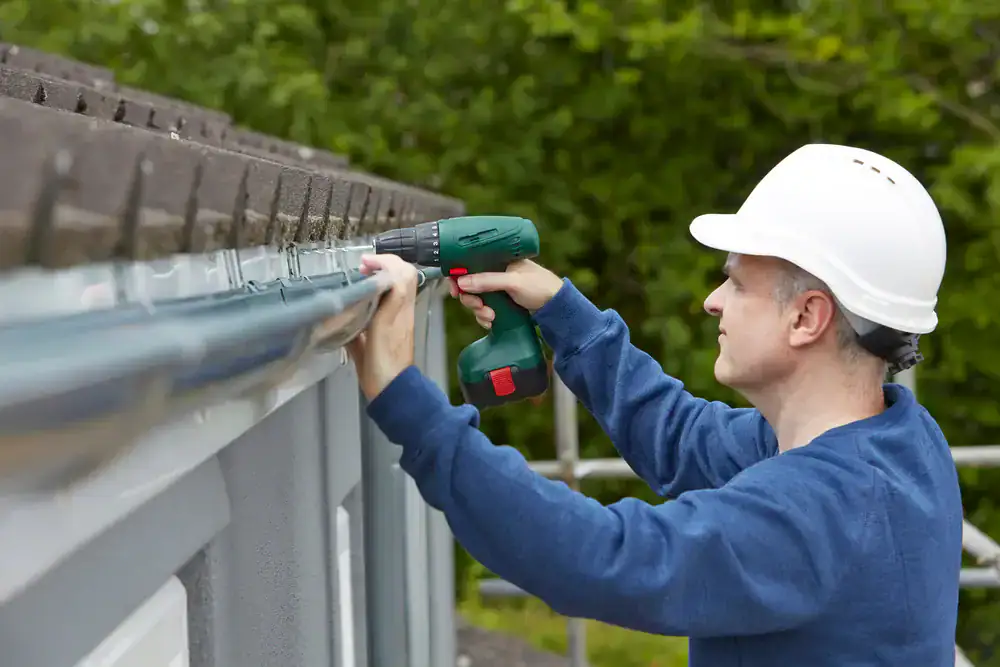
Seamless aluminum gutters are the standard here, fabricated on-site to match your home’s exact measurements. Hidden hanger fasteners replace the old spike-and-ferrule systems that pull away from fascia over time — a common issue in older Ridgewood homes. Downspout placement is evaluated for proper discharge distance from your foundation, which is especially relevant given the documented flooding this area has experienced, including the significant flood event in September 2023.
The work is done by our experienced installers who understand what Bergen County homes actually deal with — 48 inches of annual rainfall, heavy seasonal leaf loads from one of the most celebrated tree canopies in the county, and freeze-thaw cycles that run from December through April. When the job is done, you get a system that functions the way it’s supposed to, in the conditions it actually faces.

How do I know if my gutters actually need replacing or just repairs?
The honest answer is that it depends on what’s actually wrong — and that’s exactly why a physical inspection matters before anyone gives you a recommendation. Gutters that are pulling away from the fascia, visibly sagging, or showing rust and corrosion along the seams are usually past the point where repairs make financial sense. At some point, patching a deteriorating system costs more over time than replacing it once.
In Ridgewood specifically, the age of the housing stock is a real factor. If your home was built before 1960 — which applies to the majority of homes in the village — there’s a reasonable chance your gutters are original or close to it. Aluminum gutters have an average lifespan of around 20 years under normal conditions. In a town with Ridgewood’s leaf load and annual rainfall, that lifespan shortens. A free inspection will tell you what you’re actually dealing with, and we’ll tell you honestly whether repair or replacement is the right call.
What type of gutters work best for older homes in Ridgewood, NJ?
Seamless aluminum gutters are the standard recommendation for most Ridgewood homes, and for good reason. They’re fabricated on-site to your home’s exact measurements, which means no seam points where sectional gutters typically fail. They’re lightweight, durable, and available in profiles that complement the architectural styles common throughout the village — Colonial Revival, Dutch Colonial, Victorian, Tudor Revival, and others that make up Ridgewood’s housing fabric.
The bigger consideration for older homes in Ridgewood isn’t always the gutter material itself — it’s the fascia behind it. Many pre-1939 homes have original wood fascia that has been holding gutters for decades, and deteriorated fascia can’t support a new gutter system properly no matter how good the installation is. A thorough inspection should assess fascia condition before any replacement work begins. If the fascia needs attention first, that should be part of the conversation — not something you discover after the fact.
Do I need a permit for gutter replacement in Ridgewood, NJ?
Gutter replacement in New Jersey typically falls under standard home improvement work and does not require a building permit in most cases. However, the contractor performing the work is required by state law to be registered with the New Jersey Division of Consumer Affairs under the Home Improvement Contractor (HIC) Registration program. This is not optional — it’s a legal requirement, and the Village of Ridgewood’s own municipal FAQ explicitly advises homeowners to verify this registration before signing any contract.
You’re also entitled to a written contract for any project over $500, which is another state-level requirement. That contract should clearly outline the scope of work, materials being used, total cost, and timeline. If a contractor is reluctant to put things in writing or can’t produce their HIC registration number when asked, that’s a red flag worth taking seriously. The administrative side of hiring a contractor in Ridgewood isn’t complicated — but skipping it creates real exposure.
Why do my gutters keep overflowing even though they look fine from the street?
This is one of the most common things homeowners in Ridgewood run into, and the cause is almost always one of three things: the gutters are undersized for the volume of water coming off your roof, they’re pitched incorrectly so water pools instead of flowing toward the downspout, or they’re partially clogged with debris that isn’t visible from the ground.
In Ridgewood, the tree canopy factor is significant. The village’s Shade Tree Commission has maintained and expanded the street tree program since 1911, and the result is one of the most mature and dense canopies in Bergen County. That’s a lot of leaves, seed pods, and organic debris landing in gutters every fall — and partial clogs can restrict flow enough to cause overflow without the gutter appearing blocked from below. If you’re seeing overflow during moderate rain events, not just during heavy storms, a pitch or sizing issue is worth investigating. A proper inspection will identify which of these is actually driving the problem.
How much does gutter replacement typically cost in Ridgewood, NJ?
Gutter replacement costs vary based on the linear footage of your system, the number of downspouts, whether fascia repair is needed, and the complexity of your roofline. For a typical single-family home in Ridgewood, seamless aluminum gutter replacement generally runs somewhere in the range of $1,500 to $3,500 for the full system, though larger homes with complex rooflines — which are common in this village — can run higher.
What’s worth keeping in mind in a market like Ridgewood is the cost context. With median home values approaching and exceeding $1 million, a properly functioning gutter system is one of the more cost-effective ways to protect a significant asset. Foundation repairs, basement water intrusion, and fascia replacement all cost considerably more than a proactive gutter replacement. The free inspection we offer is a good starting point — you’ll get a clear, itemized estimate based on what your home actually needs, not a ballpark number pulled from a general formula.
When is the best time of year to replace gutters in Ridgewood, NJ?
Late summer through early fall tends to be the best window for gutter replacement in Ridgewood — before the heavy leaf drop from the village’s mature tree canopy begins and before temperatures drop into the freeze-thaw range that runs from December through April. Getting a new system installed and functioning before October means it’s ready to handle the season when it matters most.
That said, gutter replacement can be done year-round in most conditions, and waiting for a perfect window isn’t always practical. If you’re noticing overflow, sagging, or separation right now — regardless of the time of year — it’s worth getting an inspection scheduled rather than holding off. Water damage doesn’t pause for the calendar. Spring is also a common time homeowners discover winter damage from ice and freeze-thaw stress, so post-winter inspections in March and April are a smart habit for anyone in Bergen County with an older home.