
Gutter Installation in Ridgewood, NJ
Ridgewood's Older Homes Need More Than a Basic Gutter Swap
Hear from Our Customers
Rain Gutter Installation in Ridgewood
Ridgewood’s streets are lined with mature oaks and maples that look beautiful in October and absolutely punish an undersized or aging gutter system. When your gutters are doing their job — properly sloped, correctly sized, fully sealed — you stop watching water pool against your foundation every time it rains. That’s not a small thing on a home worth close to a million dollars.
Bergen County winters add another layer. Freeze-thaw cycles are relentless here, and gutters that can’t drain properly become ice factories — loading weight onto brackets, pulling away from fascia, and forcing water back under your shingles before you even realize there’s a problem. A correctly installed seamless system handles the leaf load in fall, the ice pressure in winter, and the nor’easter rainfall in spring without failing at any of those moments.
For homes in neighborhoods like The Heights or The Lawns — where pre-war Colonials and Tudors are the norm — the stakes are especially real. Water that isn’t managed at the roofline finds its way into basements, erodes landscaping, and quietly damages the structural elements that hold everything together. Getting this right the first time is worth far more than the cost of getting it wrong.
Gutter Contractors in Ridgewood, NJ
We’ve been doing exterior work across northern New Jersey for over ten years, with deep experience on the exact housing stock that defines Ridgewood — steep pitches, complex rooflines, original fascia boards that haven’t been touched in decades. This isn’t a company that learned on cookie-cutter new construction and now claims to handle a 1930s Dutch Colonial. We know Ridgewood homes because we’ve worked on them.
We hold NJ Home Improvement Contractor License #13VH10605800 — verifiable directly through the NJ Division of Consumer Affairs, which Ridgewood’s own Village building department tells homeowners to check before hiring anyone. Our manufacturer certifications back our installations with warranty coverage that goes beyond a contractor’s word alone.
There’s no national call center here. When something needs to be addressed, you’re talking to the same team that did the work — the kind of accountability that matters in a close-knit village where your neighbor on Crest Road or in the Graydon neighborhood will hear about it either way.
Home Gutter Installation in Ridgewood, NJ
It starts with a free inspection — not a sales visit, an actual assessment. We look at your existing gutters, your fascia condition, your roofline, and how water is currently moving (or not moving) off your home. On older Ridgewood homes, this step catches things that a gutter-only contractor would miss entirely: rotted fascia behind the existing system, improper slope from a previous install, or downspouts positioned to drain directly toward the foundation.
From there, you get a written estimate with every line item explained. That’s not just good practice — it’s what the Village of Ridgewood’s own building department FAQ says homeowners should demand. Once you’re ready to move forward, gutters are custom-fabricated on-site to the exact measurements of your roofline. No seams cut from pre-made sections. No gaps where joints will eventually leak.
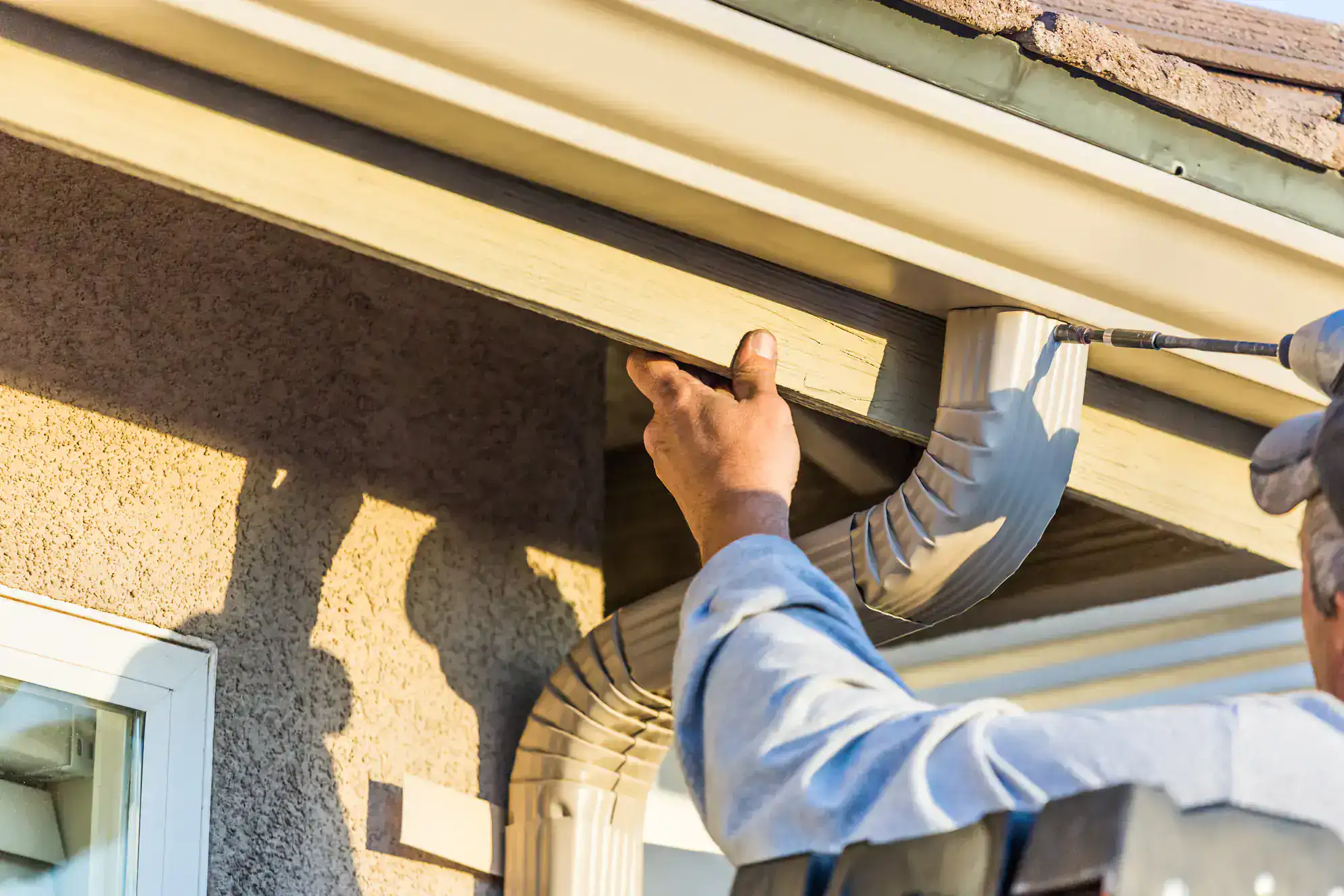
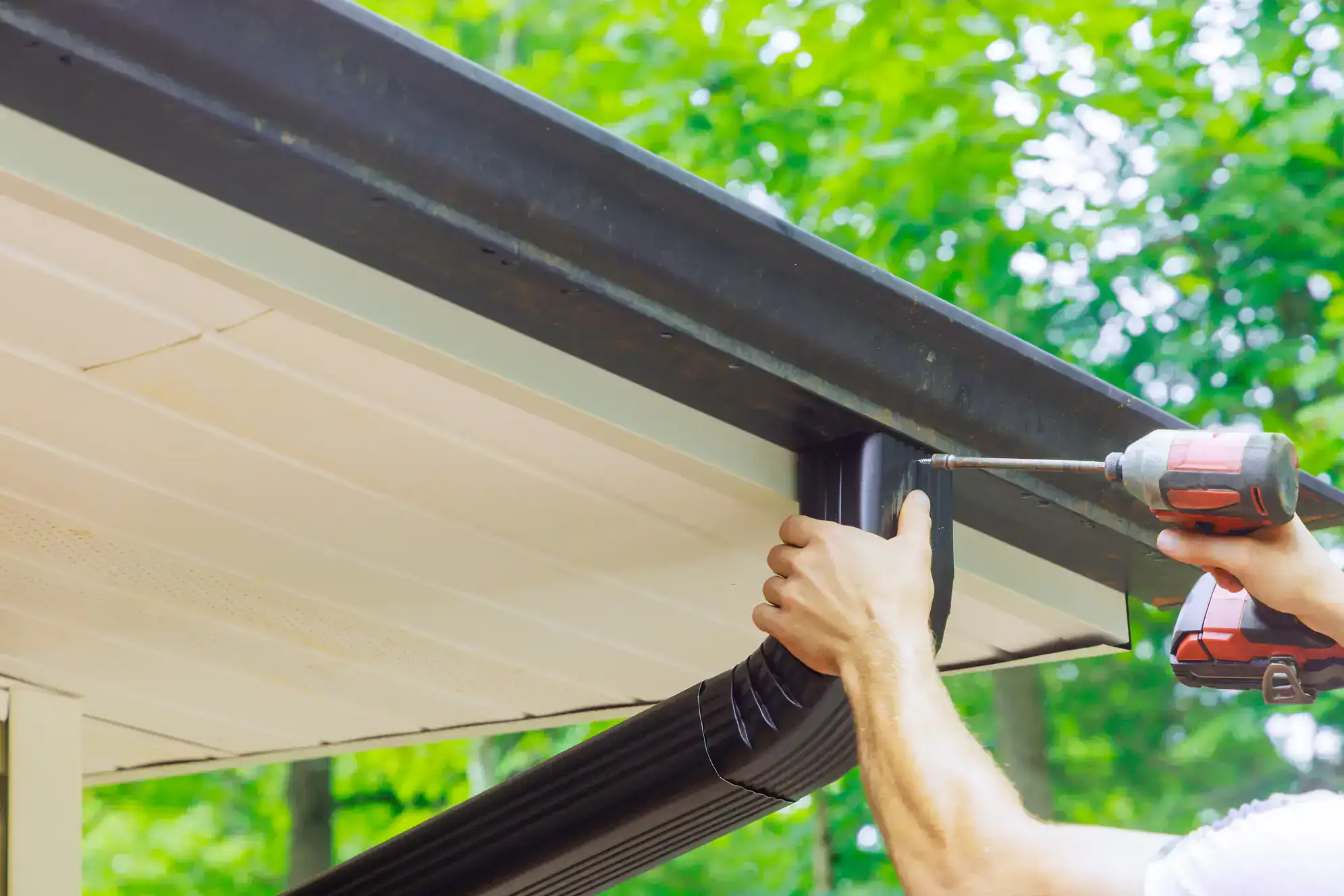
Installation includes slope verification before any bracket goes up — the standard is a quarter-inch of drop per ten linear feet, and it matters more on a complex roofline than it does on a simple ranch. Downspouts are sized and positioned based on your roof’s actual drainage load, not a generic formula. When the job is done, water moves the way it’s supposed to: away from your home, your foundation, and the landscaping you’ve spent years maintaining.
Ready to get started?
Roof Gutter Installation in Ridgewood, NJ
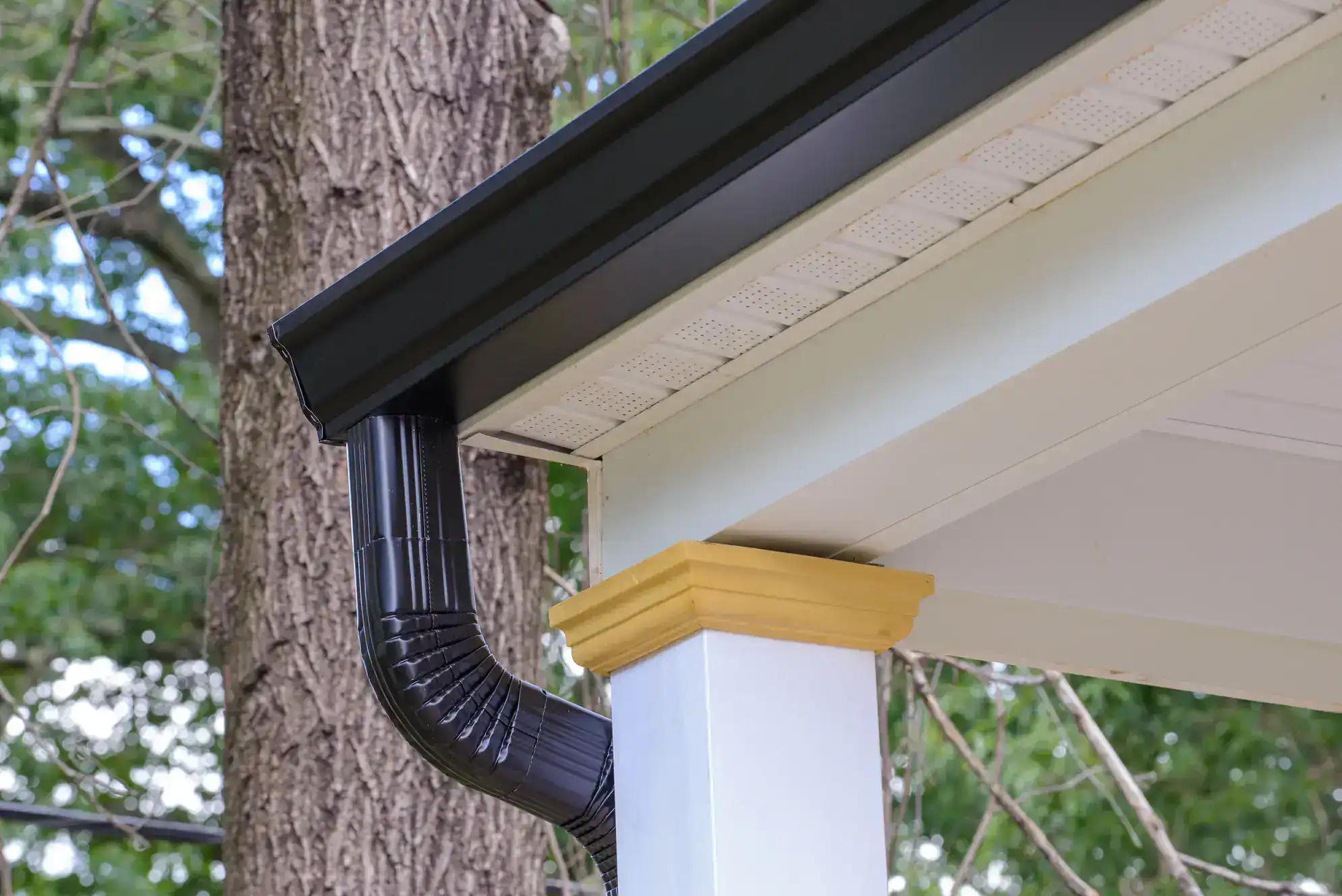
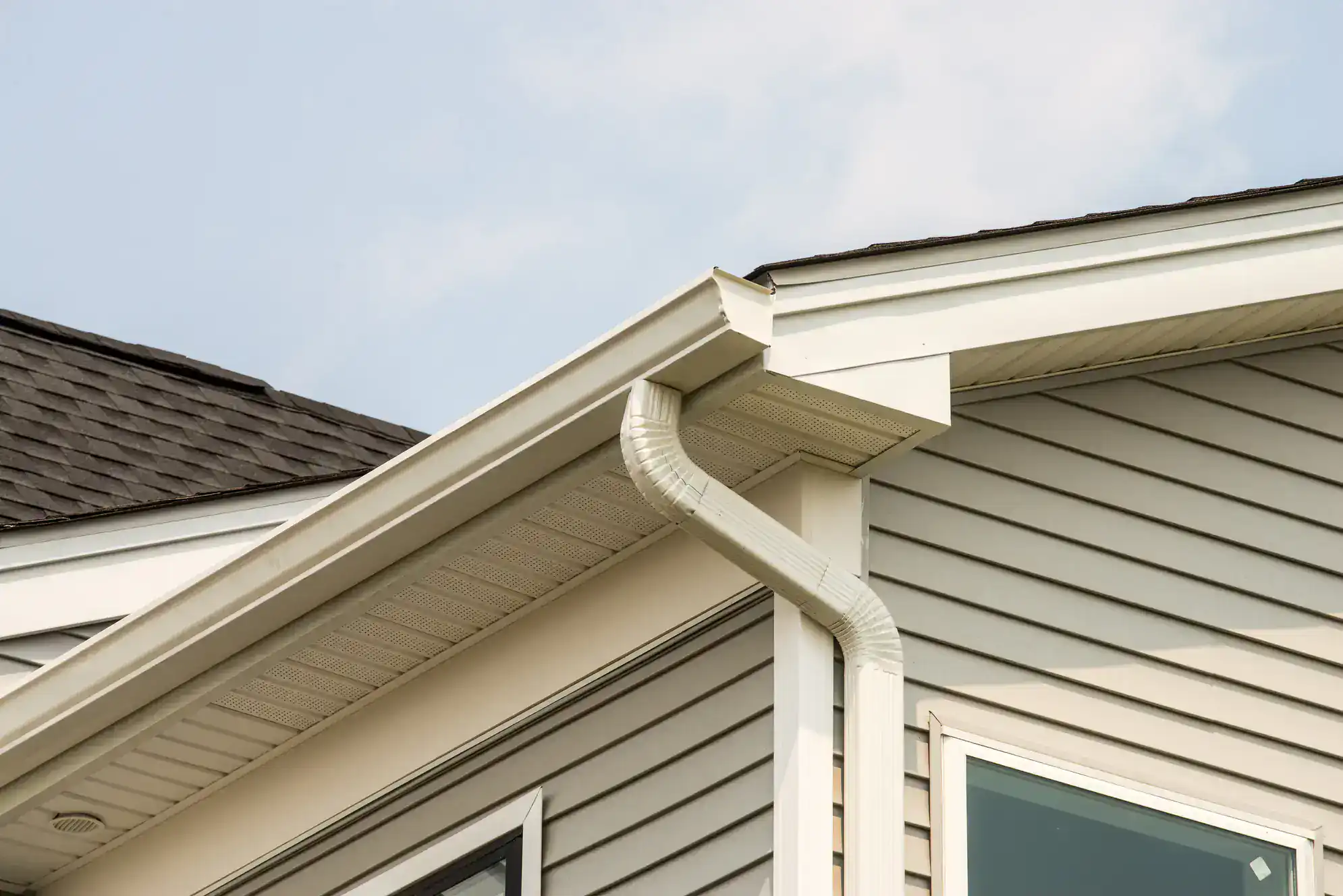
Every gutter installation we complete uses seamless aluminum fabricated to your home’s specific measurements. Aluminum holds up well against Bergen County’s seasonal swings — it doesn’t rust, it handles freeze-thaw expansion without cracking, and it comes in a range of colors that work with Ridgewood’s historic home exteriors. If your home has a particularly complex roofline — multiple valleys, dormers, or a steep pitch common on the Colonials and Tudors throughout the village — the system is designed around those specifics, not adapted from a standard template.
Fascia and soffit condition is assessed before installation begins. This matters in Ridgewood more than it does in newer developments because pre-war construction often has original wood fascia that looks fine from the ground and tells a different story up close. Mounting new gutters to compromised fascia is a short-term fix that fails fast — so if there’s a problem, we address it before the new system goes up.
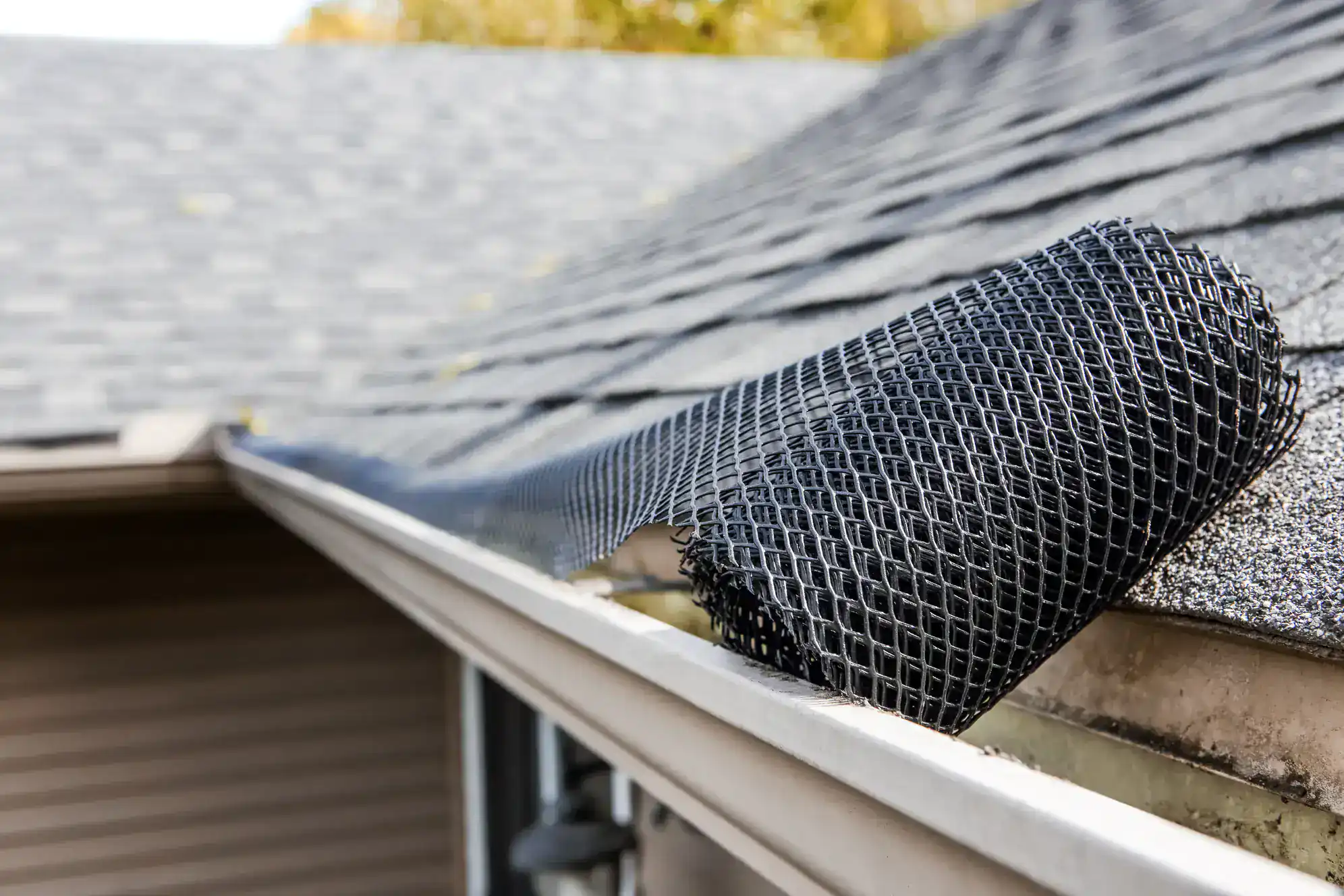
For homeowners near the Ho-Ho-Kus Brook corridor or in lower-lying areas where drainage is already a known challenge, downspout placement and extension routing are part of the conversation — not an afterthought. For homes with significant tree coverage, we offer gutter guard options for high-leaf-load environments. If your gutters were damaged in a storm, we work directly with insurance adjusters to document the damage and support your claim — a real advantage when you’re dealing with a high-value property and don’t want to fight that process alone.
Do I need a permit to replace gutters on my Ridgewood, NJ home?
For most straightforward gutter replacements — swapping out an existing system with a new one in the same position — a building permit is typically not required. However, Ridgewood’s zoning code does list drain gutters and leaders as exterior improvements that may require a zoning certificate when modifying the exterior of a building. Whether that applies to your specific project depends on the scope of the work.
The safest move is to confirm with the Village of Ridgewood Building Department before work begins. What is not optional under NJ law — and what Ridgewood’s own building department FAQ calls out explicitly — is that any home improvement project over $500 requires a written contract, and the contractor must be registered with the NJ Division of Consumer Affairs. We hold NJ HIC License #13VH10605800, which you can verify directly at njconsumeraffairs.gov. Every job comes with a written estimate before anything starts.
How do I know if my gutters are causing ice dams on my roof in winter?
Ice dams form when snow on your roof melts, runs toward the eaves, and refreezes before it can drain. Gutters that are clogged, improperly sloped, or undersized for your roof’s drainage load make this significantly worse — water backs up, freezes in the gutter channel, and eventually forces its way back under your shingles. In Bergen County, where freeze-thaw cycles happen repeatedly throughout the winter, this isn’t a rare edge case. It’s a regular cause of interior water damage that homeowners don’t trace back to their gutters until the ceiling shows it.
Signs to look for: heavy icicle buildup along the roofline, gutters visibly pulling away from the fascia under ice weight, or water staining on interior walls near exterior corners. If your gutters are sagging, holding standing water in warmer months, or were installed without proper slope, they’re already set up to fail when temperatures drop. A proper seamless installation with correct slope and bracket spacing is the most direct fix — and catching it before next winter is the right time to address it.
What size gutters do older homes in Ridgewood typically need?
Most residential homes use either 5-inch or 6-inch gutters, and the right choice depends on your roof’s pitch and total square footage — not just the size of the house. Ridgewood’s older Colonials, Tudors, and Dutch Colonials often have steep roof pitches and multiple planes, which means water moves faster and concentrates at the valleys before hitting the gutters. That increased velocity and volume can overwhelm a 5-inch system that would work fine on a low-slope ranch.
On homes with complex rooflines — which describes a large portion of the housing stock in neighborhoods like The Heights and Upper Ridgewood — 6-inch gutters with properly sized downspouts are often the better fit. The calculation isn’t complicated, but it does require someone to actually measure your roof and run the numbers rather than defaulting to whatever the previous system was. If your existing gutters were original to the home or installed without a slope and sizing assessment, there’s a reasonable chance they were never sized correctly to begin with.
How long do seamless aluminum gutters last compared to sectional gutters?
Seamless aluminum gutters typically last 20 years or more when properly installed and maintained. Sectional gutters — the kind cut from pre-made lengths and joined at seams — have a shorter effective lifespan because the seam joints are where failure starts. Sealant at the joints breaks down over time, especially under the stress of Bergen County’s freeze-thaw cycles, and once a seam starts leaking, it accelerates the corrosion and wood damage behind it.
The seamless advantage isn’t just about longevity — it’s about where failures don’t happen. A single continuous run from corner to downspout has no joints to open up, no gaps to catch debris, and no weak points for ice to exploit. For a home in Ridgewood where the fascia and siding behind the gutters may already be original wood from the 1920s or 1930s, eliminating leak points isn’t a minor upgrade. It’s the difference between a gutter system that protects those materials and one that quietly destroys them over five to ten years.
Can storm-damaged gutters in Ridgewood be covered by homeowner's insurance?
Yes, in many cases — but the key is how the damage is documented. Homeowner’s insurance typically covers sudden, storm-related damage to gutters: wind events, falling branches, hail, or the kind of ice loading that Bergen County winters regularly produce. What it generally doesn’t cover is damage from neglect or normal wear over time, so the distinction between “this failed because of last month’s nor’easter” and “this was already failing” matters a lot to your adjuster.
We work directly with insurance adjusters on storm damage claims — documenting the damage in a way that holds up to scrutiny and advocating for coverage on your behalf. For homeowners with high-value properties in Ridgewood, where a full gutter replacement on a larger, complex roofline can run anywhere from $2,800 to $7,500 or more depending on the scope, having someone in your corner during the claims process is worth a lot. The inspection is free, and if there’s a legitimate insurance angle, it gets identified upfront.
How does Ridgewood's heavy tree canopy affect how often gutters need attention?
More than most homeowners expect. Ridgewood’s mature oak and maple canopy is one of the things that makes the village feel the way it does — and in October and November, those same trees shed an enormous volume of leaves in a short window. Gutters fill fast, and a single heavy rain on a clogged system can send water cascading over the edge directly against your foundation or down your siding rather than through the downspout where it belongs.
For homes on streets with significant canopy coverage — which covers a large portion of Ridgewood’s residential neighborhoods — annual cleaning at minimum is the baseline, and twice a year is more realistic if you want to stay ahead of it. Gutter guards can reduce the frequency of cleaning significantly, though no guard eliminates maintenance entirely. The right guard system for a high-leaf-load environment is different from what works in a low-canopy neighborhood, and it’s worth having that conversation during the estimate rather than buying something generic that moves the problem instead of solving it.