
Siding Installation in Ridgewood, NJ
Ridgewood Homes Deserve More Than a Quick Fix
Hear from Our Customers
Residential Siding Contractors in Bergen County
Old or failing siding isn’t just an eyesore. In Ridgewood’s climate, it’s a liability. Every winter, freeze-thaw cycles push moisture into micro-cracks in aging panels. Every nor’easter drives wind and rain against every seam, joint, and edge on your home’s exterior. By the time you notice bubbling paint or warped panels, water has usually already found its way behind the surface — and that’s a much bigger problem than the siding itself.
When new siding goes on correctly, you stop that cycle. Your home holds heat better in winter, stays cooler in summer, and stops absorbing the kind of moisture damage that quietly eats away at the structure underneath. For Ridgewood homes — many of which were built before 1970 and carry original or once-updated cladding that’s now well past its useful life — this isn’t a cosmetic upgrade. It’s a structural reset.
There’s a curb appeal side to this too, and in Ridgewood it matters more than most places. The village has real aesthetic standards, an active Historic Preservation Commission, and a neighborhood character that residents here take seriously. New siding done right doesn’t just protect your home — it puts it back in line with the block, and in some cases, well ahead of it.
Local Siding Company Serving Ridgewood, NJ
We’ve been working on Bergen County exteriors for over ten years — and that means we’ve worked on Ridgewood homes. We know the architectural styles here, the permit process, and the standards the Historic Preservation Commission applies to neighborhoods like the Village Center and the areas around Crest Road. That’s not just experience — it’s the kind of familiarity that keeps your project moving smoothly.
We’re family-driven, which means the people responsible for your project are accountable for the outcome. There’s no call center, no rotating project managers, and no crew that disappears after the deposit clears. You get direct communication from the people actually doing the work — and a written estimate upfront that reflects exactly what you’re paying for.
Beyond siding, we handle roofing and gutters, which matters more than it sounds. Exterior systems don’t fail in isolation. A contractor who only does siding can miss the roofline issue that’s been driving moisture into your walls for years. Having one experienced team handle the full exterior means nothing gets overlooked.

Siding Installation Process in Ridgewood, NJ
It starts with a free inspection. Not a sales pitch — an actual assessment of what’s happening with your current siding. What’s the substrate condition underneath? Are there signs of moisture intrusion? Is there rot behind panels that aren’t obviously damaged from the street? In Ridgewood, where homes range from post-war Cape Cods to late Victorian Tudors with complex rooflines and dormers, this step matters more than it does on a simple ranch house. We know what to look for on architecturally varied homes, not just how to run panels on a flat wall.
Once the inspection is done, you get a written estimate — line by line, covering removal of existing siding, substrate inspection, housewrap, materials, installation, and cleanup. If your property falls within or near one of Ridgewood’s historic districts, the permit process includes a review by the Historic Preservation Commission before work can begin. We handle the permit application and inspection coordination on your behalf, so you’re not left figuring out which forms to file or which approvals are required.
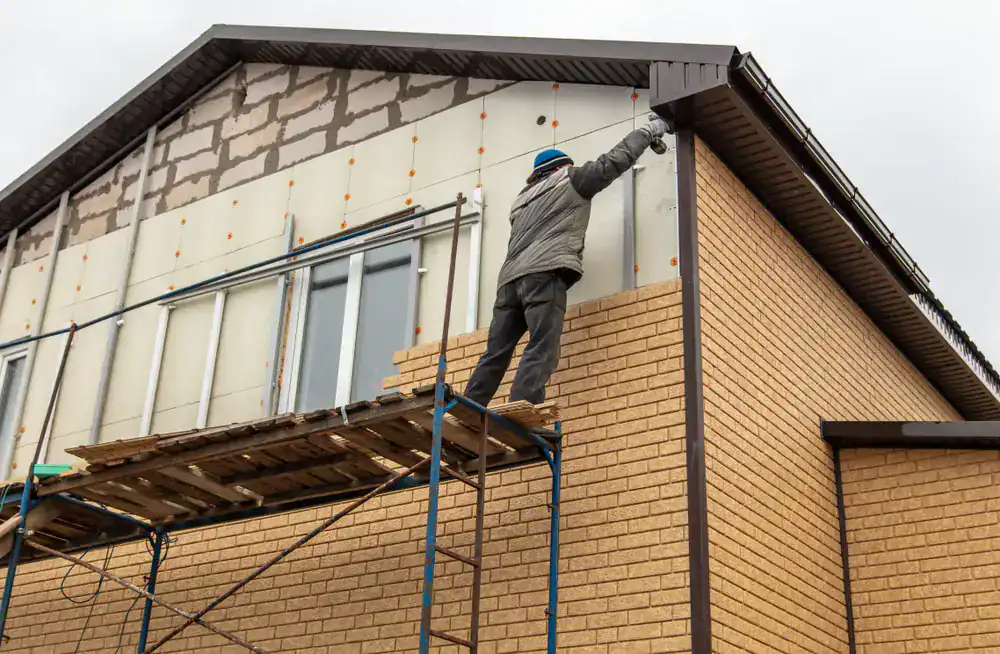
Installation follows a defined sequence: old material comes off, the substrate gets inspected and addressed if needed, housewrap goes on, and new panels are installed and trimmed out. When our crew leaves, the site is clean and the work is done — not “mostly done, we’ll be back next week.”

Ready to get started?
Vinyl Siding Contractors in Ridgewood, NJ
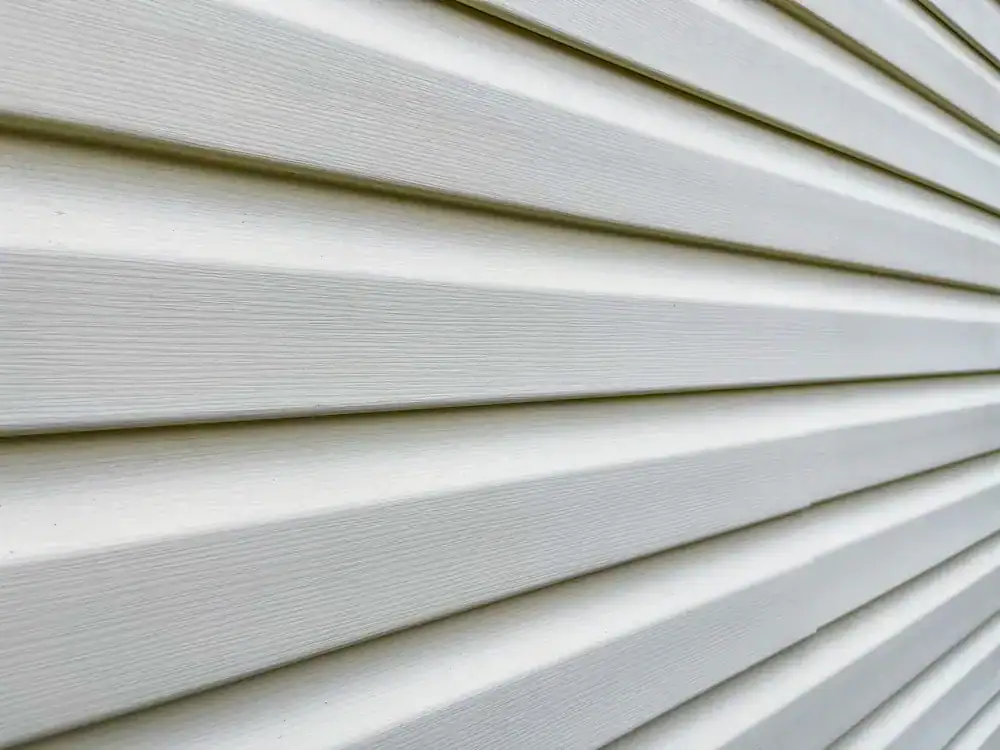
Vinyl siding is the most common choice in Bergen County, and for good reason — it holds up well against the Northeast’s weather, requires minimal maintenance, and comes in enough profiles and colors to work on almost any architectural style. Insulated vinyl, which adds a layer of foam backing behind the panel, goes a step further by reducing thermal bridging and lowering heating costs. For Ridgewood homeowners dealing with older homes that weren’t built with modern energy performance in mind, that’s a meaningful upgrade worth considering.
Fiber cement — including James Hardie products — is the right call when you need something that mimics the look of wood without the maintenance demands. It’s heavier, more labor-intensive to install, and costs more upfront, but it holds paint longer, handles moisture better, and is often the preferred choice in or near Ridgewood’s historic districts where appearance standards are tied to specific design guidelines. If your home is subject to Historic Preservation Commission review, material selection isn’t just a preference — it’s part of the approval process, and we understand that distinction in a way that can save you significant time and headache.
Whatever material fits your home, you’ll know what it costs before any work begins. Every project starts with a free estimate, and that number doesn’t change when the crew shows up.

Do I need a permit for siding replacement in Ridgewood, NJ?
Yes, in most cases. The Village of Ridgewood Building Department enforces the New Jersey Uniform Construction Code, and exterior replacement work — including siding — typically requires a permit before installation begins. This isn’t unique to Ridgewood, but the process here has an additional layer that many other Bergen County towns don’t have: if your home is located in or adjacent to a historic district, the Historic Preservation Commission may need to review and approve the exterior change before a preservation permit is issued. That review looks at whether the new material, color, and profile are consistent with the neighborhood’s historic character.
We handle the permit application and inspection process as part of the project — so you’re not left researching which forms to submit or whether your property triggers the historic review requirement. It’s one less thing to figure out during an already involved project.
How much does siding installation cost for a home in Ridgewood?
The honest answer is that it depends on several factors: the size of your home, the material you choose, the condition of the substrate underneath the existing siding, and whether any repairs are needed before new panels go on. For a typical Ridgewood single-family home, vinyl siding installation generally runs somewhere in the range of $8,000 to $18,000. Fiber cement, including James Hardie products, tends to run higher — often $15,000 to $25,000 or more — because the material costs more and takes longer to install correctly.
What matters most is that the number you get upfront is the number you actually pay. We provide written estimates that break down every line item — removal, substrate work, housewrap, materials, labor, and cleanup — before anything starts. In a market where Ridgewood homes are worth close to $1 million, a vague verbal quote isn’t good enough. You should know exactly what you’re committing to before a single panel comes off your house.
What are the signs that my siding actually needs to be replaced, not just repaired?
There’s a difference between siding that has localized damage and siding that has reached the end of its useful life — and in Ridgewood, where many homes were built before 1970, the latter is more common than most homeowners expect. The clearest signs that replacement makes more sense than repair include widespread warping or buckling across multiple panels, soft or spongy areas when you press on the wall (which usually means moisture has gotten into the sheathing behind), visible mold or mildew growth that keeps coming back after cleaning, and paint that won’t hold regardless of how recently it was applied.
One sign that’s easy to miss: if your energy bills have been creeping up and you can’t point to a clear reason, failing siding could be part of the problem. Older vinyl that’s lost its integrity no longer provides the thermal resistance it once did. A free inspection can tell you definitively whether you’re looking at targeted repairs or a full replacement — and we’ll be honest with you about which one is actually necessary.
Does Ridgewood's Historic Preservation Commission affect what siding I can choose?
It can, and it’s worth understanding before you start picking materials. The Historic Preservation Commission in Ridgewood has the authority to require a review before a preservation permit is issued for any exterior change that’s visible from a public street. That includes siding replacement. If your home is within a designated historic district — or in some cases, adjacent to one — the Commission’s review will look at whether the proposed material, profile, and color are consistent with the neighborhood’s historic character and the village’s design guidelines.
In practical terms, this means that a standard white vinyl panel might not be approvable on a late Victorian Tudor in the Village Center district, even if it would be perfectly fine three blocks away. Fiber cement products that replicate the look of original wood clapboard are often a better fit for homes subject to this review. We know this process upfront — rather than discovering it mid-project — which keeps your timeline intact and avoids costly changes after work has already started.
How long does siding installation take on a typical Ridgewood home?
For most single-family homes in Ridgewood, siding installation takes anywhere from two to five days once our crew is on-site and materials are staged. That range depends on the size of the home, the complexity of the architecture, and what’s found during the substrate inspection after the old siding comes off. Ridgewood’s housing stock includes a wide range of architectural styles — from straightforward post-war Cape Cods to more complex Tudor revivals with dormers, varied rooflines, and intricate trim profiles. The more complex the home, the more time proper installation takes.
The permit and inspection process adds time before and after the physical work. In Ridgewood, permit approval typically takes one to three weeks depending on the scope and whether a Historic Preservation Commission review is required. Scheduling also matters — spring and early fall are peak seasons for exterior work in Bergen County, and quality contractors book out four to eight weeks during those windows. Getting your estimate and permit process started early gives you the best shot at hitting your preferred timeline.
Why should I hire a local siding company instead of a larger regional contractor?
The short answer is accountability. A local siding company operating in Ridgewood and the surrounding Bergen County towns has a direct stake in how every project turns out — because the next customer is probably a neighbor or someone who saw the truck in the driveway. That’s a different kind of motivation than a large regional contractor sending a crew from two counties away.
There’s also a practical knowledge factor. We work regularly in Ridgewood and understand the permit environment, know which neighborhoods trigger Historic Preservation Commission review, and have experience with the architectural variety you find here — from 18th-century Dutch sandstone homes to post-war Cape Cods. That familiarity shows up in how efficiently the project moves and how cleanly the details get handled. Bergen County’s weather patterns, the freeze-thaw cycles, the wind exposure on elevated streets like those near Crest Road — we’ve already solved the problems a less familiar crew might run into for the first time on your house.