
Roof Inspection in Englewood, NJ
East Hill Roofs Don't Forgive a Missed Winter
Hear from Our Customers
Certified Roof Inspector in Englewood, NJ
Most roof problems in Englewood don’t announce themselves. They start quietly — a flashing gap around a chimney, a few granules washing into the gutter after a nor’easter, a small soft spot near a dormer that nobody’s been up to check in years. By the time there’s a stain on the ceiling or a visible sag, the damage has already been working its way through the decking for months. Our professional roof inspection in Englewood, NJ catches those problems while they’re still manageable.
For homeowners in East Hill, that matters more than most places. The Tudor and Colonial homes built throughout that neighborhood in the 1920s and 1930s have steep pitches, multiple dormers, and chimney configurations that create more potential failure points than a straightforward ranch or cape. Add Bergen County’s freeze-thaw cycle — temperatures crossing 32°F repeatedly through the winter — and you have conditions that stress every seam, every flashing joint, and every shingle edge on older roofing systems.
And if you’re preparing to sell, Englewood’s Certificate of Continued Occupancy requirement means the city will be looking at your home before the transaction closes. Knowing what’s on your roof before that inspection happens puts you in control of the timeline, the repairs, and the outcome.
Licensed Roof Inspector in Englewood, NJ
We’ve been working on roofs across Englewood and Bergen County for over ten years. That’s not a tagline — it’s the reason our team recognizes patterns that newer contractors miss. We’ve seen what a hard winter does to the eaves of an under-insulated home near Flat Rock Brook. We’ve documented flashing failures on the complex chimney stacks common throughout East Hill. We know Englewood’s permitting process, and we pull proper permits on every replacement job.
Our company is family-operated, fully licensed through New Jersey’s Division of Consumer Affairs, and certified by major shingle manufacturers — a credential held by fewer than 3% of roofing contractors in the country. That certification matters when you’re deciding on a replacement, because it unlocks warranty coverage that uncertified contractors simply cannot offer.
Every inspection comes free, with no obligation. That’s not a promotional hook — it’s how a company that grows through honest reviews earns the first conversation.

Roof Damage Inspection Process in Englewood, NJ
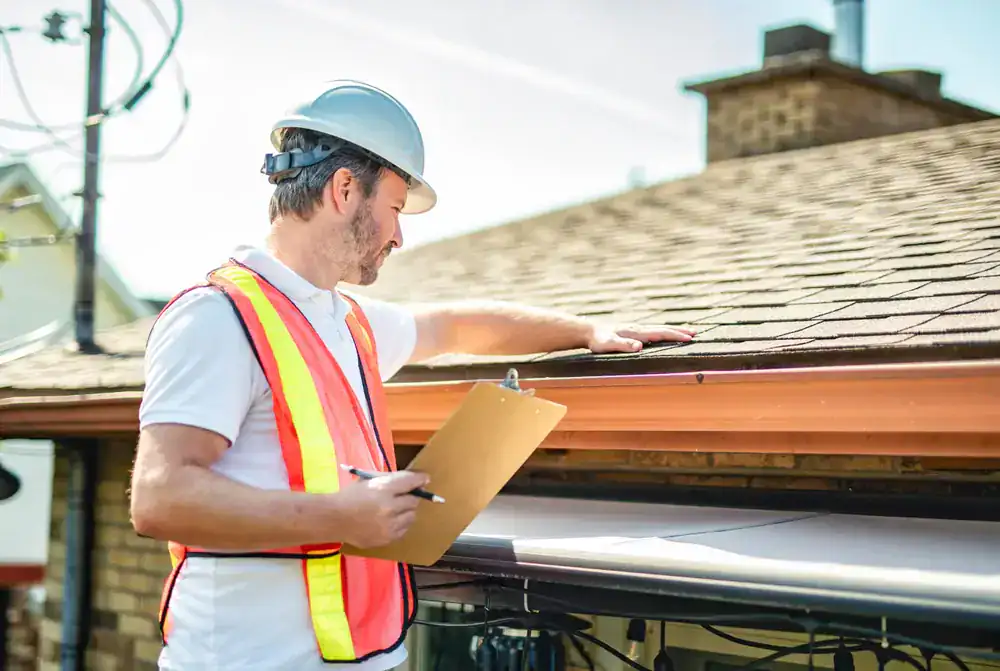
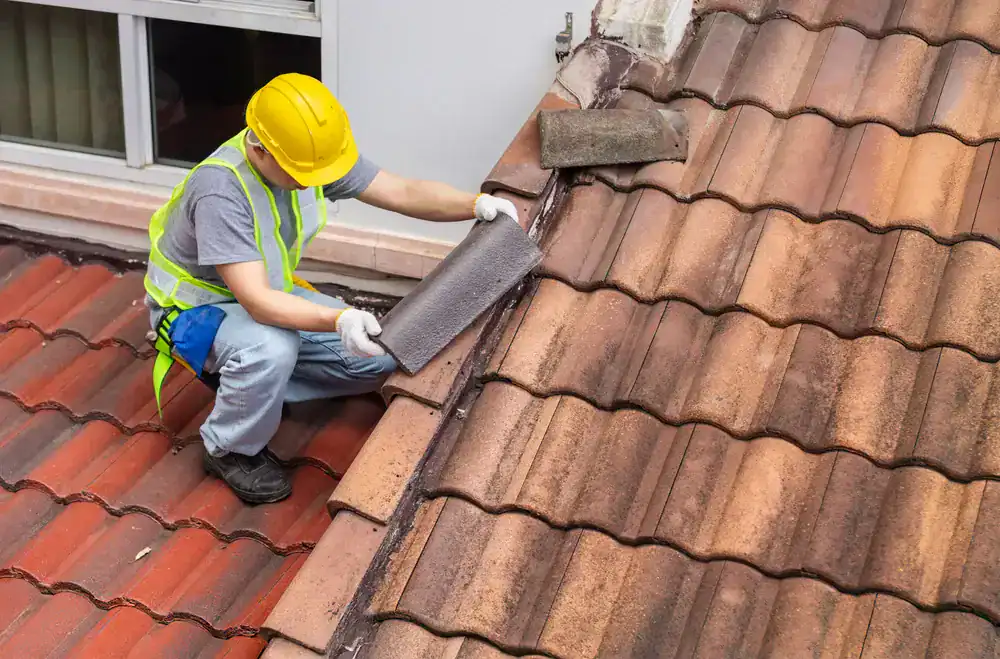
It starts with a call or a form submission — no pressure, no commitment. Someone from our team reaches out to schedule a time that works for you, and we show up when we say we will. From there, a certified inspector gets on the roof and goes through it systematically: shingles, flashing, ridge caps, gutters, fascia, soffits, and every penetration point on the surface.
In Englewood specifically, we pay close attention to the areas most stressed by local conditions. Homes near the tree canopy around Flat Rock Brook Nature Center often accumulate debris in valleys and gutters that traps moisture and accelerates deterioration. Older homes throughout the city — particularly those with the architectural complexity common in East Hill — get a closer look at chimney flashing, dormer transitions, and any areas where steep pitch changes create water-shedding challenges.
After the inspection, you get a straight answer. If the roof is in good shape, you’ll hear that. If there are repairs needed, we’ll explain exactly what, where, and why — in plain language, with documentation. If you’re heading toward a replacement, we’ll tell you that too, along with your options. No pressure, no inflated scope. Just a clear picture of where things stand.
Ready to get started?
Roof Inspection Company in Englewood, NJ
Our roof inspection in Englewood isn’t a quick visual pass from the driveway. It’s a full assessment of every component that keeps water out of your home — and in a city like Englewood, where homes range from 1920s Tudor estates in East Hill to mid-century colonials in West Englewood to newer townhouses near Route 4, that means adapting the inspection to what’s actually in front of you.
The assessment covers shingle condition and granule loss, flashing integrity at all wall-to-roof junctions, chimney caps and step flashing, valley condition, gutter attachment and drainage, soffit and fascia, and any visible signs of interior moisture intrusion. For homes with flat or low-slope sections — more common in downtown Englewood’s mixed-use buildings and multi-family properties — the inspection extends to membrane condition, drainage points, and seam integrity.
Because we also handle gutters and siding, a single inspection call can give you a complete picture of your home’s exterior — not just the shingles. That’s especially useful if you’re preparing for Englewood’s CCO inspection before a sale, or if you’ve just come through a nor’easter and want to know the full scope of what the storm touched. One visit, one honest report, and a clear path forward.

Does Englewood, NJ require a roof inspection before selling my home?
Englewood requires a Certificate of Continued Occupancy before any residential property can change ownership. The city’s Building Department conducts an inspection as part of this process, and the condition of your roof is part of what gets evaluated. If there are visible deficiencies — missing shingles, damaged flashing, deteriorating fascia — those issues can delay your closing or trigger required repairs on a compressed timeline.
Scheduling a professional roof inspection in Englewood before you list gives you the information you need while you still have time to act on it. If repairs are needed, you can address them on your schedule, with a contractor you’ve chosen, rather than scrambling to fix something after a buyer’s inspector flags it or the city’s CCO inspection comes back with conditions. It’s a straightforward way to protect your sale timeline and your negotiating position.
How often should I schedule a roof inspection in Englewood, NJ?
The National Roofing Contractors Association recommends professional inspections twice a year — once in the spring and once in the fall. In Englewood, that schedule makes a lot of practical sense given what the roof goes through across the seasons. Bergen County winters bring repeated freeze-thaw cycles that stress shingles, flashings, and every penetration point on the roof. A spring inspection catches whatever that winter left behind — ice dam damage, flashing movement, lifted shingles — before it has a chance to compound through the warmer months.
The fall inspection is equally important. Heading into winter with a compromised roof in Englewood is a real risk. Homes with inadequate attic insulation and ventilation — common throughout the city’s older housing stock — are especially vulnerable to ice dam formation, where heat escaping through the roof deck melts snow that refreezes at the cold eaves and forces water under shingles. Catching ventilation and insulation issues in October is far less expensive than dealing with the interior damage they cause in February.
What are the most common roof problems found in Englewood homes?
The issues that come up most often in our Englewood roof inspections reflect the city’s combination of older housing stock and Northeast weather exposure. Flashing failures are at the top of the list — particularly around chimneys, dormers, and skylights on the older Tudor and Colonial homes throughout East Hill. These architectural features create complex water-shedding transitions, and when the flashing shifts or deteriorates, water finds its way in before there’s any visible sign from inside the house.
Granule loss and shingle brittleness are common on roofs approaching or past the 20-year mark, which applies to a significant portion of Englewood’s housing stock. Moss and algae growth are also recurring issues in areas with heavy tree canopy, particularly near Flat Rock Brook Nature Center, where debris accumulation keeps roof surfaces damp. Ice dam damage — visible as lifted or cracked shingles along the eave line — shows up regularly after hard winters, especially on homes where attic ventilation hasn’t kept pace with modern standards.
How long does a roof inspection take, and do I need to be home?
Most residential roof inspections take between 45 minutes and an hour and a half, depending on the size and complexity of the home. For the architecturally detailed homes common in East Hill — steep pitches, multiple dormers, complex chimney configurations — expect the upper end of that range. A thorough inspection of a home with that level of roofing complexity takes more time than a straightforward single-ridge ranch, and rushing it means missing the details that matter most.
You don’t necessarily need to be present for the exterior inspection itself, but it’s worth being available at the end so the inspector can walk you through the findings in person. A written report with photographs is provided, but a direct conversation is the most efficient way to understand what was found, what the priority level is, and what your options are. If you’re preparing for Englewood’s CCO inspection ahead of a home sale, that walkthrough conversation is especially useful for planning next steps.
What should I do after a major storm hits Englewood, NJ?
After a significant weather event — a nor’easter, a summer thunderstorm with high winds, or a remnant tropical system tracking through Bergen County — the first step is a professional roof damage inspection in Englewood before you file an insurance claim or attempt any repairs. Insurance claims for storm damage have documentation requirements, and the written report from a licensed roofing contractor carries significantly more weight with an adjuster than a homeowner’s own account of what happened.
From a practical standpoint, you’re looking for a few things after a storm: missing or lifted shingles, granules washing out of downspouts, visible damage to ridge caps or flashing, and any new staining on ceilings or walls inside the home. If you have mature trees near the house — common throughout Englewood’s wooded residential areas — check for branch impact points on the roof surface as well. Don’t wait too long to schedule the inspection. Storm damage that goes unaddressed through a wet fall or a Bergen County winter compounds quickly.
How much does a roof inspection in Englewood, NJ cost?
We offer free roof inspections in Englewood with no obligation attached. There’s no fee to find out what’s going on with your roof, and no pressure to commit to anything based on what the inspection finds. In a market where the average Englewood home is valued near $720,000, the cost of not knowing your roof’s condition — especially heading into a Bergen County winter or a home sale with a CCO requirement — is considerably higher than the cost of the inspection itself.
For context, paid roof inspections in New Jersey typically run between $150 and $400 depending on the size and complexity of the home. Our free inspection covers the same ground: a full assessment of shingles, flashing, gutters, fascia, soffits, and all penetration points, followed by a written report and a straight conversation about what was found. If repairs or a replacement are needed, you’ll get a clear estimate. If the roof is in good shape, you’ll hear that too — and you can move forward with confidence either way.