
Siding Installation in Allendale, NJ
Built for Bergen County Winters, Built to Last
Hear from Our Customers
Residential Siding Contractors in Allendale
When siding starts to fail on an Allendale home, it rarely announces itself with a single dramatic problem. It’s the warped panels after a rough winter. The moisture creeping in behind the wall where you can’t see it. The faded, chalky exterior that pulls the curb appeal down on a street where neighbors maintain their properties with care. These aren’t cosmetic annoyances — on a home worth over a million dollars, they’re financial risks.
Bergen County winters are hard on exterior cladding. The freeze-thaw cycles alone — where water gets into micro-cracks, freezes, expands, and widens the damage — can quietly compromise siding that looks fine from the driveway. Add in the mature tree canopy that lines most of Allendale’s residential streets, and you’ve got extended moisture exposure, falling branch impact risk during ice storms, and shaded north-facing walls that stay damp longer than they should.
New siding done right changes all of that. You get a sealed, properly flashed building envelope that keeps water where it belongs — outside. You get material that handles the thermal expansion of a New Jersey winter without cracking or buckling. And you get a home exterior that reflects the value of the property behind it, whether you’re staying for another twenty years or thinking about what the market looks like when you’re ready to sell.
Local Siding Company in Allendale, NJ
We’ve spent roughly ten years working on homes across Bergen County — the split-levels, colonials, and ranches that make up the backbone of towns like Allendale. That experience isn’t just time logged. It’s knowing what Bergen County weather does to a building envelope, understanding how homes built in the 1950s and 60s are constructed, and recognizing the installation details that separate siding that lasts thirty years from siding that starts failing in ten.
This is a family-operated business, which means the people responsible for your project are the same people whose name is attached to it. There’s no hand-off to a subcontractor you’ve never met. Estimates are written, transparent, and honored. And because so much of our work comes from referrals — from homeowners in Allendale and across Bergen County who told a neighbor — the standard doesn’t slip.
If you’re not sure whether you need a full replacement or targeted repair, the free inspection takes the guesswork out of it. You’ll get a straight answer, not a sales pitch.

Vinyl Siding Contractors in Allendale, NJ
It starts with a free inspection. A real one — not a quick glance from the driveway, but a thorough walkthrough of your home’s exterior to assess what’s actually going on. In Allendale, where a significant portion of homes were built between the 1940s and 1960s, that inspection often turns up things that weren’t visible from the street: moisture damage behind aging panels, compromised flashing at roof-wall intersections, or original wood siding that’s well past its maintenance window. You’ll know exactly what you’re dealing with before any decision gets made.
From there, you get a written estimate that lays out the scope, the materials, and the cost — clearly, without line items designed to confuse. If you move forward, the project timeline is set before work begins, so you’re not left guessing when the crew shows up or when they’ll be done.
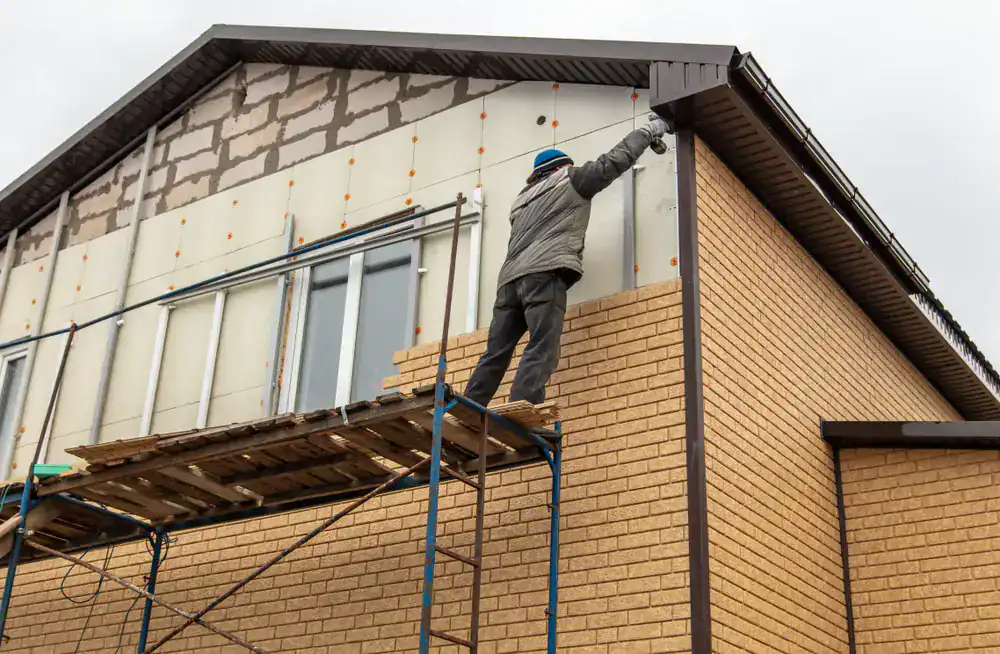
On the installation side, we account for what Allendale homes actually need: proper housewrap and moisture barriers, correct fastening that allows for thermal movement in a climate that swings from sub-zero wind chills in February to humid summers, and careful flashing at every penetration point. Worth noting — full siding replacement in New Jersey typically requires a construction permit through the Allendale Building Department, and we handle that as part of the process, not something left for you to figure out. When the job wraps, the site is cleaned up and you do a final walkthrough together before anything is signed off.

Ready to get started?
Siding Contractors in Allendale, NJ
Not every siding material makes sense for every Allendale property. A pre-1940 colonial near Franklin Turnpike has different needs than a 1960s split-level on a wooded lot. The right choice depends on the home’s architecture, how each elevation is exposed, and what you actually want out of the next thirty to fifty years.
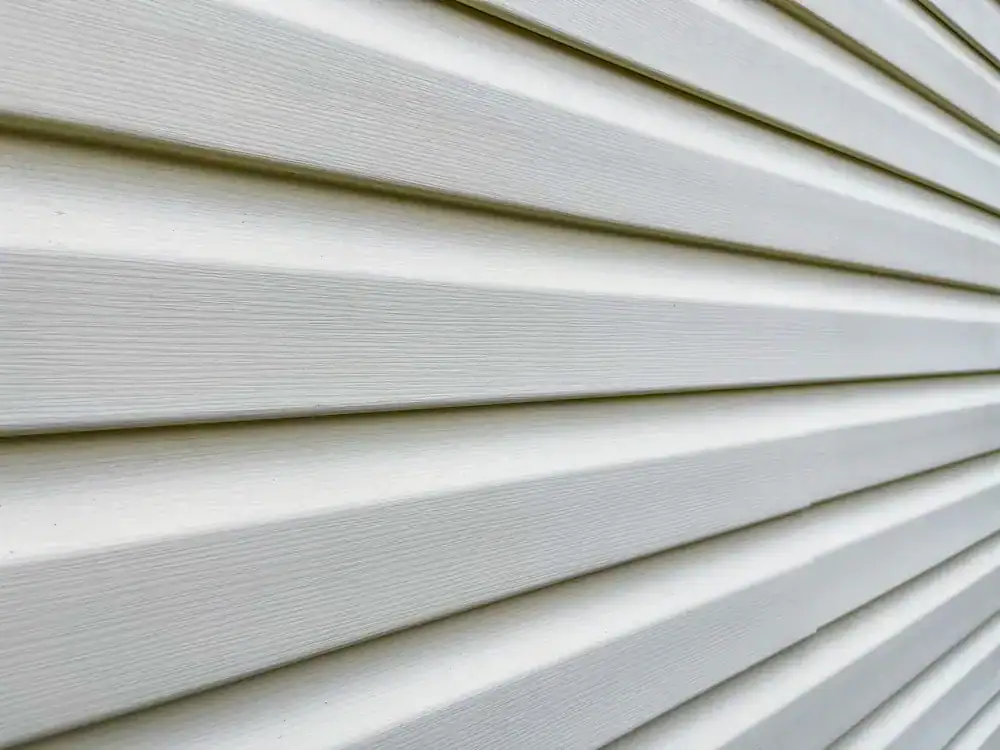
Vinyl siding remains the most common choice for good reason — it’s durable, low-maintenance, and handles Bergen County’s freeze-thaw cycles well when it’s installed correctly with proper fastening and expansion allowance. For homeowners who want something closer to the look and feel of wood without the maintenance burden, fiber cement — including James Hardie products — is worth a serious conversation. It’s harder, heavier, and more resistant to impact damage from the kind of falling branches that come with Allendale’s mature tree canopy. Engineered wood is another option for homes where aesthetics are a priority and the budget supports it.
What you won’t get is a one-size-fits-all recommendation. The material conversation is part of the process, not an afterthought. We work with multiple product lines and will walk you through the real trade-offs — performance, cost, maintenance, and how each option holds up on your specific home — so you can make a decision that actually makes sense for where you live.

Does siding installation in Allendale, NJ require a permit?
In most cases, yes. Under New Jersey’s Uniform Construction Code, replacing a significant portion of your home’s exterior siding — which covers most whole-home projects — generally requires a construction permit through the Allendale Borough Building Department at 500 W. Crescent Ave. There’s a limited exception for minor repairs that don’t exceed 25% of the total exterior wall area using like-for-like materials, but a full replacement almost always falls outside that threshold.
It’s also worth knowing that New Jersey has a specific rule around polypropylene siding: installation of any amount of it requires a permit regardless of scope. Skipping the permit process might seem like a way to save time, but it creates real problems when you go to sell the home — certificate of occupancy compliance is a standard part of the real estate transaction in NJ, and unpermitted exterior work can stall or complicate a closing. We handle permitting as part of how we manage projects here, not something left for the homeowner to sort out independently.
How do I know if my siding needs to be replaced or just repaired?
It depends on what’s actually going on behind the surface, which is why a professional inspection matters more than a visual check from the driveway. Localized damage — a few cracked panels from a falling branch, minor impact damage from a storm — is often repairable without touching the rest of the home. But if you’re seeing warping across multiple elevations, paint that’s peeling or bubbling from the inside out, or soft spots in the wall when you press against the siding, those are signs that moisture has already gotten behind the cladding and the damage is more than surface-level.
In Allendale, where a large share of homes were built in the 1950s and 60s, the siding on many properties is anywhere from 30 to 60 years old — even if it was updated once or twice along the way. At that age, the question isn’t usually whether replacement is coming, it’s whether it makes more financial sense to do it now or patch it for a few more years. A free inspection gives you a clear picture of what you’re actually dealing with, so you can make that call based on real information rather than a gut feeling.
What siding material holds up best in Bergen County's climate?
For most Bergen County homeowners, the choice comes down to vinyl or fiber cement, and both can perform well when they’re installed correctly. Vinyl is the more common choice — it’s cost-effective, doesn’t rot, and handles freeze-thaw cycling well as long as the fastening allows for proper thermal expansion. The issue with vinyl isn’t usually the material itself; it’s installation shortcuts that cause problems when temperatures drop into the single digits and the panels have no room to move.
Fiber cement, like James Hardie, is worth considering for homes in more exposed positions or on wooded lots where falling branches are a recurring risk. It’s significantly more impact-resistant than vinyl, holds paint longer, and doesn’t warp or buckle under the same thermal stress. The trade-off is cost — fiber cement runs higher upfront — but for a home in Allendale where property values are substantial and long-term performance matters, that investment often makes sense. The right answer depends on your specific home, your budget, and how much maintenance you want to deal with over the next few decades.
How long does siding installation typically take on an Allendale home?
For a standard single-family home in Allendale — a colonial, split-level, or ranch in the 2,000 to 3,500 square foot range — most full siding replacement projects run between three and seven days of active installation, depending on the size of the home, the material being installed, and what the inspection turns up underneath the existing cladding. Fiber cement takes longer than vinyl because it’s heavier, requires more precise cutting, and demands more careful handling during installation.
What affects the timeline more than the material is what gets discovered once the old siding comes off. In homes built in the 1950s and 60s, it’s not unusual to find sheathing that needs attention, old housewrap that’s no longer doing its job, or flashing that was never properly installed in the first place. Those discoveries add time, but they’re also the reason a thorough inspection before the project starts is worth doing — it reduces the chance of mid-project surprises that push the schedule back and affect the final cost. The timeline is set before work begins, and any changes to it get communicated directly, not discovered after the fact.
Can siding be installed during winter months in New Jersey?
It can be, but there are real considerations that affect how it’s done. Vinyl siding becomes brittle in very cold temperatures — when it’s below about 40 degrees Fahrenheit, the material loses some of its flexibility and is more prone to cracking during handling and installation. Allendale winters regularly produce wind chills well below zero, and the borough’s documented ice storms create conditions where outdoor work needs to be carefully managed. An experienced crew knows how to work within those constraints, but it’s not the same as installing in April.
Fiber cement and engineered wood are generally more forgiving in cold weather and can be installed year-round with proper technique. If you’re planning a project and want it done before spring, the material choice and the crew’s cold-weather experience both matter. That said, the most practical advice is to schedule in late summer or early fall if you have flexibility — you get better working conditions, you’re ahead of the winter damage season, and you’re not competing with the spring rush when contractor schedules fill up fast.
How much does siding installation cost for a home in Allendale, NJ?
For a whole-home siding replacement on a typical Allendale single-family property, you’re generally looking at a range of $12,000 to $30,000 depending on the size of the home, the material selected, and what the inspection reveals about the condition of the existing substrate. Vinyl siding projects tend to come in at the lower end of that range. Fiber cement — James Hardie and comparable products — runs higher, typically $18,000 to $30,000 or more on a larger home, reflecting both the material cost and the additional labor involved in installation.
In a market like Allendale, where median home values exceed $1 million, the cost of quality siding installation is a relatively small percentage of the asset it’s protecting. The more relevant number is usually what deferred maintenance costs — water intrusion that damages sheathing, insulation, and framing can run well beyond what a timely siding replacement would have cost. The free written estimate from us gives you a specific number for your specific home before any commitment is made, so you’re working from real figures, not ballpark guesses.