
Roofer in Norwood, NJ
Northern Valley Winters Don't Wait — Neither Should Your Roof
Hear from Our Customers
Local Roofing Company Norwood, NJ
A properly installed or repaired roof doesn’t just stop leaks. It stops the slow damage you don’t see — the moisture working into your attic, the ice backing up under your eaves after a freeze, the granules washing off shingles that have been through one too many winters on the wrong side of the Bergen County tree line. When that’s handled correctly, you’re not patching the same spot every spring. You’re done with it.
For Norwood homeowners, that matters more than most people realize. The wooded terrain throughout the Northern Valley is beautiful, but it creates real shading and moisture conditions that accelerate roof wear faster than open-lot homes in other parts of New Jersey. Add in the freeze-thaw cycling that hits this part of Bergen County hard between December and March, and a roof that’s just “good enough” tends to show its limits faster than you’d expect.
What you get on the other side of a quality job is straightforward: no more ceiling stains, no more anxiety every time a storm rolls up Route 9W, and a home that’s protected the way it should be — with a manufacturer-backed warranty that actually means something when you need it.
Roofing Company in Norwood, NJ
USA Home Remodeling is a licensed, family-owned exterior renovation contractor serving Norwood and the surrounding Northern Valley communities. We hold NJ Home Improvement Contractor License #13VH10605800 — verifiable through the NJ Division of Consumer Affairs — and carry manufacturer certifications from major shingle producers that unlock enhanced system warranties most contractors in this area simply can’t offer.
With over a decade of experience working across Bergen County, we’ve handled everything from routine repairs in quiet neighborhoods off Tappan Road to full replacements on older homes throughout Norwood and the Northern Valley that were long overdue. Our work is backed by free inspections, transparent upfront pricing, and a 24/7 emergency response line — because a roof problem in Norwood doesn’t always wait for a convenient hour.
We grow through reviews and referrals, not ad spend. That tends to say more than any credential list.
Emergency Roof Repair Norwood, NJ
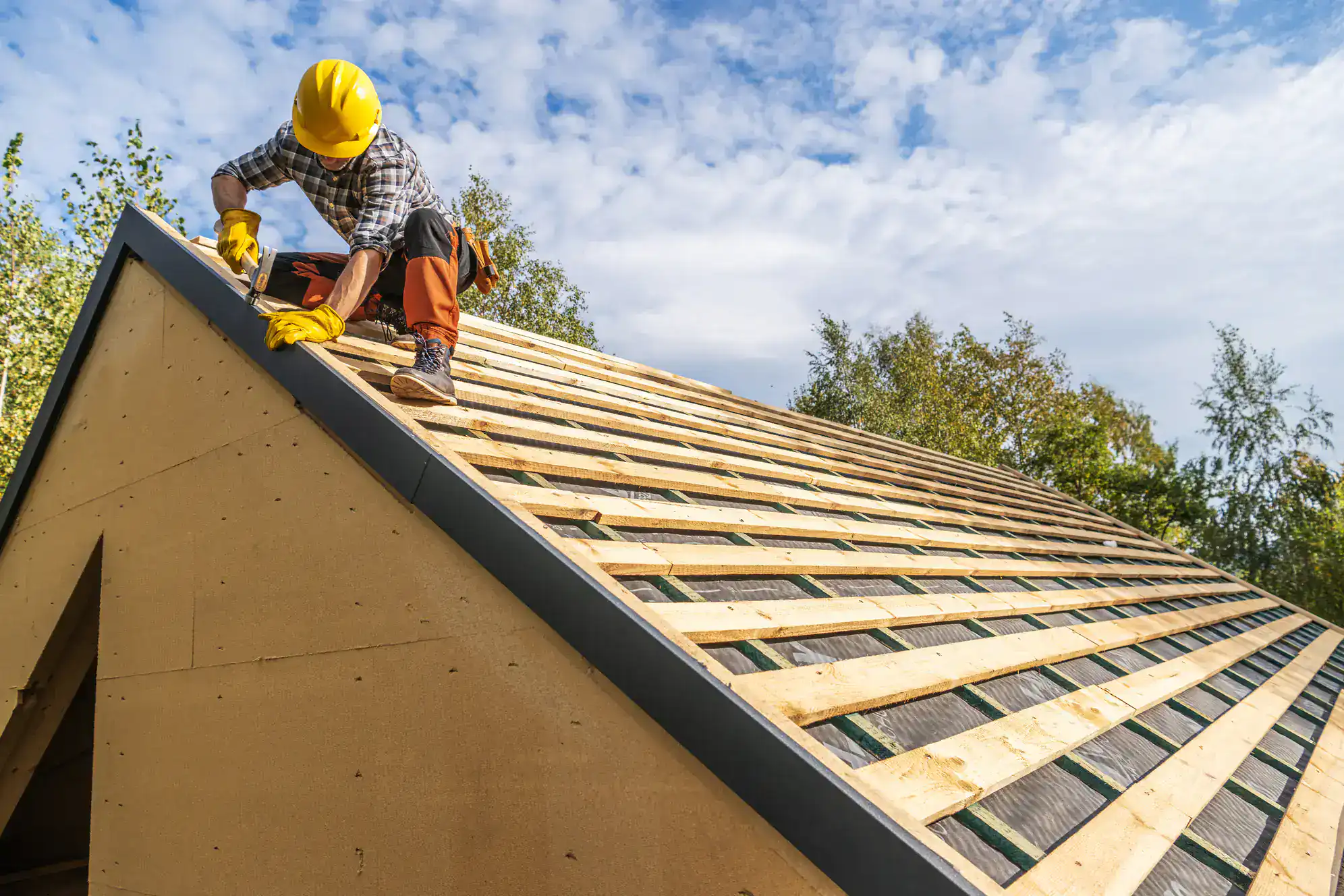
It starts with a free inspection. One of our licensed technicians walks the full roof — checking the surface, the flashing, the drainage, and the attic conditions underneath — and documents everything with photos. You get that report regardless of what you decide next. No pressure, no obligation, just a clear picture of what’s actually going on up there.
If work is recommended and you want to move forward, you’ll receive a fully itemized written estimate before anything is scheduled. In Norwood, full roof replacements and repairs exceeding 25% of the total roof area require a permit under Borough Code Chapter 98. We handle that process as part of the job — so your records stay clean, your warranty stays intact, and there are no complications if you ever sell the home.
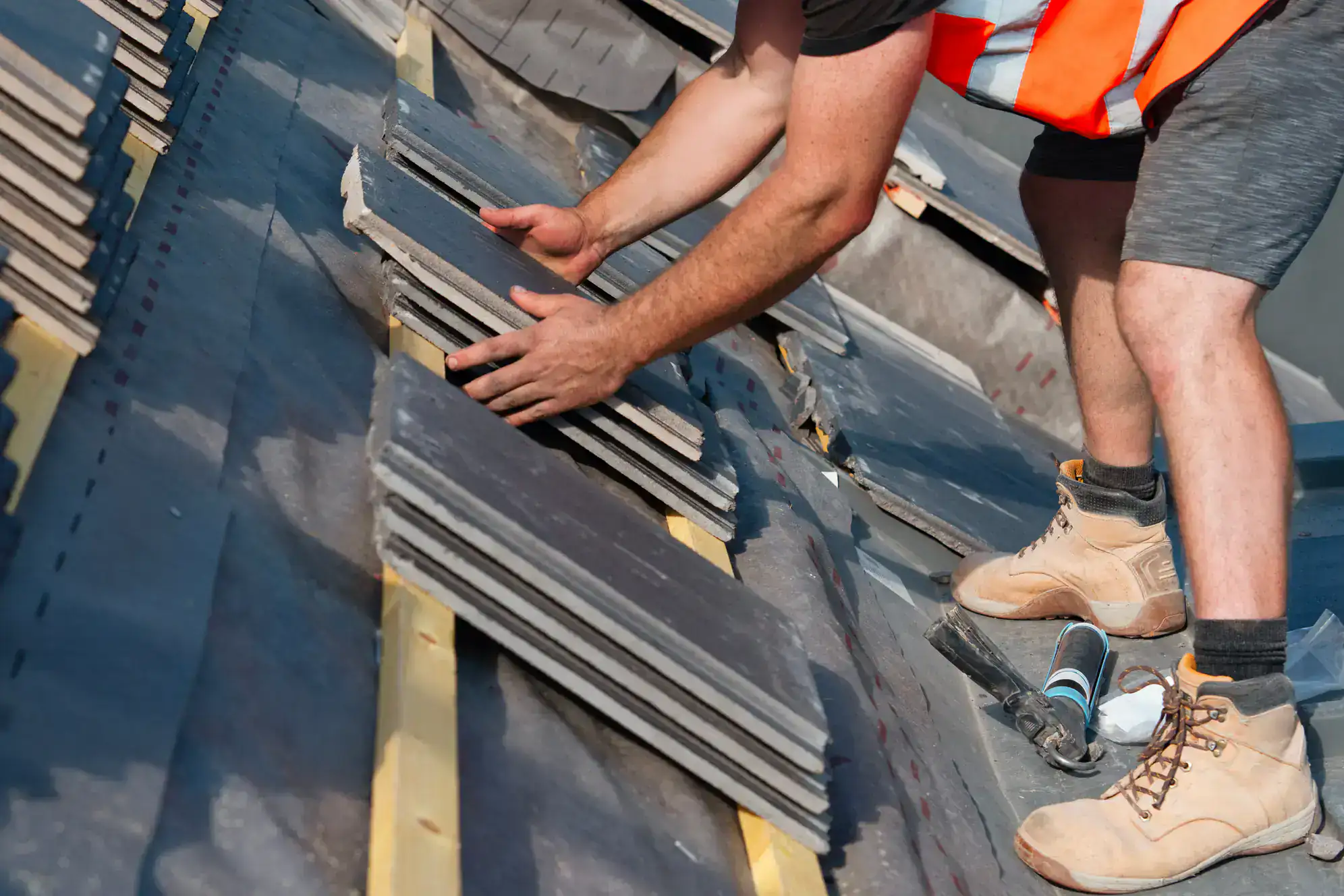
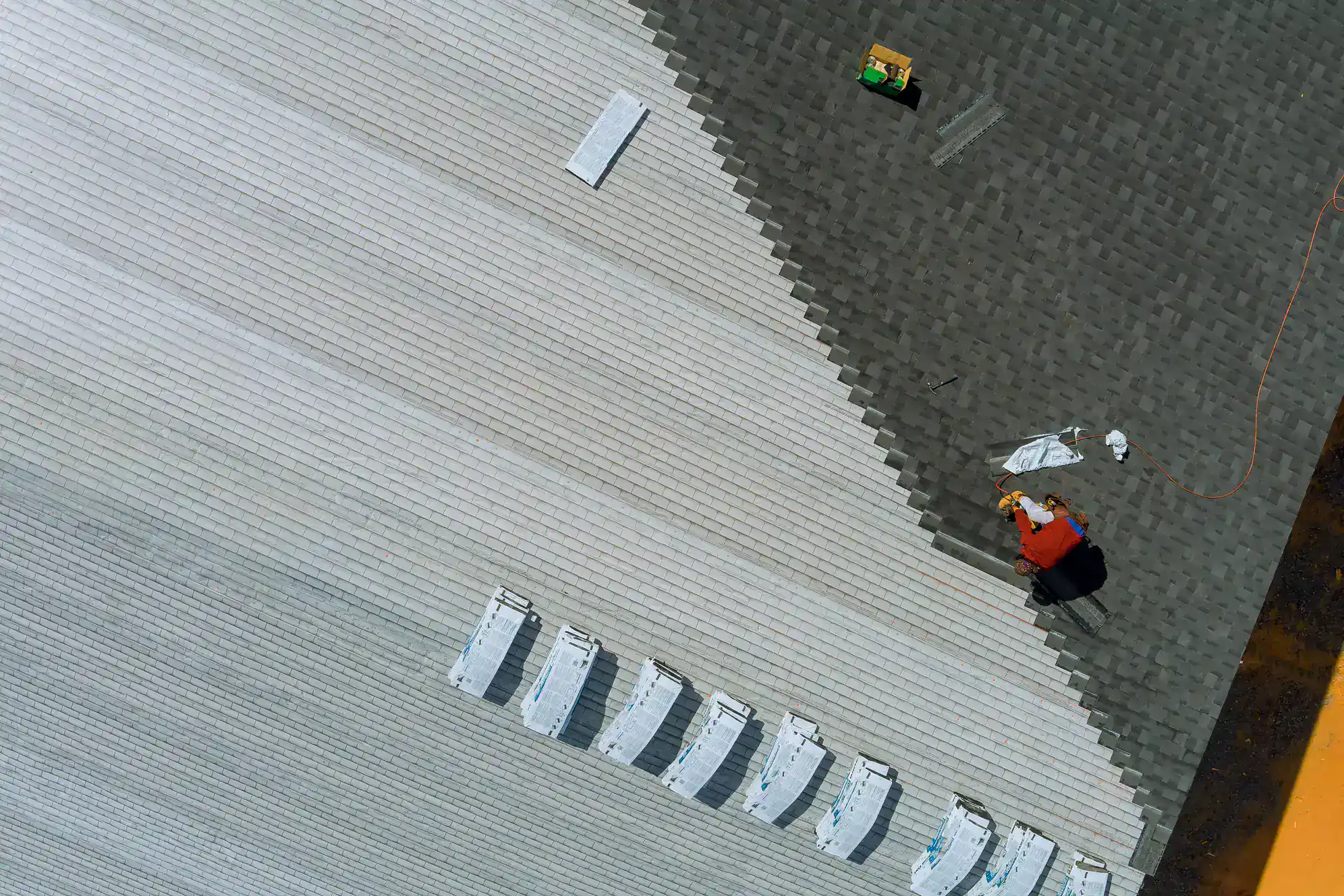
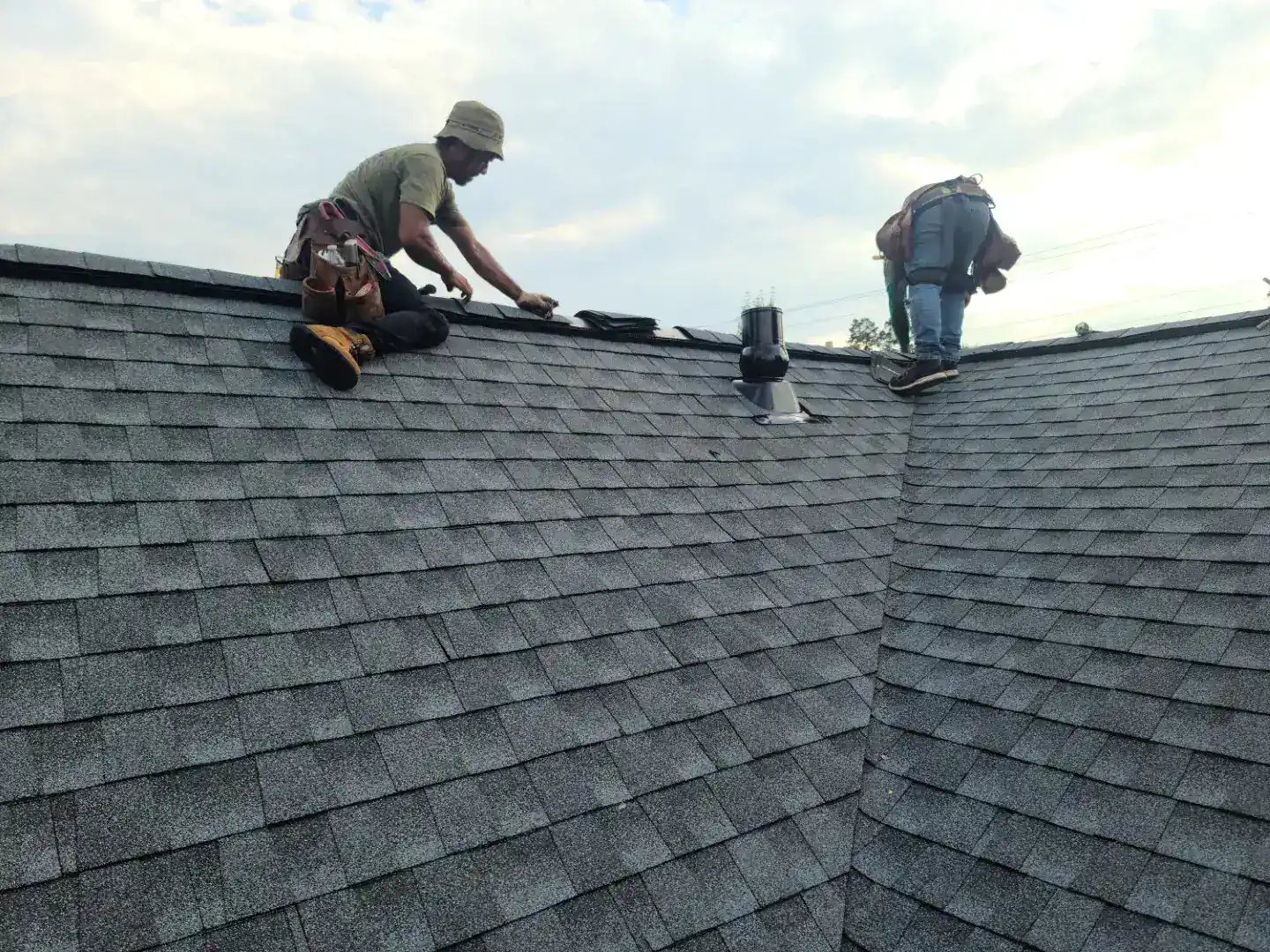
Once the job is underway, our crew works to a clear timeline. Materials go up, old roofing comes off, and the site is cleaned thoroughly before anyone leaves — nails swept from the lawn and driveway, debris removed, and a final walkthrough completed with you before the job is officially closed. Emergency situations, like storm damage or an active leak, follow the same process but start with immediate tarping and damage documentation to support your insurance claim.
Ready to get started?
Affordable Roofers Norwood, NJ
We handle the full scope of residential roofing — inspections, repairs, full replacements, flat roofing, TPO, and EPDM systems — along with siding and gutter work when those are part of the picture. For most Norwood homeowners, the conversation starts with an inspection and ends with a clear recommendation, whether that’s a targeted repair or a full replacement with a manufacturer-backed system warranty.
The homes throughout Norwood and the broader Northern Valley were built largely during the post-war decades, and a significant number have roofs that are either at or past their expected lifespan. That’s not an upsell — it’s just the reality of a housing stock that’s 40 to 70 years old in many cases. Our inspection process is designed to give you an honest read on where your roof actually stands, not push you toward work you don’t need.
For homeowners dealing with storm damage — whether from a nor’easter, a downed branch, or a wind event — we provide detailed photo documentation formatted to support insurance claims. That’s something out-of-area contractors and lead aggregator crews rarely offer, and it makes a real difference when you’re working through a claim with your insurer. Our pricing is upfront, our warranties are real, and our license number is public — everything you’d want to verify before handing over a major project.
Does replacing my roof in Norwood, NJ require a building permit?
Yes — and it’s worth understanding exactly where that line is. Under Borough of Norwood Code Chapter 98, repairs covering more than 25% of your total roof area within a 12-month period require a permit, and all full replacements require one as well. The minimum permit fee is $50, but the bigger issue isn’t the cost — it’s making sure the work is properly documented.
Unpermitted roofing work can create real problems down the road. If you ever file an insurance claim or go to sell your home, unpermitted work can surface during inspections or title searches and complicate both. We handle all required permit applications as part of qualifying projects, so you don’t have to navigate the borough process yourself. When the job is done, your paperwork is in order.
How do I know if I actually need a full roof replacement or just a repair?
That’s exactly the right question to ask before agreeing to anything. The honest answer is that it depends on the age of the roof, the extent of the damage, and what the underlying structure looks like — and you can’t fully assess that from the ground or from a surface-level look.
A proper inspection covers the exterior surface, the flashing at every penetration point, the gutters and drainage, and the attic conditions below. For older homes in Norwood — many of which were built in the 1950s through 1970s — it’s common to find that what looks like a minor leak on the ceiling is actually the result of years of moisture working in from compromised flashing or worn shingles. The inspection report gives you a documented picture of what’s actually happening, and the recommendation follows from that — not from a default assumption that replacement is always the answer.
What kind of roof damage should Norwood homeowners watch for after winter storms?
The most common issues after a nor’easter or a hard Bergen County winter are ice dam damage, lifted or missing shingles, and compromised flashing around chimneys and vents. Ice dams form when heat escapes unevenly through the roof deck, melts snow from underneath, and then refreezes at the eaves — forcing water back up under the shingles. In Norwood’s wooded neighborhoods, where tree canopy creates shading that slows melt, this is a particularly common problem.
Inside the home, the early signs are ceiling stains, peeling paint near exterior walls, or moisture in the attic after a storm. Outside, look for shingles that are buckled, curling at the edges, or missing granules in concentrated patches. Any of those warrant a professional inspection — not because every one leads to a major job, but because catching the problem early almost always costs less than waiting until it works its way deeper into the structure.
How long does a roof typically last on a home in Bergen County, NJ?
For standard asphalt shingles — the most common roofing material in Norwood and across Bergen County — the typical lifespan is 20 to 30 years under normal conditions. But “normal conditions” in the Northern Valley isn’t exactly gentle. Freeze-thaw cycling through the winter months, nor’easter wind loads, and the moisture retention that comes with heavy tree canopy all put more stress on roofing systems than a drier or warmer climate would.
In practice, that means a roof installed in the late 1990s or early 2000s is likely in or approaching its replacement window right now — especially if it hasn’t been inspected in a few years. If you’re not sure when your roof was last replaced, a free inspection will give you a clear answer. The photo report documents the current condition, identifies any active problem areas, and gives you a realistic timeline for what to expect — so you can plan ahead rather than react to a failure.
What does a manufacturer-certified roofer actually mean, and why does it matter?
Manufacturer certifications aren’t handed out to every contractor who installs a brand’s shingles. They require demonstrated installation quality and ongoing compliance with the manufacturer’s standards — and only a small percentage of roofing contractors in the country hold them. What that means practically is that a certified contractor can offer enhanced system warranties that non-certified contractors are not authorized to provide.
For a Norwood homeowner with a property valued in the high six figures and a property tax bill averaging over $12,000 a year, the difference between a standard 5-year workmanship warranty and a manufacturer-backed system warranty of 30 to 50 years is significant. It’s not just a number — it’s the difference between a warranty that covers the contractor’s labor and one that covers the entire roofing system, backed by the manufacturer directly. When you’re making a major investment in a home you plan to stay in or sell at full value, that distinction matters.
How does the free roof inspection work, and is there any obligation to hire afterward?
No obligation — that’s the straightforward answer. The inspection is a full professional assessment: our crew walks the roof, checks the attic, documents all flashing points, and photographs anything that warrants attention. You receive a detailed photo report at the end that’s yours to keep, share with your insurance company, or use to compare against another contractor’s assessment if you want a second opinion.
The reason we offer this at no cost isn’t complicated — we’re a business that grows through referrals and reviews, and the inspection is where that relationship either starts or doesn’t. Norwood homeowners tend to research thoroughly before committing to any major contractor, and a no-pressure inspection with real documentation is the most straightforward way to earn that trust. If the inspection shows your roof is in good shape, you’ll know that. If it shows a problem, you’ll have the photos and the report to back up whatever decision you make next.