
Roofing Contractor in Teaneck, NJ
Teaneck Roofs Built to Handle What Bergen County Throws at Them
Hear from Our Customers
Local Roofers in Teaneck, NJ
Most Teaneck homeowners don’t call a roofer because they want to. They call because something’s wrong — a stain on the ceiling after a storm, a gutter pulling away from the fascia, shingles that didn’t survive the last nor’easter. And the longer that call gets delayed, the more the damage spreads.
What you actually want is simple: a roof that holds, a contractor who shows up when they say they will, and a straight answer about what it’s going to cost. No inflated estimates, no pressure to replace when a repair will do the job.
Here’s what matters for homes in Teaneck specifically. The housing stock along the Phelps Park neighborhood, the Queen Anne Road corridor, and the residential streets flanking Cedar Lane is predominantly mid-century — most of these homes were built between the 1930s and 1960s. That age profile means aging decking, older ventilation systems, and flashing that’s had decades of freeze-thaw cycles working against it. A roof inspection that accounts for all of that isn’t a luxury — it’s the only way to know what you’re actually dealing with.
Reputable Roofing Contractors in Teaneck, NJ
We’ve been working on New Jersey homes for over 17 years, and we’ve spent that time right here in Bergen County. That’s not combined experience across a franchise network — that’s us, under this name, serving Teaneck homeowners through every storm season, every winter, and every post-Ida cleanup call that followed.
Our work covers full roof replacements, targeted repairs, flat roofing, metal roofing systems, gutters, and siding — which means when a nor’easter hits Teaneck and damages more than just the shingles, you’re not coordinating three separate contractors. One call handles it.
Every job comes with a free inspection and a free estimate. No trip charge, no diagnostic fee, no obligation. That offer exists because the work speaks for itself — and because Teaneck homeowners making a decision on a $15,000–$25,000 roof replacement deserve real information before they commit to anything.
Roof Repair in Teaneck, NJ
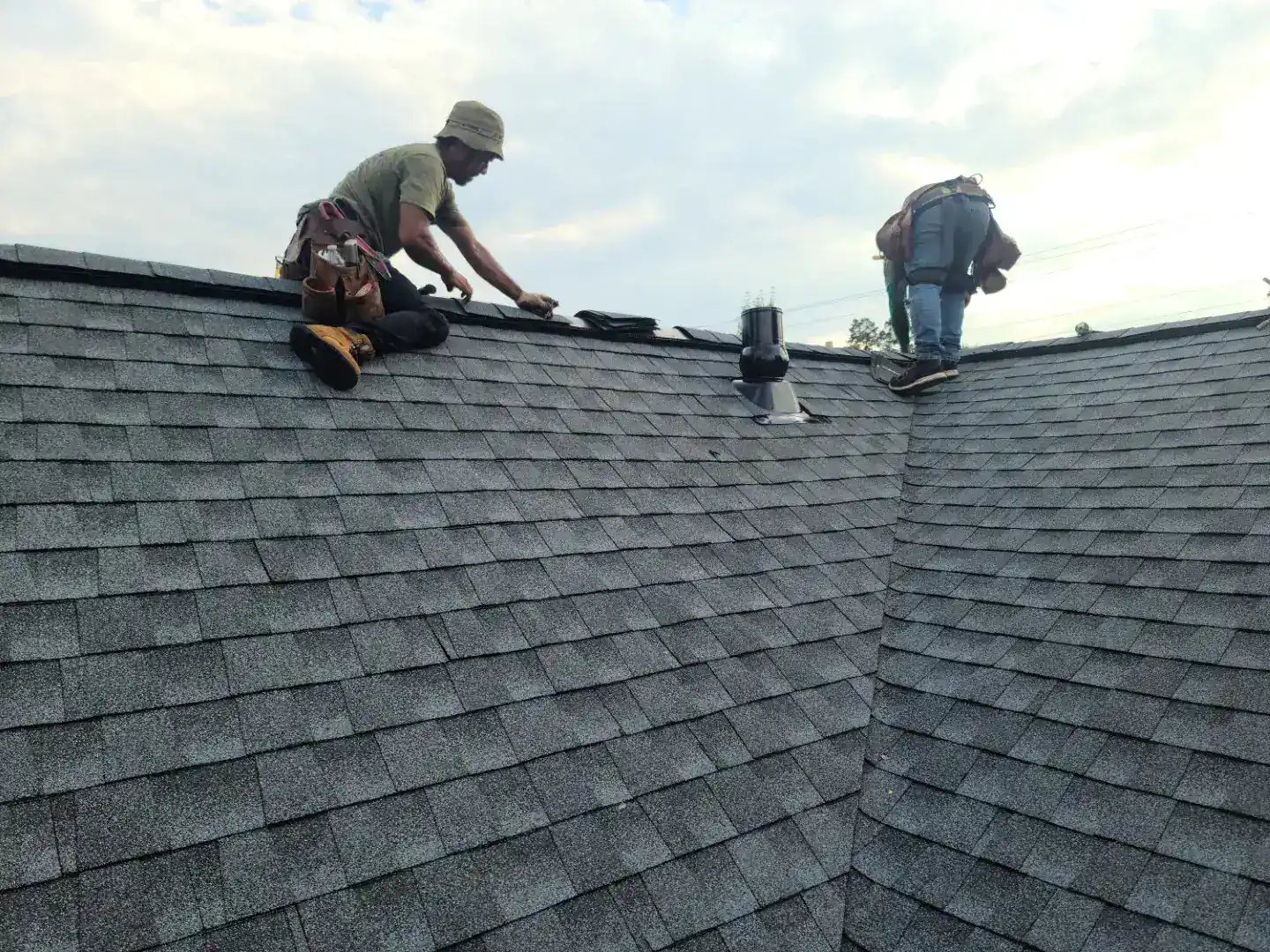
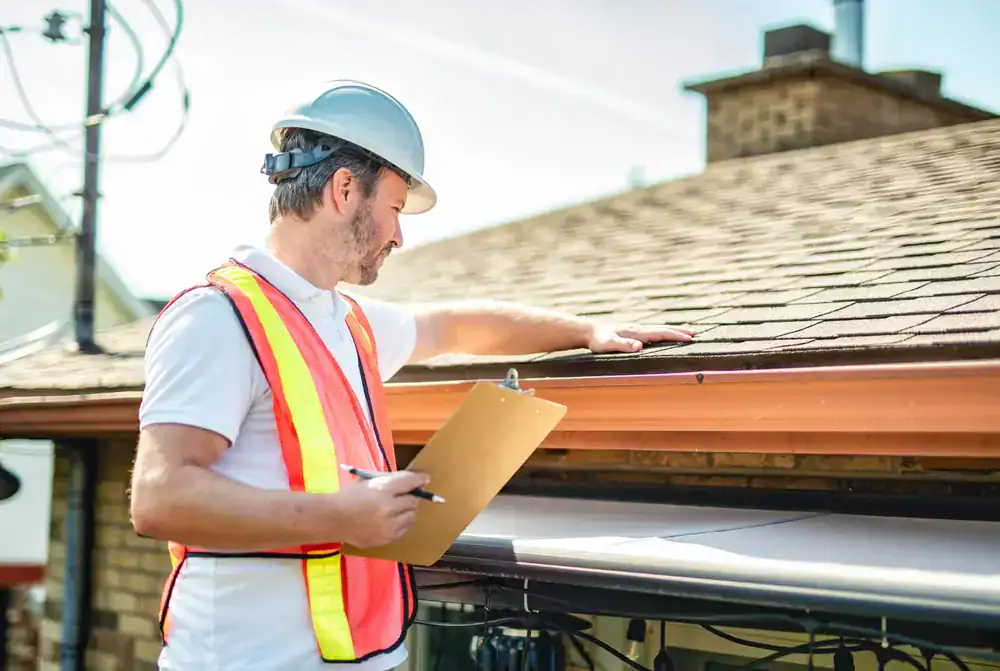
It starts with a free inspection. One of our trained technicians comes out, gets on the roof, and gives you an honest read on what’s there — not a sales pitch dressed up as a diagnosis. For homes in Teaneck’s older neighborhoods, that means checking decking condition, ventilation, flashing at valleys and penetrations, and any areas where ice dams or standing water have done quiet damage over time.
From there, you get a written estimate that breaks down exactly what’s included — materials, labor, cleanup, and permit fees. Under New Jersey’s Uniform Construction Code, a permit is required for full roof replacements in Teaneck, and we pull those permits as standard practice. That’s not an add-on — it’s how the job gets done correctly, and it protects your home’s value when it comes time to sell.
Once the scope is approved, our crew gets to work. Most residential replacements in Teaneck are completed in one to two days depending on the size and complexity of the roof. When the job is done, the site is cleaned, the materials are hauled, and you get documentation of the completed work — including warranty information from the manufacturer if applicable.
Ready to get started?
Metal Roofing Contractors in Teaneck, NJ
Asphalt shingles are still the most common choice for Teaneck residential roofs, and for good reason — they perform well in Bergen County’s climate, they’re cost-effective, and manufacturer-certified installations come with extended warranties that non-certified contractors simply can’t offer. If your home has an aging three-tab roof that’s been through fifteen New Jersey winters, a full replacement with architectural shingles and proper ice-and-water shield at the eaves is likely the right call.
Metal roofing is worth a serious conversation if you’re thinking long-term. A properly installed metal roof can last 40 to 70 years — which, on a mid-century Teaneck colonial or Cape Cod, could genuinely be the last roof that home ever needs. Metal handles snow loads, wind uplift, and freeze-thaw cycles better than asphalt, and it doesn’t lose granules after hailstorms. For homeowners in Teaneck who plan to stay in their home for decades, the math often works in metal’s favor.
For flat or low-slope sections — common on rear additions throughout Teaneck’s older housing stock — TPO and EPDM membrane systems are the standard. These are the systems that failed on a lot of homes during Tropical Storm Ida’s rainfall event, and they’re worth inspecting if yours hasn’t been looked at recently. Small roof repair contractors who only handle pitched shingles often skip these sections entirely, which is how small leaks become major interior damage.
Do I need a permit to replace my roof in Teaneck, NJ?
Yes — under New Jersey’s Uniform Construction Code, a building permit is required for a full roof replacement in Teaneck. This applies whether you’re doing a tear-off and re-roof or a complete system replacement. The permit process is handled through Teaneck Township’s building department at 818 Teaneck Road, and the work must comply with current IRC requirements — including ice-and-water shield installation at eaves, valleys, and other vulnerable areas, which is mandatory in New Jersey’s climate zone.
The reason this matters to you isn’t just legal compliance. An unpermitted roof replacement can create real problems when you go to sell your home. Buyers’ attorneys and title companies routinely check for unpermitted work, and an unpermitted roof can delay a closing, reduce your appraised value, or require costly remediation before the sale can proceed. We pull permits on every applicable job in Teaneck as standard practice — it’s built into the process, not an optional add-on.
How do I know if I need a full roof replacement or just a repair in Teaneck?
The honest answer is: it depends on the age of the roof, the extent of the damage, and what the decking looks like underneath. A roof that’s 10 to 15 years old with localized storm damage — a few missing shingles, a compromised valley, flashing that’s lifted — is often a strong candidate for targeted repair. A roof that’s 25 or 30 years old, showing granule loss across multiple sections, and has had recurring leaks is usually past the point where repairs make financial sense.
For Teaneck homes built in the 1940s through 1960s, the age profile alone warrants a close look. Many of these roofs have already been replaced once, and the second replacement is now due. The free inspection we offer is specifically designed to answer this question without any pressure attached — you get a professional assessment of what’s actually there, and you decide what to do with that information.
What roofing material holds up best against Bergen County winters?
For most Teaneck residential roofs, architectural asphalt shingles installed with proper underlayment and ice-and-water shield are the right baseline. They’re rated for wind uplift, they handle snow loads well when installed correctly, and they’re available in manufacturer-certified versions that come with extended warranties — some up to 50 years on materials. The key is proper installation, particularly at the eaves where ice dams form when heat escapes through older attic systems.
If longevity is the priority and you want something that won’t need to be revisited in 20 years, metal roofing is worth the conversation. Standing seam metal panels handle Bergen County’s freeze-thaw cycles, nor’easter winds, and heavy snow loads better than any asphalt product. The upfront cost is higher, but for a Teaneck homeowner planning to stay long-term, a 50-to-70-year roof lifespan changes the math considerably. The right answer depends on your home’s structure, your budget, and your timeline — which is exactly what a free inspection is designed to help you figure out.
How much does a roof replacement cost in Teaneck, NJ?
For a standard residential roof replacement in Teaneck, most homeowners are looking at a range of roughly $15,000 to $27,000 depending on the size of the roof, the pitch, the material selected, and the condition of the decking underneath. Bergen County pricing tracks closely with the national range given local labor rates and permit costs.
What moves the number up or down is usually what’s found during the tear-off. If the decking underneath is compromised — which is not uncommon on Teaneck homes that have had water infiltration over time — that adds material and labor to the scope. A detailed written estimate before work begins is the only way to know what you’re actually committing to. We provide free estimates that itemize materials, labor, permit fees, and any identified structural issues — so there are no mid-project surprises without your explicit approval first.
What causes ice dams, and are Teaneck homes at risk?
Ice dams form when heat escapes through the roof deck, melts snow at the ridge, and that meltwater refreezes at the cold eaves before it can drain. The result is a wall of ice along the roofline that forces water back up under the shingles and into the home. It’s one of the most common sources of winter roof damage in New Jersey, and Teaneck homes are particularly susceptible because of the age of the housing stock.
Homes built in the 1940s through 1960s — which make up the majority of Teaneck’s residential neighborhoods — were often built without the ventilation and insulation standards that modern building codes require. That means warm air from the living space escapes into the attic and directly heats the roof deck. Proper attic ventilation and ice-and-water shield installation at the eaves are the two primary defenses against ice dam damage. If your home has had ceiling stains near exterior walls after a winter storm, that’s a sign worth getting looked at before the next season hits.
How do I find a reputable roofing contractor in Teaneck, NJ without getting burned?
Start with the basics: verify the contractor holds an active New Jersey Home Improvement Contractor (HIC) registration through the NJ Division of Consumer Affairs. This is a state-level requirement for any contractor performing home improvement work over $500 in Teaneck, and you can look it up directly on the Division’s website. From there, check for manufacturer certifications — programs like GAF’s Master Elite designation or CertainTeed’s SELECT ShingleMaster require documented training, verified insurance, and quality audits that most contractors don’t qualify for.
Beyond credentials, pay attention to how the contractor handles the inspection and estimate process. A reputable roofing contractor in Teaneck, NJ will give you a written, itemized estimate — not a verbal ballpark — and will pull the required permits before work begins. Be cautious of contractors who show up after a storm offering unusually fast timelines and vague pricing. Teaneck has seen its share of out-of-state operators following major weather events, and the homeowners who end up with the most problems are usually the ones who skipped the credential check. A contractor who’s been operating in Bergen County for 17-plus years, has verifiable certifications, and offers a free inspection with no obligation is a reasonable starting point for a decision this significant.