
Roofer in Teaneck, NJ
Teaneck Roofs Built to Handle What Bergen County Throws at Them
Hear from Our Customers
Local Roofing Company Teaneck, NJ
When your roof is solid, you stop second-guessing every heavy rainfall. You stop finding stains on the ceiling after a hard freeze. And you stop dreading the inspection report when it’s time to sell. In Teaneck’s real estate market, where homes are going under contract in under three weeks, a failing roof isn’t just a maintenance issue — it’s a deal-stopper. A properly installed, certified roof is one of the few home improvements that directly affects what buyers will offer and what lenders will approve.
More than half of Teaneck’s homes were built before 1950. That’s the reality of this township’s housing stock. Roofs on homes that old have often cycled through multiple installations, and the underlying decking, flashing, and ventilation systems can carry decades of compounded wear. Ice damming is a documented, recurring problem in Teaneck specifically. When ice backs up under shingles on an older home with inadequate attic ventilation, the damage moves fast — saturated insulation, rotted decking, and interior water intrusion that doesn’t show up until it’s already expensive.
Getting the roof right the first time means you’re not dealing with callbacks, patch jobs, or warranty claims that go nowhere. It means the next nor’easter or storm event that rolls through Bergen County doesn’t become an emergency call.
Roofing Company Teaneck, NJ
We’re a licensed, family-owned exterior renovation contractor serving homeowners across Teaneck, Bergen County, and beyond. NJ Home Improvement Contractor License #13VH10605800 — look it up through the NJ Division of Consumer Affairs. That number is there because accountability matters, and in a market where storm-chaser crews show up after every major weather event, verifiable credentials aren’t optional.
We’ve spent over a decade working on homes across New Jersey, and that includes the older housing stock you find throughout Teaneck — pre-1950 colonials and ranches near Cedar Lane, homes in the Phelps Estate area, properties along the Hackensack River corridor where moisture exposure runs year-round. We don’t apply the same generic approach to every job. The age of your home, the condition of your attic, the state of your existing flashing — it all factors in before we make a recommendation.
Our free inspection includes a photo report you keep, regardless of whether you move forward. No obligation. No pressure. Just a clear picture of what you’re actually dealing with.
Emergency Roof Repair Teaneck, NJ
It starts with the free inspection. A licensed technician comes out, gets on the roof, checks the attic, reviews your drainage systems, and photographs everything — not just the obvious damage, but the underlying conditions that cause problems down the road. For older Teaneck homes, that often means checking for inadequate ventilation that contributes to ice dam formation, or assessing original decking that may not be visible from the exterior. You get the full photo report at the end of that visit, no strings attached.
From there, you get a transparent, itemized quote before any work is scheduled. The price you approve is the price you pay. If a full replacement is needed, we file a building permit with Teaneck’s Construction Department at Township Hall — that’s a required step for any tear-off and replacement in this township, and we handle it as part of the project, not as something we pass off to you. If it’s a repair, the same process applies: clear scope, clear price, clear timeline.
Once work begins, our crew handles everything from tear-off through final cleanup. You’re kept in the loop throughout. When the job is done, the site is clean, the work is documented, and you have the warranty information in hand — not buried in an email you’ll never find.
Ready to get started?
Affordable Roofers Teaneck, NJ
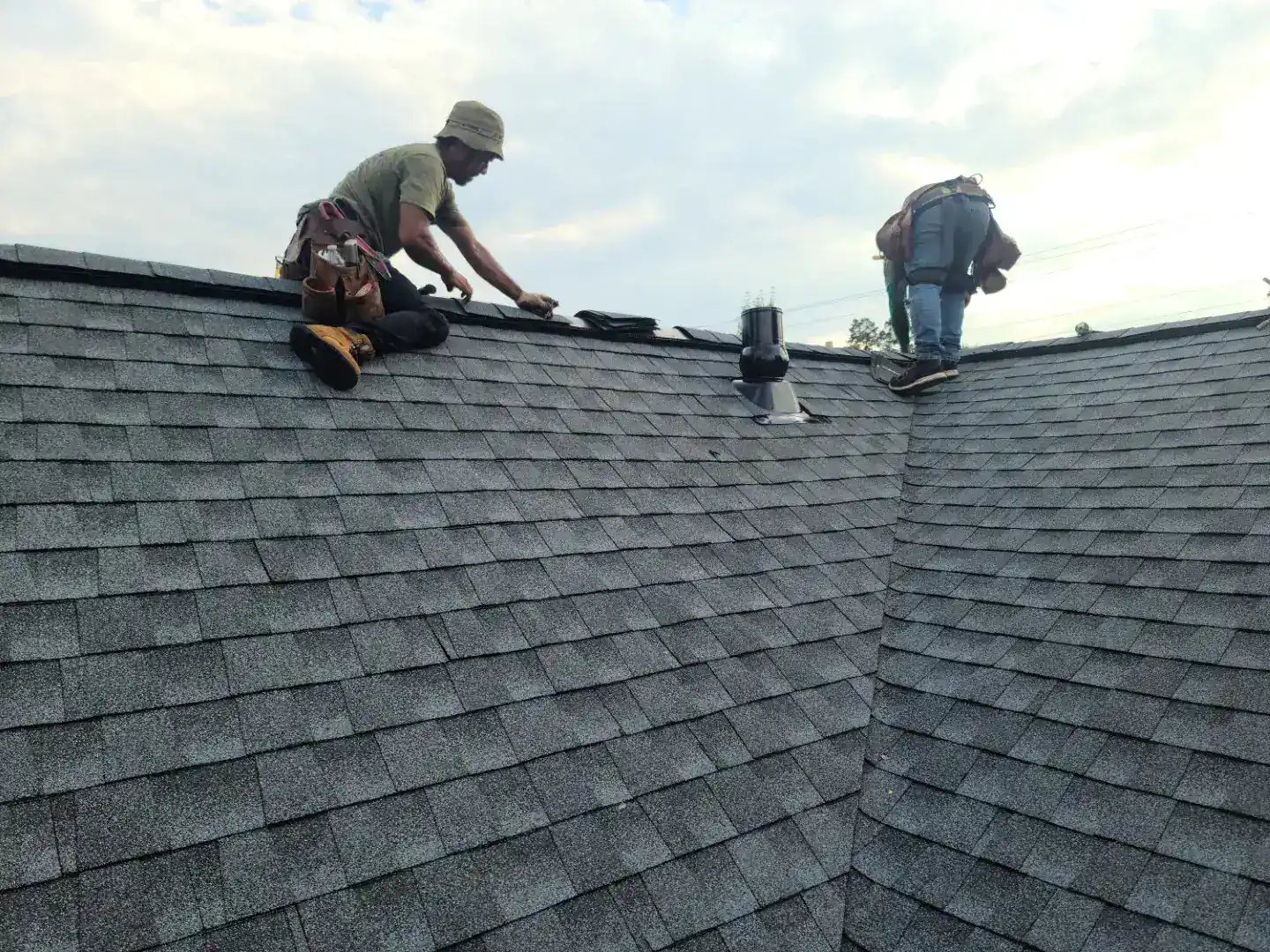
Our core service is roofing — inspection, repair, full replacement, and everything in between. We handle asphalt shingles, flat roofing systems including TPO and EPDM, flashing repair, ridge cap replacement, and ice-and-water shield installation, which is especially relevant for Teaneck homes that have dealt with recurring ice dam damage. Our manufacturer certifications from major shingle manufacturers mean the warranties we offer are stronger than what most contractors in this area can provide — enhanced system warranties that non-certified contractors simply cannot offer.
Beyond roofing, we also handle gutters and siding. For a pre-1950 home in Teaneck, that matters more than it might seem. Failing gutters back up into fascia boards and accelerate the exact rot that compromises a roof’s edge. Damaged siding allows moisture in at wall penetrations. When we assess these systems together in a single visit — roof, gutters, siding — you get a complete picture of your home’s exterior condition instead of three separate contractor visits that never quite talk to each other.
We offer bilingual service in Spanish, which is a real consideration in a township where nearly 15% of residents speak Spanish at home. Clear communication about scope, pricing, and warranty terms isn’t a courtesy — it’s the baseline for a job that goes the way it should.
Do I need a permit to replace my roof in Teaneck, NJ?
Yes — Teaneck Township requires a building permit for any full roof replacement. The application has to be filed with the Construction Department at Township Hall, located at 818 Teaneck Road, before work begins. This applies to both standard asphalt shingle tear-offs and flat roof replacements like TPO or EPDM systems.
The permit process exists to ensure the work meets NJ building code standards, which include requirements around decking, ventilation, and water barrier installation. When you hire a licensed contractor, we handle the permit filing as part of the project — you don’t need to manage that process yourself. What you do want to confirm before signing anything is that your contractor holds a valid NJ Home Improvement Contractor license. An unlicensed crew that skips the permit leaves you exposed to code violations, failed inspections, and potential issues with your homeowner’s insurance if a claim ever comes up down the road.
How much does a roof replacement typically cost in Teaneck, NJ?
In Teaneck, a full roof replacement generally runs between $9,000 and $30,000 depending on the size of the home, the materials used, and the condition of what’s underneath the existing shingles. Asphalt shingles sit at the lower end of that range. Metal, slate, and tile systems push toward the higher end. You won’t know your actual number until someone gets on your roof and assesses the decking, flashing, and ventilation conditions — not just the shingles.
For older Teaneck homes — and a significant portion of the township’s housing stock was built before 1950 — there’s often additional work involved that a surface-level estimate won’t catch. Rotted decking sections, failed chimney flashing on original brick structures, or inadequate attic ventilation that’s been contributing to ice dam damage for years can all affect the final scope. A free inspection with a photo report gives you the real picture before you commit to anything.
What are the signs that my older Teaneck home actually needs a new roof?
The most common signs are shingles that are curling, cracking, or losing granules — you’ll notice the granules collecting in your gutters. Missing shingles after a wind event are an obvious flag, but the less visible signs are often the ones that matter more: ceiling stains that appear after a hard freeze, daylight visible in the attic, or soft spots in the decking when you walk the roof.
For homes in Teaneck built in the 1940s and 1950s, the age of the roof itself is a meaningful data point. Asphalt shingles have a lifespan of roughly 20 to 30 years. If your roof hasn’t been replaced since the 1990s or earlier, it’s worth having it assessed regardless of whether you’re seeing active leaks. Ice damming — a documented recurring issue in this township — does damage that isn’t always visible from the exterior until it’s already worked its way into the insulation and framing. A thorough inspection, including the attic, will catch what a surface look won’t.
How does ice dam damage actually happen, and can it be prevented?
Ice dams form when heat escapes through the attic and warms the roof deck unevenly. Snow on the upper portion of the roof melts, runs down toward the eaves, and refreezes where the surface is colder. That ice buildup creates a dam that forces meltwater to back up under the shingles instead of draining off the roof. From there, it saturates the insulation and starts working on the decking — often without any visible sign inside the house until a ceiling stain shows up weeks later.
This is a confirmed, recurring problem in Teaneck’s older residential neighborhoods. The homes most vulnerable are the ones with inadequate attic insulation and poor ventilation — which describes a significant portion of the township’s pre-1950 housing stock. The fix isn’t just patching the shingles where water got in. It means addressing the attic conditions that caused the dam in the first place. A proper inspection will assess both the roof surface and the attic to identify where the vulnerability actually lives, not just where the water showed up.
Will my homeowner's insurance cover storm roof damage in Bergen County?
It depends on the cause and the policy. Most standard homeowner’s insurance policies in New Jersey cover sudden, storm-related damage — wind, hail, falling trees — but they typically don’t cover damage that results from gradual wear, neglect, or a roof that was already past its useful life. Bergen County has seen its share of significant weather events, including Tropical Storm Ida, which dropped over eight inches of rain on Teaneck and brought down trees throughout the township. If storm damage is the cause, you generally have a legitimate claim.
The key is documentation. Insurance adjusters need to see clear evidence that the damage is storm-related, not pre-existing deterioration. A licensed contractor who can photograph the damage, identify the cause, and provide a written assessment gives your claim a much stronger foundation than a phone call with no supporting documentation. Getting a professional inspection after any major storm event — before you make temporary repairs — is the right sequence. Temporary repairs to prevent further damage are usually covered, but you want to document the original condition first.
Why should a Teaneck homeowner choose USA Home Remodeling over a local Bergen County roofer?
That’s a fair question, and the honest answer is that you should compare carefully. What we bring to Teaneck specifically is a combination of things that aren’t always easy to find together: a verifiable NJ contractor license, manufacturer certifications that unlock enhanced warranty tiers most contractors can’t offer, a free inspection with a photo report you keep regardless of your decision, and bilingual service in Spanish — which matters in a township where nearly 15% of residents speak Spanish as their primary language.
Our family-owned structure means the accountability is direct. There’s no franchise layer, no national call center, no crew that’s different every time. The same standards we apply in Elizabeth apply in Teaneck. And because we handle roofing, gutters, and siding together, older homes in this township — where those three systems have often aged in tandem — get a complete exterior assessment in one visit instead of three separate contractor conversations. For a home worth $575,000 or more in a market that moves fast, that kind of comprehensive, accountable approach isn’t a luxury. It’s just the smarter way to protect what you own.
Other Services we provide in Teaneck