
Siding Installation in Saddle River, NJ
Estate-Scale Siding Done Right the First Time
Hear from Our Customers
Residential Siding Contractors in Saddle River, NJ
When siding fails on a property like yours, it’s rarely dramatic at first. It’s a hairline crack behind a dormer. Moisture working its way under a panel on a shaded north-facing elevation. A freeze-thaw cycle doing what it does every winter along the Saddle River corridor — expanding, contracting, and quietly widening the gap between where water should be and where it ends up. By the time it’s visible, the damage underneath is usually well ahead of what the surface shows.
New siding — installed correctly, with the right material for your home’s scale and architecture — stops that cycle entirely. Your exterior becomes a sealed, weather-resistant system rather than a collection of aging panels holding on through another Bergen County winter. For a home on two or more acres with thousands of square feet of cladding exposed to nor’easters, freeze-thaw stress, and the moisture that comes with Saddle River’s mature tree canopy, that’s not a cosmetic improvement. It’s structural protection.
The right installation also preserves what the property is worth. Saddle River homes don’t trade at $2 million-plus because of location alone — the condition and quality of every exterior detail factors into how buyers and appraisers see the asset. Fresh, properly installed siding from a certified contractor signals that the property has been maintained at the level it deserves.
Local Siding Company Serving Saddle River, NJ
We’ve been working on homes throughout Bergen County for close to ten years, with deep experience on the estate properties that define Saddle River. That means we’ve seen what a Saddle River winter does to siding that wasn’t installed with the right expansion gaps. We’ve worked on properties along East Saddle River Road and West Saddle River Road where the tree canopy keeps certain elevations damp well into spring — and we know how to account for that before the first panel goes up.
This is a family-run operation, which means the people doing the work are the same people accountable for the outcome. No franchise layers, no rotating crews, no disappearing act after the job is done. We’re licensed, insured, and carry manufacturer certifications that matter when you’re choosing premium siding for a property of this caliber — because certified installation is the only way to unlock the full manufacturer warranty your investment deserves.
If you’re not sure whether your siding needs repair or full replacement, we’ll tell you honestly. Free inspections, written estimates, and no pressure to move forward before you’re ready.

Siding Installation Process in Saddle River, NJ
It starts with a free inspection. A licensed contractor walks the full exterior of your home, checks the condition of the existing siding, looks at the substrate underneath, and identifies any moisture infiltration or structural issues that need to be addressed before new siding goes on. On a large Saddle River estate, this step isn’t a formality — it’s where problems that would otherwise get buried under new material get caught and corrected first.
From there, you get a written estimate that breaks everything down: materials, labor, removal of existing siding, any substrate repairs, and permit fees. In Saddle River, siding replacement requires a building permit through the borough’s Construction Department, and we handle that process on your behalf. You don’t have to track down forms or schedule inspections — that’s managed for you.
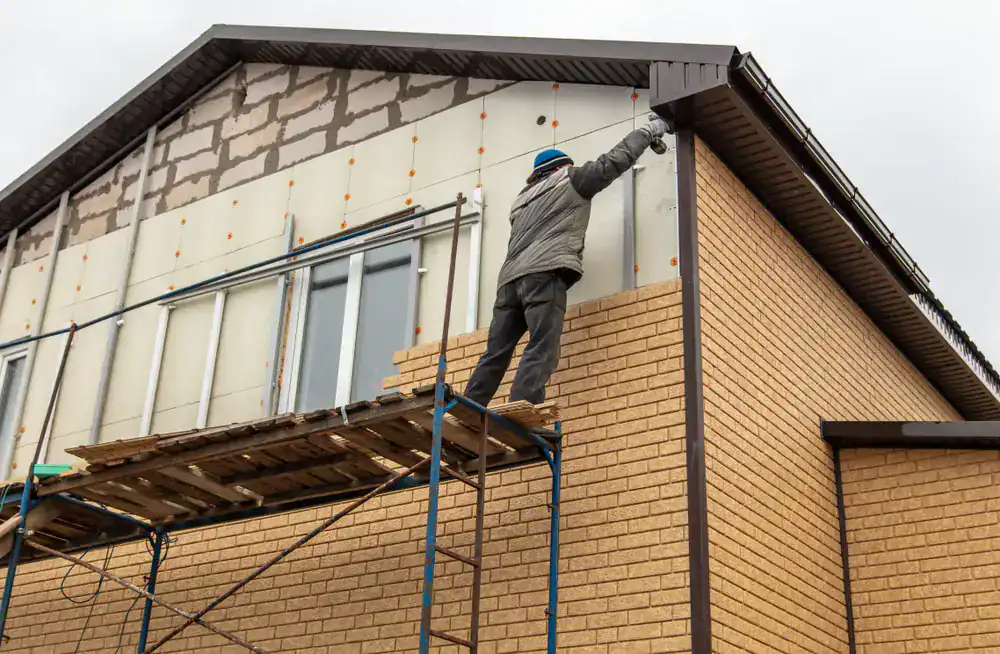
Installation follows a sequenced process: proper housewrap and moisture barrier first, then flashing at every window, door, and penetration, then panels installed with correct overlap and expansion gaps built in for the temperature swings Bergen County delivers. The job site is kept clean throughout, your landscaping is protected, and the crew works with the kind of professionalism that a property like yours calls for. When the work is done, a final walkthrough confirms everything meets the standard before anyone signs off.

Ready to get started?
Vinyl Siding Contractors in Saddle River, NJ
Not every siding material belongs on every home. In Saddle River, where properties routinely exceed 5,000 square feet and architectural details like dormers, custom trim, and multi-story elevations are the norm rather than the exception, material selection is a real decision — not a checkbox. We install fiber cement siding (including James Hardie), engineered wood like LP SmartSide, premium insulated vinyl, and traditional wood, and we’ll give you an honest read on which makes sense for your home’s style, your performance priorities, and the specific conditions on your property.
Fiber cement is the most common choice for estate-scale homes in this market — it holds paint longer, handles moisture better than standard vinyl, and stands up to the kind of impact and temperature stress that Bergen County winters deliver. Engineered wood gives you the warmth of a natural look with significantly better moisture resistance than traditional wood. If vinyl is the right fit for your project, insulated options add energy performance on top of durability. Every option comes with full manufacturer warranty coverage when installed by a certified contractor — which is exactly what you get here.
Beyond siding, we handle roofing and gutters under the same contract if needed. For homeowners managing a large property in Saddle River, having one experienced contractor assess and address the full exterior envelope — rather than coordinating three separate trades — is a practical advantage that saves time and eliminates the gaps that tend to appear when multiple contractors hand off work to each other.

Do I need a permit for siding replacement in Saddle River, NJ?
Yes — in Saddle River, siding replacement on an existing structure requires a building permit through the borough’s Construction Department. New Jersey’s Uniform Construction Code applies statewide, and Saddle River administers it locally. That means a permit application needs to be submitted, approved, and an inspection scheduled before the project is finalized.
We handle this on your behalf. We’re familiar with the borough’s process, which requires the property address, permit number, and confirmation from Building Department staff before an inspection gets added to the schedule. If you hire a contractor who skips this step — or doesn’t know it’s required — you’re left with unpermitted work that can create real problems when you go to sell or refinance. Working with a licensed local contractor means this is handled correctly from the start.
What siding material works best for a large estate home in Bergen County?
For most estate-scale homes in Bergen County — and Saddle River specifically — fiber cement is the leading choice. James Hardie and CertainTeed are the two most widely specified brands, and for good reason: fiber cement doesn’t warp or crack under freeze-thaw stress the way older vinyl can, it holds paint significantly longer than wood, and it handles the moisture exposure that comes with Saddle River’s wooded, riparian environment far better than most alternatives.
Engineered wood, like LP SmartSide, is a strong option if you want the look of natural wood without the maintenance demands. Premium insulated vinyl is a reasonable fit for certain applications and adds thermal performance. The right material depends on your home’s architectural style, the specific elevations involved, and what you’re prioritizing — longevity, aesthetics, energy performance, or some combination. A free inspection and consultation with us will give you a clear recommendation based on your actual property, not a generic sales pitch.
How does Saddle River's climate affect how long siding lasts on my home?
Bergen County’s freeze-thaw cycle is the single biggest factor in siding lifespan in this area. Every winter, temperatures drop below freezing repeatedly — and any moisture that has worked its way into micro-cracks in aging siding freezes, expands, and widens the damage when it thaws. Repeat that process across 20 or 30 winters and you get siding that looks passable on the surface but is harboring real structural deterioration underneath.
Saddle River adds another layer to this because of its mature tree canopy. Properties with significant shade — which is most of them, given the borough’s wooded character and the Saddle River corridor running through it — have elevations that stay damp longer after rain or snow. That sustained moisture exposure accelerates mold, mildew, and material breakdown on shaded north and east-facing walls faster than on sun-exposed sides. A proper inspection accounts for this, and material selection should too. Fiber cement and engineered wood handle this environment noticeably better than standard vinyl over the long run.
How much does siding installation cost in Saddle River, NJ?
The honest answer is that it varies significantly based on the size of your home, the material you choose, the condition of the substrate underneath the existing siding, and whether any repairs are needed before new panels go on. For a standard suburban home, siding installation in the Bergen County market might run $8,000 to $15,000. For an estate property in Saddle River — where homes routinely exceed 5,000 to 10,000 square feet with complex rooflines, multiple elevations, and custom trim work — the investment is proportionally larger and reflects the scale and technical demands of the project.
Fiber cement siding costs more upfront than vinyl but typically lasts longer and requires less maintenance, which changes the math over a 20-to-30-year horizon. We provide written, itemized estimates at no charge so you know exactly what you’re paying for before any work begins. There are no lowball numbers to win the job and no surprises once the crew shows up. If something unexpected is found during the project, it gets discussed with you before any additional work proceeds.
How long does siding installation take on a large home in Saddle River?
On a typical suburban home, siding installation might take three to five days. On a Saddle River estate — where you’re often dealing with 6,000 to 12,000 square feet of cladding, multiple elevations, dormers, and detailed trim work — a more realistic timeline is one to three weeks depending on the scope. Substrate repairs, if needed, add time as well.
Permit approval through Saddle River’s Construction Department is part of the timeline and needs to be factored in before work begins. We manage the permit process, but it’s worth knowing that scheduling an inspection requires advance coordination with the Building Department. Spring and early fall are the busiest seasons for exterior work in Bergen County, and quality contractors typically book four to eight weeks out during peak periods. If you’re planning a project for spring, reaching out in late winter gives you the best shot at securing your preferred schedule.
How do I know if my siding needs full replacement or just repairs in Saddle River?
This is one of the most common questions homeowners in Saddle River ask — and the answer genuinely depends on what’s happening beneath the surface, not just what you can see from the driveway. Siding that looks worn or faded may only need targeted repairs. But siding that has been absorbing moisture through failed seams, improper flashing, or freeze-thaw damage may have compromised the housewrap or wood sheathing underneath — and patching panels on top of that doesn’t solve the problem.
On a property of this scale, the stakes of getting that call wrong are significant. Covering moisture-damaged substrate with new siding traps the problem inside the wall assembly, where it continues to worsen and eventually affects structural framing. A free inspection from us gives you a clear, honest answer: what’s actually going on, what genuinely needs to be done, and what can wait. For Saddle River homeowners managing a high-value asset, that knowledge is worth getting before you make any decision — not after.