
Roofing Contractor in Saddle River, NJ
Estate-Scale Roofs Done Right the First Time
Hear from Our Customers
Local Roofers in Saddle River, NJ
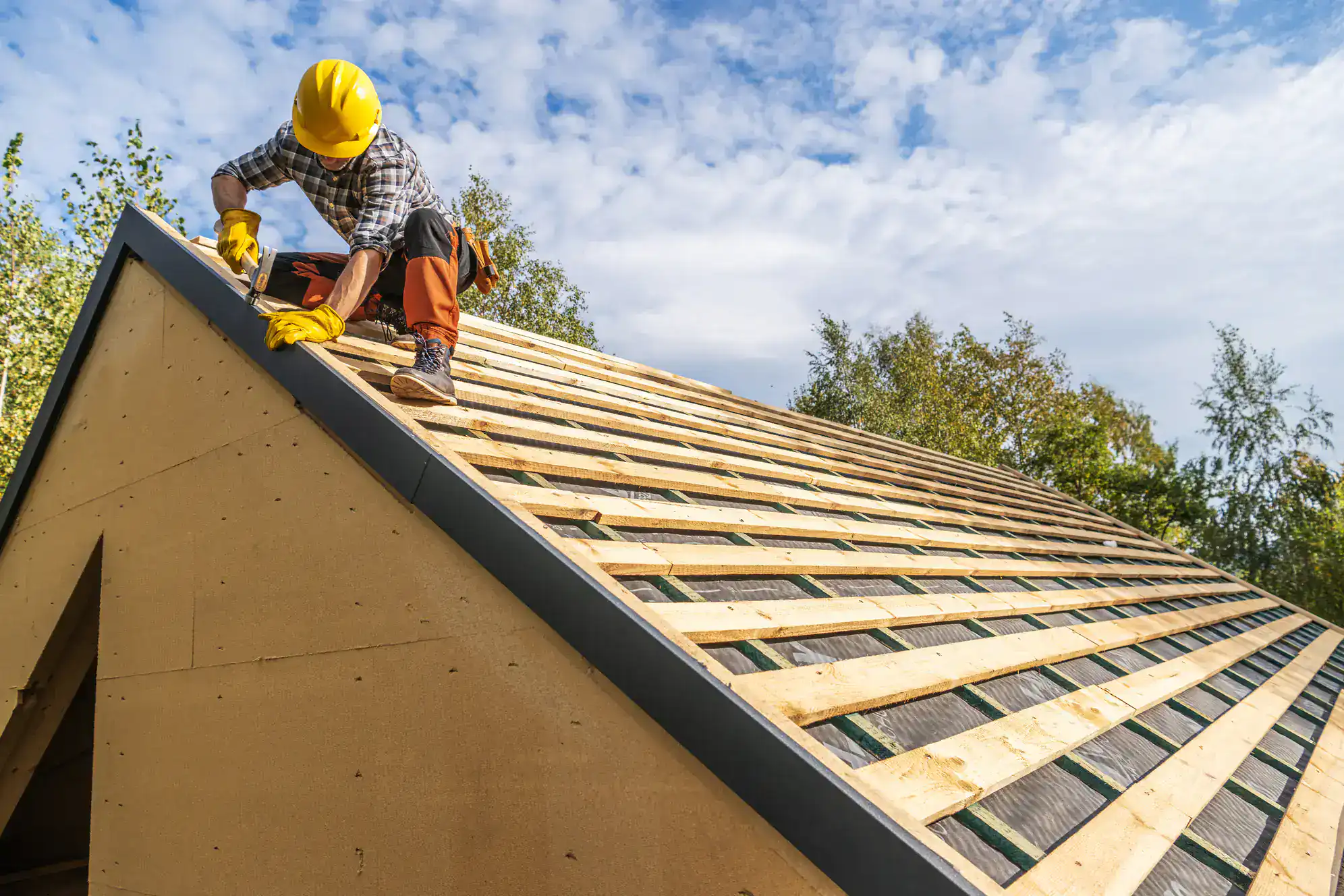
When your roof is done right, you stop thinking about it. No water stains creeping across a ceiling, no emergency calls after a nor’easter, no wondering whether the crew that installed it will still be around if something goes wrong. That peace of mind is the real outcome — and it starts with hiring a contractor who actually knows what they’re doing on a home like yours.
Saddle River’s housing stock is older than most people realize. A significant portion of the borough’s homes were built in the late 1970s and 1980s, which means a lot of roofing systems out there are either at the end of their lifespan or already past it. Add in the mature tree canopy that defines this area — beautiful, yes, but also a constant source of debris accumulation, moisture retention, and shaded roof sections that age faster than open-exposure surfaces — and the case for a proper inspection becomes pretty clear.
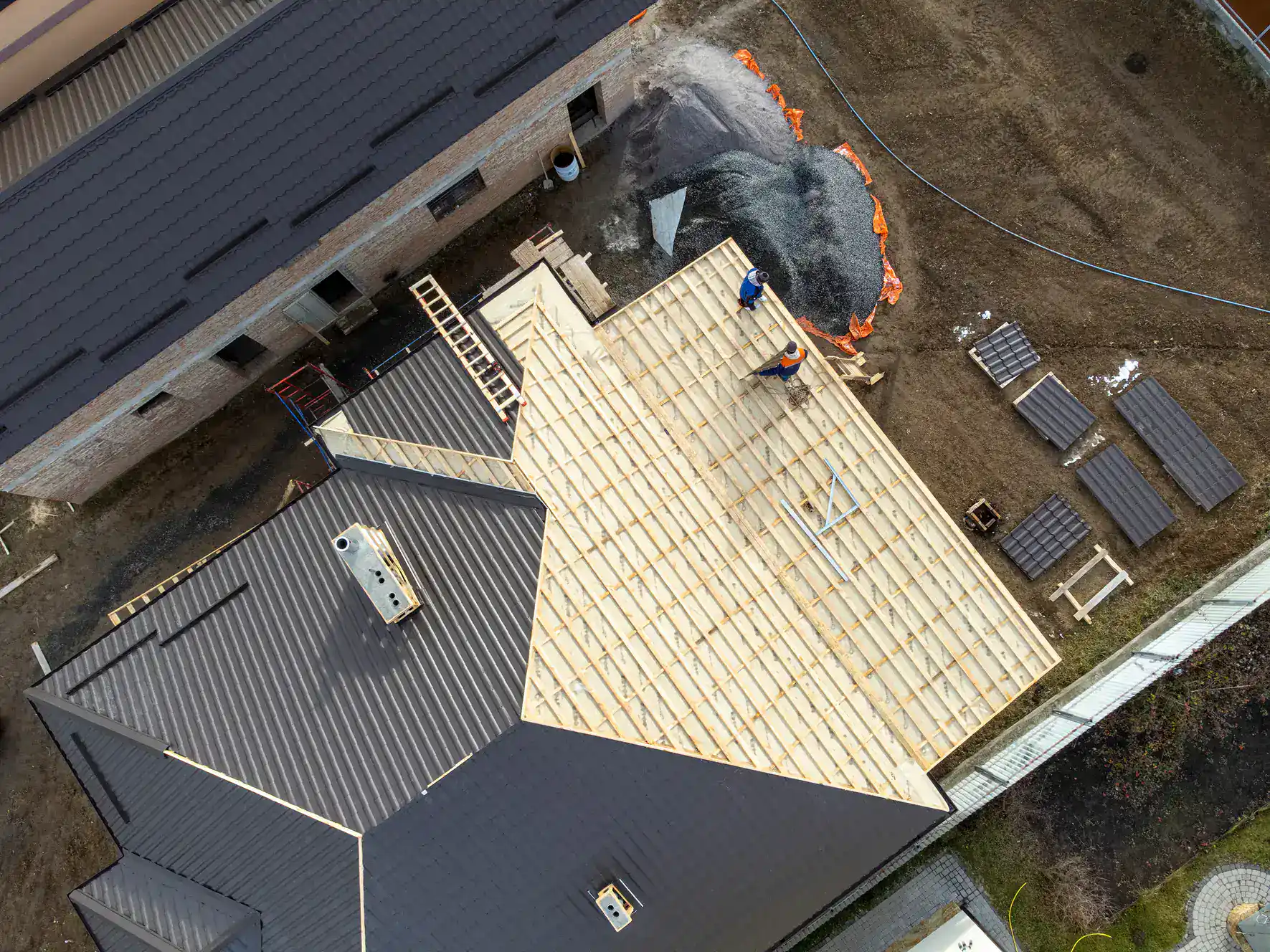
The homes here also sit on 2-acre lots with large footprints, steep pitches, multiple chimneys, dormers, and complex flashing systems. That’s not a standard replacement job. It’s a project that requires real experience with estate-scale roofing, the right materials for northern Bergen County winters, and a crew that understands what’s at stake when the home underneath is worth well over a million dollars.
Reputable Roofing Contractors in Saddle River, NJ
We’ve been doing exterior renovation work in New Jersey for over 17 years. That’s not a tagline — it’s just the reality of a family-owned business that built its reputation one project at a time, through customer reviews and word-of-mouth referrals, not paid leads or high-pressure sales.
We hold contractor licenses and certifications from major shingle manufacturers, which matters more than most homeowners realize. Certified contractors can offer extended manufacturer warranties that non-certified contractors simply aren’t authorized to provide. On a home in Saddle River — where a roofing project can easily represent a $25,000 to $50,000 investment — that distinction is worth paying attention to.
Bergen County is the service area we know well. From the permit requirements at the Borough of Saddle River’s Building and Construction Department to the specific challenges that come with heavily wooded, estate-sized lots near the Saddle River itself, this isn’t a crew learning your area for the first time. We’ve worked through countless Saddle River winters, managed complex roof systems on properties that demand precision, and built relationships with local inspectors and permit officials who understand our work.
Roof Repair in Saddle River, NJ
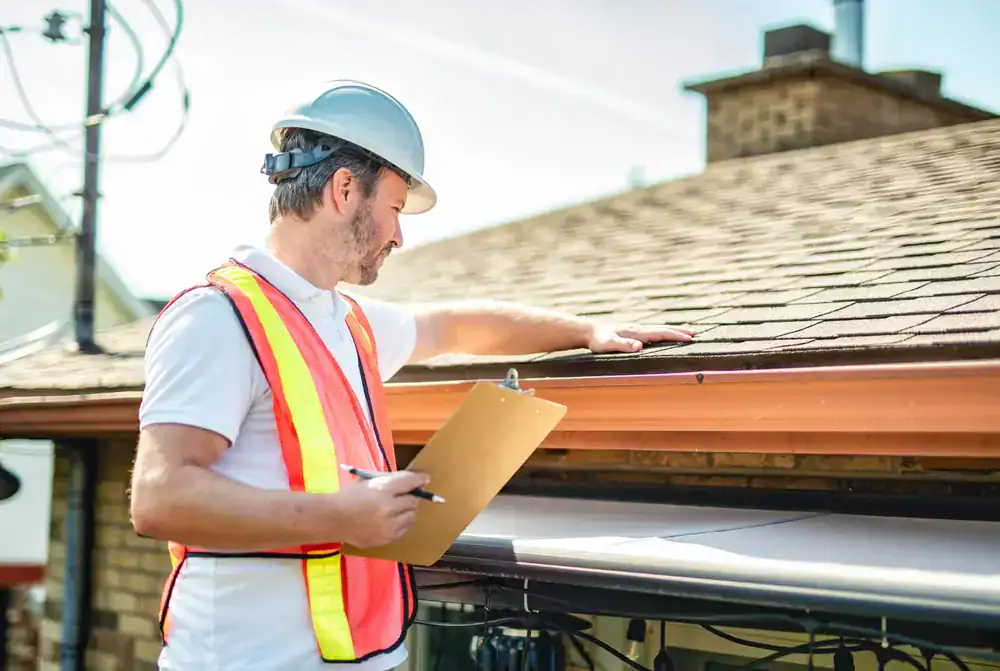
It starts with a free inspection. One of our credentialed contractors comes out, walks the roof, and gives you an honest read on what’s actually going on — no charge, no obligation, no pressure to book anything on the spot. For a lot of Saddle River homeowners, this is the first time they’ve had a professional assessment that wasn’t tied to a sales pitch.
From there, you get a written estimate with clear, transparent pricing. What you see is what you pay. If the scope changes for any reason, you’ll know about it before work continues — not after. Once you’re ready to move forward, we pull the permit through the Borough of Saddle River’s Building and Construction Department, as required under New Jersey’s Uniform Construction Code. Skipping that step isn’t just illegal — it’s a real liability on a property that could sell for $2M or more. We handle this without being asked.
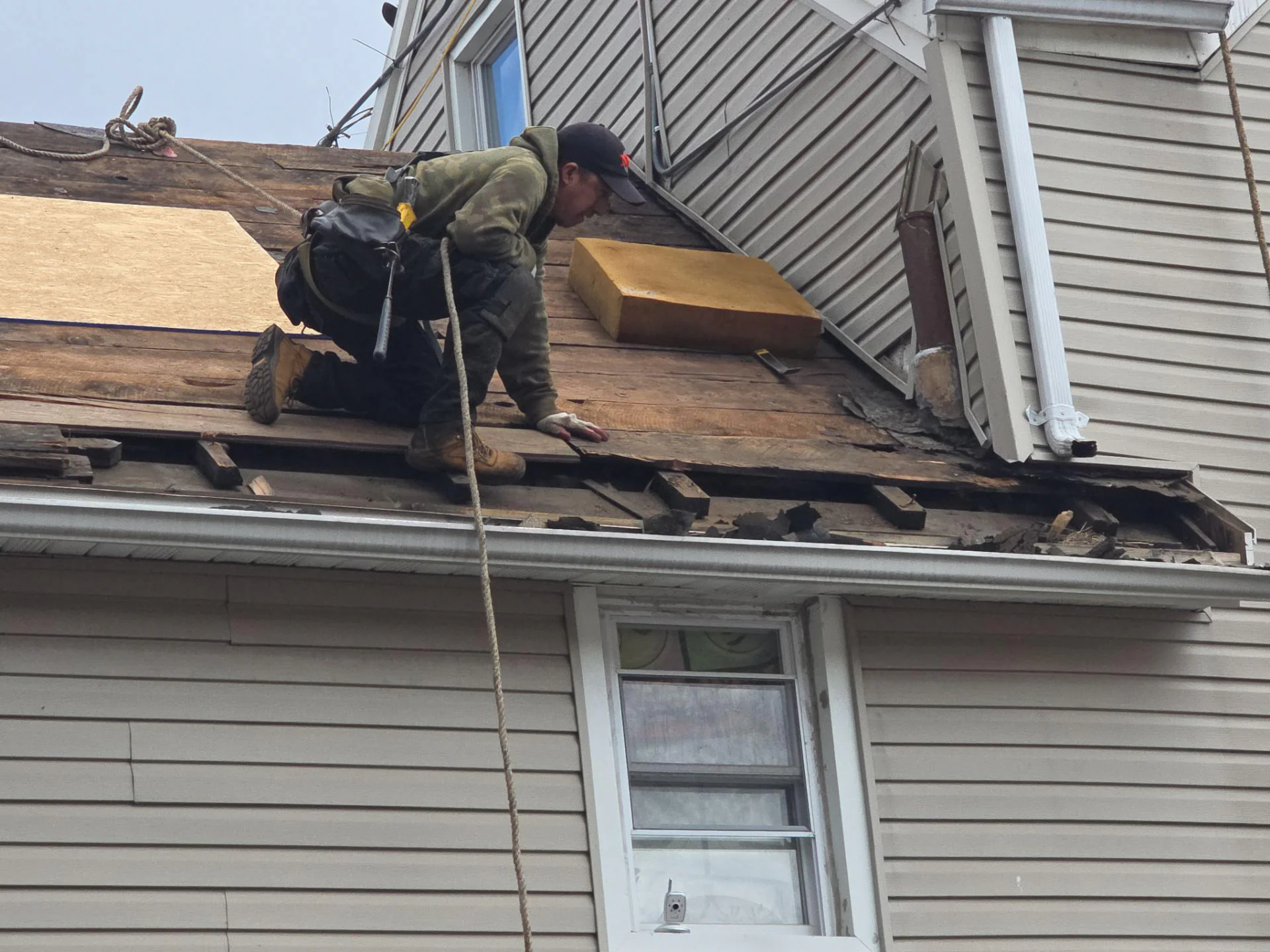
Installation is scheduled around the season and your timeline. Spring and fall tend to book quickly in this area, especially after a rough winter or a storm system that moves through Bergen County and leaves a trail of damaged flashing and lifted shingles. If you’re thinking about a replacement, getting on the schedule early matters. After the job is done, the site gets cleaned up thoroughly — on a 2-acre estate lot with manicured landscaping, that’s not an afterthought.
Ready to get started?
Metal Roofing Contractors in Saddle River, NJ
Our core service is roofing — full replacements, targeted repairs, storm damage assessments, and material consultations for homeowners who want to understand their options before committing. We also offer gutters and siding as supplementary services, which matters when you want one contractor accountable for the entire exterior rather than coordinating multiple trades and hoping nobody points fingers at each other when a problem shows up.
For homeowners in Saddle River considering a full replacement, the material conversation is worth having carefully. Architectural shingles remain the most common choice, but metal roofing has become a serious option for estate-scale homes — and for good reason. A properly installed metal roof lasts 40 to 70 years, performs better under the heavy snow loads and freeze-thaw cycles that northern Bergen County winters deliver, and offers real energy efficiency advantages for homes with large square footage and correspondingly large heating and cooling bills. As metal roofing contractors serving Saddle River, we can walk you through this conversation honestly, based on your specific home and long-term plans.
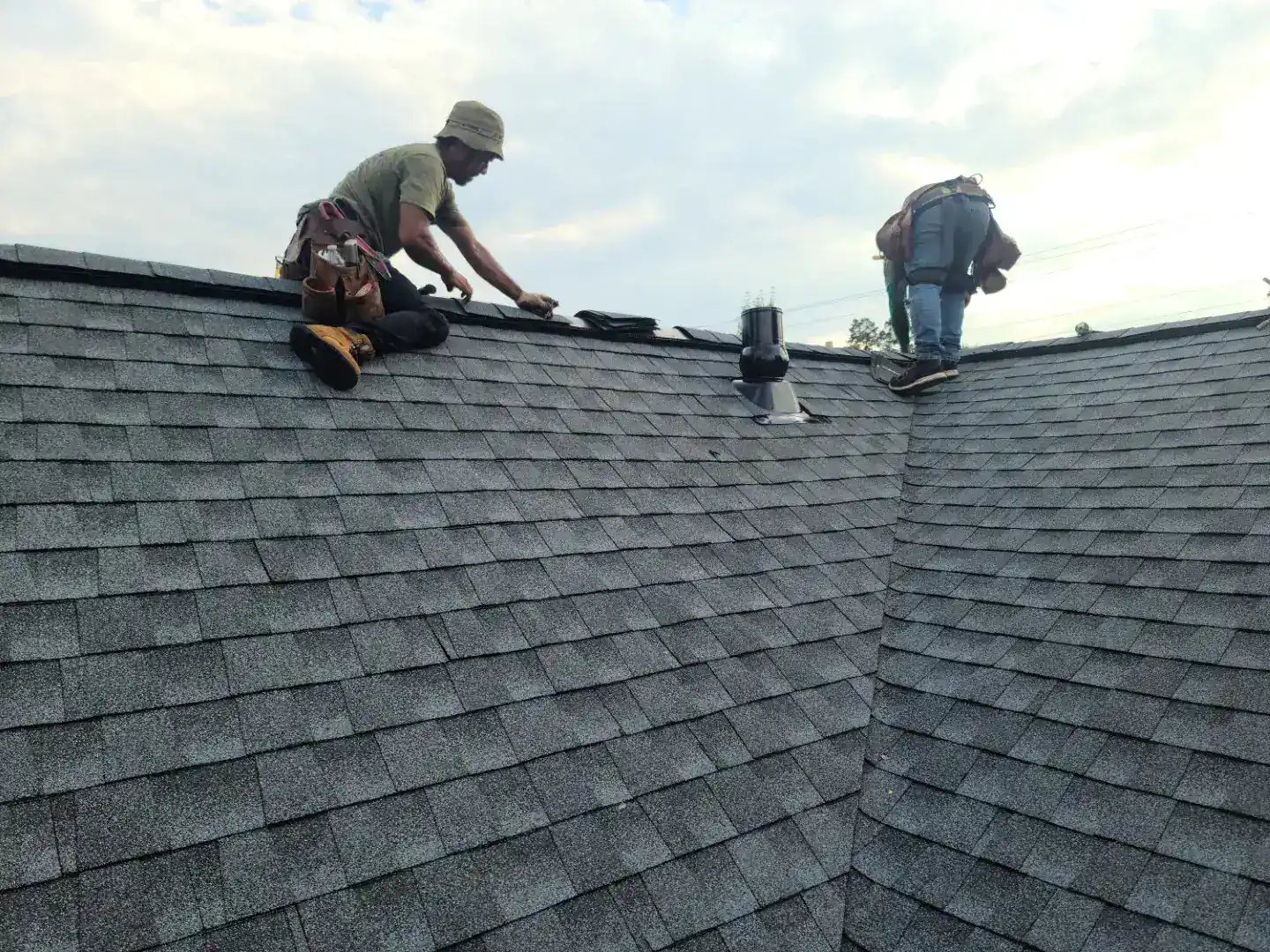
For homes that don’t need a full replacement yet, small roof repair work — damaged flashing, deteriorated valleys, wind-lifted shingles, leak points at dormers or skylights — is handled with the same standards as a full job. A small repair done correctly prevents a much larger and more expensive problem down the road, especially on a home with a complex roof system and significant interior finishes worth protecting.
Do I need a permit for a roof replacement in Saddle River, NJ?
Yes — and this applies to virtually every roofing replacement project in Saddle River, not just large ones. Under New Jersey’s Uniform Construction Code, a building permit is required for roof replacement work, and that requirement applies borough-wide. Permits are issued through the Borough of Saddle River’s Building and Construction Department, and any contractor who tells you a permit isn’t necessary for your job is either misinformed or cutting corners you don’t want cut.
The reason this matters beyond legal compliance is practical: unpermitted roofing work can complicate a property sale. Buyers’ attorneys and lenders routinely check permit history, and an unpermitted roof on a home listed at $2M or more is a material defect that can derail a transaction or force a price reduction. We pull the permit as a standard part of the job — it’s not an extra step, it’s part of doing the work correctly.
How much does a roof replacement typically cost for a large home in Saddle River?
Nationally, roof replacements average somewhere between $15,000 and $27,000, but that range is built around typical suburban homes — not the estate-scale properties that define Saddle River. When you’re working with a home that averages over 6,500 square feet, with steep pitches, multiple chimneys, dormers, complex flashing systems, and potentially premium materials like architectural shingles or metal roofing, the project scope is fundamentally different.
For a home like that in Bergen County, a realistic range for a full replacement starts around $25,000 and can exceed $50,000 depending on the material system, roof complexity, and current condition of the underlying structure. The best way to get an accurate number for your specific home is through a free on-site inspection and written estimate — which we provide at no charge. A quote given over the phone without seeing the roof isn’t worth much on a property this size.
What are the signs that my Saddle River home actually needs a new roof?
The most obvious signs are interior ones — water stains on ceilings, damp spots in the attic after rain, or visible daylight coming through the roof deck. But by the time those show up, the damage has usually already progressed further than most homeowners realize. The more useful question is whether your roof is approaching the end of its expected lifespan, because in Saddle River, a lot of the housing stock was built in the late 1970s and 1980s, which means many of those roofs have already been replaced once and may be due again.
On the exterior, look for curling, cracking, or missing shingles — especially after a significant storm. Granule loss showing up in your gutters is another indicator that the shingles are breaking down. Moss or algae growth, particularly on shaded north-facing sections under Saddle River’s heavy tree canopy, can accelerate deterioration and signal that moisture is sitting longer than it should. A free professional inspection gives you a clear, documented answer without any guesswork.
How do nor'easters and Bergen County winters affect my roof over time?
Bergen County gets hit with roughly 25 to 30 severe weather days a year, and for Saddle River specifically, the combination of heavy snowfall, freeze-thaw cycles, and high-wind storms creates a consistent pattern of roofing stress that compounds over time. Ice dams are one of the most common winter problems — they form when heat escapes through the roof deck, melts snow at the surface, and then refreezes at the cold eaves, forcing water back up under the shingles where it can cause significant interior damage.
Freeze-thaw cycling also works on flashing and sealants around chimneys, skylights, and dormers — areas that are already vulnerable on complex estate roofs. What looks like a minor gap in flashing in October can become a serious leak point by February. The mature tree canopy that makes Saddle River so visually distinctive adds another layer of risk: branches that come down during a nor’easter, debris that clogs gutters and causes water to back up, and shaded sections that hold moisture far longer than open-exposure surfaces. Annual inspections after winter — or after any significant storm — are the most cost-effective way to catch these issues before they become expensive.
What's the difference between roof repair and a full replacement — how do I know which one I need?
The short answer is that it depends on the age of the roof, the extent of the damage, and whether the underlying structure is still sound. A targeted repair makes sense when the damage is isolated — a section of flashing that’s failed, a few shingles that lifted in a storm, a single leak point at a dormer or chimney. If the rest of the roof is in good condition and has meaningful life left in it, a repair is the right call and we’ll tell you that honestly.
A full replacement becomes the better option when the roof is approaching or past its expected lifespan, when damage is widespread across multiple sections, or when repeated repairs are adding up to a cost that’s starting to approach replacement territory. On older Saddle River homes — many of which are now 40 to 50 years into their lifecycle — the honest answer is often that a repair buys a year or two at best. The free inspection process is specifically designed to give you a clear, documented picture of where your roof actually stands so you can make that call with real information, not guesswork.
How do I find a roofing contractor in Saddle River, NJ that I can actually trust?
Start with the basics that are easy to verify: NJ Home Improvement Contractor registration, proof of liability insurance, and workers’ compensation coverage. These aren’t optional in New Jersey — they’re legal requirements — and on a property worth $2M or more, hiring an uninsured contractor is a liability exposure that no homeowner in Saddle River should take on. Ask for the HIC registration number and confirm it through the NJ Division of Consumer Affairs if you want to be thorough.
Beyond the legal minimums, look for manufacturer certifications. Certified contractors have met specific training and quality standards set by the manufacturer, and they’re the only ones authorized to offer extended manufacturer warranties — the kind that protect your investment for decades, not just a few years. Longevity matters too. A company that has been operating continuously in New Jersey for 17 or more years has a track record you can actually evaluate, and more importantly, they’ll still be reachable when you need to invoke a warranty or address a concern three years after the job is done. In a community as close-knit as Saddle River, reputation built through genuine customer referrals over many years is one of the most reliable signals you have.