
Siding Installation in Pulis Mills, NJ
Your Home Has Outlasted Its Siding — Bergen County Winters Proved It
Hear from Our Customers
Residential Siding Contractors in Pulis Mills, NJ
New siding is not a cosmetic upgrade for most Pulis Mills homeowners — it is overdue maintenance on a home that has been quietly losing the fight against moisture, temperature swings, and time. When the exterior envelope is sealed correctly, you stop the slow creep of water damage behind your walls before it reaches the framing, the insulation, and the spaces you cannot see until the repair bill is significant.
Pulis Mills sits at the northern edge of Bergen County, backed by the Ramapo Mountains, which means your home faces a more demanding climate than most of its neighbors to the south. Humid continental conditions, hard winters, and the persistent moisture that comes with wooded, shaded lots accelerate the deterioration of any siding product — especially vinyl that is already 30 to 50 years old. Cracking, warping, and fastener failure are not cosmetic problems. They are entry points for water.
When the siding is right, your home holds its value in a market where the median home price in Mahwah Township sits near $700,000. Buyers notice the exterior first. Inspectors notice it second. And the cost of doing nothing compounds quietly until neither outcome is affordable.
Local Siding Company Serving Pulis Mills, NJ
We have been working on homes across Bergen County for close to ten years, which means we have seen what northern NJ winters do to siding on wooded lots near Pulis Mills and the Ramapo Valley — and we install with those conditions in mind, not against a generic checklist designed for a different climate.
We are fully licensed under New Jersey’s Home Improvement Contractor registration and carry manufacturer certifications that most local crews do not hold. That matters for your warranty. It also matters because Mahwah Township’s building department enforces the NJ Uniform Construction Code, and a contractor who does not know the local permit process puts that risk on you, not themselves.
This is a family-run operation. The people responsible for your project are the same people you talk to when you call. There is no call center, no handoff, and no confusion about who is accountable when the job is done.

Siding Installation Process in Pulis Mills, NJ
It starts with a free inspection and estimate. A trained eye walks your exterior, assesses what is actually happening behind the surface, and gives you a written number — not a ballpark, not a range that doubles by the time the crew shows up. If there is moisture damage or substrate issues hiding under your current siding, that gets surfaced before the project starts, not after.
From there, we handle the Mahwah Township permit process. The township requires permits for exterior renovation work that affects the building envelope, and skipping that step creates real problems at resale. You do not have to navigate the Construction Office — that is handled for you.
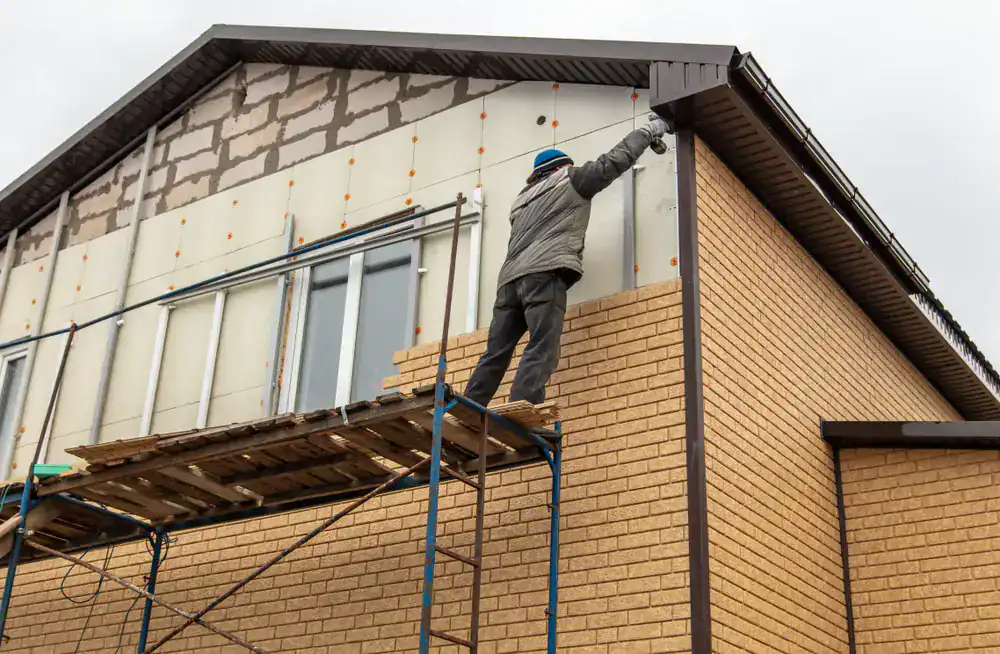
Installation follows manufacturer specifications exactly, which is the only way to activate the full product warranty on materials like James Hardie fiber cement or vinyl systems from CertainTeed. On wooded Pulis Mills properties, that also means proper moisture barriers, flashing details that account for shaded drainage patterns, and material choices suited to your specific lot conditions. When the crew leaves, the site is clean, the work is inspected, and you have documentation of everything that was done.

Ready to get started?
Vinyl Siding Contractors in Pulis Mills, NJ
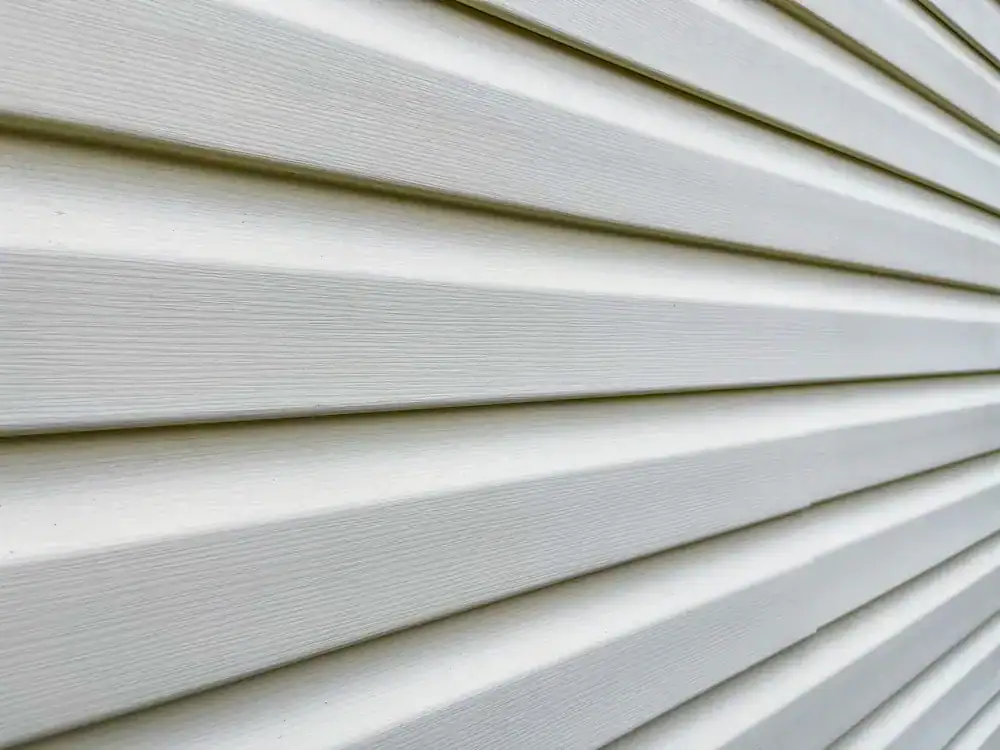
Not every siding product performs the same way on a wooded lot in northern Bergen County. Vinyl is the most common choice — it is cost-effective, low maintenance, and available in a wide range of profiles and colors. But vinyl installed on a shaded, north-facing surface in a climate with hard freeze-thaw cycling needs to be the right grade and installed with the right fastener spacing. Cheap vinyl on a Pulis Mills home does not last. Properly specified vinyl does.
Fiber cement — James Hardie being the most recognized brand — is the better fit for homeowners who want a longer performance window and greater resistance to moisture and impact. On lots where mature tree canopy keeps surfaces damp and falling debris is a real factor, fiber cement holds up in ways that vinyl cannot match over a 20- to 30-year horizon. It also carries a stronger warranty when installed by a certified contractor, which we are.
Both options are available here, and the recommendation you get will be based on your specific home, your lot conditions, and what actually makes sense for a house in Pulis Mills — not on which product has the higher margin. The estimate is free, the inspection is free, and the advice is straight.

Do I need a permit for siding installation in Mahwah Township, NJ?
Yes, in most cases. Mahwah Township enforces the New Jersey Uniform Construction Code through its Construction Office, and a full siding replacement — particularly one that involves removing existing cladding and working on the building envelope — typically requires a construction permit before work begins. The township’s own guidance explicitly warns homeowners not to assume a project does not need a permit, even if a neighbor or contractor says otherwise. Unpermitted work can result in code violations, penalties, and complications when you sell your home.
The good news is that a licensed, experienced contractor handles this for you. We know the Mahwah Township permit process, submit the application, coordinate with the building department, and make sure the work is properly inspected and documented. You do not have to figure out the paperwork — that is part of what you are hiring for.
How long does vinyl siding actually last in Bergen County's climate?
Vinyl siding is typically rated for 20 to 40 years, but that range assumes moderate conditions. Bergen County — and northern Bergen County in particular — is not a moderate climate. The humid continental conditions around the Ramapo Mountains mean your siding goes through hard freeze-thaw cycling every winter, significant temperature swings between seasons, and persistent moisture exposure on shaded lots. Those factors push vinyl toward the lower end of its lifespan, especially if it was installed with lower-grade product or improper fastener spacing.
If your Pulis Mills home was built in the 1970s, 1980s, or early 1990s and still has original siding, it has almost certainly exceeded its functional life — even if it does not look catastrophically damaged from the street. Fading, hairline cracking, warping at the seams, and panels that flex when you press them are all signs that the material has degraded to the point where it is no longer doing its job as a weather barrier. A free inspection will tell you exactly where things stand.
What is the best siding material for a wooded lot in Pulis Mills, NJ?
For wooded lots in Pulis Mills, fiber cement — James Hardie being the most widely used product — is generally the stronger long-term choice. Here is why: wooded lots create conditions that accelerate siding deterioration in specific ways. Shade from mature tree canopy keeps siding surfaces damp longer after rain, which promotes mold and algae growth on north-facing panels. Falling branches and debris create impact stress. Leaf accumulation at the base of the siding creates persistent moisture traps. Fiber cement handles all of these conditions better than standard vinyl.
That said, vinyl is not the wrong answer on every wooded lot. Higher-grade vinyl products with appropriate thickness and proper installation can perform well, particularly on south- and west-facing exposures that get enough sun to dry out between weather events. The honest answer is that the right material depends on your specific home’s orientation, lot conditions, and budget — and that is exactly what a free inspection and estimate is designed to figure out before you commit to anything.
How much does siding installation cost for a home in Mahwah, NJ?
For a typical single-family home in the Mahwah area, a full siding replacement generally falls somewhere between $10,000 and $25,000 depending on the size of the home, the material selected, and what is found during removal. Vinyl is on the lower end of that range. Fiber cement runs higher, but it also carries a longer performance window and a stronger warranty — so the cost-per-year calculation often favors it on homes where the owners plan to stay long-term or are preparing for resale in a market where Mahwah homes carry a median value near $700,000.
What moves the number most is what is found behind the existing siding. On homes built in the 1970s and 1980s, it is not uncommon to find moisture damage, deteriorated housewrap, or substrate issues that need to be addressed before new cladding goes on. A contractor who is upfront about this before the project starts — and gives you a written estimate that accounts for what was found — is the one you want. We provide written estimates and discuss any unexpected findings before additional work proceeds, so the number you agree to is the number you pay.
Can new siding be installed over my existing siding, or does it have to be removed?
It depends, and the honest answer is that installing over existing siding is almost never the better option — even though it is sometimes sold as one. Installing new siding over old adds weight to your wall assembly, can trap existing moisture damage and allow it to continue spreading unseen, and in many cases does not meet the requirements for a full manufacturer warranty. Mahwah Township’s building department may also have specific requirements that affect whether an over-installation is permissible under the NJ Uniform Construction Code.
The main reason contractors offer over-installation is that it is faster and cheaper on their end — it skips the labor of tear-off and disposal. But for a Pulis Mills homeowner with a home built in the 1970s or 1980s, that shortcut often means paying twice: once for the installation, and again when the hidden moisture damage that never got addressed causes structural problems down the line. A full tear-off lets you see exactly what you are working with before anything new goes on. That visibility is worth the extra step.
How do I know if my siding needs full replacement or just repairs in Pulis Mills?
The short answer is that isolated damage — a few cracked panels, one section with impact damage from a falling branch — is usually repairable. Widespread issues are not. If you are seeing fading across the entire exterior, warping or buckling in multiple sections, panels that have pulled away from the wall, or any evidence of moisture getting behind the surface, those are signs that the material has degraded past the point where targeted repairs make financial sense. You end up chasing a problem that keeps moving.
For homes in Pulis Mills, the tell is often what you find on the north-facing and shaded sides of the house. Those surfaces stay damp the longest, see the least sun, and degrade fastest. If the north side of your home looks significantly worse than the south side, it is usually a sign that the siding as a whole is at end-of-life — not that you have a localized problem. A free professional inspection takes the guesswork out of it. You get an honest assessment of what is actually happening, what it would cost to repair versus replace, and what the smarter investment looks like for your specific home.
Other Services we provide in Pulis Mills