
Gutter Installation in Pulis Mills, NJ
When the Trees Come Down, Your Gutters Pay for It
Hear from Our Customers
Rain Gutter Installation in Bergen County
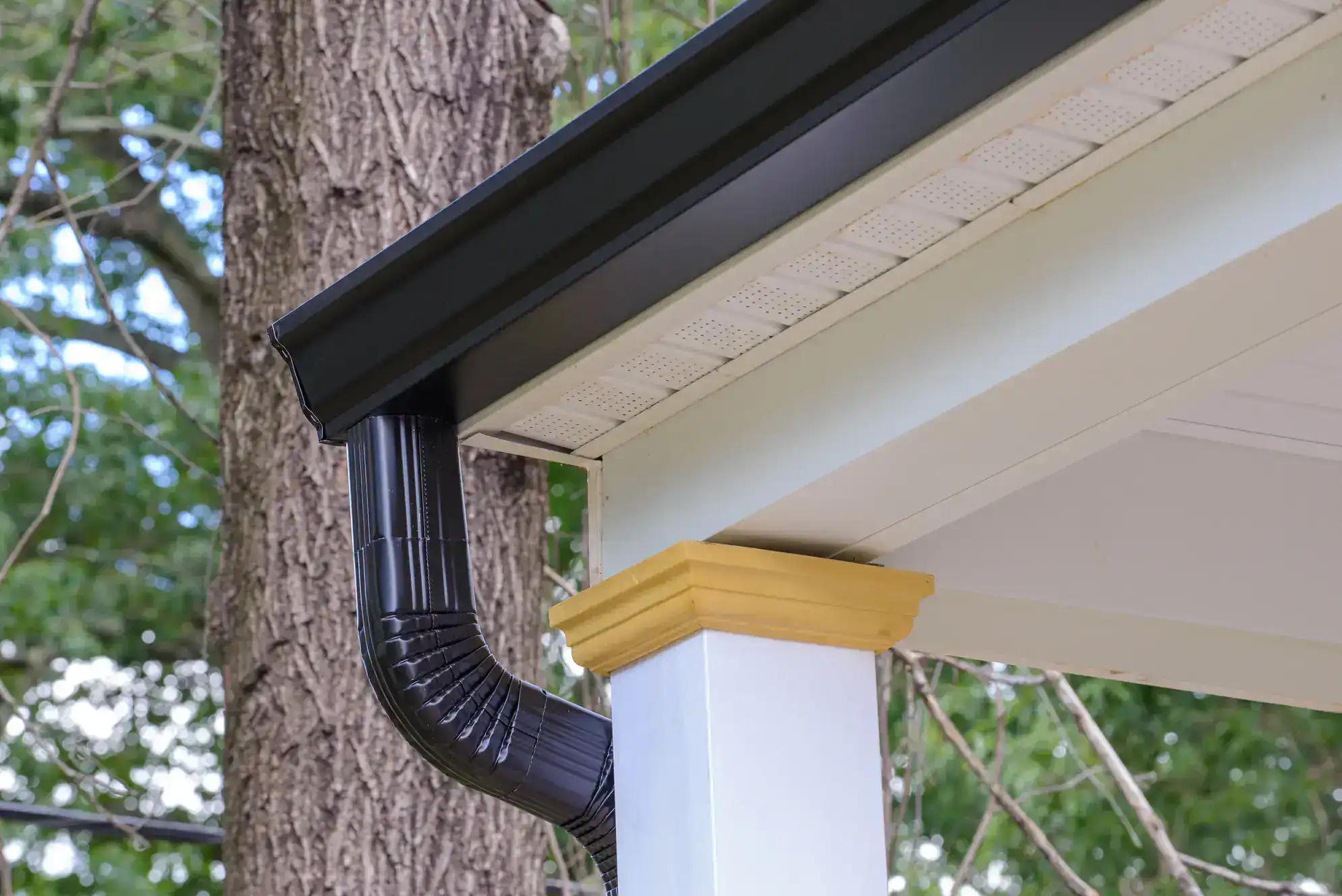
When your gutters are doing their job, you stop thinking about them — and that’s exactly the point. No water staining down the siding, no pooling at the foundation, no soggy soil eating away at your landscaping. For a home in the $1.2 million range, that kind of protection isn’t optional. It’s the baseline.
The wooded character of Pulis Mills creates a specific problem most gutter companies gloss over. Mature oaks and maples drop a serious leaf load every fall, and a blocked gutter doesn’t just overflow — it gets heavy. That weight pulls mounting hardware away from the fascia, bends the gutter line, and turns a drainage system into a liability. Properly sized, correctly sloped gutters that account for your actual roof footprint and your lot’s tree coverage make a real difference here.
There’s also the terrain factor. Homes in Pulis Mills and the surrounding Franklin Lakes and Mahwah foothills sit on sloped lots where downspout placement matters more than it does on flat ground. If the water exits in the wrong spot, it follows the grade straight back toward your foundation. Getting this right during installation — not as an afterthought — is what separates a gutter job that holds up from one that causes the next problem.
Gutter Contractors Serving Pulis Mills, NJ
We’ve been doing exterior work across Bergen County for over ten years. Not as a franchise with rotating crews, but as a family-run operation that grew because homeowners in Pulis Mills and the surrounding area told their neighbors. That’s still how most of the work comes in.
We hold an active NJ Division of Consumer Affairs Home Improvement Contractor license — number 13VH10605800, verifiable on the state’s website — along with manufacturer certifications that keep your installation eligible for real warranty coverage. When you’re protecting a home in Pulis Mills, that kind of documentation isn’t a formality. It’s what separates a contractor you can hold accountable from one you can’t.
Every job starts with a free inspection and a written estimate. No vague ranges, no surprises after the work is done. If something changes mid-project, you hear about it before anyone picks up a tool — not after.
Home Gutter Installation Process in Pulis Mills
It starts with a free on-site inspection. Before anything is quoted or scheduled, a technician walks the full perimeter of your home — checking the existing gutter condition, the fascia boards behind them, the roof’s drainage pattern, and how your lot’s grade affects where water needs to go. On older homes in Pulis Mills, many of which were built in the 1960s and 1970s, this step often surfaces issues like rotted fascia or spike-and-ferrule mounting systems that have worked loose over decades. Catching that before installation is the difference between gutters that last and gutters that fail in two seasons.
Once the inspection is complete, you get a written estimate with a clear scope of work. If your home needs fascia repair or a larger downspout to handle the drainage load from a steeply pitched roofline — common on the larger colonials and Tudors in this area — that gets documented upfront, not added to the invoice later.
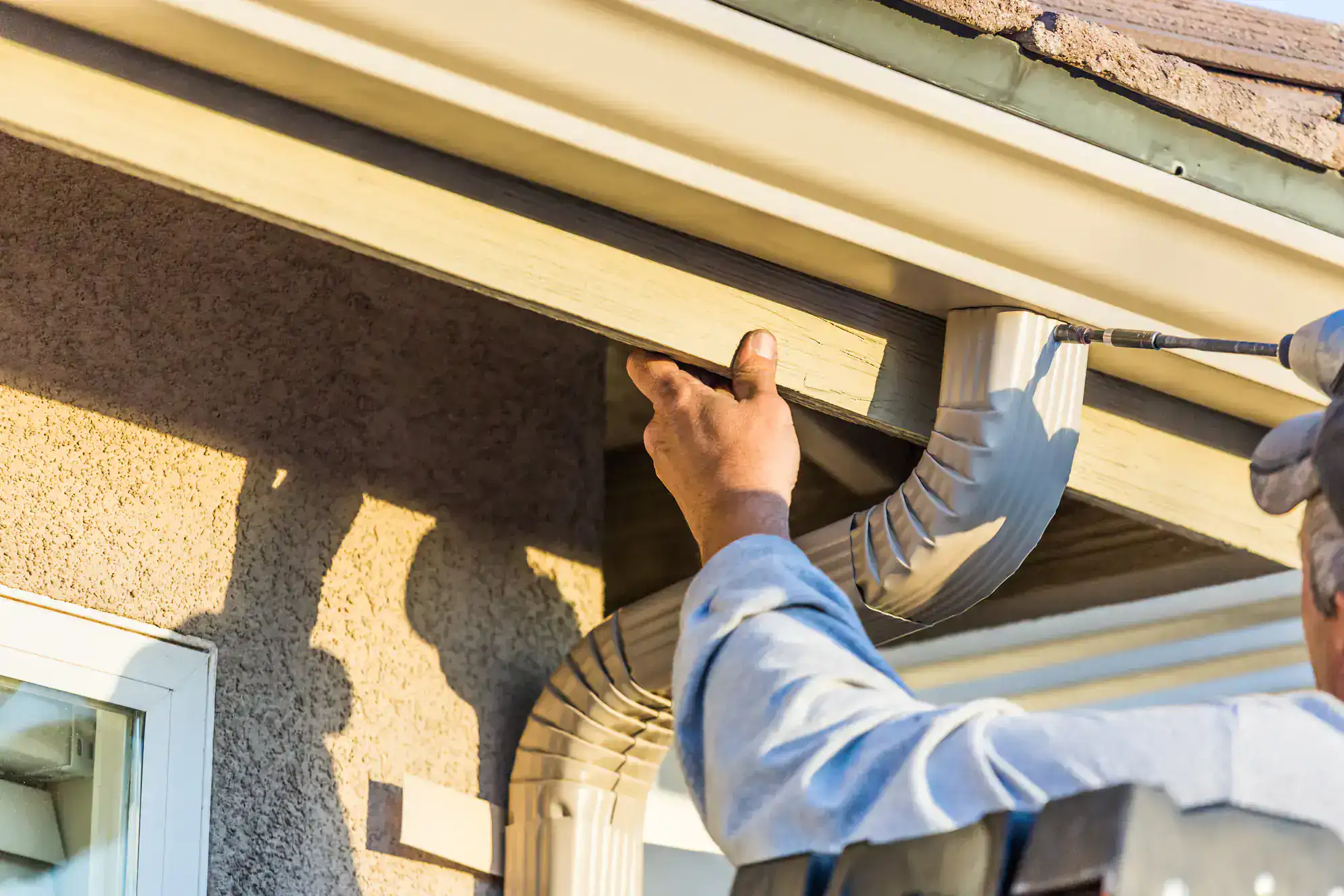
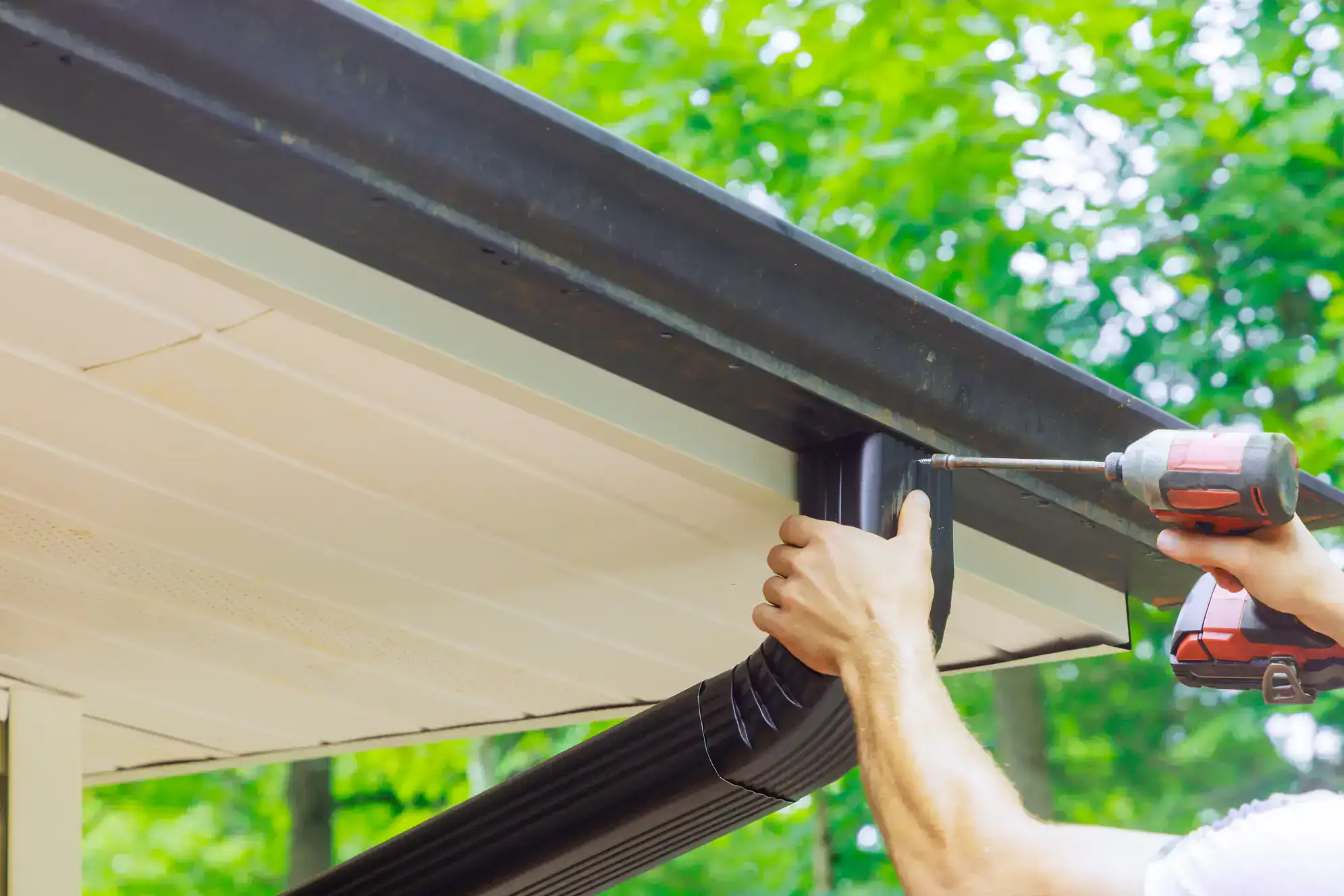
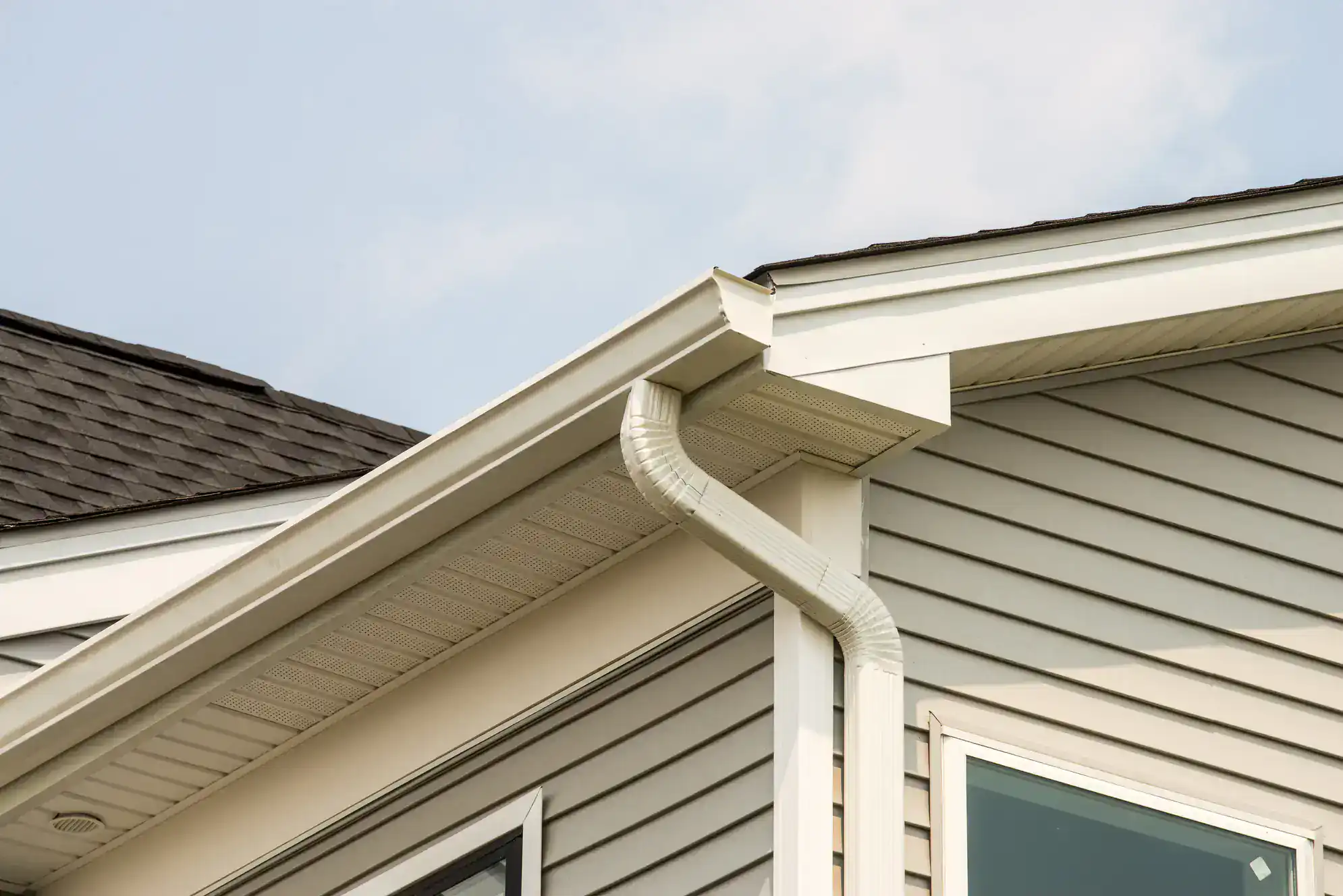
On installation day, seamless aluminum gutters are custom-fabricated on-site to fit your home’s exact roofline measurements. No pre-cut sections, no joints that become leak points. Every run is pitched for proper water flow, every downspout is positioned with your lot’s grade in mind. Franklin Lakes Borough’s building department may be involved depending on scope — if a permit is required, we handle that process as part of the job, not hand it back to you to figure out.
Ready to get started?
Roof Gutter Installation Company in Pulis Mills
The homes in and around Pulis Mills aren’t small, and the gutter systems that protect them shouldn’t be generic. Large multi-story colonials and Tudors with steep pitches and significant roof surface area push a lot of water into the gutter line during a heavy storm. With roughly 49 inches of annual rainfall in this part of Bergen County — plus 28 inches of snow and the freeze-thaw cycles that come with a full northeastern winter — undersized or improperly sloped gutters aren’t just ineffective. They’re actively damaging.
Every installation we complete includes seamless aluminum gutters custom-cut on-site, proper slope calculation for your specific roofline, downspout sizing based on your actual drainage load, and downspout placement that accounts for your lot’s terrain. If your fascia boards are showing rot — which is common on homes of this vintage — we address that before the new gutters go up, because mounting new hardware to compromised wood is a job that fails from day one.
If your gutters were damaged by a nor’easter, ice load, or a fallen branch, your homeowner’s insurance may cover the replacement. We work directly with insurance adjusters to document the damage and submit the claim — so you’re not left navigating that process alone while also managing a repair. For homeowners throughout Pulis Mills and the Franklin Lakes area, that kind of support during a stressful situation is worth a lot.
How do I know if my Pulis Mills home needs gutter replacement or just repairs?
The honest answer is that it depends on what’s actually failing — and the only way to know for sure is to have someone look at the full system, not just the visible damage. Gutters that are sagging, pulling away from the fascia, or overflowing consistently are usually showing signs of a mounting system failure rather than a surface problem. On homes in Pulis Mills built in the 1960s and 1970s, the original spike-and-ferrule hardware was the standard — and after 50-plus years, those spikes work loose from the fascia and the gutter loses its slope and hold. That’s a structural issue, and patching it doesn’t fix the root cause.
If the gutters themselves are still in reasonable shape but the mounting is failing, there are cases where re-hanging with updated hardware makes sense. But if the aluminum is cracked, heavily corroded, or pulling apart at the seams — and especially if the fascia behind them is soft or rotted — replacement is almost always the more cost-effective path. A free inspection will give you a straight answer on which situation you’re in, without any pressure to go one direction or the other.
What size gutters does a large home in Pulis Mills actually need?
Most standard residential installations use 5-inch gutters, but that’s not always the right call for the larger homes common in Pulis Mills. When you have a steep roof pitch, a large surface area, or a roofline that funnels water into a concentrated run — all of which are common on the multi-story colonials and Tudors in this part of Bergen County — a 5-inch gutter can get overwhelmed during a heavy storm. Upgrading to 6-inch gutters increases water-carrying capacity significantly and reduces overflow risk during the kind of downpours this area sees in spring and summer.
Downspout sizing matters just as much as gutter width. A 2×3 downspout handles a certain volume; a 3×4 handles considerably more. The right combination depends on your actual roof square footage and pitch, not a one-size-fits-all formula. During the inspection, that calculation gets done for your specific home — so you’re not paying for capacity you don’t need, and you’re not installing a system that can’t keep up with what Bergen County weather delivers.
Does homeowner's insurance cover gutter damage from storms in New Jersey?
It can, and it’s worth checking before you assume you’re paying out of pocket. Homeowner’s insurance in New Jersey typically covers sudden and accidental damage — which includes gutters torn off by wind, crushed by ice loads, or damaged by a falling branch. Bergen County takes a real hit from nor’easters, and the Pulis Mills area specifically deals with significant ice and wind exposure given its position in the Ramapo foothills. If your gutters were damaged in a storm, there’s a reasonable chance your policy covers at least part of the replacement.
The challenge most homeowners run into is documentation. Insurance adjusters want specific evidence — photos, measurements, and a written assessment from a contractor that ties the damage to the storm event. We handle that process directly, working with your adjuster to document the damage accurately and submit the claim properly. A lot of homeowners in this area leave insurance money on the table simply because they don’t know how to navigate the process. You don’t have to figure that out on your own.
Do I need a permit to replace gutters in Franklin Lakes, NJ?
For a straight replacement of existing gutters in kind — same size, same location, no structural changes — Franklin Lakes Borough typically treats this as ordinary home maintenance, and a permit is usually not required. However, if the scope involves changes to the drainage system, significant fascia repair, or modifications to how water is directed away from the structure, the Franklin Lakes Code Enforcement office may require a permit under the New Jersey Uniform Construction Code. The permit fee structure in Franklin Lakes is based on project cost, with a minimum fee of $95 for renovation and alteration work.
The safest approach is to confirm with the borough’s building department before work begins — and as a licensed NJ Home Improvement Contractor (license #13VH10605800), we can help navigate that conversation if needed. Working with a licensed contractor also protects you on the homeowner’s insurance side. If an unlicensed contractor does work on your home and something goes wrong, your policy may not cover it. It’s a detail that matters more than most people realize until it becomes a problem.
How often should gutters be cleaned on a wooded property in Pulis Mills?
For most homes in Pulis Mills, twice a year is the minimum — once in late spring after seed pods and early debris have settled, and once in late fall after the leaves have dropped. But if your property has heavy canopy cover from mature oaks or maples directly over the roofline, you may need a third cleaning in early winter to clear anything that came down late in the season. Blocked gutters in this area don’t just overflow — the weight of wet, compacted leaves can pull mounting hardware away from the fascia and accelerate the kind of structural failure that turns a cleaning issue into a replacement project.
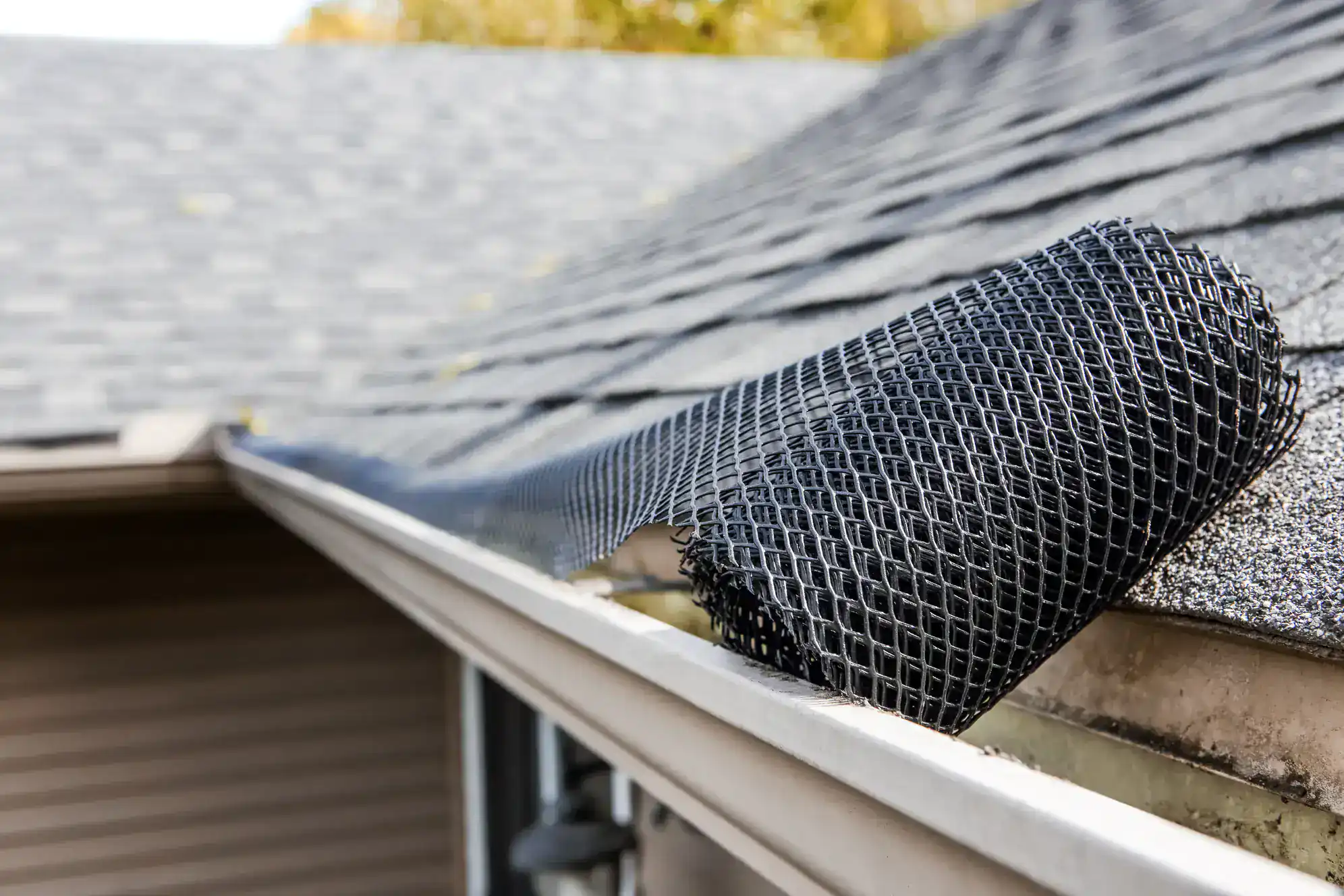
Gutter guards are worth considering if cleaning is a recurring headache, but they’re not a universal fix. Some guard systems handle fine debris poorly and can actually trap material underneath them. The right choice depends on the specific type of tree coverage on your lot and the gutter profile you have. If you’re replacing gutters anyway, it’s a good time to have that conversation and get a real recommendation based on your property — not a generic upsell.
What's the typical cost of gutter installation for a home in Pulis Mills, NJ?
For most homes in Pulis Mills, full seamless gutter installation runs somewhere between $2,800 and $5,200 — though larger homes with complex rooflines or significant linear footage can run higher. The per-linear-foot cost for professionally installed seamless aluminum gutters typically falls in the $8 to $28 range depending on profile size, downspout count, and any additional work like fascia repair that needs to happen before installation. Given the size of the homes in this area and the multi-story rooflines that are common here, it’s not unusual for a full replacement to land at the higher end of that range.
What affects the final number most is what’s found during the inspection. If the fascia boards are solid and the existing downspout locations work for your lot’s drainage, the job stays straightforward. If there’s rot behind the gutters or the downspouts need to be repositioned to account for your property’s slope, those are real costs that need to be factored in honestly. That’s exactly why the inspection and written estimate happen before any work is scheduled — so you know the full picture going in, not after the crew has already started.
Other Services we provide in Pulis Mills