
Siding Installation in Overlook, NJ
Warren County Winters Don't Wait — Neither Should Your Siding
Hear from Our Customers
Residential Siding Contractors in Overlook, NJ
New siding does more than make your home look better. It closes off the gaps that let moisture work its way into your wall assembly — and in Overlook at Lopatcong, where townhomes and condos sit close together and have been weathering Warren County winters for two decades or more, that moisture protection is the whole point. When water gets behind aging panels and freezes, it expands. It widens gaps, softens sheathing, and quietly causes damage you won’t see until it’s already expensive.
Beyond protection, there’s real comfort and energy performance on the table. Insulated vinyl siding, for example, reduces thermal bridging through your wall studs — which means less heat escaping through your exterior walls during the kind of cold stretches that hit the Delaware River valley every January and February. For homeowners in Overlook who are managing household budgets carefully, that’s not a small thing.
And if you’re thinking about selling, new siding is one of the highest-ROI exterior improvements you can make before listing. In a community where median home values sit around $293,000, updated siding can be the difference between a buyer who makes an offer and one who keeps scrolling.
Local Siding Company Serving Overlook, NJ
We’ve been handling exterior renovations across New Jersey for close to ten years. That’s not a number we throw around lightly — it means we’ve worked through the kind of winters Warren County delivers, built a reputation that holds up to neighbor-to-neighbor scrutiny in communities like Overlook, and earned reviews from real homeowners who didn’t have to say anything but chose to.
We’re a family-run operation, which means the people responsible for your project are the same people who answer the phone. No franchises, no rotating project managers, no call centers. When you’re a homeowner in a close-knit community like Overlook at Lopatcong — where your neighbors notice everything — that kind of accountability isn’t optional. It’s the baseline.
We’re fully licensed as a New Jersey Home Improvement Contractor, carry general liability and workers’ compensation insurance, and hold manufacturer certifications that keep your warranty intact. You can verify all of it before we ever set foot on your property.

Vinyl Siding Contractors in Overlook, NJ
It starts with a free inspection. A lot of homeowners in Overlook aren’t sure whether they need a full replacement or whether targeted repairs will buy them another several years. We’ll tell you honestly — because the goal is to give you the right answer, not the most expensive one. If repair makes sense, we’ll say so.
If replacement is the right call, we’ll walk you through your material options based on your specific unit, your budget, and what actually performs in Warren County’s climate. From there, you get a written estimate with a clear number — no vague ranges, no verbal quotes that shift later. Lopatcong Township requires a permit for siding installation, including the minor property maintenance permit for vinyl and aluminum siding replacement. We handle that process for you, so you’re not navigating municipal paperwork on your own.
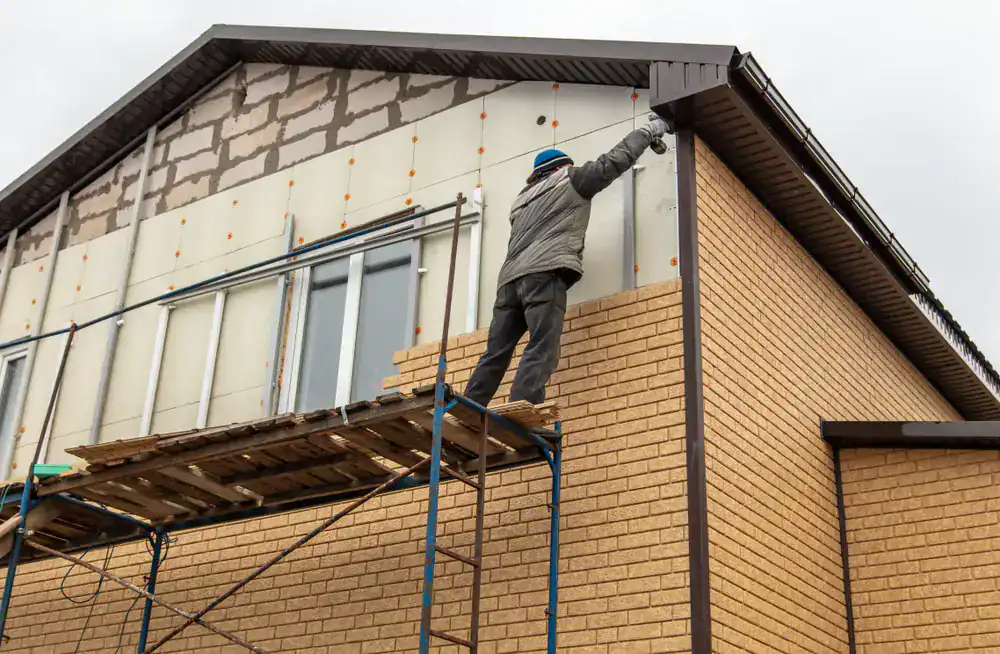
Once the project begins, we manage the full scope — tear-off, moisture barrier inspection, new installation, trim, and cleanup. You’ll know when our crew is coming, what’s happening each day, and what the finished job will look like before we leave. The final walkthrough is your chance to confirm everything is right. We don’t consider the job done until you do.

Ready to get started?
Siding Installation and Replacement in Overlook, NJ
Not every siding material is built for the conditions in northwestern New Jersey. Vinyl siding is the most common choice in communities like Overlook at Lopatcong — it’s low-maintenance, cost-effective, and available in a wide range of profiles and colors. But standard vinyl has to be installed with proper expansion gaps to handle the thermal movement that comes with Warren County’s temperature swings. Skip that step, and you’ll see buckling and cracking within a few winters.
Insulated vinyl siding adds a foam backer that improves energy performance and gives the panel more rigidity — a meaningful upgrade for older townhome and condo units where the wall assembly wasn’t built to modern energy standards. Fiber cement siding is another strong option for homeowners who want superior impact resistance and dimensional stability through freeze-thaw cycling. It holds paint longer, resists moisture better, and doesn’t become brittle in cold the way older vinyl does.
Because we handle roofing, gutters, and siding, we can also catch the issues that a siding-only contractor would miss — like roof flashing that’s directing water toward your siding seams, or gutters that are overflowing onto your lower panels. Fixing siding without addressing those root causes just means replacing it again sooner. We look at the full exterior picture so you’re not solving the same problem twice.

Do I need a permit for siding installation in Lopatcong Township, NJ?
Yes, and it’s simpler than most homeowners expect. Lopatcong Township classifies vinyl and aluminum siding replacement as minor property maintenance, which carries a $10 permit fee. It’s a real requirement — not optional — but the low fee and straightforward process mean it’s more of a formality than a burden.
That said, if your project involves full tear-off, substrate repair, new housewrap installation, or any changes to window or door openings, a standard building permit beyond the minor property maintenance category may be required. New Jersey’s Uniform Construction Code also specifies that replacing more than 25% of a building’s exterior wall area with non-polypropylene siding triggers the permit requirement. We handle all of this on your behalf — if someone tells you no permit is needed for a full siding replacement in Lopatcong Township, that’s a red flag worth paying attention to.
How do I know if my siding needs to be fully replaced or just repaired?
The honest answer is that it depends on how widespread the damage is and how old the siding is. Isolated cracking, a handful of warped panels, or minor fading in one section? Repair is often the right move and can extend the life of your siding by several years at a fraction of replacement cost. But if you’re seeing widespread buckling, significant fading across most of the exterior, panels that are brittle or breaking on contact, or any signs of moisture intrusion behind the siding — soft spots, mold, or interior wall staining — replacement is usually the more cost-effective long-term decision.
For homeowners in the Overlook at Lopatcong community, many units are now in the 20-to-30-year range, which is right at the threshold where this question becomes genuinely important. Warren County’s freeze-thaw cycles accelerate deterioration faster than many homeowners realize — siding that looks acceptable from the street can have real moisture damage behind it. A free inspection takes the guesswork out of that decision before you commit to anything.
What siding material holds up best in Warren County winters?
For most homeowners in the Overlook area, the choice comes down to vinyl, insulated vinyl, or fiber cement — and the right answer depends on your budget, your unit’s existing wall assembly, and how long you plan to stay in the home.
Standard vinyl is the most affordable and most common option. It performs well when installed correctly with proper expansion gaps for thermal movement, but older vinyl becomes brittle in sustained cold and can crack under impact. Insulated vinyl adds a foam backer that improves rigidity and reduces heat loss through the wall — a real benefit in a climate where January temperatures regularly drop into the single digits along the Delaware River valley. Fiber cement is the most durable option for freeze-thaw conditions: it doesn’t expand and contract with temperature changes the way vinyl does, holds paint significantly longer, and resists moisture intrusion better over time. It costs more upfront but tends to outperform vinyl in harsh climates over a 20-to-30-year horizon. We’ll walk you through the tradeoffs based on your specific home during the free inspection.
Can I replace the siding on my condo or townhome in Overlook at Lopatcong?
In most cases, yes — but there’s an important step that applies specifically to homeowners in a planned community like Overlook at Lopatcong. Depending on how your HOA is structured, exterior modifications may require association approval before work begins. Some HOAs in communities like this manage exterior maintenance collectively; others leave it to individual unit owners but require approval of materials, colors, and contractors before the project starts.
Before scheduling your installation, it’s worth reviewing your HOA documents or reaching out to your association board to confirm what’s required. We’re familiar with working in attached housing communities and can help you understand what documentation or approval you might need before we begin. Getting that step right upfront prevents delays and protects you from any association disputes after the work is done. We’ll also make sure the Lopatcong Township permit is pulled correctly for your unit type so everything is documented and above board from start to finish.
How long does siding installation take on a townhome or condo unit?
For a typical townhome or condo unit like those in the Overlook at Lopatcong community, a full siding replacement generally takes one to three days once the project is underway. The actual timeline depends on the size of the exterior, whether we’re doing a full tear-off or installing over existing siding, and whether any substrate repair is needed once the old panels come off.
Weather is also a real factor in Warren County. Vinyl siding installation in temperatures below 40°F requires extra care — the material becomes more brittle in cold and needs to be handled and cut differently to avoid cracking. We’ll be upfront with you about timing if a cold snap is in the forecast and whether it makes sense to wait a few days for better conditions rather than rush the job. Fall is typically the best window to complete siding work before winter sets in, and spring sees the highest demand — so if you’re planning ahead, booking early gives you the most scheduling flexibility.
Why does USA Home Remodeling offer free siding inspections in Overlook, NJ?
Because a lot of homeowners in Overlook genuinely don’t know what they’re dealing with until someone actually looks. Siding damage in this climate — especially moisture intrusion behind older panels — isn’t always visible from the street. You might have deterioration in the wall assembly that won’t show up as a visible problem until it’s already caused real structural damage. The free inspection exists so you can make an informed decision before spending a dollar, not after.
For homeowners in a community like Overlook at Lopatcong, where many units are aging into the range where siding replacement becomes relevant and where a $10,000-to-$20,000 project is a meaningful financial commitment, the last thing you need is to go in blind. The inspection gives you a clear picture of what’s actually going on with your exterior — and if the answer is that you don’t need anything done yet, we’ll tell you that too. That’s how we earn the kind of reviews that have kept this business growing for close to a decade.
Other Services we provide in Overlook