
Siding Installation in Leonia, NJ
Old Homes Deserve More Than a Quick Fix
Hear from Our Customers
Siding Contractors in Leonia, NJ
New siding isn’t just about looks. When it’s installed correctly on an older home, it changes how the whole exterior performs — tighter envelope, better moisture management, less maintenance every season. For a home worth $700,000 or more, that’s not a cosmetic upgrade. It’s a structural one.
Leonia’s pre-war housing stock is beautiful, but it’s also aging. Tudor cottages and Dutch Colonials on streets like Grand Avenue and Broad Avenue weren’t built with today’s materials, and a lot of the siding on those homes — whether it’s original wood or vinyl from the ’80s — is well past its useful life. Cracked panels, faded color, and failing seams aren’t just eyesores. They’re entry points for water, and water in a century-old wall cavity is a serious problem.
Bergen County’s winters don’t help. Temperatures swing above and below freezing constantly from December through March, and that expansion and contraction works on every joint, every seam, and every nail hole in your siding. Add wind-driven rain from nor’easters and the moisture that comes off the Hudson corridor, and you’ve got conditions that expose poor installation fast. When new siding goes on correctly — with proper flashing, the right underlayment, and materials built for this climate — you stop that cycle before it starts.
Local Siding Company Serving Leonia, NJ
We’ve been working on homes across Bergen County for close to ten years, with significant experience on the exact homes that define Leonia — pre-war Colonials, Cape Cods, and Tudor-style houses that require a different level of attention than new construction. We’ve seen what happens when siding is installed wrong on these older homes, and we know how to do it right.
What sets us apart from a siding-only shop is our full exterior perspective. Because we also handle roofing and gutters, we see the whole picture when we walk your property. Failing flashing at the roofline, a gutter that’s channeling water behind your panels, sheathing damage that needs to be addressed before anything new goes on — these are things a siding-only contractor might miss entirely.
Our work is backed by contractor licensing, manufacturer certifications, and full insurance. Estimates are free, written, and detailed — no verbal ballparks that shift after the job starts. In a tight-knit community like Leonia, where neighbors notice everything and word travels fast, that kind of accountability isn’t optional. It’s how we stay in business.

Residential Siding Contractors in Leonia, NJ
It starts with a free inspection. We walk your property, look at what’s actually happening with your current siding — not just the surface, but the flashing, the trim, the areas around windows and doors where water tends to find its way in. You get an honest read on whether you need a full replacement or targeted repair. If repair is the right answer, that’s what you’ll hear.
If replacement makes sense, you’ll receive a detailed written estimate before anything is scheduled. That estimate covers materials, labor, and timeline — and it doesn’t change after the work starts unless something genuinely unexpected turns up, in which case it gets discussed with you before any additional work proceeds. In Leonia, where the Building Department requires a permit for siding replacement under the NJ State Uniform Construction Code, we handle the permit process as part of the job. You don’t need to navigate that on your own.
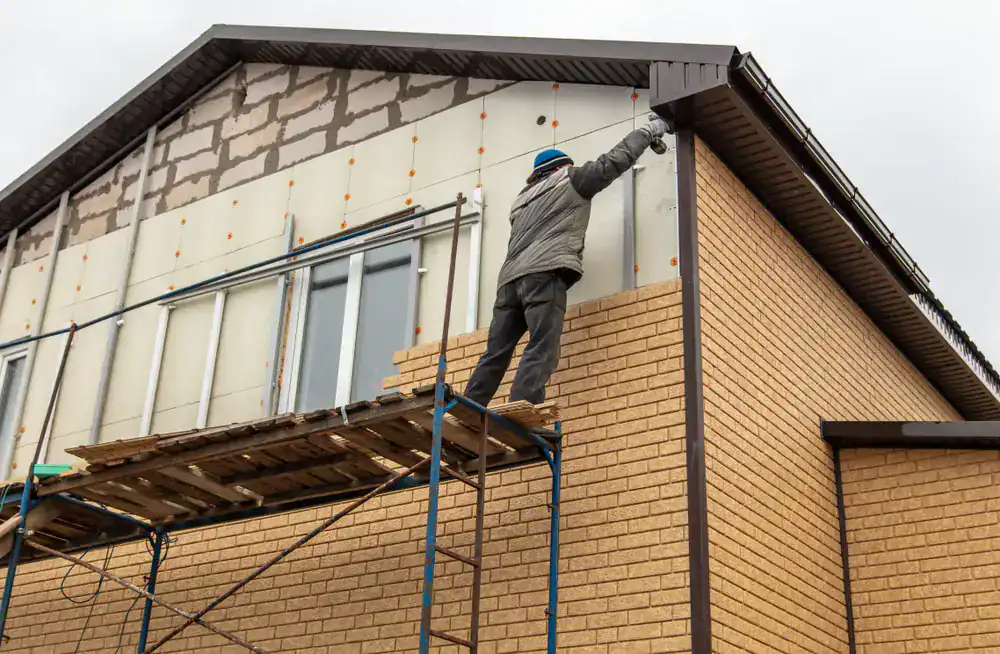
Installation itself is sequenced to protect your home at every stage — old siding removed, sheathing and moisture barrier inspected and addressed, new panels installed with proper expansion gaps and fastening technique, and all trim and flashing finished correctly. After the work is done, a final walkthrough confirms everything meets our standard before the crew leaves your property.

Ready to get started?
Vinyl Siding Contractors in Leonia, NJ
Not every siding material makes sense for every home, and in Leonia, that’s especially true. The Tudor and Colonial architecture that defines this borough’s streetscapes has specific proportions and detailing that certain panel profiles complement and others fight against. Before anything gets ordered, you’ll get a real conversation about what works for your home’s style, your maintenance preferences, and the Bergen County climate.
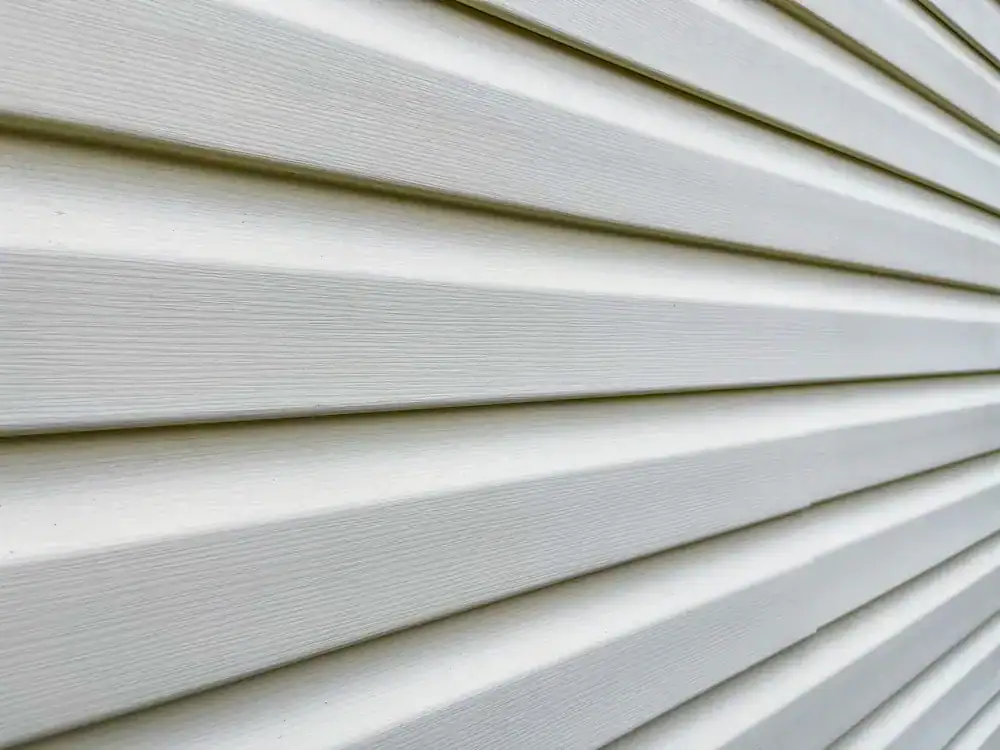
Vinyl is the most common choice — it’s cost-effective, low-maintenance, and available in profiles and textures that work well on older homes when selected carefully. Premium insulated vinyl adds a layer of thermal performance that can meaningfully reduce energy costs in a home that wasn’t built with modern insulation standards. Fiber cement, including James Hardie products, is the stronger choice for homeowners who want maximum durability and the closest visual match to original wood — it holds paint longer, resists impact better, and handles freeze-thaw cycling without the cracking and warping that cheaper materials show within a few years.
Every installation we complete includes proper moisture barrier application, correct fastening to manufacturer spec, full flashing at all penetrations and transitions, and finished trim work. Manufacturer-certified installation matters here because it’s the only way to access the full warranty on your product — and for a home in this price range, that warranty is part of what you’re paying for.

Do I need a permit for siding installation in Leonia, NJ?
Yes — Leonia requires a building permit for siding replacement under the New Jersey State Uniform Construction Code. This applies to full replacements and, in most cases, significant repairs. The permit is pulled through the Leonia Building Department, which operates on specific hours and schedules inspections separately from the permit application itself.
This matters more than most homeowners realize, especially if you’re planning to sell. Leonia requires a Certificate of Resale or Rental upon any change of occupancy, and unpermitted exterior work can complicate or delay that process at the worst possible time — right when you’re trying to close. When you work with us, the permit process is handled as part of the project. You don’t have to track down forms, coordinate inspection windows, or worry about whether the work is on record. We get it done correctly from the start.
How do I know if my Leonia home needs siding repair or full replacement?
The honest answer is that it depends on what’s actually happening behind the surface, not just what you can see from the street. Fading and minor cosmetic wear on older vinyl can sometimes be addressed without a full replacement. But if you’re seeing warping, cracking, panels pulling away from the wall, or soft spots around windows and doors, those are signs that moisture has already gotten in — and at that point, repair usually means addressing damage that’s spread further than the visible problem.
For Leonia’s pre-war housing stock, this is a common situation. Homes built in the 1920s and 1930s have had multiple decades of freeze-thaw cycling working on every seam and joint, and vinyl installed in the 1980s or 1990s is now 30 to 40 years old. A free inspection gives you a real answer — not a sales pitch for the biggest job possible, but an honest assessment of what the exterior actually needs and what the most cost-effective path forward looks like.
What siding material holds up best in Bergen County's climate?
For Bergen County’s specific conditions — hard winters with repeated freeze-thaw cycling, humid summers, and nor’easters that drive rain horizontally into every seam — fiber cement is the most durable long-term choice. It doesn’t expand and contract the way vinyl does in temperature swings, it resists impact from falling debris, and it holds paint for significantly longer than wood or standard vinyl. For Leonia homeowners with Tudor or Colonial architecture who want the closest match to the look of original wood siding, fiber cement is also the better aesthetic fit.
That said, premium insulated vinyl is a strong choice for homeowners focused on value and low maintenance. Modern vinyl has improved substantially from what was installed in the ’80s and ’90s — thicker profiles, better UV stabilizers, and more realistic textures. The right answer depends on your home’s specific architecture, your budget, and how long you plan to stay. That’s exactly the kind of conversation a free estimate is designed to have.
How long does siding installation take on a typical Leonia home?
For most single-family homes in Leonia, a full siding replacement takes between three and seven days depending on the size of the home, the material selected, and what’s found during removal. Fiber cement takes longer to install than vinyl due to its weight and the cutting and fastening requirements. If sheathing or moisture barrier damage is discovered during removal — which is more common on pre-war homes than on newer construction — that adds time to address properly before new panels go on.
Weather is a real factor in Bergen County. Vinyl installation in sub-freezing temperatures requires extra care because the material becomes brittle and can crack during handling. Spring and late summer are the most reliable windows for siding work in this area, and scheduling during those periods typically means fewer weather-related delays. That said, fiber cement and other materials can be installed year-round with the right technique, and off-season scheduling often means a faster project start date.
Does new siding actually increase home value in Leonia, NJ?
In a market like Leonia — where median home values are around $720,000, inventory is consistently tight, and buyers are educated, high-income professionals — the exterior condition of a home has a direct and measurable impact on how it’s received. New siding doesn’t just improve curb appeal. It signals to a buyer that the home has been maintained, that there are no hidden moisture problems, and that they’re not inheriting a deferred maintenance issue on day one of ownership.
Vinyl siding replacement has historically recouped a significant percentage of its cost at resale according to industry cost-versus-value data, and fiber cement tends to perform even better in higher-value markets. More practically, in a low-inventory borough like Leonia, homes that show well sell faster — and in a market where days on market translate directly to negotiating leverage, that speed has real financial value. If you’re planning a sale in the next one to three years, new siding is one of the more defensible exterior investments you can make.
How do I find a licensed siding contractor in Leonia, NJ I can actually trust?
Start with the basics: New Jersey requires all home improvement contractors to register under the NJ Home Improvement Contractor program through the Division of Consumer Affairs. This isn’t optional — it’s the law, and hiring an unregistered contractor leaves you with no legal recourse under the Consumer Fraud Act if the work is defective or the contractor disappears. Ask for the registration number before you agree to anything.
Beyond licensing, look for manufacturer certifications — these indicate that the contractor has been trained to specific installation standards and can offer enhanced warranty coverage on the products they install. Then look at reviews from actual homeowners in Bergen County, not just aggregate star ratings. In a borough as compact as Leonia, a contractor’s reputation on one block genuinely affects their business on the next. Our growth has come from customer outcomes in this specific market — not from paid advertising — and that track record is something you can verify before you make a single call.