
Gutter Installation in Leonia, NJ
Leonia's Older Homes Deserve Gutters That Actually Work
Hear from Our Customers
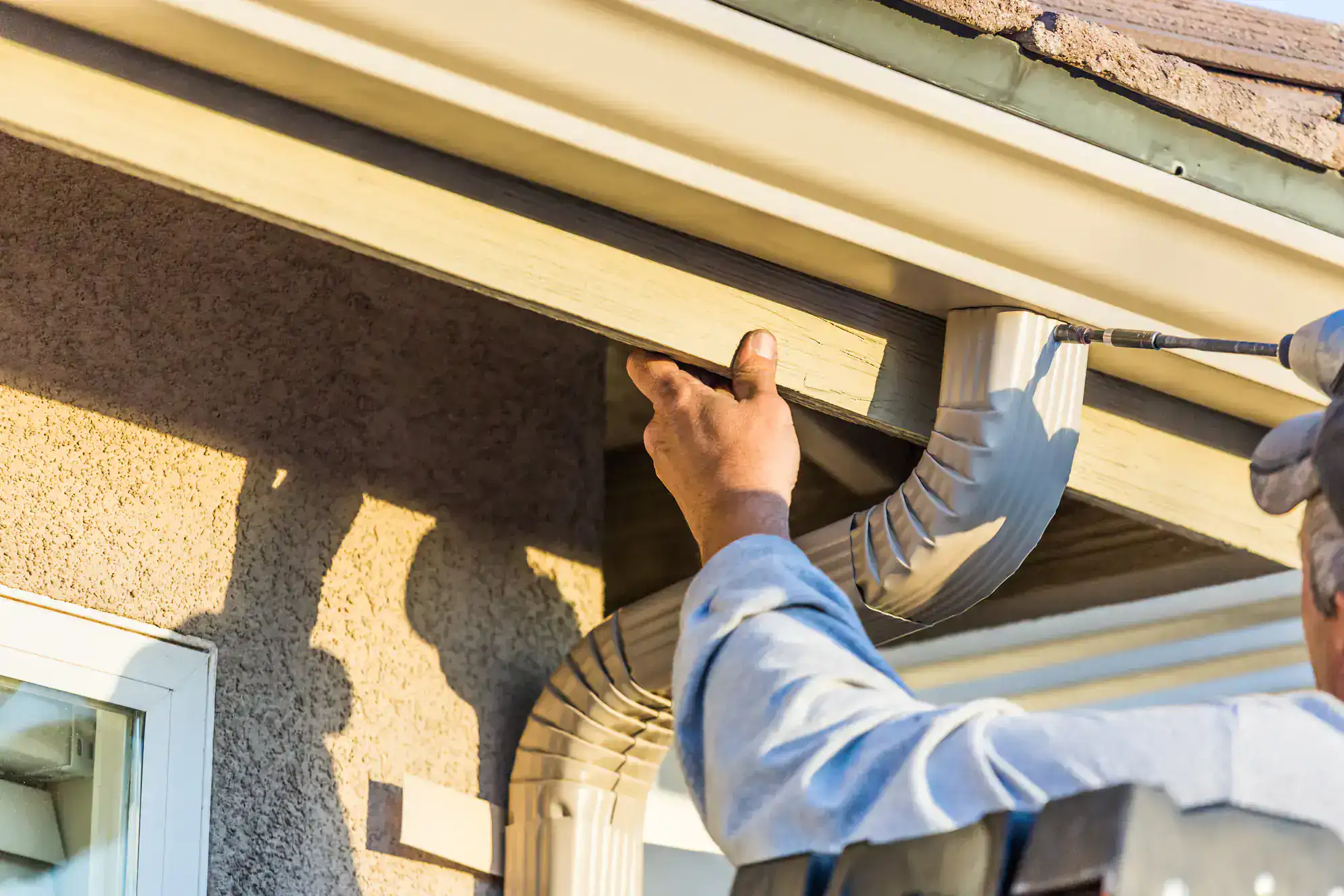
Rain Gutter Installation in Leonia, NJ
When gutters are installed correctly, the most immediate thing you notice is what stops happening. No more water pooling along your foundation after a storm. No more streaking down your siding. No more basement dampness that you’ve been quietly ignoring for two seasons. That’s not a small thing — on a home worth $780,000 or more, proper drainage is one of the cheapest forms of protection you can buy.
Leonia’s tree-lined streets are one of the borough’s best features, but they’re relentless on gutters. Maple helicopters in spring, oak leaves through fall, and debris from summer wind events mean your system is working harder than most. When gutters are sized and sloped correctly — and actually matched to the debris load your specific property produces — they stop being a maintenance headache and start doing their job quietly in the background.
The older housing stock here adds another layer. A significant portion of Leonia’s homes were built before 1970, and many still have original or aging sectional gutter systems that were never designed for today’s storm intensity. A proper installation on a home like that isn’t just an upgrade — it’s the difference between a dry basement and a $15,000 water damage claim.
Gutter Contractors in Leonia, NJ
We’ve been doing exterior work across Bergen County for over ten years, and Leonia is where a lot of that work happens. Not through advertising blitzes — through referrals. Homeowners who called us once, liked what they saw, and told their neighbors. That’s how a company like ours grows in a borough like Leonia, where people know each other and word travels fast.
The work here isn’t generic. Leonia’s homes — the colonials and cape cods along Fort Lee Road, the pre-war properties tucked behind Grand Avenue — have specific characteristics that matter when you’re installing gutters. Fascia conditions, roof pitch, drainage slope, proximity to mature trees. These aren’t things we figure out from a photo. They require a real inspection, and that’s exactly how every job starts.
We hold NJ Home Improvement Contractor License #13VH10605800, manufacturer certifications, and a track record that’s verifiable — not just claimed. You can check our credentials before you ever pick up the phone.
Home Gutter Installation in Leonia, NJ
It starts with a free inspection. Before anything is quoted or scheduled, someone comes out and looks at your actual system — not just the gutters themselves, but the fascia boards behind them, the roof edge condition, the downspout placement, and how water is currently moving (or not moving) away from your foundation. On Leonia’s older homes, this step regularly uncovers rotted fascia or improperly sloped runs that would cause new gutters to fail within a few years if left unaddressed.
From there, you get a written estimate with clear line items. What’s being replaced, what materials are being used, what the total cost is. No verbal quotes that shift on installation day. If your gutters were damaged by a storm — and Leonia recorded over two and a half inches of rain in a single July 2025 event — we can also walk you through the insurance documentation process before work begins.
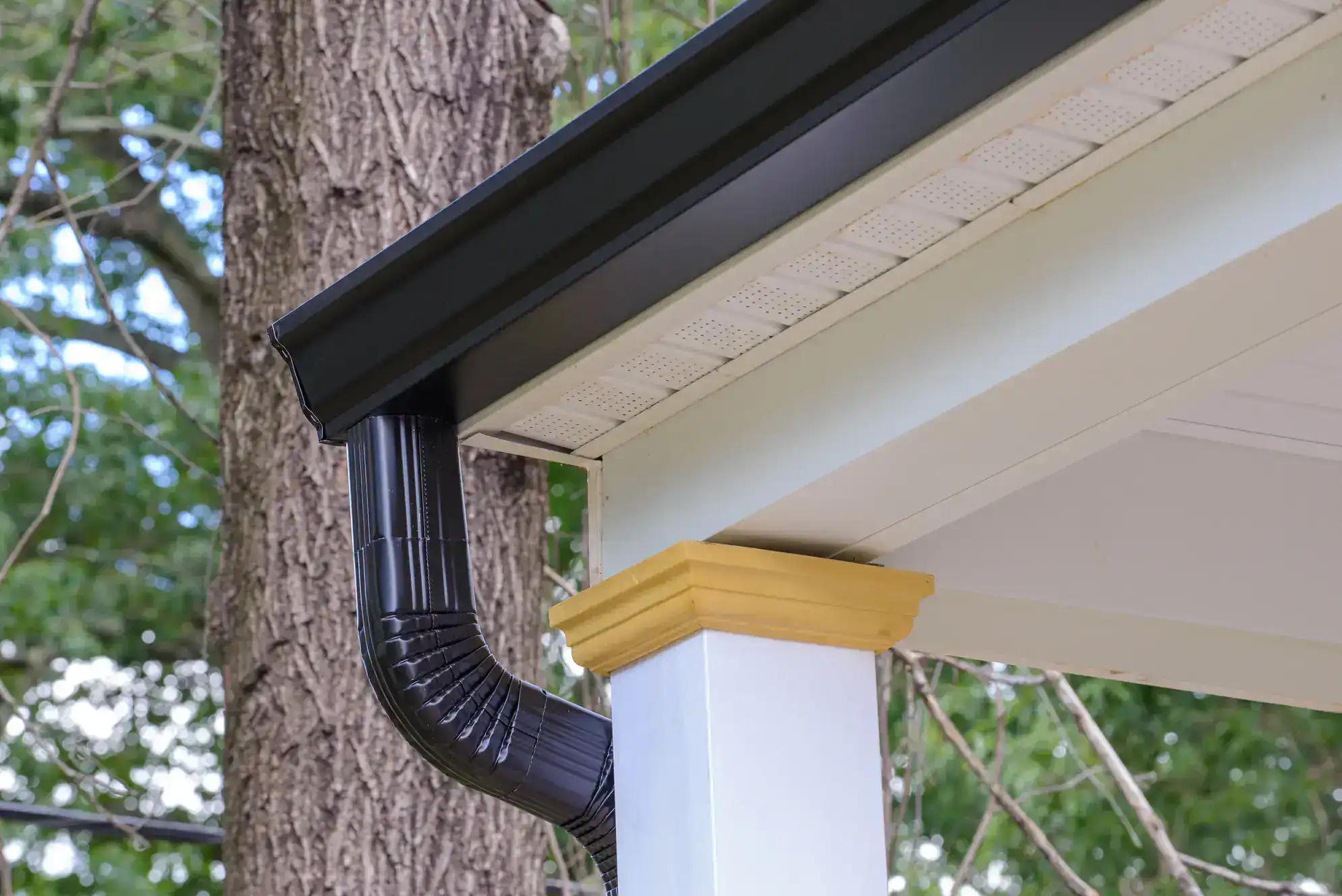
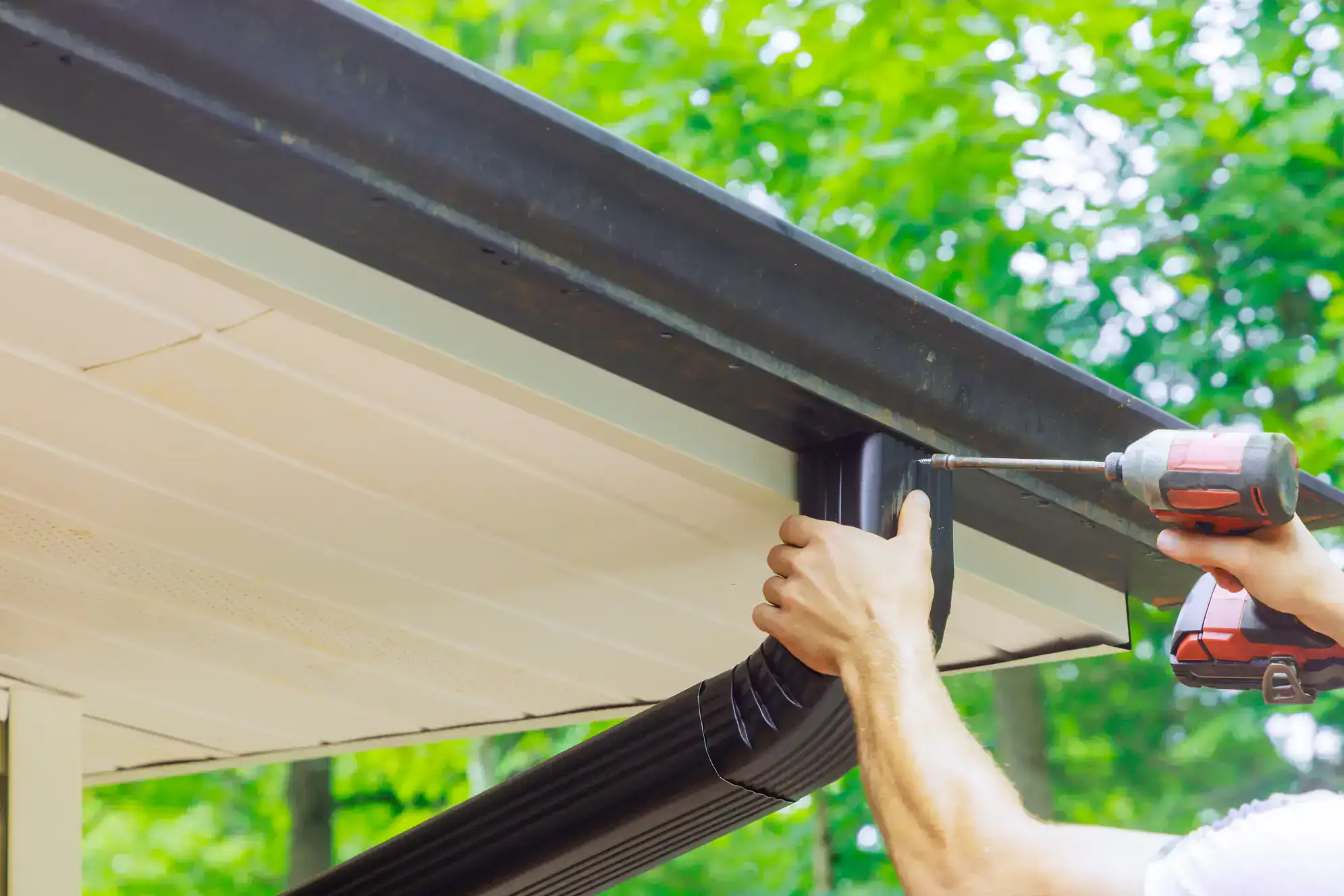
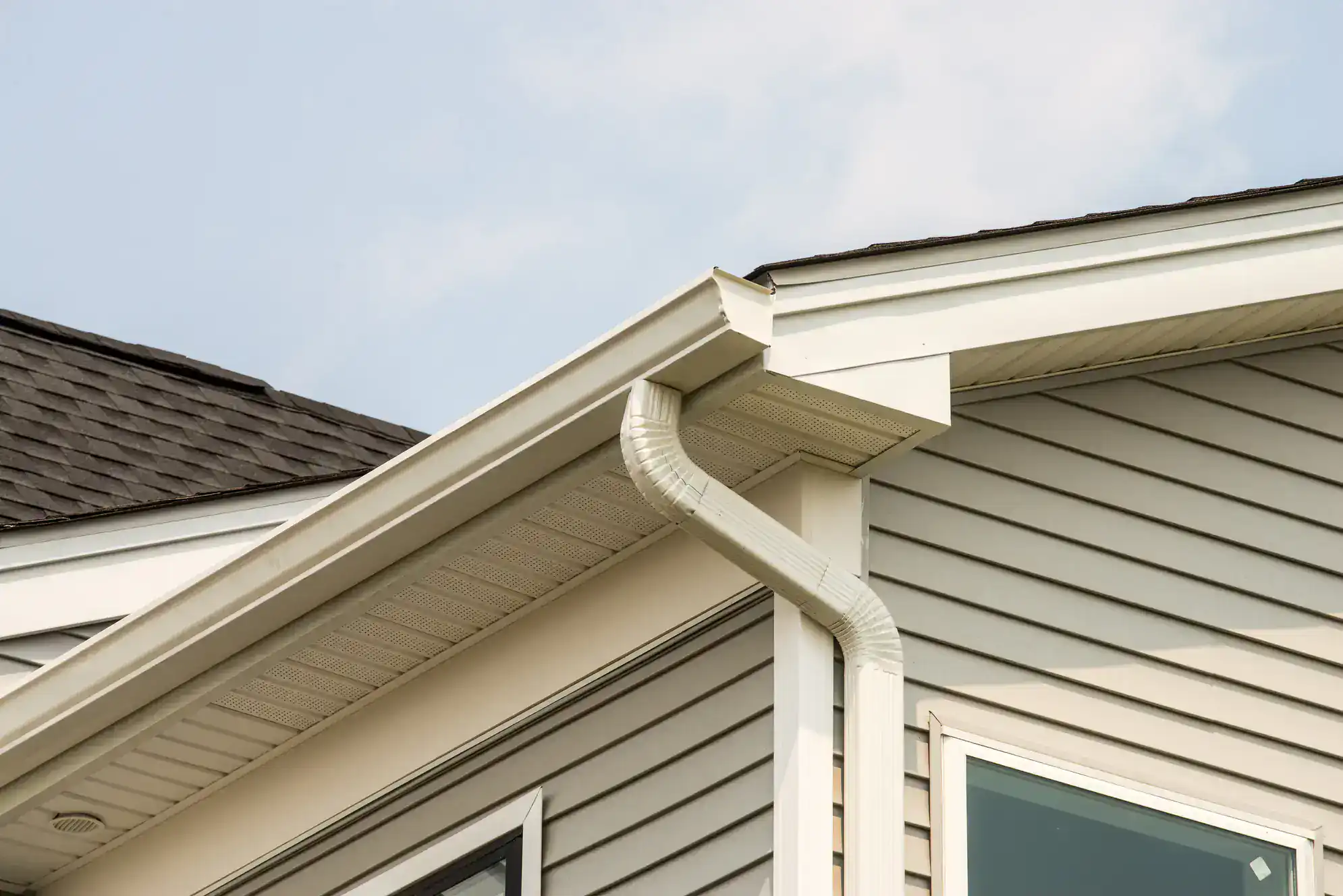
Installation uses seamless aluminum gutters fabricated on-site to your exact roofline measurements. Every run is pitched to the correct slope — a quarter inch per ten feet toward the downspout — and every downspout is positioned and extended to move water away from your foundation, not against it. When the job is done, you get a system that was built for your specific property, not a generic fit pulled from a supply house shelf.
Ready to get started?
Roof Gutter Installation in Leonia, NJ
Every gutter installation starts with a full exterior water management review. That means looking at your roof condition, fascia health, existing drainage layout, and how your downspouts relate to your foundation — not just swapping out the gutters and calling it done. For Leonia homeowners with homes built in the 1940s through 1960s, this often reveals issues that a gutter-only contractor would walk right past.
The gutters themselves are seamless aluminum, fabricated on-site to fit your roofline exactly. Seamless systems eliminate the seam joints where older sectional gutters fail and leak — which is the most common failure point on the aging systems found throughout Leonia’s residential neighborhoods. We also size the system correctly for your roof’s actual water volume, which matters more than most homeowners realize. An undersized gutter on a large colonial roof will overflow during any serious Bergen County storm, no matter how well it’s installed.
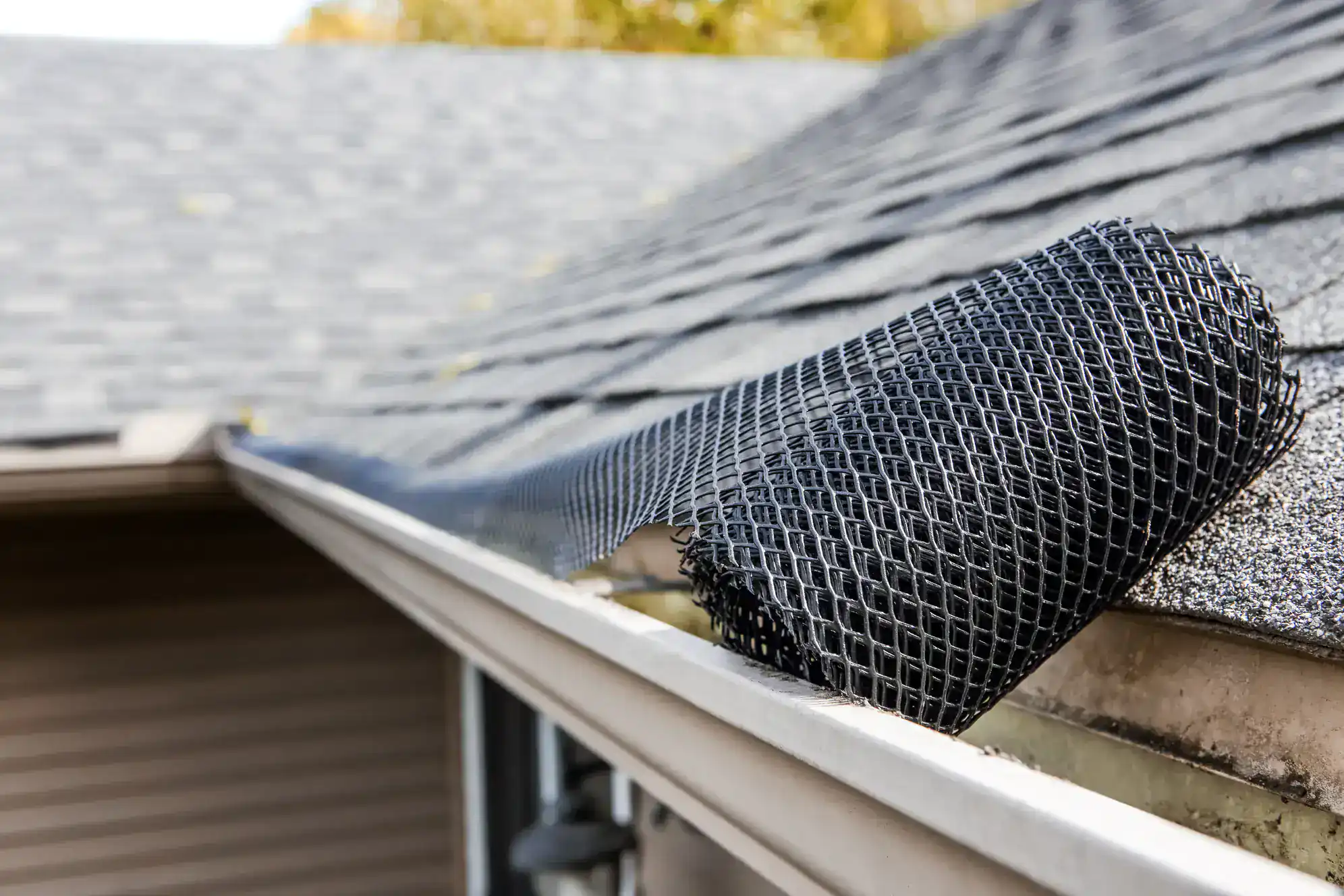
Gutter guard options are available for properties under heavy tree coverage — a practical consideration given Leonia’s Shade Tree Commission ordinances and the density of mature canopy throughout the borough. Downspouts are extended a minimum of six feet from the foundation and directed toward appropriate drainage. And if your job involves any fascia repair or soffit work, we handle that as part of the same project so your new gutters have a sound surface to attach to from day one.
Do I need a permit for gutter installation or replacement in Leonia, NJ?
For most standard gutter replacements in Leonia — swapping out existing gutters with equivalent materials in the same configuration — a construction permit is generally not required under New Jersey’s Uniform Construction Code, which classifies this type of work as ordinary maintenance. That said, if the project involves structural changes to the roofline, fascia, or soffit systems, or if you’re adding gutters to a structure that previously had none, a permit may be required and subject to inspection by Leonia’s Building Department, which operates under the NJ State Uniform Construction Code.
If you’re unsure whether your specific job triggers a permit requirement, Leonia’s Building Department can be reached directly at 201-592-5780 x253. We handle this conversation regularly and can help you understand what applies to your property before any work begins. The last thing you want is to complete a job and find out after the fact that it needed a sign-off.
How much does gutter installation typically cost for a home in Leonia?
For a full seamless aluminum gutter replacement on a typical single-family home in Leonia, you’re generally looking at a range of $2,800 to $5,200 depending on the linear footage, number of downspouts, fascia condition, and whether any additional work like soffit repair is needed. Homes with more complex rooflines or heavier debris management requirements — which is common in Leonia given the density of mature trees — may fall toward the higher end of that range.
What affects cost most is what’s behind the gutters, not just the gutters themselves. On Leonia’s older homes, it’s not uncommon to find fascia boards that have been quietly deteriorating for years under failing gutters. Replacing the fascia before mounting new gutters adds to the upfront cost, but skipping it means your new installation will pull away from the wall within a few seasons. A written estimate after a real inspection is the only honest way to give you an accurate number — which is exactly how we start every job.
How often should Leonia homeowners clean or inspect their gutters each year?
For most homes in Leonia, twice a year is the baseline — once in late spring after the maple and tree seed drop settles, and once in late fall after the leaves are fully down but before the first hard freeze. Given the borough’s density of mature trees and the formal tree preservation ordinances that protect that canopy, gutters in Leonia accumulate debris faster than in less-wooded communities. If you have large oaks or maples directly overhanging your roofline, a third cleaning mid-summer isn’t unreasonable.
The bigger risk is skipping the fall cleaning. Gutters clogged with wet leaves going into winter retain standing water that freezes. That ice expands, pulls gutter brackets away from the fascia, and can force water under your shingles — setting up ice dam conditions that lead to interior water damage far more expensive than any gutter cleaning. If you want to reduce the cleaning frequency, gutter guards are worth evaluating for your specific property, though the right type depends on your tree species and debris load.
What's the difference between seamless and sectional gutters, and which is better for my home?
Sectional gutters are pre-cut pieces joined together on-site with seam connectors. Over time — and especially in a climate like Bergen County’s, with freeze-thaw cycles through winter and heavy summer storms — those seams expand and contract, eventually separating and leaking. Most of the older gutter systems you’ll find on Leonia’s pre-1970 homes are sectional, and the seams are almost always where the failure starts.
Seamless gutters are fabricated as a single continuous piece, custom-cut on-site to fit your exact roofline. There are no seam joints along the run — only at corners and downspout connections — which dramatically reduces the number of potential leak points. They’re not immune to damage, but they last significantly longer, look cleaner, and require less maintenance over time. For a home in Leonia where the average property value is well above $700,000 and the housing stock skews older, seamless aluminum is the straightforward choice. The upfront cost difference is modest; the long-term performance difference is not.
My gutters were damaged in a storm — does homeowner's insurance cover gutter replacement in NJ?
In most cases, yes — if the damage was caused by a covered peril like wind, a falling limb, or hail, your homeowner’s insurance policy should cover gutter replacement, minus your deductible. Bergen County deals with real storm exposure. The July 2025 flash flood event dropped over two and a half inches of rain on Leonia in a single event, and wind events have caused documented structural damage in the borough. These aren’t rare scenarios — they’re the kind of weather this area gets regularly.
Where homeowners lose money is in the documentation. Adjusters need clear evidence that the damage was storm-related and not the result of deferred maintenance. The distinction matters because normal wear and tear is not covered. We work directly with insurance adjusters, document damage properly, and help you build a claim that reflects what actually happened. If you’ve had recent storm damage and haven’t filed yet, it’s worth a call before you assume you’re paying out of pocket.
How do I know if my gutters need to be replaced or just repaired in Leonia?
The honest answer is that it depends on what’s actually failing — and that’s not something you can determine from the ground. Gutters that are sagging in one section, leaking at a single seam, or have a minor pitch issue can often be repaired for a fraction of replacement cost. But gutters that are pulling away from the fascia in multiple places, have widespread corrosion, or are sitting on rotted fascia boards are telling you the whole system needs to be addressed.
In Leonia specifically, the age of the housing stock means that a lot of the gutter systems out there are original or near-original to homes built in the 1940s through 1960s. A sectional steel system from that era that’s still hanging on isn’t a candidate for spot repair — it’s past its service life, and patching it is just delaying an inevitable replacement while the underlying fascia continues to deteriorate. The free inspection we offer isn’t a sales pitch — it’s a real assessment that tells you honestly whether repair makes sense for your situation or whether replacement is the smarter call for the long term.