
Roofer in Springfield, NJ
Springfield's Aging Roofs Deserve More Than a Patch Job
Hear from Our Customers
Roofing Company in Springfield, NJ
A properly replaced or repaired roof isn’t something you think about — and that’s exactly the point. No water stains creeping across your ceiling after a nor’easter rolls through. No granules collecting in your gutters every time it rains. No wondering whether that soft spot near the chimney is getting worse.
Springfield sits on the northern edge of Union County, and its ridge-top position means it catches wind and ice in ways that lower-lying towns simply don’t. Every winter, freeze-thaw cycles work their way into any weak point a roof has — old flashing, dried-out caulk, shingles that have lost their seal. By spring, what looked like a minor issue from the street has often turned into something that reaches the decking. Getting ahead of that isn’t just smart maintenance — it’s protecting a home that’s worth well over half a million dollars.
The other thing that changes: your position when it’s time to sell. Springfield’s real estate market is active, and buyers here are not passive. They use home inspections aggressively, and a roof with documented condition and a transferable manufacturer warranty is a tangible asset — not just a checkbox. That kind of coverage isn’t something every contractor can offer. It requires manufacturer certification, and it’s one of the clearest differences between a roof that’s installed and a roof that’s protected.
Local Roofing Company Springfield, NJ
We’re based in Elizabeth, NJ — right here in Union County — and have been working on homes throughout Springfield and the surrounding area for over a decade. The cape cods, ranches, and split-levels that line Springfield’s streets aren’t unfamiliar territory. The chimney flashing challenges, the ridge ventilation issues common to mid-century construction, the ice dam vulnerabilities that come with the way these homes were originally built — we’ve seen all of it, on homes just like yours.
We hold NJ Home Improvement Contractor License #13VH10605800, which you can verify directly through the NJ Division of Consumer Affairs. Beyond state licensing, we carry manufacturer certifications from major shingle brands — certifications that require demonstrated installation quality and unlock warranty tiers most contractors simply can’t access.
Every job starts with a free inspection and a free estimate. You get a detailed photo report regardless of whether you move forward. No obligation, no pressure — just an honest picture of where your roof stands.
Emergency Roof Repair Springfield, NJ
It starts with a free inspection. One of our crew members comes out, walks the exterior, checks the attic if accessible, looks at your drainage, flashing, and shingle condition, and documents everything with photos. You get that report. Whether you’re dealing with visible damage after a storm or just haven’t had eyes on the roof in years, this step gives you real information instead of assumptions.
From there, if work is needed, you receive a transparent, itemized estimate before anything is scheduled. Every line is explained — materials, scope, labor — so the number you approve is the number on the invoice. Springfield homeowners ask good questions, and this process is built around that. For projects that require a permit — typically commercial or multi-residential work under Springfield Township’s Building Department guidelines — we handle that coordination. For standard single-family replacements, the process moves efficiently without unnecessary delays.
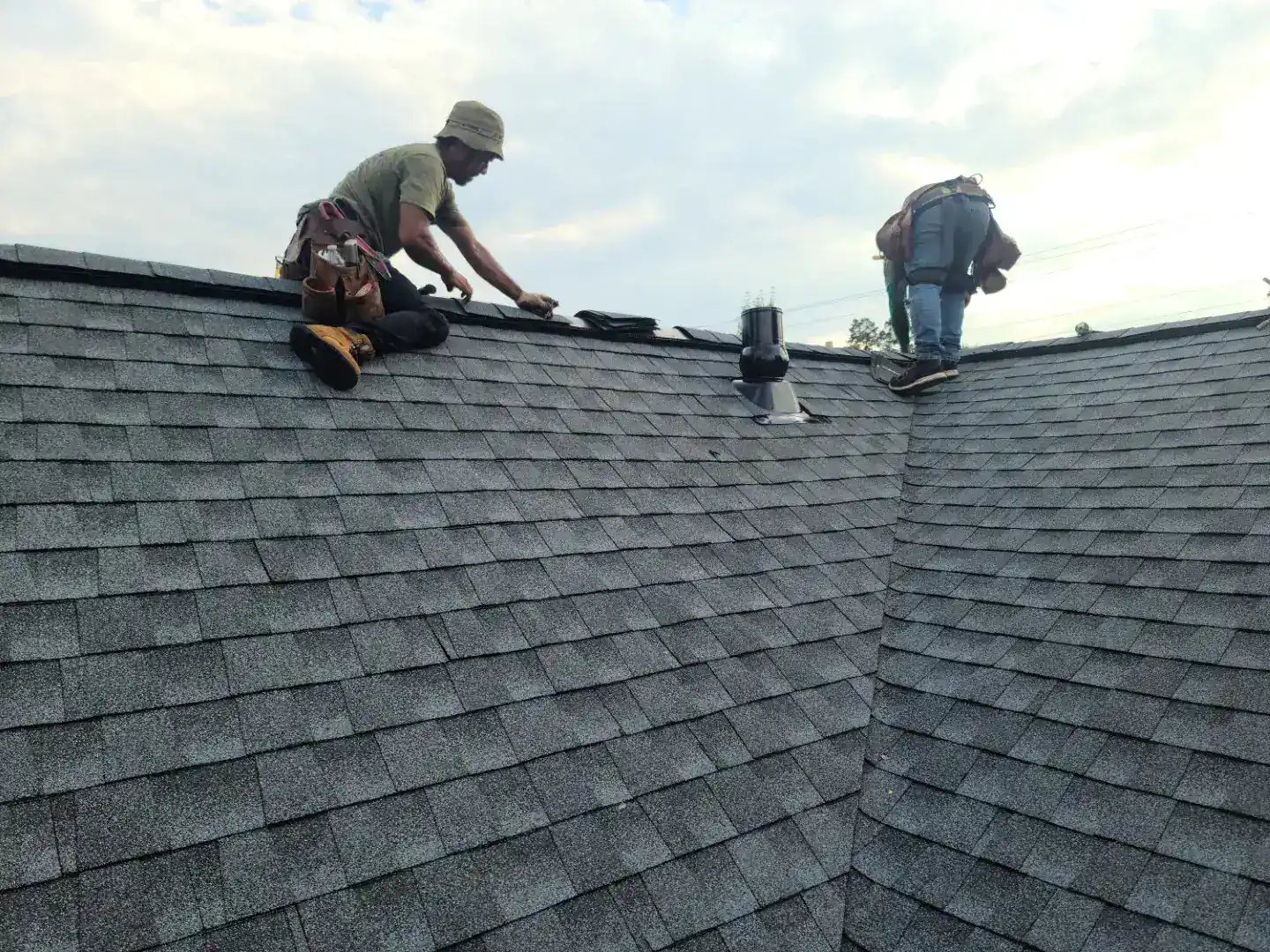
On installation day, our crew arrives, protects your property, completes the work, and cleans the site before leaving. A final walkthrough confirms everything is right. If a storm event creates an urgent situation — a nor’easter at 11pm, wind damage before the next rain — our 24/7 emergency line is there. Someone answers, and a crew gets dispatched to tarp and stabilize before the damage compounds.
Ready to get started?
Affordable Roofers in Springfield, NJ
Roofing is the core of what we do — full replacements, repairs, flat roofing in TPO and EPDM, and complete inspections with documented photo reports. But Springfield’s mid-century homes rarely have just one aging system. The same decades of nor’easters, freeze-thaw cycles, and UV exposure that wear down a roof do the same thing to gutters and siding. Addressing them through the same licensed, locally accountable contractor — rather than coordinating three separate companies — is a practical advantage that Springfield homeowners use regularly.
For roofing specifically, the materials and installation method matter as much as the labor. Manufacturer-certified installation unlocks enhanced system warranties that can extend coverage for decades and transfer to the next buyer at resale. In a market where Springfield homes are selling at $650,000–$700,000 and buyers are scrutinizing every inspection report, that documentation carries real weight.
We also offer bilingual service — Se Habla Español — which is relevant in a township where nearly 19% of residents are Hispanic. Transparent pricing, no hidden fees, and a beat-or-match price guarantee round out what we offer. Our goal isn’t to be the cheapest option on Route 22 — it’s to be the one you don’t have to call back.
How do I know if my Springfield, NJ home actually needs a full roof replacement?
The honest answer is that most homeowners can’t tell from the ground — and that’s not a knock on anyone. Granule loss, cracked flashing, and early-stage decking damage aren’t visible from your driveway. What you might notice are interior signs: water stains on ceilings, damp spots in the attic after rain, or granules collecting in your gutters during a downpour.
Given that the majority of Springfield’s housing stock was built between the 1940s and 1960s, a large share of homes in this township are working with roofs that are either at or past their expected lifespan — even if they’ve had one replacement since original construction. A professional inspection with a photo report gives you a documented baseline. From there, the recommendation is straightforward: if damage is isolated, a targeted repair may be all you need. If the decking is compromised or the shingles have lost significant granule coverage across multiple sections, replacement is the more cost-effective path. Either way, you’ll know exactly what you’re looking at before making any decision.
What does a roof replacement actually cost for a typical Springfield, NJ home?
Roofing costs in New Jersey vary based on roof size, pitch, material choice, and the condition of the existing decking underneath. For a standard single-family home in Springfield — the ranches, cape cods, and split-levels that make up most of the township’s residential stock — asphalt shingle replacement typically runs in the range of $8,000 to $18,000 for most projects, though larger or more complex roofs can exceed that range.
What affects the final number most is what’s found once the old material comes off. If the decking has moisture damage from years of ice dam infiltration — a real risk in Springfield given the ridge-top wind exposure and the freeze-thaw patterns common to Union County winters — that adds to the scope. This is exactly why a detailed inspection before quoting matters. We provide transparent, itemized estimates so you see the full picture before committing. The price you approve is the price on the invoice.
Does replacing a roof in Springfield, NJ require a permit?
For single-family residential homes in Springfield, the permit requirement depends on the scope of work and how it’s classified under the NJ Uniform Construction Code. Under Springfield Township’s published Building Department guidelines, a construction permit is specifically required for roofing replacement on commercial and multi-residential units. For standard single-family homes, minor repairs that fall below certain material thresholds typically don’t require a permit, while full tear-off replacements can vary based on scope and local interpretation.
The safest approach is to confirm directly with Springfield Township’s Building Department at 20 North Trivett Avenue before any project begins — which is standard practice for any reputable contractor. We handle this coordination as part of the process for projects where a permit is required. Any contractor working in Springfield is also legally required to hold a valid NJ Home Improvement Contractor license for work over $500 — and that license number must appear on permit applications. Our NJ HIC license (#13VH10605800) is publicly verifiable through the NJ Division of Consumer Affairs.
What kind of warranty comes with a new roof, and does it transfer if I sell my home?
There are two types of warranty coverage to understand: the contractor’s workmanship warranty, which covers installation quality, and the manufacturer’s product warranty, which covers the materials themselves. Standard contractor warranties typically run five to ten years. Manufacturer warranties on the shingles alone can run twenty to thirty years, but they only cover the product — not the system as a whole.
Where manufacturer certification changes the equation is at the system warranty level. When a contractor holds a certified installer status with a major shingle manufacturer, they can offer an enhanced system warranty that covers the full roofing assembly — shingles, underlayment, and installation — for significantly longer periods, sometimes thirty to fifty years. These warranties are also transferable, which matters directly in Springfield’s active real estate market. A home selling at $650,000–$700,000 with a documented, transferable manufacturer warranty is in a materially stronger position during the inspection and negotiation process than one without it. Not every contractor can offer this — it requires earned certification, not just licensing.
How quickly can you respond to storm damage on my Springfield roof?
We offer 24/7 emergency roofing service, which means storm damage doesn’t wait for business hours and neither do we. When a nor’easter moves through Union County — and Springfield’s position on the northern ridge of the county means it often takes the brunt of those systems — wind-driven rain, ice buildup, and downed branches can create immediate vulnerabilities that need to be addressed before the next weather event compounds the damage.
The emergency response process starts with a call. A crew gets dispatched to assess the damage, tarp any exposed areas, and document everything with photos. That documentation serves two purposes: it stops the damage from spreading, and it gives you a professional record for your homeowner’s insurance claim. Many Springfield homeowners don’t realize that having a licensed contractor’s assessment submitted alongside an insurance claim can significantly strengthen the outcome. Getting the right eyes on the damage quickly — before anything dries out or shifts — is the part that matters most.
How do I find a licensed roofer in Springfield, NJ I can actually trust?
Start with the license. Any contractor doing home improvement work in New Jersey for more than $500 is legally required to hold a valid NJ Home Improvement Contractor license. You can search any contractor’s license number directly through the NJ Division of Consumer Affairs website — it takes about thirty seconds and tells you whether the license is active and in good standing. Our license number is #13VH10605800, and it’s searchable right now.
Beyond licensing, manufacturer certifications are the next meaningful filter. They’re not easy to earn, they require demonstrated installation quality, and they unlock warranty tiers that unlicensed or uncertified contractors simply cannot offer. After that, look at review history — not just the star rating, but the specifics. Do the reviews mention clear communication, accurate estimates, clean job sites? Those details matter more than the overall score. Springfield homeowners invest seriously in their properties, and the right contractor should be able to show credentials, explain their process, and give you a documented inspection before asking you to spend a dollar. If they can’t do all three, keep looking.