
Roof Inspection in Springfield, NJ
Springfield's Aging Roofs Deserve an Honest Second Opinion
Hear from Our Customers
Certified Roof Inspector in Springfield, NJ
Springfield’s weather doesn’t give much warning. One nor’easter, one freeze-thaw cycle, one summer storm rolling in off Route 22 — and what looked like a minor issue becomes a ceiling stain, a soaked attic, or a repair bill that could’ve been a fraction of the cost six months earlier. A professional roof inspection catches those problems while they’re still small and manageable.
The housing stock in Springfield tells the story pretty clearly. Most homes in the township were built in the 1950s and 1960s, which means a large portion of the roofs operating here are at or past their expected lifespan. If your Springfield home was reroofed in the late ’80s or early ’90s, that roof is now 30-plus years old. Standard three-tab shingles from that era were rated for 20 to 25 years. The math isn’t in your favor — but you won’t know where you actually stand until someone gets up there and looks.
For homes near Lenape Park or anywhere along Springfield’s heavily treed residential streets, there’s an added layer to watch. Overhanging branches drop debris that retains moisture against your shingles, accelerates granule loss, and quietly creates the conditions for moss and lichen growth. That kind of damage doesn’t announce itself. It just compounds — until it does.
Licensed Roof Inspector in Springfield, NJ
We’ve been working on roofs across New Jersey for over ten years, with deep roots in Springfield and the surrounding Union County communities. Our business is family-operated, which means the people making decisions about your roof are the same people whose name is on the work. There’s no franchise layer, no rotating subcontractor crew, no one who disappears after the job is done.
Our team holds contractor licenses and certifications from major shingle manufacturers — not because it looks good on a website, but because those certifications require maintained insurance, completed product training, and a real track record of customer satisfaction. They also unlock manufacturer-backed warranty coverage that uncertified contractors simply can’t offer, which matters when you’re protecting a home worth north of $500,000 in Union County.
Springfield is a community where reputation travels fast. Neighbors talk — at Jonathan Dayton, at the park, on the block. Our growth has come from reviews and referrals, not ad spend. That’s not an accident. It’s what happens when a company tells homeowners the truth, even when the truth is “your roof is fine.”

Roof Damage Inspection in Springfield, NJ
It starts with a call. You describe what you’ve noticed — a stain, missing shingles, granules in the gutter, or nothing specific at all — and we schedule a time that works around your day. Springfield is a commuter township. Most residents are on I-78 or Route 22 early and back in the evening. We schedule around that, not against it.
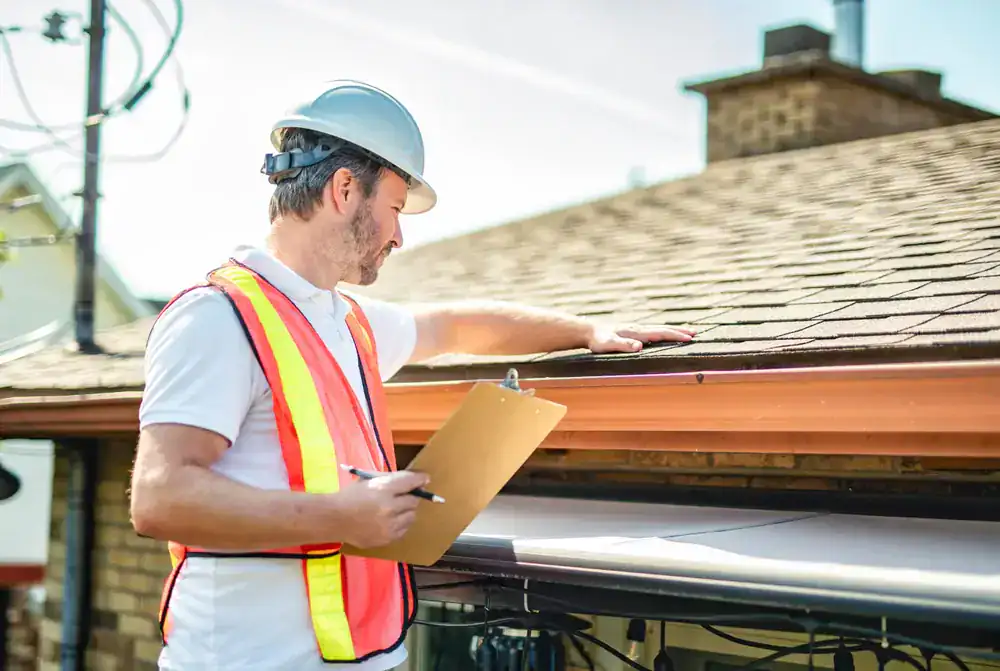
When our inspector arrives, they’re not doing a quick visual from the driveway. We get on the roof. The inspection covers the full shingle field, all flashing points around chimneys, vents, and skylights, the ridge cap, gutters, soffit, and fascia. Flashing is where freeze-thaw damage shows up first in New Jersey winters — different materials expand and contract at different rates, and those seams open up over time. That’s one of the first things we check, and one of the most commonly missed.
After the inspection, you get a straightforward rundown of what was found — in plain language, with photos. If your roof needs work, you’ll know exactly what and why. If it doesn’t, you’ll hear that too. There’s no obligation attached to the inspection, and no pressure attached to the findings. Our goal is to give you accurate information so you can make a smart decision about a significant asset.
Ready to get started?
Roof Inspection Company in Springfield, NJ
Our roof inspection isn’t a five-minute walk-around. It’s a systematic assessment of every component that keeps water out of your home. That means the shingle field, flashing at every penetration point, the ridge, the valleys, gutters, fascia, soffit, and attic ventilation — because poor ventilation ages shingles from the inside out and is one of the most consistently overlooked issues on older homes in Union County.
Springfield’s pre-war and post-WWII housing stock comes with its own specific checklist items. Older homes often have original or early-replacement flashing that has long since exceeded its useful life. Homes in the southern parts of Springfield, near the Rahway River watershed, tend to show more moisture-related wear — in the attic, at the eaves, and along the lower courses of shingles where runoff concentrates. Those are the details that matter when you’re trying to understand what your roof actually needs, not just what it looks like from the street.
If replacement turns out to be the right call, our inspection findings carry weight. New Jersey’s Uniform Construction Code requires permits for full roof replacements in Springfield, and having documented inspection findings from a licensed contractor makes that process cleaner. For homeowners navigating an insurance claim after storm damage, written findings with photo documentation from a certified inspector are the difference between a straightforward approval and a prolonged back-and-forth with an adjuster.

How do I know if my Springfield home actually needs a roof inspection right now?
The honest answer is that most Springfield homeowners don’t have a clear signal — they just have a nagging feeling, especially after a rough winter or a summer storm. If your home was built between 1950 and 1975, which covers the majority of Springfield’s residential housing stock, your roof has likely already been replaced at least once. If that replacement happened in the late ’80s or ’90s, you’re looking at a roof that’s 30 years old or older. That’s past the expected lifespan of most asphalt shingles, regardless of how it looks from the ground.
Visible signs like missing shingles, granules collecting in your gutters, or a stain on an interior ceiling are obvious triggers. But the more common situation is that nothing looks obviously wrong — and the damage is in the flashing, the ventilation, or the underlayment where you can’t see it without getting on the roof. A professional inspection gives you a clear picture either way, and it costs you nothing to find out.
What does a roof inspection cost for homeowners in Springfield, NJ?
We offer free roof inspections — no charge, no obligation. You don’t pay anything to find out what condition your roof is in. That’s not a limited-time offer or a promotional hook. It’s simply how we operate, because the inspection is the starting point for an honest conversation, not a sales transaction.
If the inspection reveals that repairs or replacement are needed, you’ll receive a detailed estimate with transparent, itemized pricing before any work is discussed. Springfield homeowners have invested significantly in their homes — the median home value in the township is around $594,000 — and a roof replacement is a major expenditure. You deserve to know exactly what you’re paying for and why before you commit to anything. The free inspection is how that process starts on the right foot.
How does New Jersey's freeze-thaw cycle affect roofs in Springfield specifically?
New Jersey winters are hard on roofing systems in ways that aren’t always obvious until spring. The freeze-thaw cycle — where temperatures drop below freezing at night and rise above it during the day — happens dozens of times each winter in Union County. Every time water infiltrates a small crack in a shingle, a sealant joint, or a flashing seam and then freezes, it expands. That expansion forces the opening slightly wider. The next freeze makes it wider still. By the time you notice a ceiling stain in March, that process has been running for months.
Flashing is where this damage concentrates most predictably. The metal flashing around chimneys, skylights, and roof vents expands and contracts at a different rate than the surrounding roofing material, and those joints are the first to open under repeated thermal cycling. Springfield’s ridge-top geography also means homes here get full exposure to wind-driven precipitation — there’s no natural buffer from the Watchung Mountains to the west. A thorough inspection after winter specifically targets these failure points before they become interior water damage.
Does Springfield, NJ require a permit for roof work after an inspection finds damage?
It depends on the scope of work. In Springfield Township, minor repairs — replacing a handful of shingles or resealing a flashing joint — typically don’t require a permit. But a full roof replacement does require a building permit issued through Springfield’s Construction Office under New Jersey’s Uniform Construction Code. That permit process involves an inspection by the township’s construction official to confirm the work meets code.
This is worth knowing before you hire anyone. New Jersey also requires all home improvement contractors — including roofers — to be registered under the state’s Home Improvement Contractor program, administered by the Division of Consumer Affairs. An unregistered contractor can’t legally pull a permit in Springfield, and if something goes wrong, you have no legal recourse under the state’s consumer protection laws. We are properly licensed and registered, which means permit applications are handled correctly and you’re protected throughout the process.
I'm selling my home in Springfield — should I get a roof inspection before listing it?
Yes, and it’s one of the smarter moves you can make before putting a Springfield home on the market. The township’s real estate market has been active, with median sale prices around $676,000 and homes moving quickly. In that environment, a buyer’s inspector flagging an aging or damaged roof during the inspection contingency period can derail a deal, trigger a price reduction, or create a negotiating standoff right when you want the transaction to close cleanly.
Getting a professional roof inspection before you list gives you control over the narrative. If the roof is in solid shape, you have documentation to show buyers. If there are issues, you can address them on your timeline — not under the pressure of a 30-day closing window. For a home in Springfield’s dominant 1950s–1970s construction era, a pre-listing inspection from a licensed, certified contractor is straightforward due diligence that protects your sale price and your timeline.
Can a roof inspection in Springfield support an insurance claim after storm damage?
It can, and the quality of the inspection documentation makes a real difference in how a claim gets handled. After a nor’easter or a summer hail event — both of which hit Union County with some regularity — insurance adjusters assess damage based on what’s documented, not what you describe over the phone. A written inspection report with photographs from a licensed, certified roofing contractor carries significantly more weight with an adjuster than a general home inspector’s notes or your own photos from the ground.
Springfield homeowners filing storm damage claims benefit from having an inspection completed promptly after the event, before additional weather exposure changes the condition of the damage. Our inspection process produces the kind of documented findings — specific to each failure point, with photographic evidence — that gives your claim a clear factual foundation. If the damage supports a claim, that documentation helps move it forward. If it doesn’t, you’ll know that too, and you won’t have wasted time pursuing a claim that was never going to pay out.