
Roofer in Englewood Cliffs, NJ
Palisades-Tested Roofing for Homes Built to Last
Hear from Our Customers
Local Roofing Company in Englewood Cliffs
Most homeowners in Englewood Cliffs don’t find out their roof has a problem until water shows up somewhere it shouldn’t. By then, what started as a flashing gap or a few lifted shingles has turned into a ceiling stain, a damaged floor, or worse. The fix is always more expensive than the inspection would have been.
Homes atop the Palisades ridge face wind loads and freeze-thaw cycles that inland Bergen County communities simply don’t. When temperatures drop and moisture gets into small cracks — around chimneys, in roof valleys, under aging flashing — it freezes, expands, and forces those openings wider every single cycle. By spring, what looked fine in October is actively leaking. On a home worth $1.5 million or more, that’s not a minor inconvenience.
When we do the work right, you’re not just getting new shingles. You’re getting a system — properly flashed, properly ventilated, and backed by a manufacturer warranty that travels with the home if you ever sell. In a borough where a Continuing Certificate of Occupancy is required at resale, that documentation matters. A roof done right the first time protects your investment on both ends.
Roofing Company in Englewood Cliffs, NJ
We’re a licensed, family-owned exterior contractor serving homeowners throughout Bergen County, including Englewood Cliffs and the surrounding Palisades communities. We hold NJ Home Improvement Contractor License #13VH10605800 — publicly searchable through the NJ Division of Consumer Affairs — along with certifications from major shingle manufacturers that fewer than 3% of roofing contractors nationwide have earned.
Those certifications aren’t a marketing badge. They’re what allow us to offer manufacturer-backed system warranties that a non-certified contractor simply cannot provide. For homeowners near the Flat Rock Brook area or along the East Palisade Avenue corridor — where large homes sit under heavy tree canopy and complex rooflines are the norm — that level of backing makes a real difference.
We’ve grown through referrals and honest reviews, not advertising volume. That’s still how it works.
Emergency Roof Repair in Englewood Cliffs, NJ
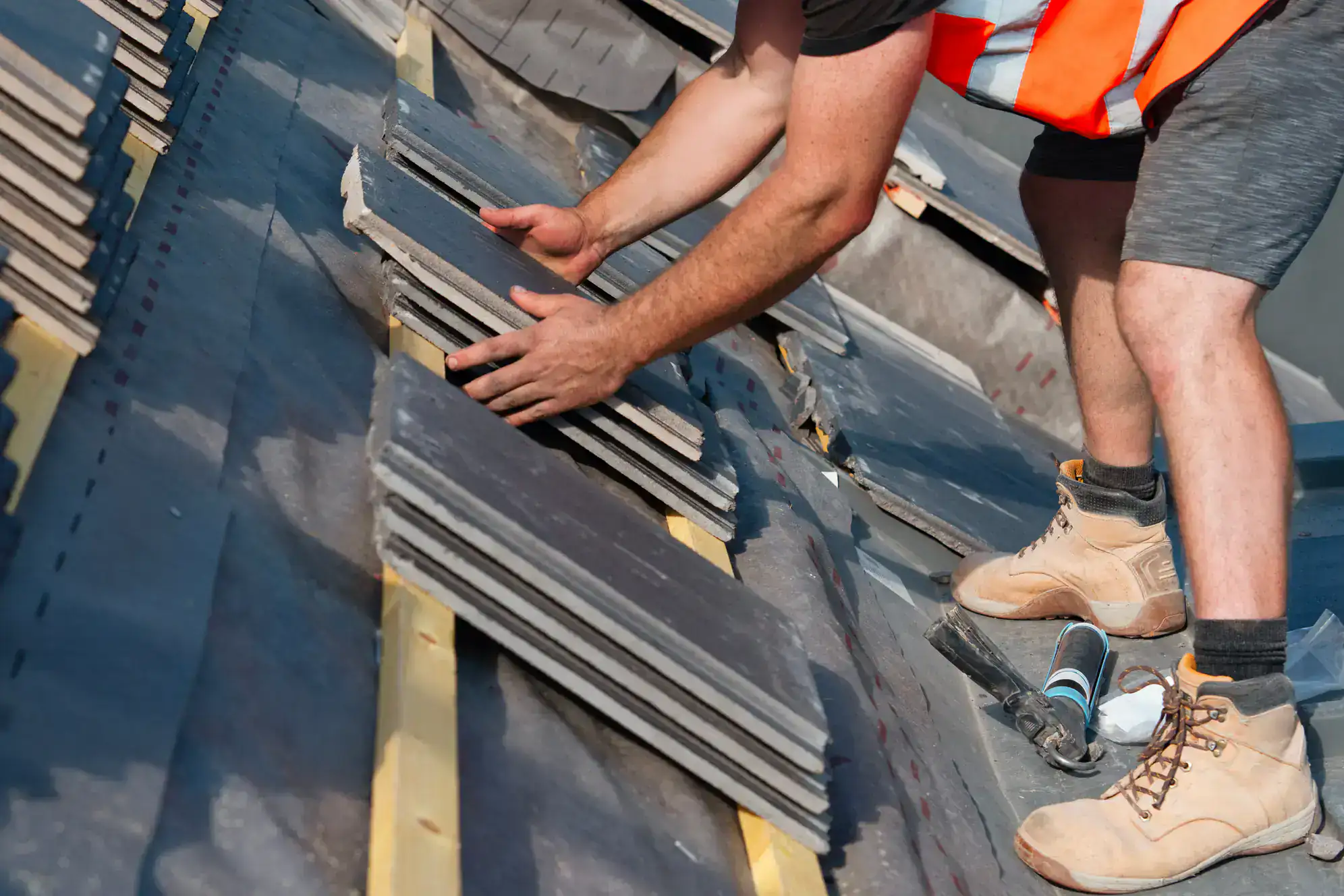
It starts with a free inspection. We do a full exterior walkthrough, an attic check, a drainage assessment, and a photo report you keep — whether you move forward with any work or not. On the complex, multi-plane rooflines common to Englewood Cliffs estates, that inspection takes real time and attention. A quick visual from the driveway isn’t it.
If repairs or a full replacement are warranted, you’ll get a detailed, itemized estimate before anything is scheduled. Materials, labor, disposal, permit fees — all of it laid out clearly. The Borough of Englewood Cliffs requires a building permit for roofing work, and we pull that permit before a single nail goes in. That’s not optional, and any contractor who skips it is creating a problem you’ll inherit at resale.
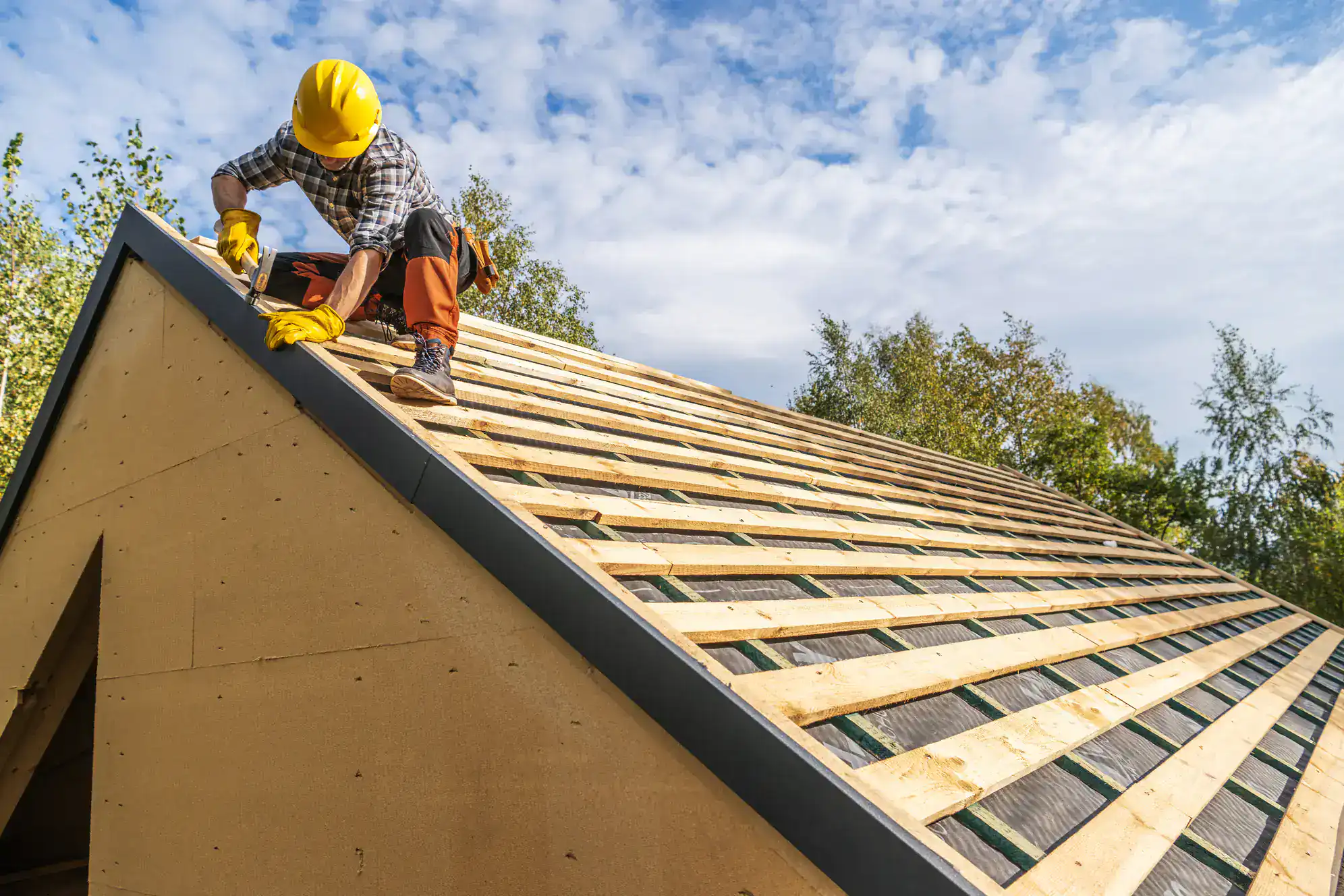
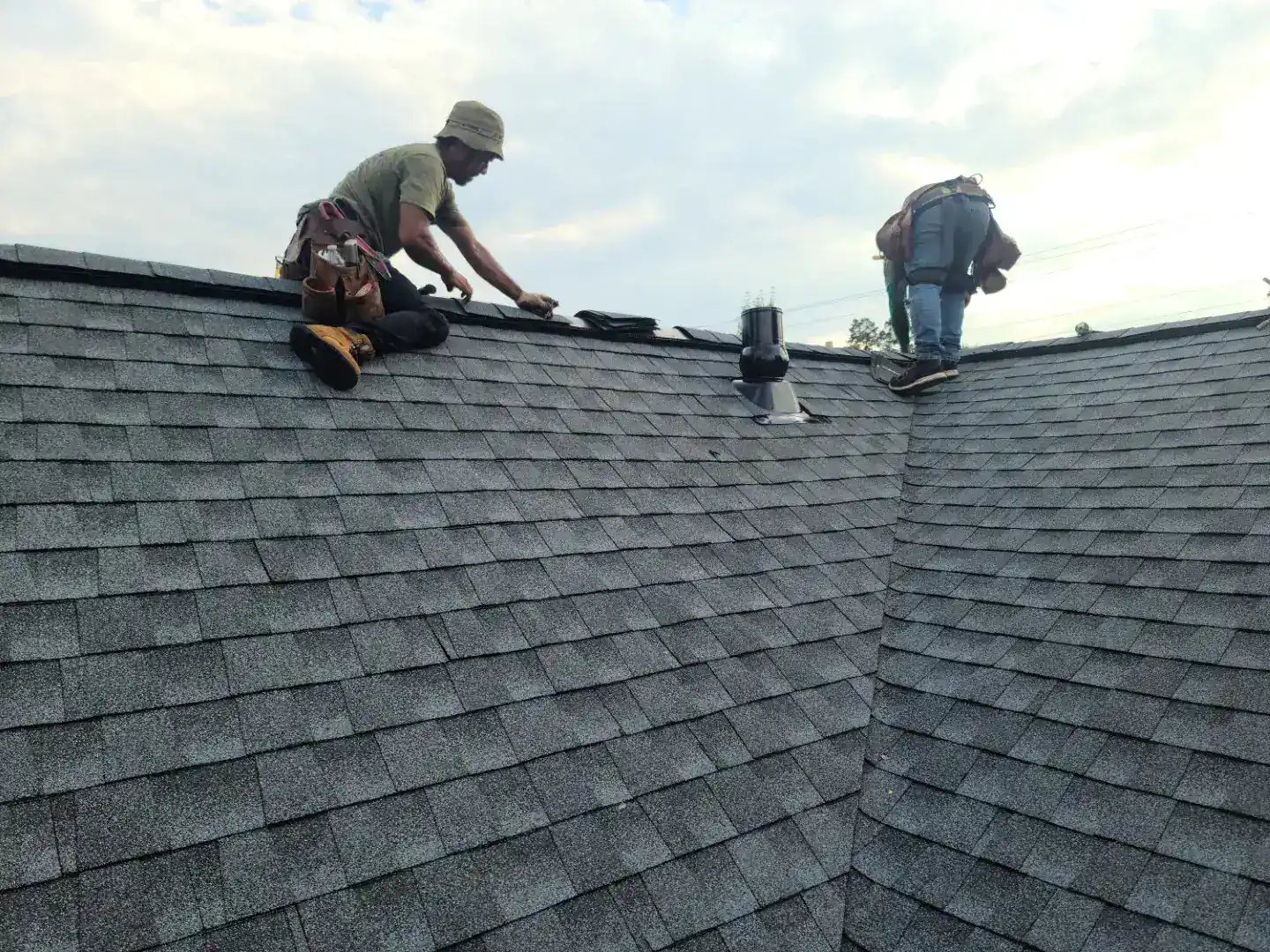
Once work begins, our crew works clean and on schedule. When the job is done, the site is cleared, the permit is closed, and you have documentation in hand. If a storm causes urgent damage — a nor’easter, a summer thunderstorm off the Hudson corridor — our 24/7 emergency line means you’re not waiting until Monday to get someone on-site.
Ready to get started?
Affordable Roofers in Englewood Cliffs, NJ
We handle the full scope of exterior roofing — inspection, repair, maintenance, and full replacement — across asphalt shingle systems, flat roofing, TPO, and EPDM. Siding and gutter services are also available, which matters in Englewood Cliffs where mature tree canopy means gutters clog fast and debris builds up in roof valleys through every season.
For homeowners on larger estate properties — the kind that are common along the Palisades ridge — the borough’s municipal code includes a specific provision: roofs 7,500 square feet or larger require roof leaders connected to a storm drain or dry well. That’s not something every contractor knows walking in, and it’s the kind of detail that creates compliance problems at the worst possible time if it’s missed.
Our manufacturer certifications unlock access to enhanced system warranties — some extending 30 to 50 years — that are transferable to the next owner. That’s a concrete financial asset for any Englewood Cliffs homeowner, especially given that median home values in the borough have reached approximately $1.9 million. Protecting that investment starts with a roof that’s installed to the standard that earns those warranties in the first place.
Do I need a permit to replace my roof in Englewood Cliffs, NJ?
Yes — the Borough of Englewood Cliffs requires a building permit for roofing work, and that permit needs to be in place before work begins. This isn’t a formality you can clean up afterward. When you sell your home in Englewood Cliffs, a Continuing Certificate of Occupancy is required, and any unpermitted roofing work will surface during that process. It can delay or derail a sale, and it puts the liability squarely on you as the homeowner.
There’s also a specific provision in the borough’s code worth knowing: if your roof is 7,500 square feet or larger — which applies to a meaningful number of properties on the Palisades ridge — roof leaders must be connected to either a storm drain or dry well. A contractor who isn’t familiar with Englewood Cliffs’ local requirements can inadvertently create a code violation you won’t find out about until it matters most. We handle permit compliance as a standard part of every project, not an afterthought.
How much does a roof replacement typically cost in Englewood Cliffs?
There’s no single number that covers Englewood Cliffs roofing, and anyone who quotes you a flat price before seeing your roof isn’t giving you an accurate estimate. The homes in this borough — grand colonials, Tuscan-style estates, large contemporaries along the Hudson Terrace corridor — tend to be significantly larger and more architecturally complex than typical suburban homes. That complexity affects cost: more roof planes, more dormers, more flashing work around chimneys and skylights, and more skilled labor to do it right.
A straightforward replacement on a mid-size home might run $15,000–$25,000. A full replacement on a larger Englewood Cliffs estate with a complex roofline can reach $40,000–$60,000 or more depending on materials, system type, and what the inspection reveals. The more useful question is what you’re getting for that investment — specifically, whether the contractor is certified to offer a manufacturer-backed system warranty that protects the home long-term. That warranty has real dollar value, especially on a property in the $1.5–$3 million range.
What roofing problems are most common for homes on the Palisades ridge?
The Palisades geography creates a specific set of roofing stresses that homes in sheltered inland communities don’t face at the same level. Wind is the most immediate one — the Hudson River corridor funnels weather northward, and homes along the ridge top and east-facing slopes experience sustained wind loads that can lift shingles, stress flashing connections, and drive rain horizontally into any gap in the system. After a strong nor’easter, it’s worth having your roof looked at even if nothing is visibly missing.
Freeze-thaw cycling is the slower, more insidious problem. Water infiltrates small cracks or compromised flashing during a warm spell, then freezes and expands when temperatures drop again. Each cycle widens the opening a little more. On homes with steep pitches and complex rooflines — which describes most of Englewood Cliffs — ice dam formation is also a real risk in heavy snow winters. Heat escaping through the roof melts snow that then refreezes at the eave, forcing water back under shingles. A properly ventilated roofing system is the most effective long-term defense against both issues.
How do I know if I need a full roof replacement or just repairs?
The honest answer is that you usually can’t tell from the ground, and neither can a contractor who hasn’t done a proper inspection. What looks like a few missing shingles from the driveway might be surface-level — or it might be the visible symptom of underlying deck damage, failed flashing, or compromised ventilation that’s been building for years. Given that the median construction year for homes in Englewood Cliffs is around 1970, a significant share of the housing stock is working with roofing systems that are 30, 40, or even 50 years old. Even homes that got a replacement roof in the 1990s are now approaching the end of a typical 25–30-year shingle lifespan.
A thorough inspection — not a driveway glance, but a full walkthrough with an attic check and photo documentation — gives you a real answer. If repairs are genuinely sufficient, that’s what you’ll be told. If the deck is compromised or the system is too far gone to patch effectively, a full replacement is the more cost-effective path in the long run. We offer free inspections with no obligation, so you’re not paying to find out where you stand.
What does a manufacturer certification actually mean for my roof warranty?
Most roofing contractors offer a workmanship warranty — typically five to ten years — that covers their labor. That’s it. If the materials fail outside of that window, or if a system-level issue develops, you’re dealing with the manufacturer directly, and standard warranties on materials alone are limited in scope.
A manufacturer-certified contractor is different. Certifications from major shingle manufacturers — earned by roughly 2–3% of roofing contractors nationally — unlock access to enhanced system warranties that cover both materials and installation together, sometimes for 30 to 50 years, and in many cases are transferable to the next owner. For an Englewood Cliffs homeowner with a high-value property, that transferability is a real financial asset. It’s documentation you can hand to a buyer that says the roof was installed to the manufacturer’s highest standard and is covered accordingly. That’s a different conversation than “here’s a receipt and a five-year labor guarantee.”
How quickly can someone respond if my roof is damaged after a storm in Englewood Cliffs?
We offer 24/7 emergency response, which means you can reach someone the same night a nor’easter comes through — not the following week when every contractor in Bergen County has a full callback queue. In Englewood Cliffs, where homes sit exposed on the Palisades ridge and a single storm can drive water through a compromised flashing or lift a section of ridge cap, the speed of that first response matters. Water doesn’t wait for business hours, and in a home with custom interiors and hardwood floors, even a few hours of infiltration can cause serious damage.
Emergency response typically starts with an on-site assessment and, where needed, temporary tarping to stop active water entry while a full repair plan is developed. That visit also gives you documented photo evidence of the damage — which is exactly what your insurance company will ask for. Having a licensed contractor on-site quickly, with documentation in hand, puts you in a much stronger position when you file a claim than trying to describe the damage from memory a week later.