
Gutter Installation in Englewood Cliffs, NJ
Palisades-Tested Gutters for Homes That Can't Afford to Fail
Hear from Our Customers
Rain Gutter Installation in Bergen County
When a gutter system is doing its job, you stop thinking about it entirely. No overflow streaking down your siding after a July downpour. No saturated soil pressing against your foundation every spring. No rotting fascia boards hiding behind gutters that haven’t been replaced since the ’70s. That’s the baseline — and it’s more valuable than most homeowners realize until something goes wrong.
Englewood Cliffs sits right on the edge of the Palisades Interstate Park, and that tree canopy is relentless. Oaks, maples, and sweetgum trees drop heavy debris loads from October through December, and homes along Hudson Terrace and the streets nearest the park take the brunt of it. A properly sized, correctly sloped gutter system — paired with the right guard — handles that seasonal load without turning into a maintenance problem every fall.
The homes here also aren’t small. Many of the colonials and custom estates in Englewood Cliffs have complex rooflines with large drainage surfaces. Undersized gutters on a home that size don’t just overflow — they direct water exactly where you don’t want it. Getting the sizing and downspout placement right from the start is the difference between a gutter system that protects your home and one that quietly damages it.
Gutter Contractors Serving Englewood Cliffs, NJ
We’ve been working on exterior renovations across Bergen County for over ten years, with deep roots in Englewood Cliffs and the surrounding communities. We’re licensed with the NJ Division of Consumer Affairs (HIC License #13VH10605800), hold manufacturer certifications from major material brands, and carry full insurance — not because it sounds good on a website, but because it’s what protects you when someone is on a ladder against your home.
Our work here is rooted in referrals. Homeowners in Englewood Cliffs, Fort Lee, Teaneck, and Leonia have passed the name along because the job gets done right and the communication is straight. No vague estimates that balloon into something else. No disappearing after installation. Just clear scopes, written quotes, and work that holds up through NJ winters.
Gutters don’t exist in isolation from the rest of your exterior. That’s why our approach covers the whole picture — fascia condition, roof drainage patterns, downspout sizing — before a single bracket goes up. You get a free inspection and a written estimate with no obligation, so you know exactly what you’re dealing with before any decision is made.
Home Gutter Installation Process in Englewood Cliffs
It starts with the free inspection. Before anything is measured or quoted, the full exterior gets assessed — not just the gutters themselves, but the fascia boards behind them, the roofline above them, and the grade of the lot below them. On a property in Englewood Cliffs, where lots can carry real elevation changes along the Palisades terrain, that last part matters more than most contractors acknowledge. Downspouts that aren’t positioned to move water away from the foundation on a sloped lot aren’t solving the problem — they’re redirecting it.
Once the assessment is done, you get a written estimate with a clear scope of work. If your fascia needs attention before new gutters can be properly anchored, that gets noted. If your current downspout count isn’t adequate for your roof’s drainage surface, that gets flagged too. Nothing gets added to the invoice after the fact.
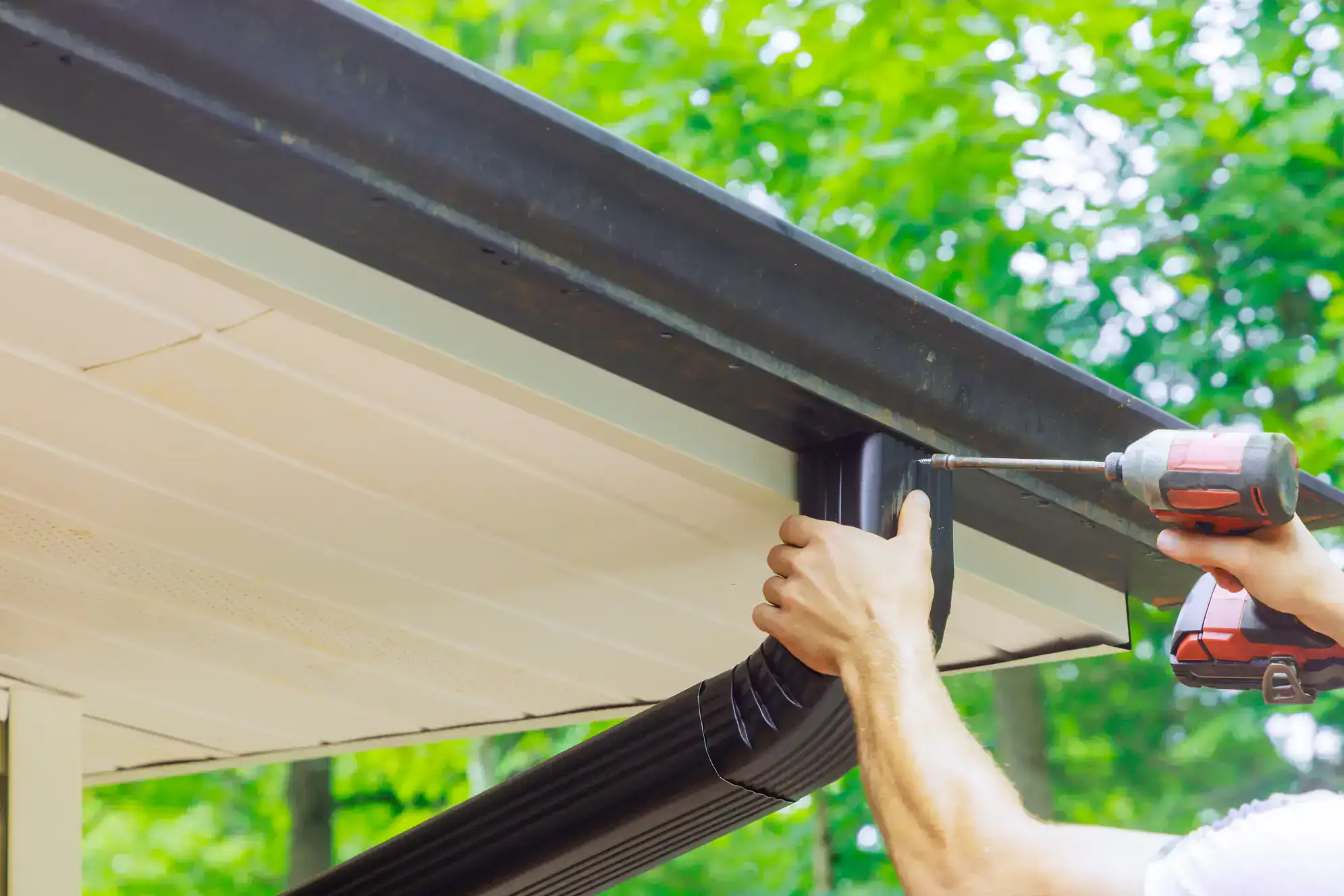
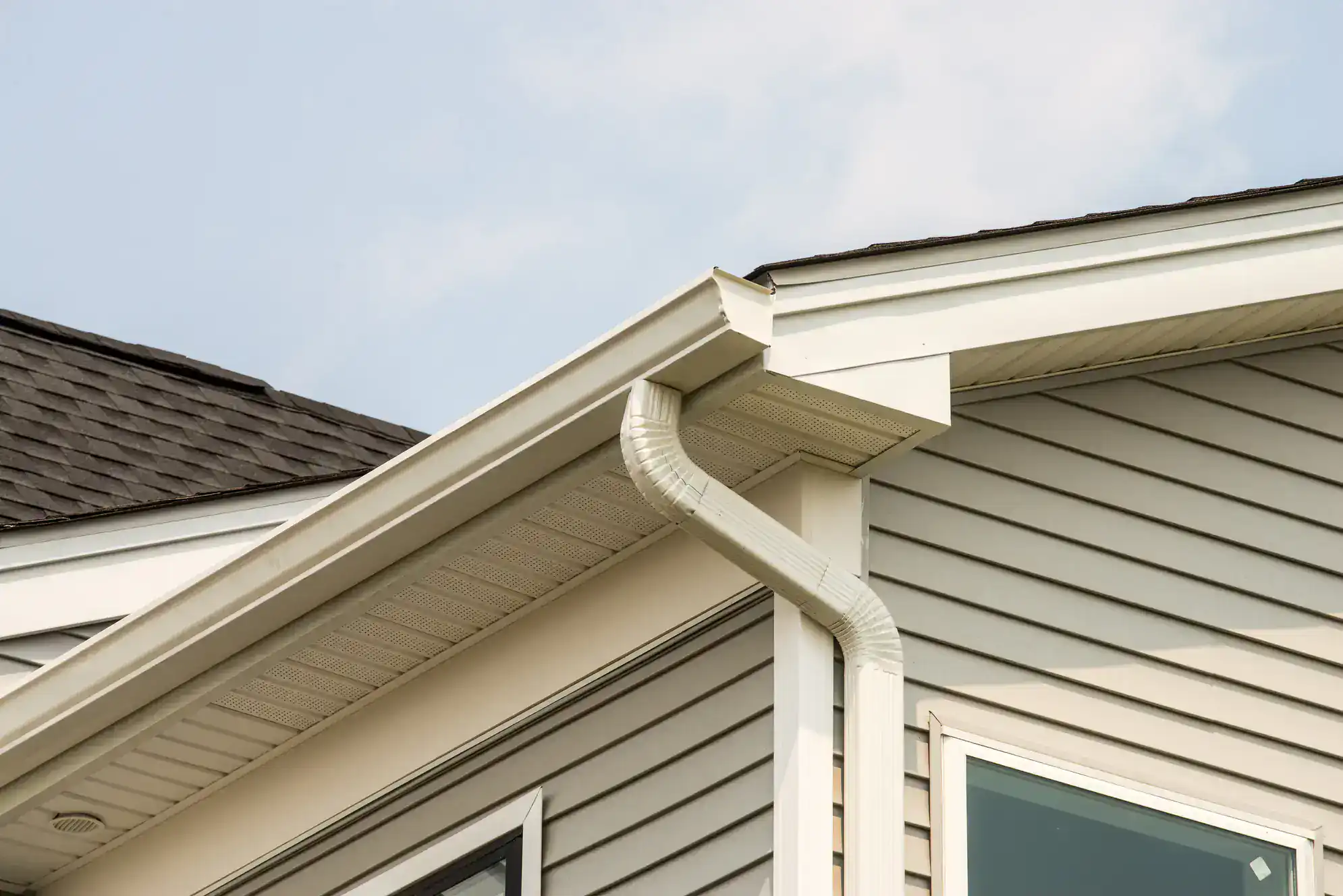
Installation uses seamless aluminum gutters fabricated on-site to your exact measurements. Slope is calculated before any bracket is set — the standard is a quarter inch of drop per ten feet of run, and that’s what moves water efficiently to the downspout rather than letting it pool and stagnate. When the job is done, cleanup is complete and the system is tested before the crew leaves. If your home qualifies for a storm damage insurance claim, the documentation and adjuster communication is handled for you.
Ready to get started?
Roof Gutter Installation Company in Englewood Cliffs
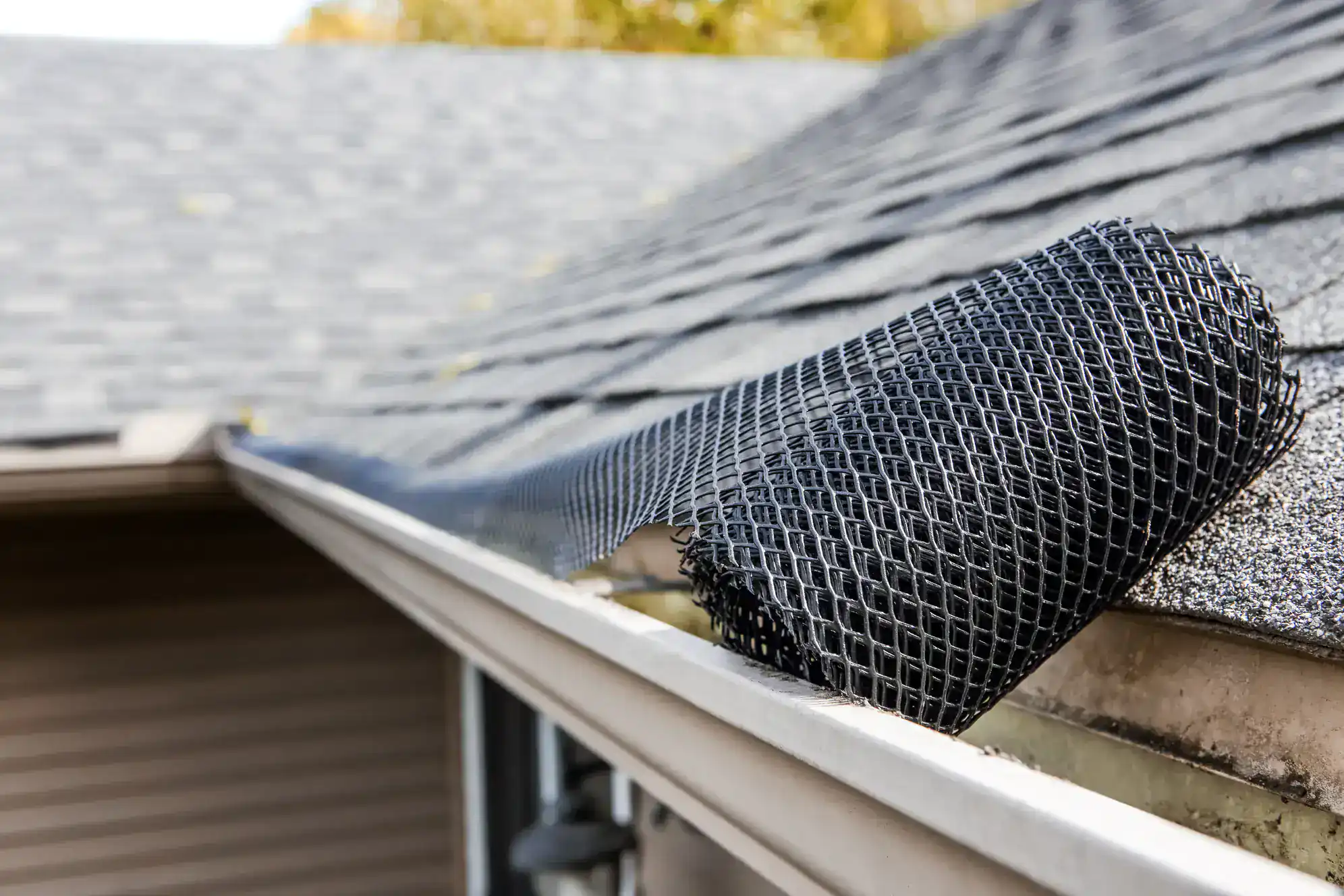
Our gutter installation service covers seamless aluminum fabrication, correct slope and bracket installation, downspout sizing relative to actual roof drainage area, and gutter guard options for homes that deal with heavy debris loads — which describes most of Englewood Cliffs given the park border. Color matching is standard, with 20-plus color options to complement your home’s exterior without drawing attention to the gutters themselves.
For homes along Hudson Terrace or backing up to the Palisades Interstate Park, gutter guard installation is worth a real conversation. The debris volume from that tree canopy isn’t a once-a-year cleaning situation — it’s a recurring maintenance cost that a quality guard system can dramatically reduce. The gutter guard market has grown significantly for exactly this reason, and in a borough where home values average $1.3 million, the investment makes straightforward financial sense.
Every contractor performing home improvement work in Englewood Cliffs is required to hold a valid NJ Home Improvement Contractor registration under state law — and that registration is verifiable. Our license number is publicly listed and can be confirmed through the NJ Division of Consumer Affairs. If a contractor working on your home can’t produce that number, that’s a risk to your insurance coverage, your warranty, and your legal standing as a homeowner. This is not a minor detail on a high-value property.
Do I need a permit for gutter installation in Englewood Cliffs, NJ?
Gutter installation itself typically does not require a separate building permit in New Jersey, including in Englewood Cliffs. However, any contractor performing home improvement work in the borough must hold a current NJ Home Improvement Contractor registration issued by the NJ Division of Consumer Affairs. This is a state-level legal requirement — not optional — and it applies to every job regardless of size or scope.
Where permitting does come into play is if the gutter work is part of a larger roofing project. The Englewood Cliffs Building Department specifically requires permits for roofing work, so if your gutters are being replaced alongside a roof, that permit process needs to be accounted for. We handle this as part of the job — it shouldn’t be something you’re left to figure out on your own.
How do I know if my gutters need repair or full replacement?
The honest answer is that it depends on what’s actually failing, and that’s worth assessing before assuming either direction. Gutters that are pulling away from the fascia, leaking at seams, sagging in the middle, or overflowing consistently during normal rain events are showing signs of a system that’s past its useful life. Sectional gutters — the kind installed on most of the colonials and split-levels built in Englewood Cliffs in the 1960s and ’70s — have joints at every section, and those joints are where leaks start. After 50-plus years, patching them is often a short-term fix on a long-term problem.
If the fascia boards behind the gutters are rotted or soft, that changes the equation entirely. New gutters can’t be properly anchored to compromised wood, so the fascia has to be addressed first. That’s something a gutter-only contractor might miss or defer — it’s something we specifically look for during the inspection before any recommendation is made.
How much does gutter installation cost for a large home in Bergen County?
For a typical home, full gutter replacement generally runs between $2,800 and $5,200, with seamless aluminum systems priced in the range of $8 to $28 per linear foot installed. For larger homes — and many properties in Englewood Cliffs have substantial rooflines and significant linear footage — the total will reflect the actual scope of the job. Story count, roofline complexity, downspout count, and whether fascia repairs are needed all affect the final number.
The most useful thing you can do before comparing quotes is make sure every contractor is quoting the same scope. A low number that doesn’t include proper slope calculation, adequate downspout sizing, or fascia assessment isn’t a better deal — it’s an incomplete job. Our written estimate breaks down every line item so you know exactly what’s included and why. The free inspection is the starting point, and there’s no obligation attached to it.
Will my homeowner's insurance cover storm-damaged gutters in New Jersey?
It can, and it’s more common than most homeowners realize — especially in Bergen County, where storm events have triggered statewide flood watches and local emergency declarations. If your gutters were damaged by wind, hail, falling branches, or ice accumulation, that damage may qualify as a covered loss under your homeowner’s policy. The key is documentation: insurers need clear evidence of the cause and extent of damage, and that’s where having a licensed contractor involved early in the process makes a real difference.
We assist with the insurance claim process directly — documenting the damage, preparing the submission, and communicating with the adjuster on your behalf. Homeowners who navigate this alone often leave money on the table, not because the coverage isn’t there, but because the documentation doesn’t support the full claim. If you suspect storm damage is involved, that’s worth raising at the inspection before any work begins.
What gutter size is right for a larger home in Englewood Cliffs?
Most residential homes use either 5-inch or 6-inch gutters, but the right choice depends on your roof’s actual drainage surface — not just the size of the house. Englewood Cliffs receives close to 48 inches of rain annually, which is roughly 10 inches above the national average. During peak summer months, a single storm can dump several inches of rain in a short window. A 5-inch gutter that might perform adequately in a drier climate can overflow regularly here during those events if it’s undersized for the roof it’s serving.
For the larger colonials and custom estates common in this borough — homes with wide roof spans, multiple valleys, and significant square footage — 6-inch gutters and larger downspouts are often the right call. The inspection process accounts for this specifically: roof pitch, drainage area, and downspout count are all evaluated before a recommendation is made. Upsizing isn’t always necessary, but it should always be a deliberate, calculated decision rather than a default.
Are gutter guards worth it for homes near the Palisades Interstate Park?
For homes in Englewood Cliffs — particularly those along Hudson Terrace or backing up to the park boundary — gutter guards are one of the more practical investments you can make after a new installation. The 2,500-acre Palisades Interstate Park creates a dense tree canopy of oaks, maples, sweetgum, and white pine that drops heavy debris from October through December. Without guards, gutters in this zone typically need cleaning two to three times per year at minimum, and a single missed cleaning before a heavy rain can result in overflow, siding damage, and saturated soil against the foundation.
Quality gutter guards don’t eliminate maintenance entirely, but they dramatically reduce the frequency and reduce the risk of a clog causing real damage between visits. The gutter guard market has grown significantly because the math is straightforward: the cost of a guard system is often recovered within a few years of avoided cleaning costs, and the protection it adds to a new installation extends the useful life of the system. Whether it makes sense for your specific home is something the inspection will help clarify.