
Roof Inspection in Rahway, NJ
Rahway's Older Homes Deserve More Than a Quick Glance
Hear from Our Customers
Roof Damage Inspection in Rahway, NJ
Most Rahway homeowners don’t find out their roof has a problem until water shows up somewhere it shouldn’t. A stain on the ceiling. A soft spot near the eave. By then, what started as a flashing issue or a cracked vent boot has already worked its way into the decking. A professional roof inspection catches those things before they become a gut-punch repair bill.
Rahway’s housing stock is older than most people realize. Pre-war colonials near downtown, Cape Cods in the Milton Lake area, mid-century bungalows throughout Inman Heights — a large portion of these homes are at or past the point where a roof needs serious attention. Add in the freeze-thaw cycles that hit Union County every winter, and you’ve got flashing that expands and contracts, shingles that crack in the cold, and eave lines that are quietly forming ice dams while the attic stays warm and poorly ventilated. These aren’t dramatic failures. They’re slow ones. And slow roof damage is exactly what an inspection is designed to find.
After a nor’easter rolls through or a summer storm drops wind and hail on the Route 1/9 corridor, the damage you can see from the driveway is rarely the whole story. A roof damage inspection in Rahway, NJ gives you the full picture — documented, photographed, and explained in plain language so you can decide what to do next with real information in hand.
Licensed Roof Inspector in Rahway, NJ
USA Home Remodeling has been working on New Jersey homes for over ten years. Roofing is the core of what we do, and we back it up with contractor licenses, certifications from major shingle manufacturers, and the kind of accountability that only comes from a family-run operation where reputation isn’t a marketing line — it’s the whole business model.
We’ve inspected and repaired roofs on the same types of homes that define Rahway’s neighborhoods. We know what a 1950s Cape Cod’s attic ventilation situation typically looks like. We know what freeze-thaw cycles do to chimney flashing on a pre-war colonial. We know what the industrial air along the Route 1/9 corridor does to shingle granules over time. That’s not a sales pitch — that’s just what a decade of working in Union County actually looks like.
Our growth has come from reviews and referrals, not ad spend. When a Rahway homeowner tells their neighbor about us, that means more to us than any campaign. We keep it simple: show up, be honest, do the work right.

Roof Inspection Company in Rahway, NJ
It starts with a phone call or a form submission — whichever is easier for you. You tell us what you’ve noticed, or just that you haven’t had your roof looked at in a while and want to know where things stand. We schedule a time that works for you and show up when we say we will.
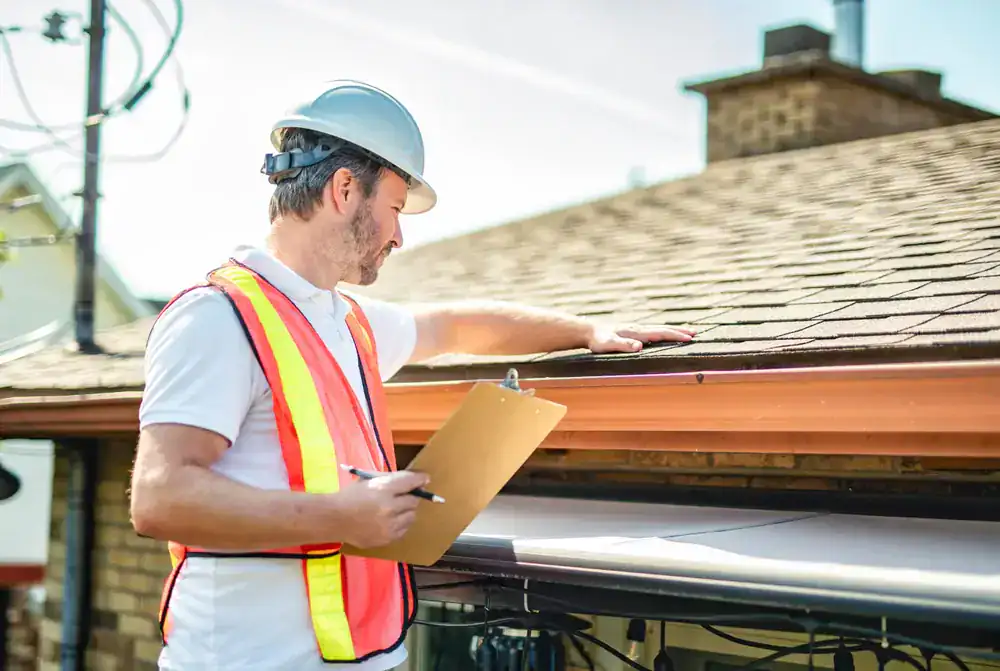
On-site, a certified roof inspector goes through the full exterior: shingles, flashing at the chimney and skylights, vent pipe boots, ridge line, gutters, soffits, and fascia. For Rahway homes near the river corridor, we pay close attention to lower roofline components that can take on moisture stress after flooding events. If there’s attic access, we use it — because what’s happening inside the attic often tells the real story about ventilation, insulation, and any active water intrusion that hasn’t shown up on the ceiling yet.
After the inspection, you get a straightforward summary of what we found. If your roof is in good shape, we’ll tell you that. If there’s damage that needs attention, we’ll explain what it is, why it matters, and what your options are. Any repair or replacement work in Rahway requires permits through the city’s Division of Building under the NJ Uniform Construction Code — we handle that process and pull permits properly, so there are no surprises if you ever sell the home. From the first call to the final walkthrough, the whole thing is designed to give you clarity, not a sales pitch.
Ready to get started?
Certified Roof Inspector in Rahway, NJ
A roof inspection in Rahway, NJ from USA Home Remodeling covers the full exterior envelope — not just the shingles. We look at flashing around every penetration point, the condition of the ridge and valleys, gutter attachment and drainage, soffit and fascia integrity, and any visible signs of granule loss, shingle cracking, or lifted edges. Homes near the Route 1/9 industrial corridor tend to show accelerated granule wear, and we factor that in when assessing how much life a roof has left.
Because we also handle gutters and siding, one inspection call covers the systems that work together with your roof. Wind events that stress shingles also stress gutter seams. Rain that gets under compromised flashing also saturates the fascia behind it. You get a complete picture of your exterior — not three separate assessments from three different contractors.
The inspection is free. No charge, no obligation, and no pressure toward a particular outcome. If you’ve had recent storm activity — a nor’easter, a summer wind event, or any of the flooding events that have historically affected the Rahway River basin — and you’re not sure what it did to your roof, this is the fastest and most cost-effective way to find out. We’re licensed under both New Jersey’s Home Improvement Contractor registration program and Rahway’s own Chapter 178 contractor licensing requirements, and we carry full general liability and workers’ compensation coverage on every job.

How do I know if my Rahway home actually needs a roof inspection right now?
The honest answer is that most Rahway homeowners who need an inspection don’t have an obvious sign pointing them there. If your home was built before 1970 — which covers a large share of the Cape Cods, colonials, and bungalows throughout Milton Lake, Inman Heights, and the neighborhoods surrounding downtown Rahway — and you haven’t had a professional look at the roof in the last few years, that’s reason enough. Asphalt shingles have a typical lifespan of 20 to 30 years, and a roof that’s been through Rahway’s winters, nor’easters, and summer storm seasons for two decades is worth checking.
Beyond age, there are specific triggers worth paying attention to: granules collecting in your gutters, any shingles that look curled or cracked from the ground, a ceiling stain that appeared after a heavy rain, or anything that looked off after the last big wind event. You don’t need all of those to justify a call. Any one of them is worth getting eyes on. The inspection is free, so there’s no financial reason to wait and see.
What does a professional roof inspection actually include from start to finish?
A thorough roof inspection goes well beyond walking around and glancing at the shingles. It covers the full surface of the roof — checking shingle condition, granule loss, and any visible cracking or lifting — plus every penetration point where water can enter: chimney flashing, vent pipe boots, skylight seals, and ridge vents. The valleys and edges of the roof get close attention because those are the areas that collect the most water and tend to fail first.
We also look at gutters, soffits, and fascia as part of the same assessment, because those components are directly connected to how your roof manages water. If there’s attic access, we go in — because signs of moisture, staining on the decking, or compressed insulation often show up there before they show up anywhere else in the house. At the end of the inspection, you get a clear explanation of what we found, what it means, and what — if anything — needs to happen next.
Can a roof inspection in Rahway, NJ help with an insurance claim after storm damage?
Yes, and this is one of the most practical reasons to schedule one after any significant weather event. Rahway has a documented history of damaging storms — the April 2007 nor’easter caused major damage to dozens of homes in the Rahway River basin and triggered a federal disaster declaration for Union County. When storm damage affects your roof, insurance adjusters need documentation: photographs, written descriptions of the damage, and an assessment from a qualified contractor that establishes what happened and when.
A professional roof damage inspection in Rahway, NJ gives you exactly that. We document what we find thoroughly — photos, written notes, and a clear explanation of what the damage is and how it connects to the storm event. That documentation is what supports a legitimate claim and helps you avoid the situation where an adjuster minimizes the damage because there’s nothing concrete on the table. If you’re unsure whether the damage meets your deductible threshold, an inspection gives you the information to make that call before you file.
What's the difference between a certified roof inspector and a regular roofing contractor?
A standard roofing contractor is licensed to do the work — install, repair, replace. A certified roof inspector has completed additional product-specific training through major shingle manufacturers and meets ongoing requirements around licensing, insurance, and customer satisfaction in order to maintain that certification. It’s a higher bar, and it matters for a few concrete reasons.
First, manufacturer certifications unlock warranty coverage that standard contractors cannot offer. If a certified contractor installs your roof, the manufacturer warranty can extend to 25, 30, or more years — including workmanship coverage. An uncertified installer may void or limit that warranty entirely. Second, a certified inspector is trained to evaluate roofing systems against manufacturer standards, not just general contractor judgment. In Rahway, where home values have been rising and protecting that investment matters more than ever, the difference between a standard inspection and a certified one can directly affect your warranty coverage and your long-term costs.
How do ice dams form on Rahway homes, and can an inspection prevent them?
Ice dams form when heat escapes through the attic — usually because of inadequate insulation or ventilation — melts snow on the upper part of the roof, and that meltwater runs down and refreezes at the cold eave line. The ice builds up and creates a dam that traps water behind it. That trapped water backs up under the shingles and eventually finds its way into the attic, the insulation, and sometimes the ceiling below. By the time you see a stain, the damage has usually been happening for a while.
This is a recurring issue in Rahway’s older housing stock. Pre-war and mid-century homes — colonials, Cape Cods, bungalows — were built long before modern attic ventilation standards existed, and many of them have never been updated. Rahway’s winters regularly push temperatures back and forth across freezing, which is exactly the condition that produces ice dams. A roof inspection that includes an attic assessment can identify whether your home has the ventilation and insulation conditions that make it vulnerable, so you can address the root cause rather than just dealing with the damage after the fact every winter.
Is a roof inspection required before replacing a roof in Rahway, NJ?
It’s not legally required as a standalone step, but any roof replacement in Rahway does require a permit through the city’s Division of Building under the New Jersey Uniform Construction Code. Rahway’s municipal code addresses re-roofing under its construction permit fee schedule, and the city also has its own Chapter 178 contractor licensing requirements that apply to anyone performing roofing work. A contractor who skips the permit process is putting you at risk — unpermitted work can complicate a future home sale and may void your homeowner’s insurance coverage for related damage.
As a practical matter, an inspection before a replacement is genuinely useful because it determines the scope of the job. If the decking underneath is damaged, that affects the estimate. If there are ventilation deficiencies that contributed to premature shingle wear, those need to be corrected before the new roof goes on — otherwise you’re just repeating the same problem on a new surface. An inspection gives you and your contractor the full picture before any work starts, which leads to more accurate pricing and fewer surprises mid-project.
Other Services we provide in Rahway