
Roof Inspection in Liberty Square, NJ
Liberty Square's Older Homes Deserve More Than a Guess
Hear from Our Customers
Roof Damage Inspection in Liberty Square
A lot of Liberty Square homeowners don’t find out their roof has a problem until water shows up on the ceiling. By then, the damage has usually been building for months — working through the shingles, into the decking, soaking the insulation, and setting up the conditions for mold. A proper roof inspection catches that before it becomes a costly repair or a health issue inside your home.
The housing stock in Liberty Square is older than most people realize. Homes built in the 1940s and 1950s have roofing systems that have been through decades of nor’easters, freeze-thaw cycles, and summer storms off the coast. That kind of wear doesn’t always show up as a missing shingle you can spot from the street. It shows up as cracked flashing around a chimney stack, a failing underlayment beneath shingles that still look okay, or a vent boot that’s been slowly letting water in for two winters.
For landlords managing two-family or multi-unit buildings throughout Liberty Square — which make up a significant portion of the neighborhood’s housing — a documented inspection also gives you a clear picture of where you stand from a maintenance and liability standpoint. You’re not guessing. You have something in writing.
Licensed Roof Inspector in Liberty Square, NJ
We’ve been working on roofs across New Jersey for over ten years, with deep experience in neighborhoods like Liberty Square and Frog Hollow. Our team is fully licensed under New Jersey’s Home Improvement Contractor program and holds certifications from major shingle manufacturers — credentials that less than a small fraction of roofing contractors in the country actually earn.
What that means for you practically: your inspection is done by someone who knows what aging roofs in Liberty Square actually look like, not someone reading off a checklist. We understand the specific challenges of this neighborhood’s older housing stock — the tight spacing between buildings that creates concentrated wind pressure, the flat and low-slope roof sections common on two-family homes, and the freeze-thaw damage patterns that come with Union County winters. If work is needed, you qualify for manufacturer-backed warranty coverage that uncertified contractors simply cannot offer.
Our business grew through customer reviews and referrals — not advertising — because the work earned it. That’s the kind of track record that holds up.

Roof Inspection Company in Liberty Square, NJ
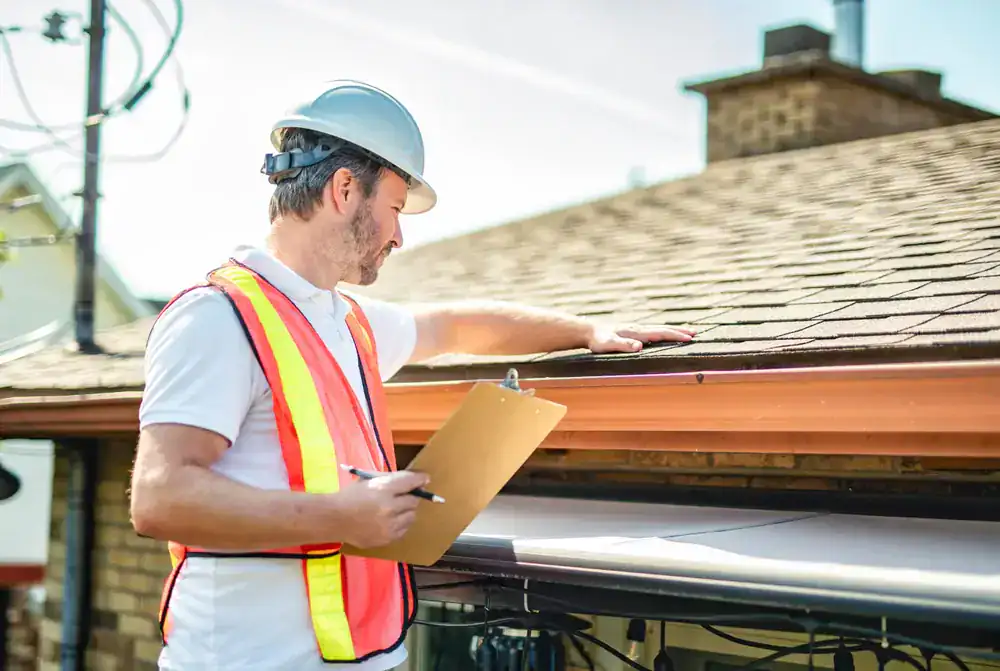
It starts with a call or a quick message to schedule your free roof inspection in Liberty Square, NJ. No deposit, no commitment — just a time that works for you. When our inspector arrives, they’re not doing a drive-by assessment from the ground. They’re going up on the roof and looking at the full system: shingles, flashing, ridge caps, gutters, soffits, fascia, vents, and any penetrations like chimneys or plumbing stacks.
In Liberty Square specifically, that inspection also accounts for the flat and low-slope roof sections common on older two-family buildings — areas that fail differently than standard pitched roofs and require a different eye. The tight spacing between buildings here also creates wind conditions that concentrate pressure on roof edges and ridge caps in ways that don’t affect more open suburban properties. Those are the spots that get missed when someone isn’t looking for them.
After the inspection, you get a clear, written summary of what we found. If everything looks solid, you’ll hear that. If there are issues, they’ll be explained in plain language — what they are, why they matter, and what your options are. If repair or replacement work moves forward, Elizabeth’s Bureau of Construction requires a building permit under the NJ Uniform Construction Code, and we handle that process on our end. You won’t be left to figure that out on your own.
Ready to get started?
Certified Roof Inspector in Liberty Square, NJ
Our roof inspection isn’t a quick visual scan. It’s a full evaluation of every component that keeps water out of your home — and in Liberty Square, that list is longer than most people expect. The inspection covers shingle condition and granule loss, flashing integrity at chimneys, skylights, and walls, the condition of the underlayment, gutter attachment and drainage, soffit and fascia condition, attic ventilation where accessible, and the structural integrity of the roof deck itself.
For the flat and low-slope roof sections found on many of the older two-family and multi-unit buildings throughout Liberty Square and the surrounding Frog Hollow area, the inspection also evaluates membrane condition, ponding water risk, parapet wall flashing, and drainage points — failure modes that are completely different from a standard pitched roof and require specific knowledge to assess accurately.
After the inspection, you receive a written report documenting current conditions, any damage found, and recommended next steps. That documentation matters whether you’re planning a repair, preparing for a potential insurance claim, or simply trying to understand what kind of maintenance timeline you’re looking at. The inspection is free. The report is yours to keep. And if no work is needed, that’s exactly what you’ll be told.

How do I know if my Liberty Square home actually needs a roof inspection right now?
You don’t have to wait for a visible leak to justify an inspection. In Liberty Square, where a large portion of the housing stock dates back to the 1940s and 1950s, age alone is a strong reason to get eyes on your roof. Most asphalt shingle roofs have a functional lifespan of 20 to 30 years, and if you don’t know when yours was last replaced, an inspection is the fastest way to find out where you stand.
Beyond age, there are a few things worth paying attention to: granules collecting in your gutters after rain, shingles that look cupped or curling at the edges, any staining on interior ceilings or walls, or visible daylight in the attic. Any one of those is worth a call. And if you’ve come through a recent nor’easter or summer storm, a post-storm roof damage inspection in Liberty Square, NJ is worth scheduling even if nothing looks wrong from the street — wind damage to flashing and ridge caps often isn’t visible until water has already found its way in.
What's actually included in a free roof inspection — is it a real assessment?
Yes — it’s a full inspection, not a sales visit. When one of our inspectors comes out for a free roof inspection in Liberty Square, NJ, they go up on the roof and evaluate the entire system. That includes shingle condition, flashing at every penetration point, ridge and hip caps, gutter attachment, soffit and fascia, and the roof deck where accessible.
For the flat or low-slope sections common on older two-family buildings throughout Liberty Square and Frog Hollow, the inspection also covers membrane condition, drainage points, and parapet wall flashing — areas that fail differently than pitched roofs and require specific experience to assess correctly. At the end, you get a written summary of what we found. If the roof is in good shape, you’ll hear that directly. If there are issues, they’ll be explained clearly with no pressure to move forward on anything. The inspection is genuinely free — no obligation attached.
Does a roof inspection in Liberty Square, NJ require a permit or any paperwork?
The inspection itself doesn’t require a permit — it’s an assessment, not construction work. You don’t need to file anything with the city just to have your roof evaluated. However, if the inspection identifies issues that require repair or full replacement, that work does require a building permit through Elizabeth’s Bureau of Construction under New Jersey’s Uniform Construction Code.
Permit applications for roofing work in Elizabeth typically take around 20 to 30 business days to process, and the permit must remain active through the completion of the job and final inspection. If you hire us, we handle the permitting process on our end — you won’t be navigating city paperwork on your own. One important note: hiring an unregistered contractor in New Jersey means you lose your legal protections under the Consumer Fraud Act. Always verify that your contractor holds a valid NJ Home Improvement Contractor registration before any work begins.
How does a roof inspection help if I'm filing a homeowner's insurance claim?
Insurance claims for roof damage move faster and hold up better when you have professional documentation behind them. When you file a claim after a storm — whether it’s a nor’easter that came through Union County in January or a summer thunderstorm that brought high winds and hail — your insurance company will send their own adjuster. Having an independent inspection report from a licensed roof inspector in Liberty Square, NJ gives you a clear, contractor-documented account of what was found and when.
That matters because adjusters don’t always catch everything, especially the less obvious damage: lifted flashing, cracked vent boots, or granule loss that signals accelerated aging. A written inspection report from a certified contractor gives you a second set of findings to reference and, if needed, dispute. It also establishes a timeline — showing that the damage was identified shortly after the event rather than after prolonged neglect, which can affect how a claim is evaluated. Getting the inspection done quickly after a storm is the most practical step you can take before the claim process moves forward.
I'm a landlord with a rental property in Liberty Square — do I need a roof inspection?
If you own a rental property in Liberty Square, a professional roof inspection isn’t just a good idea — it’s part of managing your legal exposure as a landlord. Under New Jersey landlord-tenant law, you’re required to maintain habitable conditions in your rental units, and a weathertight roof is part of that standard. If a tenant reports a leak and you can’t demonstrate that you’ve been proactive about maintenance, that puts you in a difficult position.
A documented inspection from us gives you a written record of the roof’s condition at a specific point in time. That documentation supports your maintenance decisions, helps you plan for capital expenses before they become emergencies, and gives you something concrete to reference if a tenant dispute or insurance situation arises. For two-family and multi-unit buildings — which are common throughout Liberty Square — the flat and low-slope roof sections require regular attention that goes beyond what a standard visual check from the ground can catch.
What's the best time of year to schedule a roof inspection in Liberty Square, NJ?
The best time is before something goes wrong — but if you’re thinking seasonally, spring and fall are the two most practical windows. Spring inspections let you assess any damage from the winter: freeze-thaw cycling is hard on flashing seals and shingle tabs, and ice dam conditions in older homes with inadequate attic ventilation — which is common in Liberty Square’s pre-1960 housing stock — can cause damage that isn’t obvious until the snow melts. Catching that in March or April means you can address it before the next rain season.
Fall inspections serve a different purpose: they let you go into winter knowing your roof is ready. Union County gets its share of nor’easters between November and March, and a roof with a failing flashing seal or a compromised ridge cap going into that season is a roof that’s likely to let water in. That said, if you’ve recently come through a significant storm — or if you’ve noticed anything unusual inside your home like ceiling stains or drafts — don’t wait for the calendar. A roof leak inspection in Liberty Square, NJ is worth scheduling any time you have a reason to be concerned.
Other Services we provide in Liberty Square