
Gutter Replacement in Park Village, NJ
Century-Old Homes Here Don't Forgive Failing Gutters
Hear from Our Customers
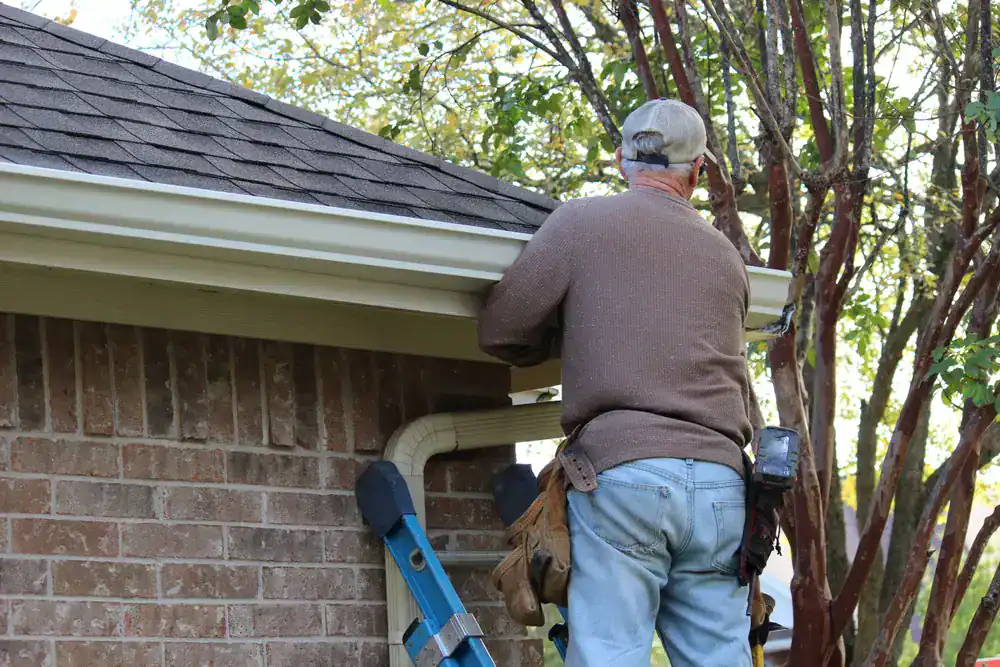
Rain Gutter Replacement in Park Village
Most homeowners in Park Village don’t call about gutters until something else goes wrong — a wet basement, a rotting fascia board, paint peeling off the siding. By that point, the gutter was probably failing for a season or two already. The good news is that replacing them correctly stops the chain reaction before it gets expensive.
Park Village’s housing stock is predominantly over 100 years old. That means your home was built in an era when drainage standards were different, fastening systems were primitive by today’s measure, and no one was accounting for the rainfall intensity that Northeast storms now deliver. When gutters on these homes fail, water doesn’t just run off the edge — it saturates the soil against your foundation, works into the fascia, and in a village with documented flood hazard areas near the Hackensack River, it compounds a drainage problem that already has less margin for error than most towns.
Properly installed seamless gutters — pitched correctly, fastened with hidden hangers, and sized for your roofline — redirect that water away from your foundation before it becomes your problem. You stop the rot before it spreads. You protect the investment you’ve made in a home that, in this market, is worth close to half a million dollars. That’s the actual outcome. Not prettier gutters. A drier, more structurally sound house.
Gutter Replacement Contractors in Park Village
We’ve been doing exterior work in the North Jersey market for over ten years. We’re family-owned, which means the people making decisions about your job are the same people whose name is attached to it. In a compact, 1.4-square-mile village like Park Village — where neighbors notice the work done on the house next door — that accountability isn’t a talking point. It’s just the reality of operating here.
We hold contractor licenses and certifications from major shingle manufacturers, along with New Jersey Home Improvement Contractor registration, which is a legal requirement for any legitimate operator doing home improvement work in this state. These aren’t self-awarded credentials. They require documentation, insurance verification, and adherence to real standards.
Most of our business has grown through customer reviews, not advertising spend. That matters because it means every job has to hold up — there’s no marketing budget to outrun a bad reputation in Bergen County.

House Gutter Replacement Process in Park Village
It starts with a free inspection. One of our technicians comes out, walks the roofline, checks the existing gutters, and looks at the fascia boards behind them. On homes in Park Village — most of which were built in the early 1900s — that fascia inspection matters more than people expect. If the wood behind the gutter has been compromised by years of water exposure, installing new gutters over it doesn’t solve the problem. You need to know what’s actually there before anything gets replaced.
From there, you get a clear, itemized estimate. Linear footage, material type, downspout count, any fascia work identified — it’s all spelled out before you sign anything. If you have questions about what’s included or why something is priced the way it is, that conversation happens before the job starts, not after.
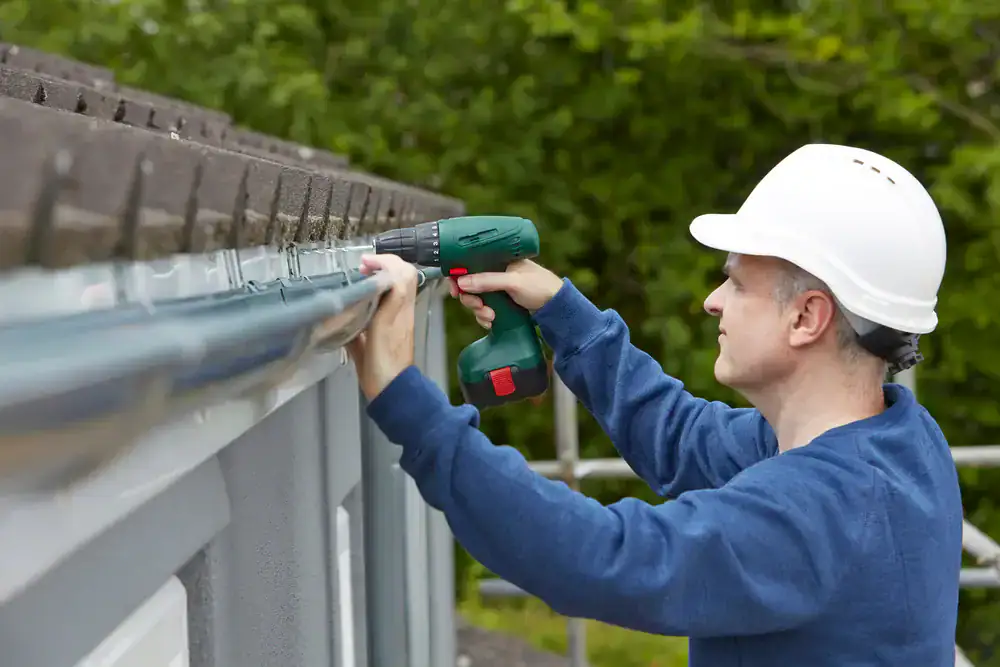
On installation day, the gutters are fabricated on-site as seamless aluminum runs custom-fitted to your home’s exact dimensions. The old system comes down, fascia is assessed and addressed if needed, and the new gutters go up with hidden hanger fasteners spaced to handle the kind of heavy rainfall that Bergen County sees in spring and during summer storm systems. Downspouts are positioned to carry water well clear of your foundation. When the crew leaves, the site is cleaned up and you do a walkthrough together so you can see exactly what was done.

Ready to get started?
Roof Gutter Replacement Services in Park Village
Gutter replacement on a newer home and gutter replacement on a century-old American Foursquare in Park Village are not the same job. The wide eaves, the varied roofline pitches, and the likelihood of compromised fascia behind the existing gutters all require a more thorough assessment than a standard swap-and-go. That’s why the free inspection isn’t just a scheduling formality — it’s the part of the process that determines what the job actually needs to be.
Every roof gutter replacement through our company includes seamless aluminum gutters custom-fabricated on-site, hidden hanger fasteners installed at proper intervals, downspout placement designed to move water away from your foundation, and a full site cleanup when the work is done. If the inspection identifies fascia damage — which is common on homes of this age throughout Park Village — that gets documented and addressed as part of the scope, not discovered mid-job and added to your bill without warning.
For homeowners in Park Village who are near the flood hazard areas along the Hackansack River corridor, downspout positioning and drainage direction are particularly important. If you have questions about whether any portion of your project requires a permit review through Ridgefield Park’s Building Department at 234 Main Street, that’s a straightforward question they can answer before work begins. We can walk you through what typically applies and what doesn’t.

How do I know if my gutters actually need full replacement in Park Village?
The clearest signs are gutters that are pulling away from the fascia, visibly sagging between hangers, or showing rust and cracks along the seams. But on homes in Park Village — where most of the housing stock is over 100 years old — there’s often a less obvious issue underneath: the fascia board itself has rotted from years of water contact, and the gutters are only staying up because of habit at this point.
If you’re seeing water overflow during moderate rain, staining on your siding below the gutter line, or soft spots developing near your foundation after storms, those are functional failures, not cosmetic ones. A free inspection will tell you definitively whether repair is viable or whether full replacement is the more cost-effective path. In most cases on homes of this age in Park Village, replacement with a properly sized seamless system is the answer that actually holds up long-term.
What's the difference between seamless gutters and the sectional gutters most older homes have?
Sectional gutters are pieced together in pre-cut lengths and joined at seams. Every seam is a potential failure point — they collect debris, they separate over time, and they’re the first place water finds a way through. On a home that’s been through decades of Bergen County winters, freeze-thaw cycles, and the kind of heavy spring rainfall this region regularly sees, those seams tend to go.
Seamless gutters are fabricated as one continuous run from a single piece of aluminum, custom-cut on-site to match the exact length of your roofline. There are no mid-run joints, which means no mid-run leak points. They’re also installed with hidden hanger fasteners rather than the old spike-and-ferrule system that most homes in Park Village were originally fitted with — a system that works loose over time and is one of the primary reasons gutters start pulling away from the fascia on older homes.
Does gutter replacement require a permit in Park Village, NJ?
Standard gutter replacement — removing the old system and installing a new one in the same configuration — typically does not require a permit in most New Jersey municipalities. However, if the work involves structural fascia repair, changes to downspout routing, or if your home is located within one of Park Village’s designated flood hazard areas near the Hackensack River, it’s worth a quick call to the village’s Building Department at 234 Main Street before the job starts.
New Jersey does require that any contractor performing home improvement work be registered with the NJ Division of Consumer Affairs as a Home Improvement Contractor. That registration is a legal baseline — not optional — and you should ask for it from any contractor you’re considering. We carry this registration along with our contractor licenses, so that documentation is available if you want to verify it before moving forward.
How much does gutter replacement typically cost for a home in Park Village, NJ?
For a standard single-family home in Park Village, gutter replacement with seamless aluminum gutters generally runs somewhere in the range of $1,000 to $2,500, depending on the linear footage of your roofline, the number of downspouts, and whether any fascia repair is needed. Homes in Park Village tend to be on the larger side of that range simply because the older American Foursquare style common throughout the neighborhood often has more roofline perimeter and wider eaves than newer construction.
If significant fascia damage is found during the inspection — which is not unusual on homes built before World War I — that work is scoped and priced separately so you know what you’re looking at before anything is committed. The estimate you receive will be itemized, not a single lump number. You’ll see what you’re paying for and why, which makes it easier to compare it against any other quotes you’re collecting.
What time of year is best for gutter replacement in Park Village, NJ?
Late summer through early fall is generally the best window — before the leaves start coming down and before temperatures drop into freeze-thaw territory. Park Village’s tree canopy is substantial, and once October arrives, gutters fill fast. Getting a new system in place before that happens means you’re heading into the high-demand season with everything working correctly rather than scrambling after the first heavy rain.
Spring is the second most common time homeowners in this area schedule replacements, usually because a winter of ice and freeze-thaw cycles revealed problems that weren’t obvious before. The combination of Bergen County’s cold winters and the moisture-rich environment near the Hackensack River makes ice dam formation a real risk on older homes — and gutters that are already compromised going into winter tend to come out of it in noticeably worse shape. If you noticed any separation, sagging, or overflow this past winter, it’s worth getting an inspection scheduled before the spring storms test the system again.
Why does proper gutter installation matter more in Park Village than in other towns?
A few things make Park Village specifically unforgiving when gutters aren’t working right. First, the proximity to the Hackensack River means portions of the village sit within documented flood hazard areas, and the water table in low-lying sections is already elevated. When gutters overflow and direct water toward a foundation in that environment, the consequences arrive faster and go deeper than they would in a higher, drier community.
Second, Park Village operates a combined sewer system — one that carries both stormwater and sanitary sewage in the same pipes. The village is currently under a New Jersey DEP compliance agreement and actively working to separate that infrastructure. In that context, gutters that overflow onto driveways and sidewalks aren’t just a property problem — they contribute to a stormwater load that the system is already struggling to handle. A properly installed gutter system that directs water into appropriate drainage paths is genuinely the responsible choice for a homeowner in this village, not just a home maintenance checkbox.
Other Services we provide in Park Village