Gutter Installation in Free Acres, NJ

Built for the Canopy Over Free Acres

Free Acres sits under a dense tree canopy on 75 wooded acres — and your gutters take the full impact of that every single season. We install seamless gutter systems sized for what your roof actually deals with, not what works on a standard suburban lot.
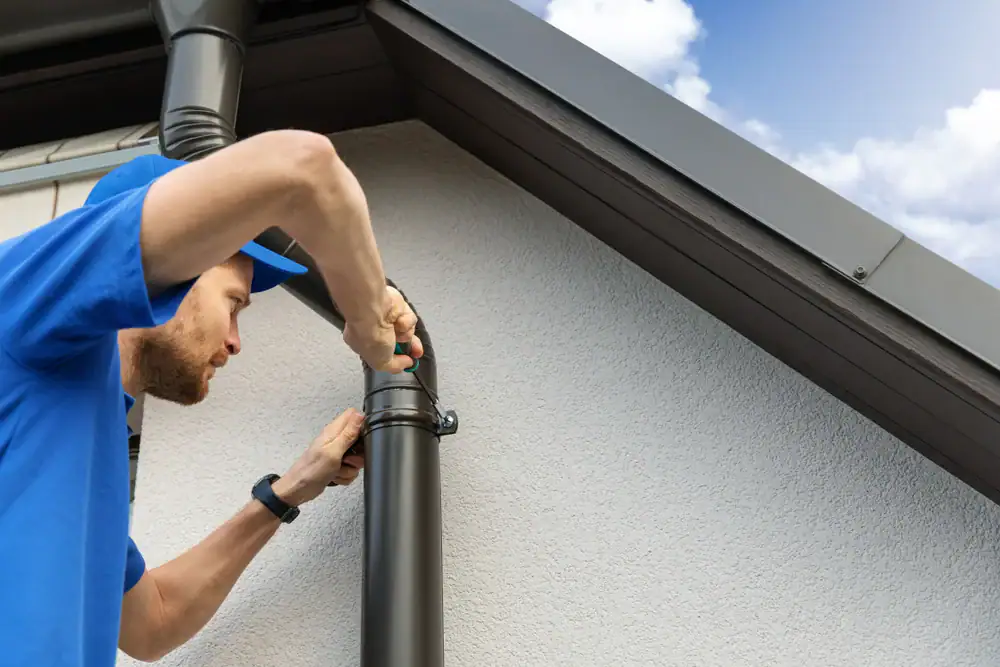
A person on a ladder installs or repairs a house gutter system, securing downspouts to the roof edge on a sunny day—showcasing expert Home Remodeling Union County, NJ services.

Hear from Our Customers

Close-up of a black metal gutter and downspout attached to a home remodeling project in Union County, NJ; the porch column features a decorative gold capital, with green tree branches in the background.

Rain Gutter Installation, Free Acres NJ

What Changes When Your Gutters Actually Work

When gutters are doing their job, you stop finding water in places it doesn’t belong. No more pooling along the foundation. No more fascia boards quietly rotting behind clogged, overflowing channels. No more basement moisture showing up after a hard July storm rolls through the area. That’s what happens when a system that was never sized right keeps getting pushed past its limit.

Free Acres is one of the most densely wooded residential communities in Union County. The mature canopy that makes this place feel like a retreat also drops continuous debris onto your roof from March through December. Leaves, seeds, pollen, and broken branches don’t take a season off. A gutter system that isn’t sized and sloped correctly for that kind of load will fail faster here than it would almost anywhere else in the area.

A lot of the homes here also have history — original bungalows that have been significantly expanded over the decades, with rooflines and drainage systems that were never updated to match the added square footage. When the roof area grows but the gutters don’t, overflow isn’t a matter of if. Getting that properly assessed and corrected is what actually protects your home long-term.

Gutter Contractors in Free Acres, NJ

A Decade In, and Still Earning It Job by Job

We’re a licensed exterior contractor based in Elizabeth, NJ, serving homeowners across Union County — including Berkeley Heights, the municipality that governs most of Free Acres. NJ HIC License #13VH10605800. We hold manufacturer certifications from major material manufacturers. More than ten years working on roofs, gutters, and siding in communities that have real weather, real trees, and real housing stock with decades of wear on it.

This isn’t a national franchise with a rotating crew and a call center. Our work here is built on referrals — homeowners who called because a neighbor recommended us, not because of a paid ad. In a community of 85 households like Free Acres where everyone knows who’s been working on whose house, that kind of reputation either holds up or it doesn’t. It’s held up.

We provide free estimates and written quotes with no hidden fees. If repair is the right answer, that’s what you’ll hear. If replacement is necessary, you’ll know exactly why before any work begins.

A person uses a power drill to attach a black downspout to the gutter system on the edge of a house roof, with green trees in the background—a common scene during home remodeling in Union County, NJ.

Home Gutter Installation in Free Acres

No Guesswork — Here's Exactly What to Expect

It starts with a free inspection. Before anything is quoted or scheduled, we take a real look at the existing system — gutters, fascia boards, downspout placement, and drainage path away from the foundation. For older Free Acres homes, this step matters more than most people realize. A bungalow that’s been expanded over the years may have fascia that’s been quietly absorbing moisture for a long time. If that’s the case, you’ll know before new gutters go up, not after.

From there, we take measurements and calculate slope for every run. We fabricate seamless aluminum gutters on-site to fit your specific roofline — one continuous piece per run, no mid-span seams, no joints where leaks typically start. Downspouts are sized based on actual roof area and the rainfall intensity this area sees, not a generic estimate. Berkeley Heights averages over 30 inches of rain annually, with July and December each pushing above three inches — that’s real volume, and it has to go somewhere.

Because Free Acres homes may require Free Acres Association review for exterior changes, the written estimate is detailed enough to support that process if needed. Once everything is confirmed, installation is clean, efficient, and fully explained before our crew leaves.

Close-up of a house roof gutter with a partially unrolled black mesh gutter guard laying on top, designed to prevent debris from clogging the gutter—a smart solution for NJ homeowners planning Home Remodeling in Union County. The roof has dark asphalt shingles.

Explore More Services

About USA HOME REMODELING LLC

Roof Gutter Installation, Free Acres NJ

What's Included When We Work on Your Home

Every gutter installation in Free Acres starts with a full exterior assessment — not just the gutters themselves. We evaluate fascia condition, existing downspout placement, and how water currently moves away from the foundation. For homes in a wooded, 75-acre enclave where debris load is constant and housing ages vary by decades, skipping that step would mean missing the actual problem half the time.

We install seamless aluminum gutters as the standard, and for good reason. No seams along the run means no weak points for leaks to develop. The system is fabricated on-site to your exact measurements and mounted with proper slope toward the downspouts — something that sounds basic but is regularly skipped on rushed jobs. Gutter guards are also available for Free Acres homeowners who want to reduce cleaning frequency given the canopy overhead.

Downspouts are sized and positioned to handle peak flow, not average flow. If your home has been expanded from its original footprint — which is common in Free Acres — that added roof area generates significantly more runoff than the original system was built for. We also provide storm damage documentation and insurance claim support for homes that took hits from wind or falling branches. Whatever the scope, the estimate is written, detailed, and final — no surprises at the end of the job.

Close-up view of a house exterior in Union County, NJ, showing gray vinyl siding, white trim, and a white rain gutter system with a downspout at the roof corner under a partly cloudy sky—ideal inspiration for home remodeling projects.

Does the Free Acres Association need to approve new gutter installation?

It depends on the scope of work. Free Acres is unique in New Jersey — residents own their homes but lease the land from the Free Acres Association, and the association retains the right to review architectural changes to homes within the community. A straight replacement of existing gutters in the same location, same size, and same color may not require formal association review. But if you’re changing downspout placement, adding gutters where none existed, or making any visible change to the exterior profile of the home, it’s worth confirming with the association before work begins.

The written estimate we provide before any job includes enough detail — scope, materials, placement — to support an association review submission if one is needed. That’s not something most contractors think about when working in Free Acres, but it’s a real part of the process here, and we handle it upfront rather than after the fact.

For a typical suburban lot in New Jersey, twice a year — once in late spring and once in late fall — is usually enough. For a property in Free Acres, that baseline probably isn’t sufficient. The community sits on 75 wooded acres with a mature tree canopy that sheds debris in every season: pollen and seeds in spring, storm debris through summer, the full leaf load in fall, and organic buildup that compresses and holds moisture through winter.

A more realistic cleaning schedule for most Free Acres homes is three to four times per year, with the most critical cleanings happening in late fall before the first freeze and in early spring after the thaw. Gutters that go into winter carrying wet, compacted debris are far more likely to develop ice dams and bracket stress from freeze-thaw cycling. Gutter guards can significantly reduce cleaning frequency and are worth discussing during the estimate, particularly for homes with heavy canopy coverage directly overhead.

The standard residential gutter is a 5-inch K-style profile, and it’s adequate for a lot of homes. But whether it’s right for yours depends on your roof’s square footage, its pitch, and the rainfall intensity your area sees. Berkeley Heights — the municipality governing most of Free Acres — averages over 30 inches of rain annually, with peak months pushing above three inches. That’s a meaningful volume, especially during intense summer thunderstorms that deliver a lot of water in a short window.

For Free Acres homes that have been expanded from their original bungalow footprints, this matters even more. A home that started at 900 square feet and has grown to 2,000 or more generates significantly more roof runoff than a 5-inch gutter system may have been designed to handle. In those cases, 6-inch gutters and larger downspouts are often the right call. The only way to know for certain is to measure the actual roof area and run the numbers — which is part of every free inspection before a quote is issued.

Fascia is the board that gutters mount to, and if it’s compromised, new gutters won’t hold. The most common signs are visible: soft or spongy wood when pressed, paint that’s bubbling or peeling along the roofline, or gutters that are already pulling away from the house despite not being physically damaged. In Free Acres, where some homes date back to the early 1900s and have decades of gutter overflow history, deteriorated fascia is not unusual — it’s something we assess on every inspection.

If the fascia is in rough shape, the honest answer is that it needs to be addressed before gutters are installed. Mounting new gutters to rotted wood is a short-term fix that creates a longer-term problem. The inspection will tell you what you’re actually working with, and if fascia repair or replacement is needed, that gets included in the written quote so there are no surprises mid-job.

Yes, in many cases they can — but it depends on the cause of the damage and how the claim is documented. Wind, hail, and falling branches are typically covered under standard homeowners insurance policies as sudden, accidental damage. For Free Acres homes, falling branches from the dense canopy overhead are a real and recurring risk, especially during the summer storm systems that track through the region. Damage from gradual deterioration or lack of maintenance is generally not covered, which is why documentation timing matters.

The key is filing correctly and documenting the damage thoroughly before anything is removed or repaired. We work directly with insurance adjusters, photograph and document storm damage in detail, and help homeowners understand what their policy is likely to cover before a claim is submitted. A lot of homeowners in this area don’t realize their gutters may qualify — and end up paying out of pocket for something their insurance would have handled.

Sectional gutters are pre-cut pieces that get joined together on-site with connectors and sealant at every seam. Those seams are where leaks almost always start — sealant breaks down, connectors loosen, and water finds its way through. For a home that’s been around for decades and has an older sectional system, there’s a good chance the leaks you’re seeing are coming from those joints, not from the gutter material itself.

Seamless gutters are fabricated on-site from a single continuous piece of aluminum, cut to the exact length of each run. There are no mid-span seams, which means significantly fewer points of failure over time. For Free Acres homes — many of which have original or aging sectional systems that have been patched repeatedly — switching to seamless is usually the more durable and cost-effective long-term decision. The upfront cost is comparable, and the difference in performance over a 20-to-30-year lifespan is substantial, particularly given the debris load and freeze-thaw cycling that gutters in this area deal with every year.