
Gutter Replacement in Madison Hill, NJ
Madison Hill Homes Deserve More Than a Patch Job
Hear from Our Customers
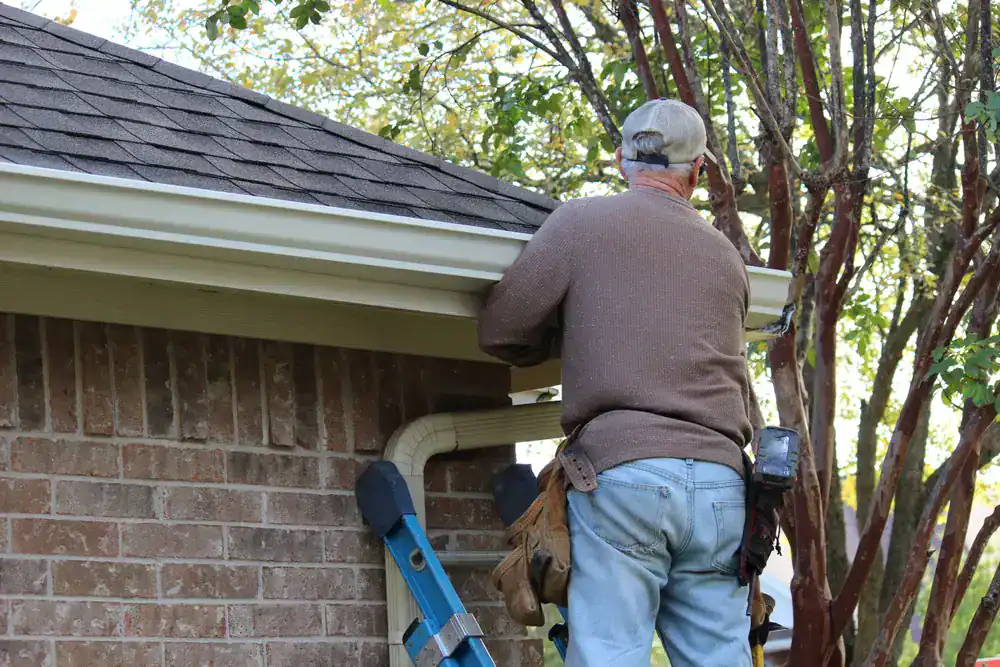
Rain Gutter Replacement in Madison Hill
Most Madison Hill homeowners don’t think about their gutters until something goes wrong. Then it’s the water stain creeping down the siding, the soft spot on the fascia board, or the basement that smells like it got wet again after a hard rain. By the time those signs show up, the gutters have usually been failing quietly for a while.
Getting ahead of it changes a lot. When your gutters are moving water the way they’re supposed to, you stop feeding moisture into the clay-heavy soil that runs along Union County foundations. That matters in Madison Hill more than people realize — clay doesn’t drain, it holds. Water that pools against your foundation because a gutter is overflowing or a downspout is too short builds pressure over time, and that pressure is expensive to fix.
The homes along and around Madison Hill Road were mostly built between the 1940s and 1970s. A lot of them are on their original fascia boards, or close to it. A properly installed seamless gutter system — one that’s pitched right, fastened correctly, and discharging water far enough from the house — takes that pressure off the entire exterior. Less rot. Less moisture intrusion. Less of the slow, invisible damage that turns into a big repair bill a few years down the road.
Gutter Replacement Contractors in Madison Hill, NJ
We’ve been doing exterior work across Union County for over a decade, with deep roots in communities like Madison Hill. Our background in roofing shapes how every gutter replacement gets done — because the two systems are connected. Where the roof ends and the gutter begins matters. If that transition isn’t right, it doesn’t matter how good the gutter is.
Being family-owned means our names are attached to every job. There’s no franchise buffer, no regional call center handling your project. When something needs to be addressed, it gets addressed. That’s just how a business built on reviews and repeat referrals has to operate.
Madison Hill homeowners have been some of our most consistent sources of word-of-mouth over the years. The neighborhood takes care of its properties, and the expectation is that the contractors who work here do the same.

House Gutter Replacement Process in Madison Hill
It starts with a free inspection. Before anything is quoted or scheduled, we come out to look at what you actually have — the existing gutters, the fascia condition behind them, the downspout placement, and how water is currently moving away from the house. If there’s fascia rot or a drainage issue that needs to be corrected before new gutters go up, you’ll hear about it then, not after the job is done.
From there, you get a clear, itemized estimate. Linear footage, material, fastener type, downspout count — all of it spelled out so you understand what you’re paying for and why. For most Madison Hill homes, that means seamless aluminum gutters fabricated on-site to fit the exact dimensions of your roofline. No pre-cut sections, no extra seam points where leaks start.
Installation is typically completed in a single day for a standard single-family home. Madison Hill and the surrounding Clark Township area require permits for most exterior home improvement projects, and if your specific job needs one, we handle that before work begins — not skipped over. When our crew leaves, the job site is clean, the system is tested, and you’ll know exactly what was done and what to watch for going forward.

Ready to get started?
Roof Gutter Replacement Company in Madison Hill
A lot of homeowners assume gutter replacement is just pulling off the old system and hanging a new one. Sometimes that’s all it is. But on the mid-century homes that make up most of Madison Hill’s housing stock, it’s usually more involved than that — and a contractor who doesn’t check is one who’s setting you up for problems down the line.
Before new gutters go up, the fascia boards get inspected. If there’s rot or water damage behind the old system, that has to be addressed first or the new gutters won’t hold. The drip edge where your roof meets the gutter line gets checked too — it’s the handoff point between your roofing system and your drainage system, and it’s one of the most commonly overlooked details in a gutter replacement.
The installation itself uses seamless aluminum gutters custom-fabricated on-site for your home’s specific dimensions. Downspout placement is evaluated based on where water needs to go — not just where the old ones were — with discharge positioned to move water well away from your foundation. Given Union County’s documented flash flood history, including the July 2025 storm that dropped over six inches of rain on the area in a single event, your drainage system needs to perform under real pressure, not just light rain. That’s the standard every installation we complete is held to.

How do I know if I need gutter replacement or just a repair in Madison Hill, NJ?
The honest answer is that it depends on what’s actually wrong. Isolated leaks at a seam or a single section pulling away from the fascia can sometimes be repaired. But if you’re seeing multiple failure points — sagging in more than one area, gutters that consistently overflow despite being clean, visible separation from the fascia along a long run, or rust and corrosion showing through — replacement usually makes more financial sense than repeated repairs.
For homes in Madison Hill that were built in the 1950s or 1960s, there’s another factor worth considering. A lot of those homes still have the original spike-and-ferrule fastener system, where a long nail was driven through the gutter and into the fascia. Those spikes loosen over decades, and once they do, the gutter starts to pull away from the house. You can re-nail them, but they’ll loosen again. A full replacement with hidden hangers — which wrap around the gutter and screw directly into the fascia — solves the problem at the root rather than buying a little more time.
What does gutter replacement cost for a typical home in Madison Hill?
For a standard single-family home in Madison Hill, most gutter replacements run somewhere between $1,000 and $2,400 depending on the linear footage, the number of downspouts, and whether any fascia repair is needed before the new system goes up. Seamless aluminum — which is what most homes here get — sits in the middle of the cost range and is the most practical choice for the type of weather Union County deals with.
What shifts the cost up isn’t usually the gutters themselves. It’s what’s found underneath. Fascia rot is common on Madison Hill’s older housing stock, and if the boards behind the gutters have been holding moisture for years, they’ll need to be replaced before new gutters can be properly secured. That work gets identified during the free inspection, so you know about it upfront — not as a surprise line item after installation has started.
How does Union County's weather affect how long gutters last in Madison Hill?
New Jersey gets roughly 46 to 50 inches of precipitation a year, spread across all four seasons. That means your gutters aren’t just working during spring rains — they’re under load year-round, including through the freeze-thaw cycles that hit Union County every winter. Those cycles are particularly hard on older gutter systems. When water sits in a gutter that’s not pitched correctly and temperatures drop, that water freezes, expands, and forces the gutter away from the fascia. Do that enough winters in a row and the system is done.
The summer side of it matters too. The area experienced a flash flood event in July 2025 that dropped 6.67 inches of rain in a single storm — the highest single-event rainfall total in New Jersey that day. That kind of volume overwhelms a compromised gutter fast. A system that’s already sagging, clogged, or pulling away from the fascia doesn’t just overflow in that scenario — it can direct water straight into your foundation or behind your siding. Aluminum gutters installed correctly have a 20-year lifespan under normal conditions, but in Union County’s climate, the quality of the installation and the condition of the fascia behind it have a lot to do with how close to that number you actually get.
Does gutter replacement in Madison Hill require a permit?
Madison Hill and the surrounding Clark Township area require permits for most exterior home improvement projects. Whether your specific gutter replacement triggers that requirement depends on the scope of work — a straight like-for-like swap with no structural changes is often exempt, but if fascia boards are being replaced or the drainage configuration is changing, a permit may be required.
The right move is to confirm with the local construction office before work begins. Under New Jersey’s Uniform Construction Code, which applies to all municipalities including this area, any work that involves structural components of the exterior typically falls under permit jurisdiction. A contractor who skips that step isn’t doing you any favors — permit violations can create complications when you go to sell the home. We handle permit verification as part of the pre-installation process so nothing gets overlooked.
What type of gutters work best for older homes in Madison Hill?
For the Cape Cods, ranches, and Colonials that make up most of Madison Hill’s housing stock, seamless aluminum gutters are the standard recommendation — and for good reason. They’re fabricated on-site to match your home’s exact roofline dimensions, which means no pre-cut seams along the run where leaks tend to start. Aluminum holds up well through New Jersey winters, doesn’t rust, and is light enough not to stress aging fascia boards.
The width matters too. Most older homes in Madison Hill were originally built with 4-inch gutters, which were standard at the time. Given how much rain Union County now sees — and the documented flooding history in the area — upgrading to 5-inch or 6-inch gutters during a replacement makes a real difference in how the system handles heavy volume. Wider gutters paired with correctly sized downspouts move water faster and reduce the chance of overflow during the kind of intense storms that have hit the region in recent years.
Why does USA Home Remodeling offer free gutter inspections in Madison Hill, NJ?
The free inspection exists because most homeowners in Madison Hill don’t know exactly what’s wrong before they call — they just know something isn’t right. The gutter is sagging, or water is running behind it, or there’s a stain on the siding that wasn’t there last year. A free inspection removes the barrier of having to pay just to get an honest answer about what you’re dealing with.
It also reflects how we operate. We’ve grown almost entirely through customer reviews and referrals, not advertising. That only works if the people who hire us are satisfied — which means the inspection has to be honest, not a sales pitch. If a repair is all you need, that’s what you’ll hear. If the system is at the end of its life and replacement makes more sense, you’ll get a clear explanation of why, with an itemized estimate that lays out exactly what the work involves. For homeowners in Madison Hill who’ve been around long enough to know what a contractor running a script sounds like, the difference is usually obvious pretty quickly.
Other Services we provide in Madison Hill