
Roofer in Madison Hill, NJ
When Clark Township Storms Hit, Your Madison Hill Roof Shouldn't Be the Weak Link
Hear from Our Customers
Local Roofing Company Madison Hill, NJ
Most homeowners on Madison Hill Road and throughout Clark Township aren’t thinking about their roof until something goes wrong. A water stain on the ceiling. Shingles in the yard after a storm. A draft that wasn’t there last winter. By the time those signs show up, the damage underneath has usually been building for a while.
The good news is that catching it early — or replacing an aging roof before it fails — is almost always less expensive and less disruptive than emergency repairs. For homes in Madison Hill that were built in the postwar era, which is most of them, the math is pretty simple: roofs that were installed in the 1990s or early 2000s are now at or past their expected lifespan. A professional inspection tells you exactly where you stand.
What we deliver on the other side of this process is straightforward. A roof that doesn’t leak. A home that’s protected from whatever the next nor’easter or summer storm brings through Union County. And if you’re thinking about selling, a documented, properly permitted, manufacturer-warranted roof is a real asset — not just a checkbox. In a market where Madison Hill homes are valued well above the national median, that protection matters.
Roofing Company in Madison Hill, NJ
USA Home Remodeling is a family-owned exterior renovation contractor based in Elizabeth, NJ — which puts us squarely in Union County, the same county as Madison Hill and Clark Township. We’ve spent over a decade working on homes throughout this area, including the postwar housing stock that defines much of Madison Hill’s character. We hold NJ Home Improvement Contractor License #13VH10605800, verifiable through the NJ Division of Consumer Affairs.
Beyond licensing, we carry certifications from major shingle manufacturers. That matters more than it might sound — those certifications are what allow us to offer enhanced system warranties that most contractors in this market simply can’t provide. A non-certified installer can put shingles on your roof, but they can’t offer you a 30- to 50-year manufacturer-backed warranty. We can.
We’re not a franchise. There’s no call center routing your questions to someone who’s never seen Madison Hill or your neighborhood. When you call us, you’re talking to the people who will actually show up on your roof — and who will still be here if you need to call back.
Emergency Roof Repair in Madison Hill, NJ
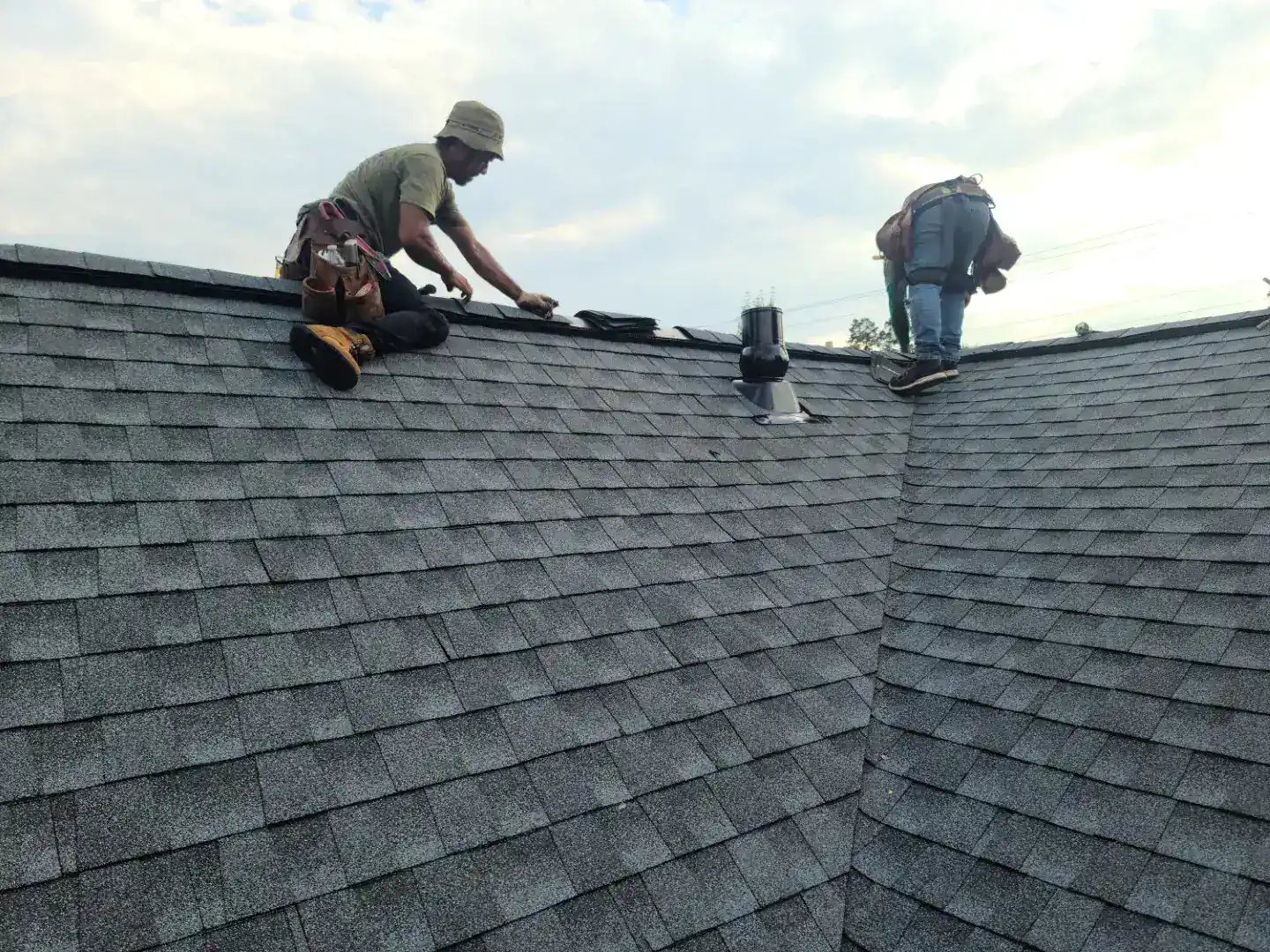
It starts with a free inspection. We come out, get on the roof, check the decking, flashing, and drainage, and look in the attic for any signs of moisture intrusion. You get a photo report of what we found — something you keep regardless of whether you move forward with us. No pressure, no obligation.
If repairs or a full replacement make sense, we walk you through a detailed, itemized estimate before anything is scheduled. You know the full scope and the full price before a single nail goes in. For full replacements in Madison Hill and Clark Township, we handle the building permit process through the township’s Division of Code Enforcement — that’s required under New Jersey’s Uniform Construction Code, and it’s something we manage as a standard part of the job so you don’t have to figure it out yourself.
Once the work is scheduled, we show up when we said we would. The crew works efficiently, and cleanup is part of the job — not an afterthought. If you work from home, which a significant number of Madison Hill residents do, we keep disruption to a minimum and communicate throughout the day. When we’re done, you get documentation of the completed work and any applicable warranty information in writing.
Ready to get started?
Affordable Roofers in Madison Hill, NJ
Roofing in Madison Hill covers more ground than just swapping out shingles. The homes here — Cape Cods, split-levels, colonials, ranches built through the 1940s to 1960s — have their own set of considerations. Aged decking, original ventilation systems, outdated flashing, and layers of previous repairs are common on roofs this old. We assess all of it before we quote anything, because what’s underneath the surface affects the scope and the long-term outcome.
For residential roofing, we handle asphalt shingle installation and replacement, flat roofing systems including TPO and EPDM, roof repair after storm damage, flashing repair and replacement, and full gutter and siding work as part of a complete exterior package. Every qualifying replacement project includes permit handling for Clark Township, manufacturer-certified installation, and warranty documentation you can actually use.
If you’ve received a competing quote, bring it. We offer a beat-or-match price guarantee — not because we’re trying to be the cheapest option in the market, but because we’re confident the value holds up when you compare what’s actually included. Manufacturer certifications, a Union County-based crew, a licensed contractor on record, and a roof that’s permitted and documented for resale. That’s what you’re getting.
Does my Madison Hill home actually need a full roof replacement, or just repairs?
That’s the right question to ask before spending anything, and the honest answer is: it depends on what’s actually up there. Age is one factor — most asphalt shingle roofs have a realistic lifespan of 25 to 30 years, and a significant portion of Madison Hill’s housing stock was built in the postwar era. If your roof was installed in the 1990s or early 2000s, it’s worth a serious look.
What we’re checking during an inspection goes beyond shingle condition. We’re looking at the decking for soft spots, the flashing around chimneys and vents for gaps or rust, and the attic for any signs of moisture that would indicate the roof has already been compromised. In some cases, targeted repairs extend the roof’s life by several years. In others, the underlying structure has deteriorated to the point where repairs are a short-term fix on a long-term problem. We’ll tell you which situation you’re in — with photos — and let you decide.
How much does a roof replacement typically cost in Madison Hill, NJ?
For a standard single-family home in the Madison Hill area, a full asphalt shingle roof replacement generally runs somewhere between $10,000 and $20,000, depending on the size and pitch of the roof, the condition of the existing decking, and the materials selected. Homes with more complex rooflines — dormers, multiple valleys, steep pitches — will land toward the higher end of that range.
Flat roofing systems using TPO or EPDM are priced differently and typically quoted per square foot based on the system specified. The best way to get an accurate number for your specific home is a free on-site inspection, because no two roofs in Madison Hill are identical. We provide detailed, itemized estimates so you know exactly what you’re paying for before you commit to anything.
Do I need a permit to replace my roof in Clark Township, NJ?
Yes. Clark Township requires a building permit for full roof replacements, enforced through the township’s Division of Code Enforcement under New Jersey’s Uniform Construction Code. Minor repairs may fall under ordinary maintenance and not require a permit, but a full replacement — tearing off existing material and installing a new roofing system — requires a permit and inspection.
This is something homeowners sometimes skip when they hire an unlicensed contractor or a crew that doesn’t handle the paperwork. The risk is real: unpermitted roofing work can surface as a problem during a home sale, create issues with your homeowner’s insurance, and leave you without legal recourse if something goes wrong. As a licensed NJ Home Improvement Contractor, we pull the permit, schedule the required inspections, and make sure the completed work is on record — so you’re protected.
What should I do if a storm damages my roof in Madison Hill?
The first priority is stopping active water intrusion. If you have a visible breach — missing shingles, a damaged section after a wind event, or a sudden leak during a storm — emergency tarping can prevent water from getting into the structure while a permanent repair is scheduled. Union County sees its share of damaging weather: Tropical Storm Isaias brought 60-mph winds through Clark Township and Madison Hill, and tornado watches and severe thunderstorm events are a recurring part of the weather calendar here.
After the immediate situation is stabilized, the next step is documentation. If you’re filing a homeowner’s insurance claim, you’ll need photos of the damage, an inspection report, and a contractor’s assessment of the scope of repairs. We help with all of that. We respond to emergency calls in Madison Hill, provide the documentation your insurance company will ask for, and give you a clear picture of what the repair or replacement will involve before any work begins.
How do I know if a roofing contractor in Madison Hill is actually licensed in New Jersey?
New Jersey requires any contractor performing home improvement work valued at over $500 to hold a valid Home Improvement Contractor license issued by the NJ Division of Consumer Affairs. You can verify any contractor’s license in seconds on the Division of Consumer Affairs website — just search by business name or license number. USA Home Remodeling holds NJ HIC License #13VH10605800, which is publicly searchable and current.
This matters more than it might seem. An unlicensed contractor cannot legally pull a permit in Clark Township, which means any work they perform is technically unpermitted — a problem that follows the home, not just the contractor. Beyond the legal exposure, unlicensed contractors have no accountability mechanism. There’s no licensing board to file a complaint with, no bond protecting you if the work fails. Checking the license takes about 30 seconds and tells you a lot about who you’re dealing with.
Why does it matter whether my roofer is manufacturer-certified in Madison Hill, NJ?
Most homeowners don’t realize there’s a gap in what different contractors can actually offer — not in terms of skill, but in terms of what the manufacturer will stand behind. When a roofer holds a certification from a major shingle manufacturer, they’re authorized to install that manufacturer’s full system in a way that qualifies for enhanced warranty coverage. That can mean a 30- to 50-year warranty backed by the manufacturer, not just the contractor’s word.
A non-certified installer can use the same shingles, but the warranty they can offer is limited to their own workmanship guarantee — which is only as reliable as the company itself. In Madison Hill, where median home values exceed $766,000, the difference between a manufacturer-backed system warranty and a contractor-only guarantee is a real financial consideration. It’s also a factor at resale: a transferable, documented warranty from a recognized manufacturer is something a buyer’s inspector will notice, and something that supports your home’s value. We hold those certifications — and we’ll show you the warranty documentation before the job starts.
Other Services we provide in Madison Hill