
Siding Installation in Madison Hill, NJ
Clark Township Homes Deserve More Than a Quick Fix
Hear from Our Customers
Residential Siding Contractors in Madison Hill
Most Madison Hill homeowners don’t call about siding until something is visibly wrong — a cracked panel, a soft spot near the foundation, or a heating bill that keeps climbing for no obvious reason. By that point, moisture has usually been working behind the surface for a while. New siding stops that cycle before it turns into a bigger repair.
Clark Township’s freeze-thaw winters are hard on older cladding. When water gets into even a small gap and freezes, it widens that gap. Do that a few hundred times over the course of a decade and the damage compounds quietly. The homes along Madison Hill Road — most of them Cape Cods and ranches built in the 1950s and 60s — were never designed for 40-year-old vinyl to carry the load they’re being asked to carry today.
Beyond the structural side, there’s the value side. Homes in Madison Hill are worth real money — well above the state median. New siding is one of the few exterior projects that meaningfully moves the needle on curb appeal and resale value at the same time. It’s not a cosmetic upgrade. It’s maintenance that pays you back.
Local Siding Company Serving Madison Hill, NJ
We’ve been working on exterior renovations across Union County for close to ten years, with deep roots in Madison Hill and Clark Township. That means we’ve been inside the walls of homes throughout this neighborhood — we know what the substrate looks like under 1980s vinyl, and we know what to do when we find it.
We’re a family-run operation, which means the people making decisions about your project are the same people accountable for how it turns out. No call centers, no rotating project managers. When something comes up mid-job, you hear about it directly — not through a voicemail chain.
We carry contractor licenses and manufacturer certifications, and we pull permits the right way through Clark Township’s Construction Office. The township’s own Residential Housing page tells homeowners to verify contractor registration before signing anything — we pass that check, and we think every contractor you consider should too.

Siding Installation Process in Madison Hill, NJ
It starts with a free inspection. We come out, look at what you’re working with, and give you a straight answer about whether you need full replacement, targeted repair, or nothing yet. A lot of Madison Hill homeowners are surprised to find their siding is further along than they thought — or in better shape than they feared. Either way, you leave the inspection with real information, not a sales pitch.
If replacement makes sense, we put together a written, itemized estimate. Clark Township requires permits for siding installation, calculated at $35 per $1,000 of construction cost — that gets factored in upfront, not added as a surprise line item after you’ve signed. We handle the permit process through the township’s Construction Office so you don’t have to chase paperwork.
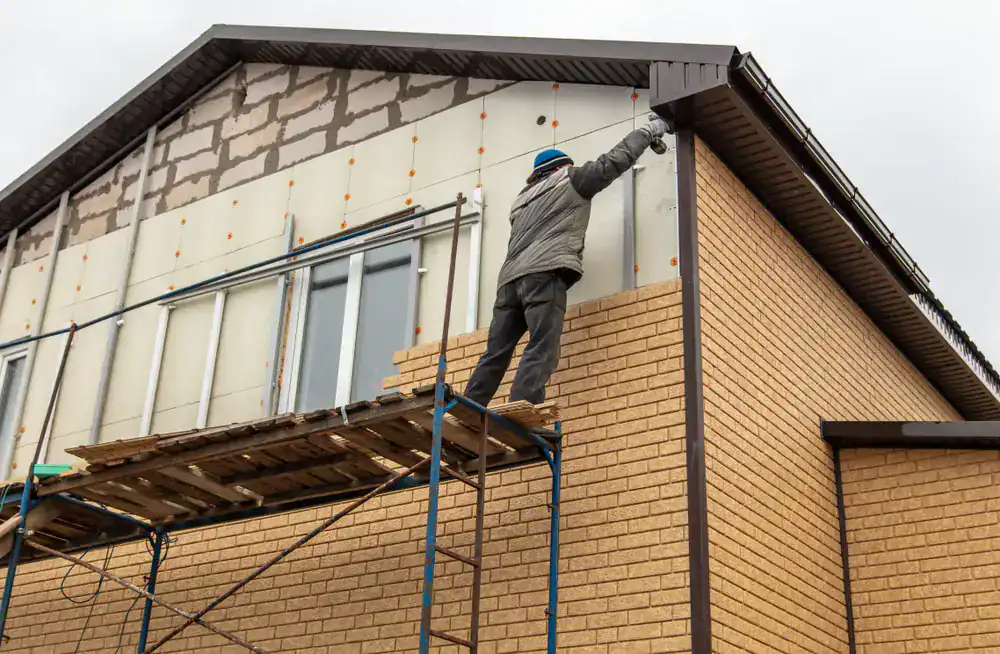
Once the project starts, we remove the existing cladding, assess the substrate, address any moisture or structural issues we find, and install the new material to manufacturer specifications. We work clean, we communicate daily, and we don’t disappear between visits. When we’re done, the site is cleared and the job is documented — including any warranty paperwork tied to your specific material and installation.

Ready to get started?
Vinyl Siding Contractors in Madison Hill, NJ
Most of the homes in Madison Hill were built when aluminum and wood clapboard were the standard. What’s on them now — if they’ve been re-sided at all — is likely first- or second-generation vinyl from the 1980s or 90s. That material is at or past the end of its functional life, and the options available today are meaningfully better.
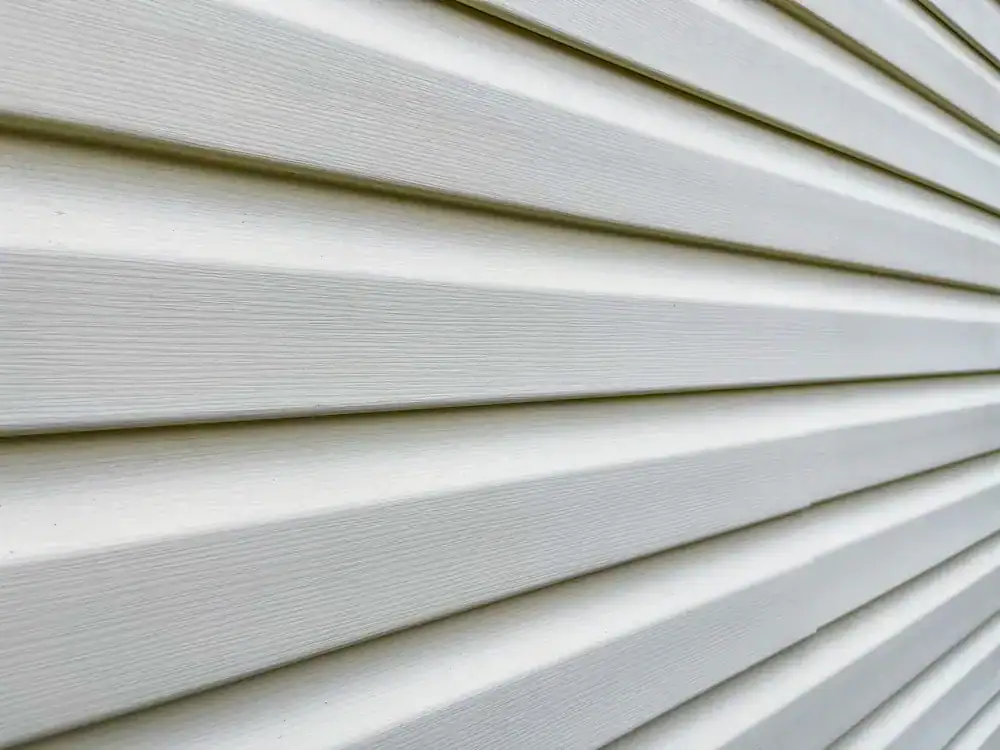
Vinyl siding remains the most common choice for Clark Township homes — it’s durable, low-maintenance, and holds up well through Union County winters when it’s installed correctly with proper expansion gaps. Insulated vinyl, which includes a foam backer, adds a thermal layer that older homes with minimal wall insulation can genuinely benefit from. For homeowners who want something more substantial, fiber cement siding — including James Hardie products — offers the look of wood without the rot risk, and it’s one of the more resilient options available for a home that sees real weather.
The material conversation is something we walk through with every homeowner during the estimate. There’s no one-size answer. What’s right for a south-facing Colonial on a corner lot is different from what works for a ranch set back from the road with mature tree coverage. We’re certified installers, which means we can offer the full manufacturer warranty — not just the standard coverage — on the materials we install.

Do I need a permit for siding installation in Clark Township, NJ?
Yes — Clark Township requires a permit for siding installation, and it’s not optional. The fee is calculated at $35 per $1,000 of construction cost under the township’s Chapter 122 Construction Codes, so on a $15,000 project, you’re looking at roughly $525 in permit fees. That gets factored into your written estimate upfront.
The permit process in Clark also requires zoning officer approval before the application goes to the Construction Office, so the sequencing matters. A licensed contractor who knows the township’s process will handle this correctly from the start. If a contractor tells you permits aren’t necessary or offers to skip them to save you money, that’s a red flag — not a favor. Unpermitted work can create real problems when you sell your home or file an insurance claim.
How do I know if my Madison Hill home's siding needs to be replaced?
There are a few things worth looking at before you call anyone. Fading and chalking that doesn’t clean off, panels that have warped or buckled on the south- or west-facing sides of the house, gaps at seams that have widened over time, and any soft or spongy feeling when you press against the wall near the base — those are all signs that the siding has run its course.
For homes in Madison Hill built in the 1950s and 60s, the more honest question is often how old the current siding is, not just what it looks like. Vinyl from the 1980s or early 90s is now 30 to 40 years old, which puts it at or past the expected end of its lifespan regardless of how it looks on the surface. Moisture damage behind the panels doesn’t always announce itself visibly until it’s already significant. A free inspection gives you a professional read on what’s actually going on — without any obligation to move forward.
What type of siding holds up best through Union County winters?
For most Clark Township homes, insulated vinyl or fiber cement are the two strongest options for handling what New Jersey winters actually deliver. Standard vinyl can become brittle in extreme cold and is more vulnerable to impact damage — a falling branch from the mature trees common in Madison Hill neighborhoods can crack a panel that would flex under warmer conditions. Insulated vinyl’s foam backer adds both thermal performance and a bit of structural rigidity that standard vinyl lacks.
Fiber cement — James Hardie being the most widely used brand — handles freeze-thaw cycles well, doesn’t absorb moisture the way wood does, and holds paint longer. It’s heavier and costs more to install, but for a home that’s going to see another 30 years of Union County weather, it’s a durable choice. The right answer depends on your home’s specific exposure, your budget, and what the substrate looks like once the old material comes off. That’s part of what the inspection conversation covers.
How long does a full siding installation take on a Clark Township home?
For a standard single-family home in Madison Hill — a ranch or Cape Cod in the 1,500 to 2,500 square foot range — most full replacements take between three and seven days of active installation time, depending on the material, the condition of the substrate underneath, and whether any repairs need to happen before the new siding goes on.
Fiber cement takes longer than vinyl because it’s heavier, requires more precise cutting, and has stricter installation requirements to maintain the warranty. Homes with more complex rooflines, dormers, or multiple exterior angles also add time. The permit process through Clark Township adds a few days on the front end before work can begin, which is worth accounting for when you’re planning timing. Spring and early fall tend to book out 4 to 6 weeks in advance — if you’re thinking about getting it done before winter, earlier is better.
What's the difference between siding repair and full siding replacement?
Repair makes sense when the damage is isolated — a few cracked panels from a storm, a section near a downspout that took on water, or cosmetic issues in one area of the house. If the rest of the siding is structurally sound and the material is relatively recent, targeted repair is a reasonable and cost-effective option.
Full replacement becomes the better call when the siding is aging uniformly across the whole house, when moisture has gotten behind multiple sections, or when the material itself has reached the point where patching one area just moves the problem somewhere else. For Madison Hill homes with original or first-generation vinyl, replacement is often the more honest recommendation — not because repair can’t be done, but because it doesn’t address the underlying issue. The inspection is where that determination gets made, and we’ll tell you straight which one applies to your home.
How do I verify a siding contractor is properly licensed to work in New Jersey?
Clark Township’s own Residential Housing page specifically tells homeowners to check that any contractor they hire is registered with the NJ Division of Consumer Affairs before signing a contract. That registration is required under the NJ Home Improvement Contractor law, and it’s there to protect you — not the contractor. You can verify registration directly at the Division of Consumer Affairs website by searching the contractor’s name or business.
Beyond state registration, ask whether the contractor carries general liability insurance and workers’ compensation coverage. If something goes wrong on your property — a worker gets hurt, a window gets cracked during installation — you want to know you’re not the one holding the bill. Licensed, insured contractors will have no hesitation providing that documentation. We carry both, and we’re happy to share proof before any work begins. It’s a reasonable thing to ask, and any contractor worth hiring will expect the question.
Other Services we provide in Madison Hill