
Siding Installation in Clark, NJ
Clark's Aging Homes Deserve More Than a Patch Job
Hear from Our Customers
Vinyl Siding Contractors in Clark, NJ
When siding fails on a mid-century Cape Cod or split-level in Clark, it rarely fails quietly. You start seeing it in your energy bills first — drafts in rooms that didn’t used to have them, heating costs that don’t make sense for the size of your house. Then comes the visible stuff: warping around windows, water stains creeping down the wall, panels that flex when the wind picks up. These aren’t cosmetic issues. They’re signs that your home’s exterior is no longer doing its job.
New siding changes that. Properly installed cladding with a fresh moisture barrier underneath stops water infiltration before it reaches your wall cavity — which matters a lot in a town that takes a direct hit from nor’easters every few years and cycles through freezing and thawing all winter long. Union County winters are hard on exterior materials, and homes that were built before modern energy codes need every layer of protection they can get.
There’s also the street-side reality of living in Clark. You’re pulling into your neighborhood every day off Exit 135, and your home is visible. A clean, updated exterior doesn’t just protect your investment — it reflects the care you’ve put into a property that, at today’s prices, is worth protecting seriously.
Residential Siding Contractors in Clark, NJ
We’ve been working on homes across Union County for close to ten years. That’s not a number we throw around lightly — it means we’ve seen what happens when siding is installed without proper flashing, what a nor’easter does to panels that weren’t secured correctly, and what a homeowner is left dealing with when a contractor cuts corners on the moisture barrier. We’ve fixed a lot of other people’s mistakes over the years. We’d rather just do it right the first time.
We’re a family-run operation, which means the people doing the work are accountable for it. We handle roofing, siding, and gutters — the full exterior — so when a homeowner on Raritan Road in Clark needs more than one thing addressed, they don’t have to coordinate three separate contractors and three separate schedules. We’re licensed in New Jersey, fully insured, and we provide written estimates before anything starts. No surprises on the final invoice.

Siding Installation Process in Clark, NJ
It starts with a free inspection. A lot of Clark homeowners aren’t sure whether they need full replacement or targeted repair — and honestly, that’s the right question to ask before spending anything. We come out, take a real look at what’s going on, and give you a straight answer. If repair makes sense, we’ll tell you. If the condition of the siding means you’d be calling us again in two years anyway, we’ll tell you that too.
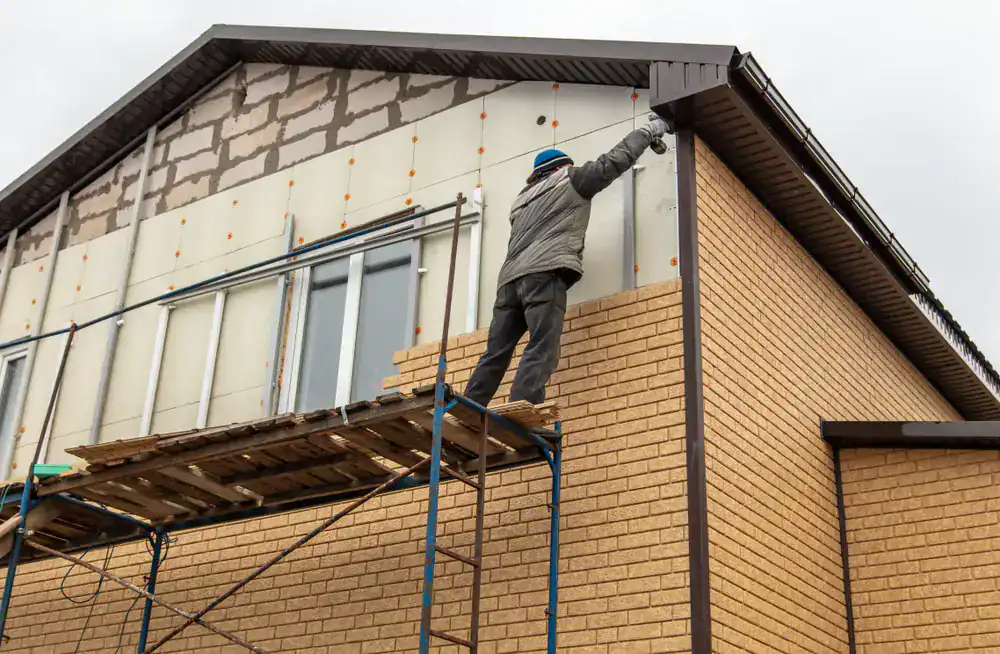
If you’re moving forward with installation, we pull the permit through Clark Township’s Construction Office — that’s required for exterior work in Clark, and it’s something we handle as part of the job, not something we leave you to figure out. From there, we remove the existing siding, inspect the sheathing underneath for any moisture damage or rot, install a fresh weather-resistant barrier, and then install your new panels. Every window, door, and corner gets properly flashed and sealed. That step is where a lot of installations go wrong, and it’s where we’re most deliberate.
Once the work is done, we walk the project with you before we leave. You see everything, you ask whatever you need to ask, and we don’t consider it finished until you’re satisfied with what you’re looking at.

Ready to get started?
Local Siding Company Serving Clark, NJ
The housing stock in Clark is specific. Two-thirds of the homes here were built during the postwar boom — the same era that gave Clark its Cape Cods, ranches, and split-levels, and the same era that brought the Garden State Parkway through Union County and turned this township into a suburb almost overnight. Those homes have character, but they also have age. Wall assemblies from the 1950s and 1960s weren’t built with modern energy performance in mind, and the siding systems on them — whether original or replaced once already — are often at the end of their useful life.
For most Clark homes, vinyl siding remains the most practical and cost-effective option. It holds up well through Northeast winters, doesn’t require painting, and when installed with a foam-backed insulated underlayment, it meaningfully improves the thermal performance of an older wall assembly. For homeowners in Clark’s higher-end pockets — particularly near the Westfield border, where newer construction and substantially renovated homes are more common — fiber cement is worth a serious look. It’s denser, more impact-resistant, and carries a finished appearance that holds up well on larger, more architecturally detailed homes.
Whatever material makes sense for your home, the installation standard doesn’t change. Proper flashing, a sealed moisture barrier, and manufacturer-compliant technique are what make the warranty real and the work last. That’s what we deliver with every project we take on in Clark.

Do I need a permit for siding installation in Clark, NJ?
Yes — Clark Township’s Construction Office requires permits for most home improvement projects, and exterior siding replacement falls under that requirement. In some cases, you may also need prior approval from the Zoning Officer before the permit application is submitted, depending on the scope of the work and your property’s specific situation.
We handle this for you. A reputable contractor in New Jersey should be pulling permits as a standard part of the job — not leaving it to the homeowner to navigate. If a contractor tells you permits aren’t necessary or suggests skipping them to save time, that’s a red flag worth taking seriously. Permitted work is inspected work, and inspected work protects you if you ever sell the home or need to make a warranty claim.
How do I know if my siding needs to be repaired or fully replaced?
The honest answer is that it depends on what’s actually going on beneath the surface — and you can’t always tell from a visual inspection alone. Cracking, fading, and loose panels can sometimes be addressed with targeted repairs. But if the damage is widespread, if there’s moisture infiltration behind the panels, or if the siding is original to a home built in the 1950s or 1960s, the math usually favors replacement.
In Clark, where a large portion of the housing stock is 60 or more years old, we see a lot of situations where homeowners have already had one round of repairs and are now facing the same issues again. At some point, patching aging material is just delaying the inevitable — and doing it repeatedly costs more over time than a single proper replacement would have. Our free inspection is specifically designed to give you a clear, honest answer on where your siding actually stands, without any pressure to go one direction or the other.
What siding material holds up best against New Jersey winters?
For most homes in Clark, insulated vinyl siding is the strongest combination of durability, performance, and value. Standard vinyl can become brittle in extreme cold, but insulated vinyl — which has a foam backing bonded to the panel — handles freeze-thaw cycling significantly better and adds a layer of thermal resistance that older homes in Clark genuinely benefit from. It’s also low-maintenance, which matters when you’re not looking to repaint every few years.
Fiber cement is the other serious option, particularly for homeowners who want a material that’s denser and more resistant to impact damage from wind-driven debris — something that comes up after the nor’easters that move through Union County every winter. It costs more upfront and requires periodic painting, but it holds its shape well under temperature extremes and has a longer expected lifespan than vinyl. The right call depends on your home, your budget, and what you’re trying to accomplish — which is exactly what the inspection conversation is for.
How long does siding installation take on a typical Clark home?
For a standard single-family home in Clark — a Cape Cod, ranch, or split-level — a full siding replacement typically takes between two and five days, depending on the size of the home, the material being installed, and what we find once the old siding comes off. If there’s moisture damage or rot in the sheathing underneath, addressing that properly adds time, but it’s not something you want to skip. Covering damaged substrate with new siding just traps the problem inside the wall.
Scheduling is worth thinking about in advance. Spring and early fall are the busiest windows for exterior work in Union County — both because the weather cooperates and because homeowners coming out of winter want to address damage before the next season. Quality contractors in this market typically book out four to six weeks during peak season. If you’re planning a project for spring or fall, reaching out early gives you more flexibility on timing and a better chance of getting on the schedule before the backlog builds.
Does new siding actually increase home value in Clark, NJ?
It depends on the condition you’re starting from, but in most cases — yes, meaningfully. Clark’s median home price is around $640,000, and in a market at that level, curb appeal carries real weight. New siding is consistently one of the highest-return exterior improvements in terms of resale value, and in a competitive Union County market where buyers are comparing homes carefully, a fresh exterior can be the difference between a fast sale and a listing that sits.
Beyond resale, there’s the day-to-day reality of living in Clark. Residents here are pulling in off the Parkway every evening, and your home’s exterior is what you see first. If you’re not planning to sell anytime soon, updated siding still improves your home’s energy performance, reduces maintenance costs, and removes the ongoing concern about what’s happening behind failing panels. For a home that’s been in the family for decades — which describes a lot of Clark properties — that peace of mind has real value too.
How do I find a licensed siding contractor in Clark, NJ I can actually trust?
Start with the basics: any contractor doing home improvement work in New Jersey is required by law to be registered with the NJ Division of Consumer Affairs under the Home Improvement Contractor Registration program. It’s not optional, and it’s not a formality — hiring an unregistered contractor leaves you without legal protection under the NJ Consumer Fraud Act if something goes wrong. You can verify registration status directly through the state’s online database before signing anything.
Beyond licensing, look for a contractor who provides a written, itemized estimate — not a ballpark number over the phone — and who handles the permit process as part of the job. In Clark specifically, where homes are worth serious money and neighbors talk, reputation matters. Check Google reviews, ask in local community groups, and pay attention to how the contractor communicates before the project even starts. If they’re hard to reach during the estimate phase, they’ll be harder to reach once your deposit is in. A contractor who’s been working in Union County for close to a decade, carries proper insurance, and puts everything in writing isn’t hard to find — but it does take a few minutes of due diligence to verify.
Other Services we provide in Clark