
Roof Inspection in Clark, NJ
Clark's Aging Roofs Deserve More Than a Glance
Hear from Our Customers
Certified Roof Inspector in Clark, NJ
About two-thirds of Clark’s housing stock was built between the 1940s and 1960s — the wave of Cape Cods, split-levels, and colonials that went up fast after the Garden State Parkway opened and turned this township from farmland into suburb almost overnight. Those homes have history, and so do their roofs. If yours hasn’t been inspected in a few years, there’s a real chance something is quietly working against you up there — and you won’t know it until water shows up somewhere it shouldn’t.
Clark’s winters don’t help. The freeze-thaw cycles that run through Union County all season long are one of the most damaging things a roof deals with. Water gets under flashing, freezes, expands, and widens gaps that weren’t a problem last spring. Ice dams form at the eaves of older homes with limited attic insulation — exactly the kind of homes that make up most of Ashbrook, Madison Hill, and the Raritan Road corridor. By the time you see a stain on the ceiling, the damage behind it has usually been building for months.
A thorough inspection catches that early. It also gives you documentation — the kind that matters when you’re filing an insurance claim after one of the nor’easters or high-wind events that roll through this area and leave shingles scattered across driveways. You get a clear picture of your roof’s actual condition, a straight answer on what needs attention and what doesn’t, and the information you need to make a smart decision on your own timeline.
Licensed Roof Inspector in Clark, NJ
We’ve been working on New Jersey homes for over ten years — and a significant portion of that work has been right here in Union County, on the same mid-century housing stock that defines Clark. Our team knows what a 1960s split-level looks like from the ridge to the soffit, where the flashing tends to fail first, and what honest remaining life looks like on a roof that’s been through a few New Jersey winters.
We’re family-operated, which means the people making decisions about your home are the same people whose names are on the reviews. There’s no rotating crew, no franchise playbook, and no incentive to recommend work that isn’t needed. When a Clark homeowner asks for a straight answer, that’s what they get — even if the straight answer is “your roof is fine, come back in three years.”
We hold a New Jersey Home Improvement Contractor license and certifications from major shingle manufacturers — credentials that fewer than 3% of roofing contractors in the country carry. That’s not a marketing line. It’s the difference between a standard warranty and an extended, manufacturer-backed one that actually protects a home worth what Clark homes are worth today.

Roof Damage Inspection in Clark, NJ
It starts with a phone call or a form submission. You tell us what you’re seeing — or what you’re worried about — and we schedule a time that works for you. There’s no charge to get on the calendar, and no obligation attached to anything that follows.
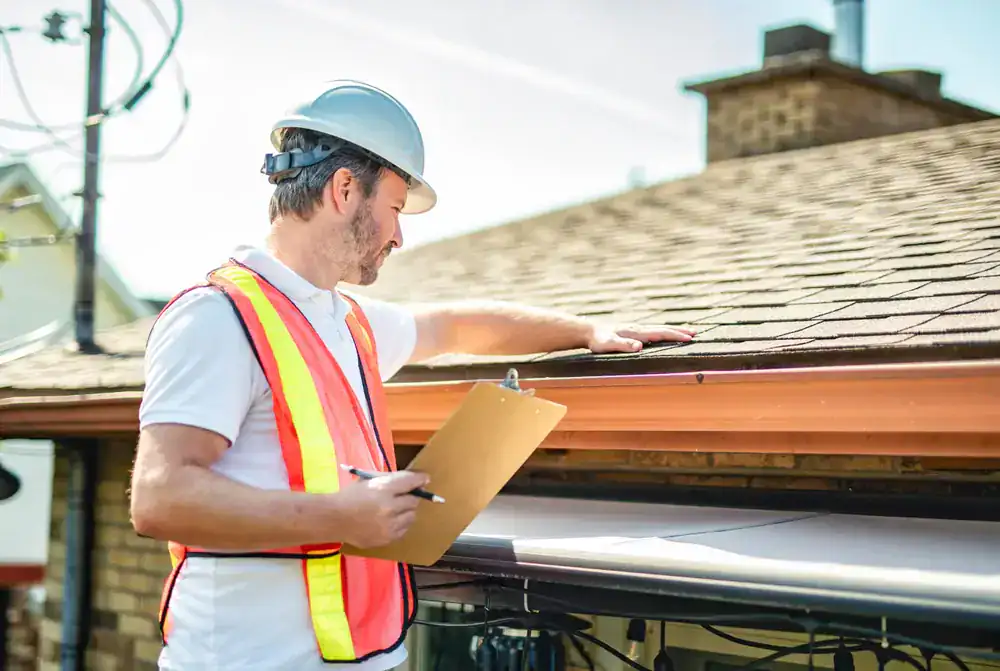
When our inspector arrives, they’re not doing a quick walk-around from the driveway. They’re getting on the roof. They’re checking shingles, flashing, ridge caps, valleys, and every penetration point — vents, chimneys, skylights — because that’s where water finds its way in. They’re also looking at your gutters and siding while they’re there, since storm damage in Clark rarely stops at the shingle layer. The Robinson’s Branch area and the tree-heavy lots on the western side of the Parkway tend to collect debris that accelerates wear in ways that aren’t obvious until you’re up close.
After the inspection, you get a clear report — what was found, what it means, and what the options are. If Clark Township requires a permit for any repair or replacement work (which it does for full replacements, administered through the Construction Department at 430 Westfield Avenue), we handle that process on our end. You don’t have to figure out the paperwork. If the roof is in good shape, you’ll hear that too — and you can move on knowing you’ve done your due diligence.
Ready to get started?
Roof Inspection Company in Clark, NJ
A roof inspection from us isn’t a checklist item — it’s a complete assessment of your exterior system. That means shingles, flashing, fascia, soffits, gutters, and siding all get reviewed together, because they all work together. On the older homes throughout Clark’s neighborhoods — the Cape Cods near Lenox, the bi-levels in Florence Mills, the colonials along Raritan Road — these components have decades of wear on them, and problems in one area almost always affect another.
The inspection covers the full surface of the roof, every transition point, and every penetration. Flashing around chimneys and skylights is a known failure point on homes of this era. Ridge venting and attic airflow get evaluated too, because poor ventilation is one of the leading contributors to ice dam formation on the low-pitch rooflines common in Clark’s postwar housing stock. If there’s been a recent storm — and Union County sees its share of nor’easters and high-wind events — the inspection documents damage in a format that holds up with insurance adjusters.
You also get honest guidance on timing. If a full replacement is five years out, you’ll know that. If it’s urgent, you’ll know that too — along with what it would cost and what your options are. The goal is to give you real information so you can make a real decision, not to manufacture urgency where there isn’t any.

How do I know if my Clark, NJ home actually needs a roof inspection right now?
The honest answer is that most Clark homeowners are overdue without knowing it. The National Roofing Contractors Association recommends professional inspections at least twice a year, but the majority of homeowners only call when something visible goes wrong. Given that roughly two-thirds of Clark’s housing stock dates to the 1940s through the 1960s, a lot of these roofs are on their second or third replacement cycle — and age alone is a legitimate reason to get eyes on it.
Beyond age, there are specific triggers worth paying attention to: granules collecting in your gutters after rain, shingles that look cupped or curled at the edges, flashing that’s visibly lifted or separated around your chimney, or any water staining on ceilings or in your attic. After a significant storm — and Clark has had documented events with 60 mph wind gusts and quarter-size hail — a post-storm inspection is worth scheduling even if you don’t see obvious damage from the ground. Some of the most costly damage isn’t visible until we’re actually on the roof.
What does a roof inspection typically cost in Clark, NJ?
We offer free roof inspections in Clark, NJ with no obligation. You’re not paying to find out what condition your roof is in — that information is yours regardless of what you decide to do next. If repairs or a replacement turn out to be necessary, you’ll receive a clear, itemized estimate before any work is discussed.
For context, a full roof replacement in Clark on a typical mid-century single-family home generally runs anywhere from $8,000 to $18,000 or more depending on roof size, pitch, material, and the extent of any underlying damage found during the inspection. Targeted repairs are obviously much less. The inspection is what tells you which category you’re actually in — and getting that information for free, from a licensed contractor who has no incentive to oversell, is a straightforward way to protect a home that’s worth well into the six figures in today’s Clark market.
Does Clark, NJ require a permit for roof replacement, and does that affect the inspection?
Yes — Clark Township requires a building permit for full roof replacements, administered through the Department of Construction at 430 Westfield Avenue. This is standard under New Jersey’s Uniform Construction Code, which governs all residential construction and renovation work across the state. The permit requirement doesn’t affect the inspection itself, but it’s relevant to what happens after: any replacement work needs to be performed by a properly licensed contractor who can pull the permit on your behalf.
Working with an unlicensed operator in Clark doesn’t just risk the quality of the work — it can create complications at resale, affect your insurance coverage, and eliminate your legal recourse under New Jersey’s Consumer Fraud Act. We’re fully licensed and handle the permit process as part of every replacement job. You don’t have to navigate the municipal building or figure out fee schedules — that’s handled before the crew shows up.
What causes ice dams, and are Clark homes especially vulnerable to them?
Ice dams form when heat escaping through the roof melts snow at the upper surface, and that water then refreezes when it reaches the colder eaves — building up a ridge of ice that can force water back under the shingles and into the roof deck. It’s one of the more damaging winter conditions a roof faces, and it’s largely invisible from inside the house until the water has already found its way in.
Clark’s housing stock makes this a real concern. The Cape Cods, split-levels, and ranches that dominate the township — particularly in the Ashbrook and Madison Hill sections — were built in an era before modern insulation and ventilation standards. Many of these homes have attic airflow issues that allow heat to escape through the roof surface rather than being contained. Union County winters cross the freezing threshold repeatedly throughout the season, which is exactly the cycle that creates ice dams. A proper inspection evaluates attic ventilation alongside the roof surface, because fixing the ventilation is often what prevents the ice dam from forming in the first place.
How is a professional roof inspection different from a general home inspection?
A general home inspector covers a wide range of systems — electrical, plumbing, HVAC, structure, and roof — but they’re generalists by design. They’re typically evaluating the roof from the ground or from a ladder at the eave, and their report reflects that. They’re looking for obvious red flags, not the kind of granular assessment that tells you whether your flashing is two years from failure or your ridge cap is holding fine.
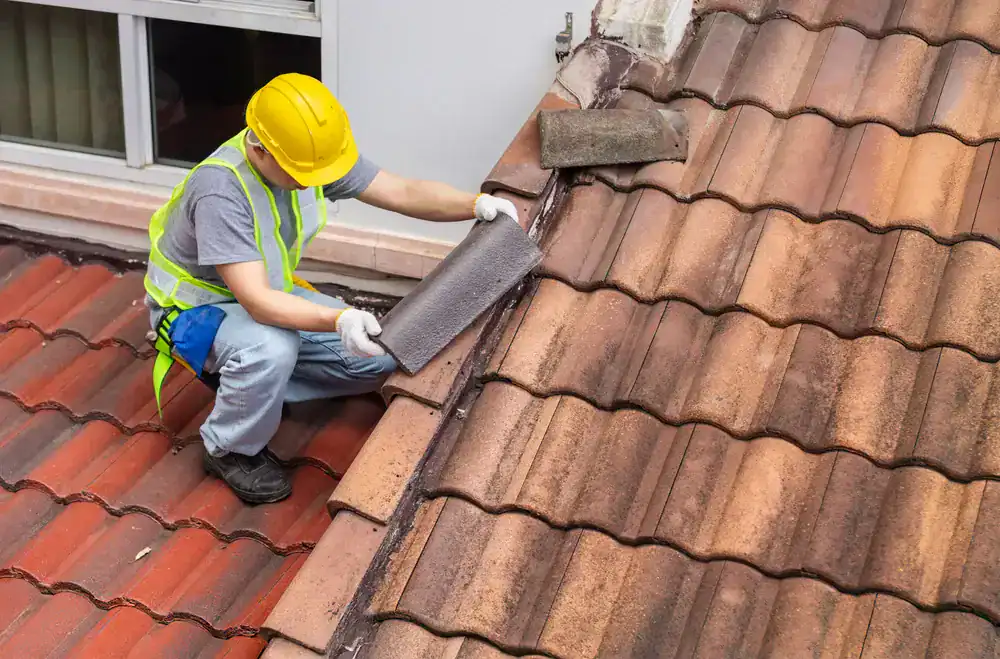
A professional roof inspection from a licensed, certified roofing contractor means someone who works on roofs every day is getting on your roof and evaluating it the way a specialist would. We know what flashing separation looks like on a 1960s chimney. We know what granule loss patterns indicate thermal stress versus normal wear. We know how to evaluate the attic side of the equation, not just the exterior surface. For Clark homeowners dealing with aging homes and real weather exposure, that level of detail is what makes the inspection actually useful — not just a box checked on a disclosure form.
Can a roof inspection help with an insurance claim after a storm in Clark?
Yes — and this is one of the more practical reasons to call sooner rather than later after a significant weather event. Clark and the surrounding Union County area have documented storm history: nor’easters with sustained high winds, severe thunderstorms with confirmed hail, and wind events that have triggered county-wide advisories. When those storms roll through and you suspect damage, a detailed inspection report from a licensed roofing contractor carries real weight with insurance adjusters in a way that a verbal assessment or a general home inspection simply doesn’t.
The inspection documents exactly what was found, with photographic evidence of every affected area — shingles, flashing, gutters, siding, penetration points. That documentation creates a clear record of storm-related damage that supports your claim and helps ensure nothing gets overlooked or dismissed. Insurance companies have their own adjusters, and having an independent assessment from a certified contractor gives you a factual baseline to work from. Filing without that documentation often means leaving money on the table — or having damage denied because it wasn’t properly documented at the time.
Other Services we provide in Clark