
Roof Inspection in Park Village, NJ
Sayreville's Storm History Doesn't Forgive a Neglected Roof
Hear from Our Customers
Certified Roof Inspector in Park Village, NJ
Most roof damage in Park Village doesn’t announce itself. It builds quietly — under shingles lifted by coastal wind gusts, behind flashing that’s been pulling away from a chimney or vent for two seasons, inside decking that absorbed moisture during the last heavy rain. By the time you see a water stain on your ceiling, the damage has already been spreading.
Living in an attached townhome adds a layer to this that detached homeowners don’t deal with. When your roof shares structural elements with the unit next door, a slow leak doesn’t stay your problem for long. Moisture migrates through shared decking and framing. What starts as a minor flashing issue on your end can show up as water damage in your neighbor’s unit — and now it’s a much bigger conversation.
Sayreville sits along the Raritan River corridor, and the weather here is not gentle. Hurricane Sandy damaged over 1,000 homes in this borough alone. Nor’easters push wind and rain through every gap and seam a roof has. A professional roof inspection gives you a clear, documented picture of what’s holding up and what isn’t — so you’re making informed decisions, not reactive ones.
Licensed Roof Inspector in Park Village, NJ
We’ve been working on roofs across Park Village and throughout Middlesex County for over ten years. That’s not a number we throw out casually — it means we’ve seen what this climate does to homes in communities like Park Village, Sayreville, and the surrounding area across real seasons, real storms, and real years. We were here before Hurricane Sandy, and we’re still here now.
We hold active New Jersey Home Improvement Contractor registration and carry certifications from major shingle manufacturers — the kind that fewer than 3% of roofing contractors in the country qualify for. That matters to you because it means any work we do can be backed by enhanced manufacturer warranties that most contractors simply cannot offer.
We’re a family-run operation, which means our reputation travels with us on every job. When we inspect a roof in Park Village, we’re not running a numbers game. We tell you what we find, show you the documentation, and let you decide what to do next. No pressure. No manufactured urgency.

Roof Damage Inspection in Park Village, NJ
It starts with a call or a form submission — no upfront cost, no commitment. We schedule the inspection at a time that works for you, which matters in Park Village where most residents commute out early and return late via Route 9 or the Garden State Parkway.
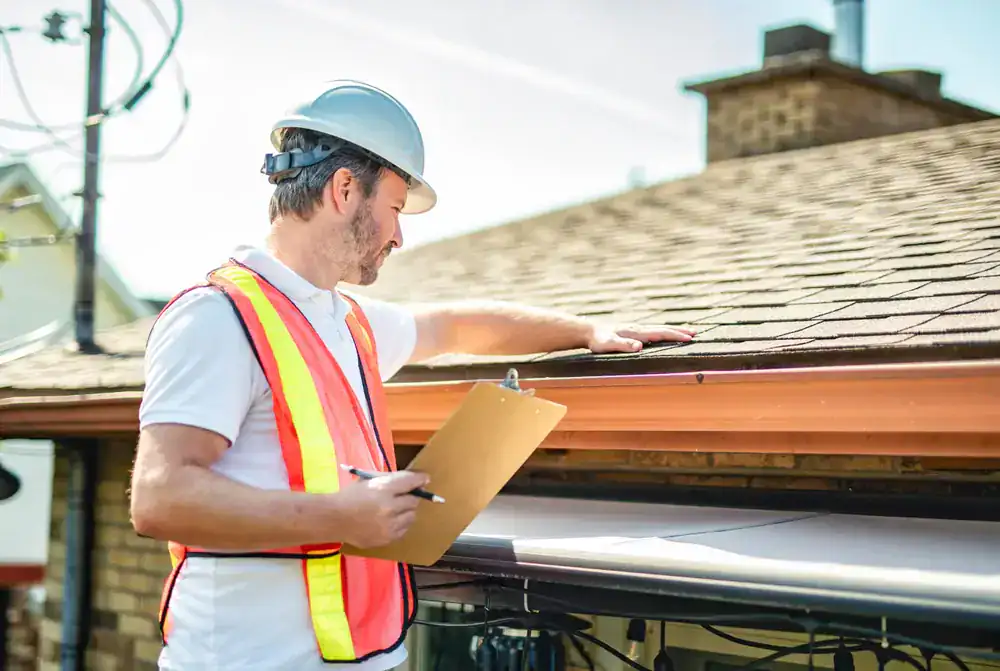
When we arrive, we do a full assessment — not a glance from the driveway. That means shingles, flashing at every penetration point (chimneys, vents, skylights, valleys), gutter attachment and condition, soffit and fascia, ridge cap, drip edge, and vent pipe boots. We also check the attic when accessible, because that’s where early signs of moisture intrusion and ventilation problems actually show up. In Sayreville’s freeze-thaw winters, ice dam conditions along eaves are a real and recurring issue — we look for the evidence of that too.
At the end, you get a clear written report with photos. If there’s damage, we explain what it is, where it is, and what your options are. If your roof is in solid shape, we’ll tell you that too. If any repair or replacement work is recommended and you choose to move forward, all work in Sayreville requires a building permit through the Sayreville Construction Department — we handle that process, so you don’t have to navigate it yourself.
Ready to get started?
Roof Inspection Company in Park Village, NJ
A roof inspection from us is a full exterior assessment, not a spot check. We look at every component that contributes to your roof’s ability to keep water out — because in a waterfront-proximate community like Sayreville, where storm events come with real frequency and real force, partial inspections leave real gaps.
For Park Village townhomes specifically, we pay close attention to the shared roofline areas where your unit meets the adjacent structure. These transition zones are where moisture problems tend to start and where they’re easiest to miss without a trained eye. We also assess gutter attachment and drainage, because gutters that have pulled away from the fascia during a wind event create water intrusion pathways right at the roofline.
Our inspection includes a full written report with photographic documentation — something that carries real weight if you’re filing an insurance claim, negotiating a home sale, or simply want a record of your roof’s condition before the next storm season. If you’re buying or selling a townhome in Park Village, a pre-transaction roof inspection from a licensed, certified contractor gives you information your general home inspector’s overview may not fully capture. We also handle gutter and siding assessments as part of our broader exterior services, so if the inspection turns up issues beyond the roof itself, you’re not starting the contractor search over again.

How often should townhome owners in Park Village get a roof inspection?
Twice a year is the standard recommendation from the National Roofing Contractors Association — once in the spring after winter stress, and once in the fall before the next cold season starts. For Park Village specifically, that schedule makes a lot of sense. Sayreville winters bring repeated freeze-thaw cycles that stress roofing systems at the eaves, valleys, and flashing points. By spring, there’s often evidence of ice dam activity or wind damage from nor’easters that you won’t see from the ground.
The townhome factor matters here too. In an attached community like Park Village, a roof issue that goes undetected through one winter can migrate into adjacent units through shared structural elements by the time spring arrives. Catching it in March instead of June is the difference between a minor repair and a much larger remediation. If your roof hasn’t been professionally inspected in the last year, now is a reasonable time to schedule one — not because something is necessarily wrong, but because you genuinely don’t know until someone looks.
What does a professional roof inspection actually include from start to finish?
A thorough roof inspection covers every component that contributes to your roof’s ability to keep water out. That includes shingle condition — looking for cracking, curling, granule loss, blistering, or missing sections — as well as flashing integrity at every penetration point: chimneys, skylights, vent pipes, valleys, and wall junctions. We also check gutter attachment and condition, soffit and fascia, ridge cap, drip edge, and vent pipe boots and seals.
Beyond the exterior, attic access is part of a complete inspection when it’s available. The attic is where early moisture intrusion and ventilation problems actually show up — often before there’s any visible exterior damage. In Sayreville’s climate, inadequate attic ventilation is a contributing factor to ice dam formation in winter, which forces water up under shingles and into the decking. You get a written report with photographs at the end, so you have documentation of the roof’s current condition regardless of what you decide to do next.
Can a roof inspection in Park Village, NJ help with an insurance claim?
Yes, and in Sayreville, this comes up regularly. The borough has one of the most documented storm histories in Middlesex County. When damage occurs and you file a claim, the documentation from a professional roof inspection by a licensed, certified contractor carries real weight with insurance adjusters.
A report that includes photographs, specific damage descriptions, and a credentialed contractor’s assessment gives the adjuster something concrete to work from. It also helps ensure that all damage is captured — not just what’s visible from a quick walkthrough. If you’ve experienced wind, hail, or water-related damage and are considering a claim, getting a professional inspection documented before any repairs are made is important. Adjusters need to see the damage in its original condition, and a detailed inspection report supports that process more effectively than a general home inspection summary.
Do I need a permit for roof work in Sayreville, and who handles that?
Yes. Roof replacement work in Sayreville requires a building permit through the Sayreville Construction Department, located at 49 Dolan Street. This isn’t optional — it’s a borough requirement, and it exists for a real reason. A permitted job means the work is inspected by a municipal building inspector, which is an independent check on quality beyond what the contractor self-reports. It also protects you legally and helps ensure your manufacturer warranty stays intact.
A contractor who proposes to replace your roof without pulling a permit is cutting a corner that creates liability for you as the homeowner. If you ever sell your home, unpermitted work can surface during the buyer’s due diligence and complicate or kill the transaction. We handle the permitting process as part of any replacement or significant repair project — you don’t need to figure out the paperwork or make separate calls to the Construction Department. It’s part of how the job gets done correctly.
What are the signs that my roof needs more than just an inspection?
There are a handful of things that, if you’re seeing them, mean the inspection is probably going to confirm you need work. Granules collecting in your gutters or at the base of your downspouts are one of the clearest signs — granule loss means the shingles are aging past their effective life. Shingles that are visibly curling at the edges or cupping in the middle are past the point of being a cosmetic issue. Any visible sagging along the roofline suggests decking or structural problems underneath.
Inside the home, water stains on ceilings or walls near the roofline, or daylight visible through the attic, are signs that moisture has already found its way in. In Park Village townhomes, it’s also worth paying attention if a neighbor has recently had roof work done — that can be an indicator that the roofline in your section of the community is reaching a similar age threshold. An inspection will confirm the extent and give you a clear picture of what the actual condition is, rather than guessing from the ground.
Why is a free roof inspection from USA Home Remodeling worth my time?
Because not knowing the condition of your roof is a real financial risk, and removing the cost barrier to finding out is straightforward. A professional roof inspection in Park Village, NJ from a licensed, certified contractor gives you a documented assessment of your roof’s current condition — something a general home inspector’s overview or a ground-level look on your own simply won’t produce with the same depth or credibility.
For Park Village residents, the stakes are concrete. Townhome values in Sayreville are approaching and exceeding $400,000 to $500,000. A roof issue discovered during a buyer’s home inspection can cost sellers thousands in negotiated credits or derail a sale entirely. A slow leak left undetected through one winter can migrate into adjacent units through shared structural elements, turning a minor repair into a community-level problem. Getting a clear, professional assessment costs you nothing upfront and gives you information you can actually use — whether that’s peace of mind, an insurance claim, a pre-sale disclosure, or a repair decision made on your terms rather than in response to an emergency.
Other Services we provide in Park Village