
Roof Inspection in Linden, NJ
Linden's Aging Roofs Deserve More Than a Glance
Hear from Our Customers
Certified Roof Inspector in Linden, NJ
Linden’s residential neighborhoods — Sunnyside, Elmora, and the surrounding blocks — are largely built on mid-century Cape Cods and Colonials that went up between the 1940s and 1970s. That housing stock has character and real value. It also has roofs that are at or past the point where problems start hiding in plain sight. A professional roof inspection in Linden, NJ gives you a clear, documented picture of where things stand — before a small flashing failure turns into a rotted deck and a five-figure repair bill.
What makes Linden different from a typical inland suburb is the environment your roof is actually living in. The Arthur Kill runs along the city’s eastern edge, and salt-laden air off Newark Bay doesn’t do asphalt shingles any favors over time. Add the industrial corridor near the Bayway area and the wear that comes with it, and you’ve got conditions that accelerate roof degradation in ways that most homeowners don’t think about until something goes wrong.
A licensed roof inspector in Linden, NJ isn’t just checking boxes — we’re looking at your specific roof, in your specific environment, with the kind of pattern recognition that only comes from years of working in this area. That’s the difference between a real inspection and a sales visit dressed up as one.
Roof Inspection Company in Linden, NJ
USA Home Remodeling has been working on roofs across Union County and throughout Linden for over ten years. That’s not a tagline — it’s a track record you can verify. We’re a family-operated exterior contractor, which means the people doing the work are the same people whose reputation is on the line in every Linden neighborhood we serve.
We’re fully licensed as a New Jersey Home Improvement Contractor, carry general liability and workers’ compensation insurance, and hold manufacturer certifications from major shingle brands — credentials that unlock enhanced warranty coverage most contractors simply can’t offer. The City of Linden’s own Construction Code Department states that homeowners who hire unregistered contractors lose their consumer law protections. That’s on the city’s website, and it’s worth knowing before you let anyone on your roof.
From the older Colonials near Tremley Point to the Cape Cods throughout Sunnyside, we’ve inspected roofs on homes just like yours. We’ll tell you what we find — including when the answer is that your roof has years left and doesn’t need a thing.

Roof Damage Inspection in Linden, NJ
It starts with a call. You tell us what you’ve noticed — or nothing at all, because sometimes the whole point is that you haven’t noticed anything yet. We schedule a time that works for you and show up when we say we will.
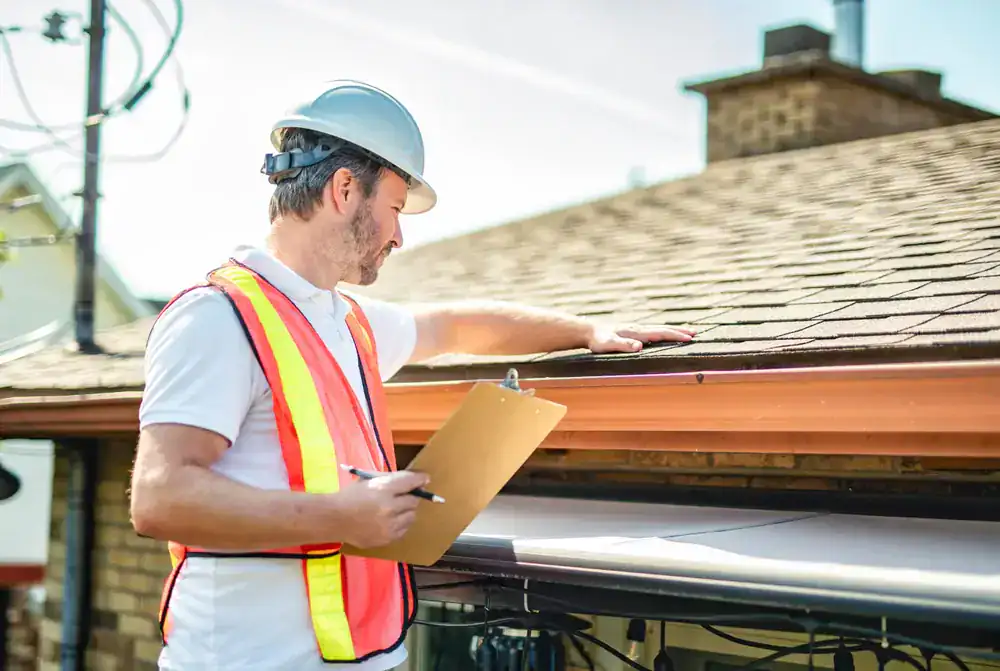
On-site, we do a thorough inspection of the full roofing system: shingles, flashing, ridge caps, valleys, eaves, gutters, and any penetrations like chimneys or vents. For older homes in Linden — where original underlayment and aging flashing are common — we pay particular attention to the areas where mid-century construction tends to fail first. If there’s been recent storm activity, we look specifically for the kind of damage that nor’easters and summer thunderstorms leave behind in Union County: lifted shingles, granule loss, compromised seals around penetrations, and ice dam scarring along the eaves.
After the inspection, you get a straight answer. If we find damage, we document it with photos and walk you through exactly what it means and what your options are. If your roof is in good shape, we tell you that too. No manufactured urgency, no vague warnings designed to push you toward a sale. Just the facts, clearly explained, so you can make an informed decision. If repair or replacement work is needed and you want to move forward, we handle permitting in compliance with New Jersey’s Uniform Construction Code — so nothing gets done without the proper approvals in place.
Ready to get started?
Licensed Roof Inspector in Linden, NJ
A roof inspection in Linden, NJ from USA Home Remodeling covers the full exterior system, not just the shingles you can see from the driveway. We assess the condition of your shingles, flashing, underlayment, ridge line, valleys, soffit, fascia, and gutters. For homes in Linden’s older neighborhoods, we also look at attic ventilation — because inadequate ventilation is one of the leading causes of premature roof failure and ice dam formation in mid-century homes, and it’s a problem that doesn’t show up on a surface-level walkthrough.
Because Linden sits along the Arthur Kill with Newark Bay to the northeast, coastal storm exposure is a real factor in how we approach every inspection. We’re specifically trained to identify salt-air degradation patterns, wind-driven moisture infiltration, and the kind of granule loss that indicates shingles are approaching the end of their service life. These aren’t issues we’d flag the same way in an inland town — they require a specific eye for what this environment does to roofing systems over time.
Our roof leak inspection service in Linden, NJ includes written documentation and photographs, giving you a clear record of your roof’s condition. If you’re preparing to sell your home in Linden’s competitive market — where values have climbed significantly year-over-year — that documentation can protect your asking price and prevent last-minute renegotiations. If you’re dealing with an insurance claim after storm damage, it gives you your own independent record before the adjuster’s visit. Either way, you leave knowing exactly where things stand.

Does a roof inspection in Linden, NJ require a permit or any city approval?
A roof inspection itself doesn’t require a permit — it’s an assessment, not construction work. However, if the inspection reveals that repair or replacement work is needed, that work will likely require a building permit under New Jersey’s Uniform Construction Code, which applies in Linden as it does across the state.
This is actually one of the reasons it matters who does your inspection. The City of Linden’s Construction Code Department explicitly states that home improvement contractors must be registered with the NJ Division of Consumer Affairs, and that homeowners who hire unregistered contractors lose their legal protections under state consumer law. When you work with a fully licensed and registered contractor like USA Home Remodeling, you don’t have to worry about whether the paperwork is handled correctly — we manage the permitting process as part of any repair or replacement work so everything is done by the book from the start.
How do I know if my roof actually needs replacing or just a repair?
That’s exactly the question a good inspection is designed to answer — and the honest answer is that it depends on a few things: the age of the roof, the extent and location of the damage, and whether the underlying deck and structure are still sound.
For most of the mid-century homes in Linden’s established neighborhoods, roofs installed in the 1990s or early 2000s are now in the range where the answer could go either way. A roof at 20–25 years with isolated flashing damage and otherwise intact shingles may have several good years left with targeted repairs. A roof showing widespread granule loss, multiple failed seals, and compromised underlayment is telling a different story. The only way to know for certain is a thorough inspection by a certified roof inspector in Linden, NJ who can assess the full system — not just the visible surface — and give you an honest read on where things actually stand. We’ll tell you what makes financial sense, not what generates the largest job for us.
What storm damage should Linden homeowners look for after a nor'easter or heavy rain?
After a significant storm — and Linden sees its share of them, from nor’easters that pile on heavy snow loads to summer thunderstorms that bring high winds and hail — there are a few things worth checking before you call anyone.
From the ground, look for missing or visibly lifted shingles, granules collecting in your gutters or downspout discharge areas, and any sagging or displacement along the ridge line. Inside, check your attic and upper-floor ceilings for signs of moisture intrusion — water stains, soft spots, or any new musty smell. What you won’t be able to see from the ground or from inside are the flashing failures around chimneys, vents, and valleys that are often the first place storm-driven water finds a way in. Those require a physical inspection to catch. A roof damage inspection in Linden, NJ after a major weather event gives you documented evidence of what the storm did — which is important whether you’re filing an insurance claim or simply deciding what repairs are needed before the next season hits.
How long does a roof typically last on a Linden home, and when should I start worrying?
Most standard asphalt shingle roofs have a functional lifespan of 20 to 30 years under normal conditions. In Linden, “normal conditions” includes coastal wind exposure from the Arthur Kill corridor, freeze-thaw cycles through Union County winters, and the industrial air quality environment near the Bayway area — all of which can shorten that window compared to what a manufacturer’s warranty timeline might suggest.
If your home was built between the 1940s and 1970s and has had one roof replacement, that replacement is likely approaching or past the 20-year mark. If you’re not sure when the last roof was installed — which is common with older Linden homes that have changed hands — that uncertainty alone is a reason to schedule an inspection. You don’t need visible damage to justify getting eyes on it. Proactive inspections catch the slow-developing problems that don’t show up as obvious leaks until they’ve already caused significant damage to the deck, insulation, and interior structure.
Is a free roof inspection actually thorough, or is it just a sales visit?
It’s a fair question, and the skepticism behind it is completely reasonable. In markets like Linden — where post-storm door-knockers and aggressive contractor tactics are a known issue — homeowners have every right to wonder whether a “free inspection” is just a foot in the door for a replacement pitch.
The answer depends entirely on who’s doing it. Our free inspection is a full assessment of your roofing system — shingles, flashing, underlayment, ridge, valleys, penetrations, and gutters — documented with photos and communicated clearly. If your roof is in good shape, you’ll hear that. If it needs minor repairs, you’ll hear that too. If it needs replacement, we’ll explain why and show you the evidence. The inspection is free because we’d rather earn your trust with an honest assessment than manufacture urgency to close a sale. That approach is what drives the review growth and referrals that have kept us running in Union County for over a decade — not high-pressure tactics.
Should I get a roof inspection before listing my home for sale in Linden?
In Linden’s current real estate market — where home values have climbed sharply and competition among buyers is real — roof condition is one of the most common friction points in a closing. A buyer’s home inspector flagging roof issues can trigger price renegotiations, repair demands, or a deal falling apart entirely, usually at the worst possible moment in the timeline.
Getting a roof inspection before you list gives you control over that conversation. If the roof is in good condition, you have documentation to share with buyers that removes one of their biggest concerns. If there are issues, you can address them proactively — on your schedule and with a contractor you chose — rather than scrambling to satisfy a buyer’s demands after the fact. For a Linden home selling in the $450,000–$550,000 range, a few hundred dollars in pre-listing inspection and targeted repairs can protect far more in negotiated value. It’s one of the more straightforward decisions a seller can make in a competitive market.
Other Services we provide in Linden